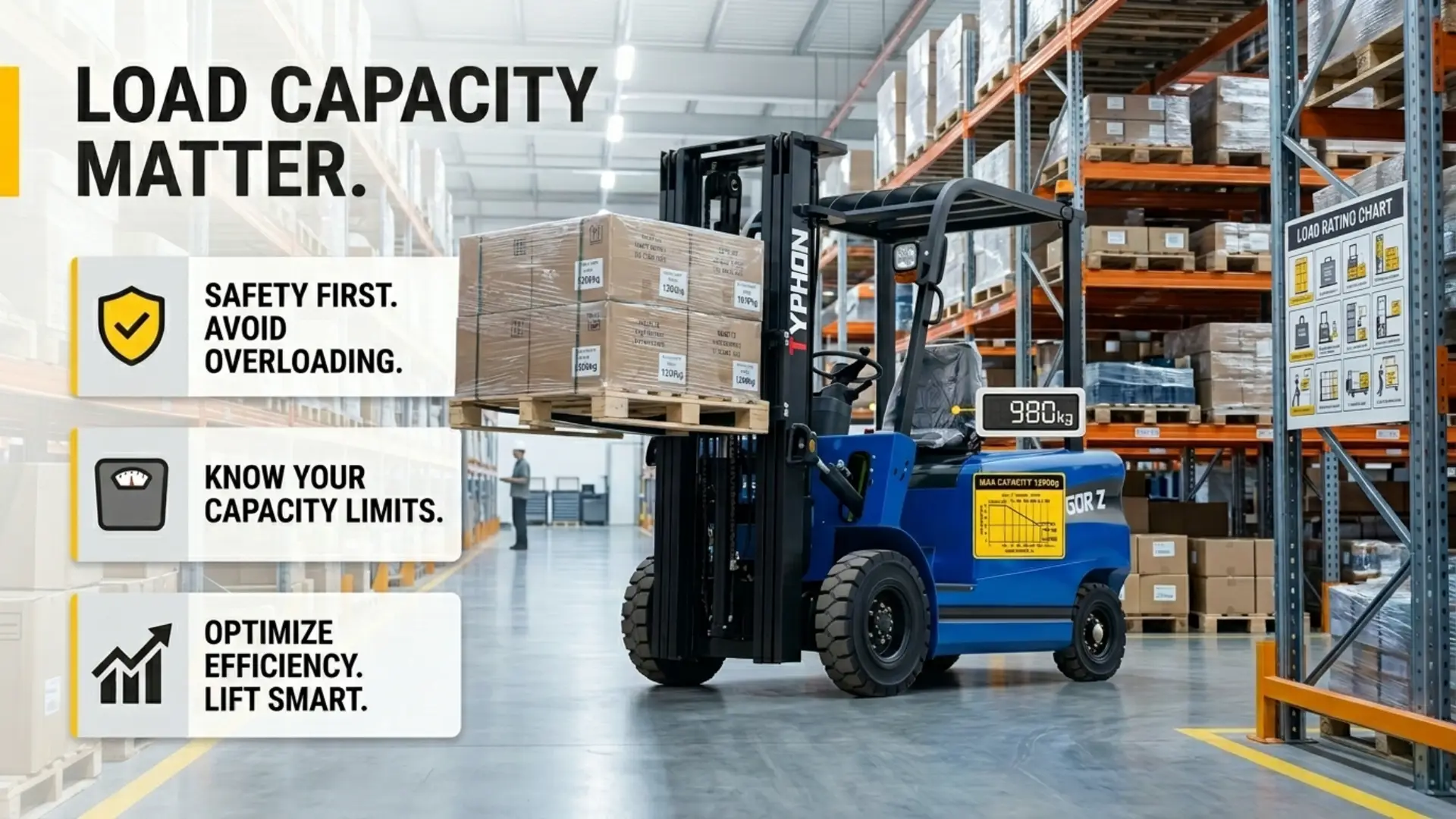
A forklift is only as safe and productive as the load it’s built to handle. Push past its rated capacity, and you invite instability, damaged goods, and serious injuries. Stay within it, and the machine performs exactly as designed, shift after shift. Weight capacity isn’t a technical detail to skim over in the manual; it’s a fundamental factor that shapes safety, efficiency, and equipment longevity across your entire operation. This post explains why forklift weight capacity matters, covering how load limits protect your team, how to match capacity to your workload, how capacity affects stability and handling, how it influences wear and maintenance, and how the right forklift selection drives real productivity.
Understand Load Limits for Safer Operations
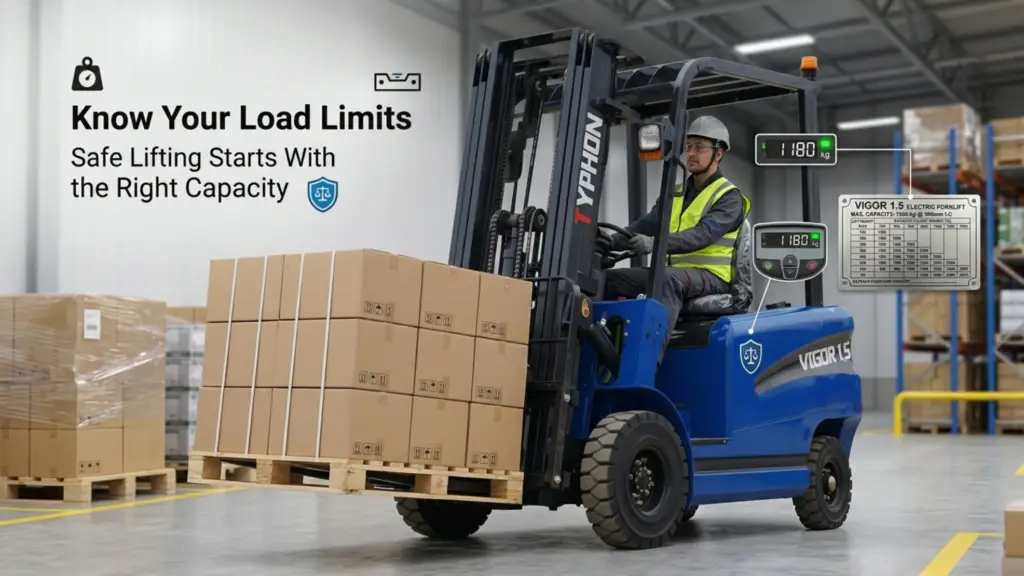
A forklift’s weight capacity defines the maximum load it can safely lift and transport, and respecting that limit is the first rule of safe operation. The rated capacity, set by the manufacturer and displayed on the machine’s data plate, reflects careful engineering of the mast, counterweight, and hydraulic system working together. When you keep loads within that figure, the forklift handles them predictably and stays balanced throughout every lift and move. Treat the rated capacity as a firm boundary, not a suggestion, because everything about safe handling depends on it.
Exceeding that limit invites a chain of serious problems, and each one carries real consequences on the job:
- Instability, where an overloaded forklift can tip forward or sideways, especially during lifting or turning.
- Equipment damage, as excess weight strains the mast, forks, and hydraulics beyond their designed limits.
- Workplace accidents, including dropped loads, collisions, and tip-overs that put operators and nearby workers at risk.
Any one of these can turn a routine task into a costly, dangerous incident in seconds.
The reason load limits matter so much comes down to physics and balance. A forklift relies on its counterweight to offset the load on the forks, and that balance holds only when the load stays within the rated capacity. Push beyond it, and the machine’s center of gravity shifts to a dangerous point where control slips away. Understanding this relationship, and confirming that every load falls within the machine’s limit before you lift, gives operators a dependable foundation for safe work. When your team treats capacity as non-negotiable, you protect people, goods, and equipment from the accidents that overloading so often causes.
Match Forklift Capacity With Your Workload Requirements
Not every operation handles the same loads, and choosing a forklift means matching its capacity to the work you actually do. A warehouse moving lightweight palletized goods has very different needs from a steel yard lifting dense industrial materials. Selecting a machine sized to your typical loads ensures it performs efficiently without unnecessary strain, and it prevents the costly mismatch of buying too little or too much capacity for the job at hand.
Load requirements vary widely across industries, and understanding your range is essential to a smart choice:
- Lightweight loads, such as standard pallets of packaged goods, retail stock, and light manufacturing components.
- Medium loads, including bulk materials, larger crates, and mixed inventory common in distribution and warehousing.
- Heavy industrial materials, like steel, concrete products, machinery, and dense raw materials found in construction and manufacturing.
Knowing where your heaviest routine loads fall on this spectrum points you toward the right capacity class for your operation.
The goal is to select a forklift that handles your heaviest regular loads comfortably, with a sensible margin, rather than one that strains at its limit on every lift. A machine sized just below your needs forces overloading and all the risks that come with it, while an oversized machine adds unnecessary cost and can be harder to maneuver in tight spaces. Consider not just the weight of your loads but also their size and how the load’s center of gravity affects effective capacity, since a bulky load carried farther from the mast reduces what the forklift can safely lift. Weighing these factors together helps you choose equipment that performs reliably and efficiently, matched precisely to the demands of your workplace.
Improve Stability and Handling Performance
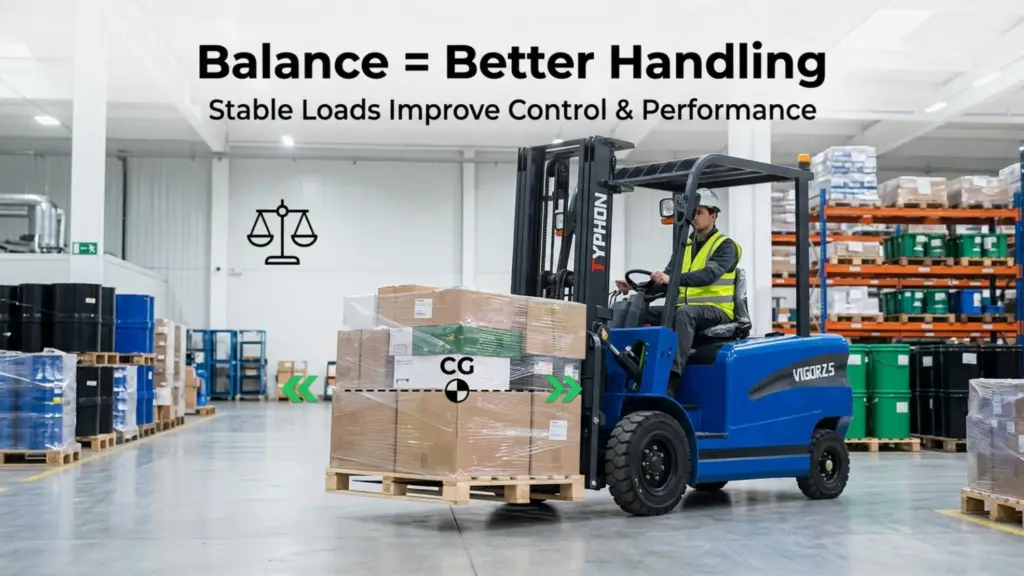
Weight capacity does more than set a safety ceiling; it directly shapes how well a forklift balances and handles throughout every task. A machine operating within its rated capacity maintains a stable center of gravity as it lifts, carries, and places loads, giving the operator smooth, predictable control. When loads stay within limits and are positioned correctly, the forklift responds the way it should, and handling stays crisp and confident from pickup to placement.
Stability shifts constantly as a forklift works, and capacity influences it at every stage:
- Lifting, where raising a load higher shifts the center of gravity upward and makes balance more sensitive.
- Carrying, where an overloaded or poorly positioned load makes the machine harder to steer and stop safely.
- Placing, where precise, stable control is essential to set loads accurately at height without tipping.
Keeping loads within capacity through each of these phases preserves the balance that safe, accurate handling depends on.
Proper load management ties directly to operator confidence and performance. When operators trust that the machine is balanced and responsive, they work more smoothly and decisively, without the hesitation that comes from an unstable or straining forklift. Distributing loads correctly on the forks, keeping them low during travel, and staying within the rated capacity all contribute to steady, controllable handling. An operator working with a properly loaded machine can maneuver confidently in tight aisles, lift to height precisely, and place loads accurately without second-guessing the machine’s response. That confidence translates into better handling performance, fewer mistakes, and a safer, more efficient operation where the forklift consistently does exactly what the operator expects.
Avoid Equipment Wear and Maintenance Issues
Operating a forklift beyond its rated capacity takes a steady toll on the machine, even when no accident occurs. Every overloaded lift forces components to work harder than they were designed to, and that added stress accumulates over time. What looks like a machine simply doing its job is often a machine wearing out prematurely, and the damage frequently goes unnoticed until a costly repair or breakdown makes it obvious.
The strain of overloading falls on several critical systems, each of which suffers under excess weight:
- Mast, where the added load stresses the lifting mechanism, chains, and rollers, accelerating wear and risking failure.
- Hydraulics, which must generate higher pressure to move overweight loads, leading to leaks, seal damage, and pump strain.
- Tires, which bear the extra weight and wear down faster, compromising both traction and stability.
- Structural components, including the frame and forks, which fatigue over time when pushed beyond their limits.
Each of these systems represents a significant repair expense when overloading drives it toward early failure.
Operating within the rated capacity protects all of these components and delivers real financial benefits over the life of the machine. A forklift that consistently works within its limits experiences normal, predictable wear, which keeps maintenance routine and repair costs manageable. Just as importantly, it lasts longer, delaying the major expense of replacement and maximizing the return on your equipment investment. Respecting capacity also supports a more reliable maintenance schedule, since components that aren’t overstressed hold up as expected between services. By treating the rated capacity as a limit that protects the machine as much as the operator, you reduce downtime, control repair costs, and keep your forklift dependable for years of demanding work.
Increase Productivity With the Right Forklift Selection
The right forklift doesn’t just operate safely; it operates productively, completing handling tasks faster and with less effort. When a machine’s capacity is matched properly to the loads it handles, it moves materials smoothly and efficiently without straining or requiring workarounds. That efficiency compounds across a shift, turning a well-chosen forklift into a genuine driver of throughput and keeping your operation running at its best.
A properly sized forklift improves productivity in several practical ways:
- Faster cycles, since a machine suited to the load lifts and moves it without hesitation or repeated attempts.
- Fewer interruptions, as a forklift working within its limits avoids the breakdowns and delays that overloading causes.
- Confident operation, allowing operators to work at a steady, efficient pace rather than compensating for a machine that’s undersized or overtaxed.
Together, these advantages help your team move more material in less time while keeping every task safe.
Matching capacity to job demands is the key to unlocking this performance. A forklift that’s too small forces operators to split loads, make extra trips, or push the machine past safe limits, all of which slow the work and invite risk. One that’s correctly sized handles each load in a single, smooth motion, keeping the flow of materials steady and predictable. The result is a productive balance where safety and efficiency reinforce each other rather than competing. When businesses take the time to select equipment matched to their actual workload, they gain a machine that maximizes performance, protects their people, and delivers dependable results day after day, making the right forklift selection one of the smartest operational decisions they can make.
Conclusion
Forklift weight capacity sits at the heart of safe, efficient, and cost-effective material handling. Respecting load limits prevents instability and accidents, while matching capacity to your workload ensures the machine performs without strain. Staying within rated limits preserves stability, builds operator confidence, and protects the mast, hydraulics, tires, and structure from premature wear. Choose the right forklift for your loads, and you gain faster cycles, fewer interruptions, and dependable productivity across every shift. Make weight capacity a central factor in how you select and operate your equipment, and you’ll protect your team, extend the life of your machines, and keep your operation running safely and profitably for the long term.