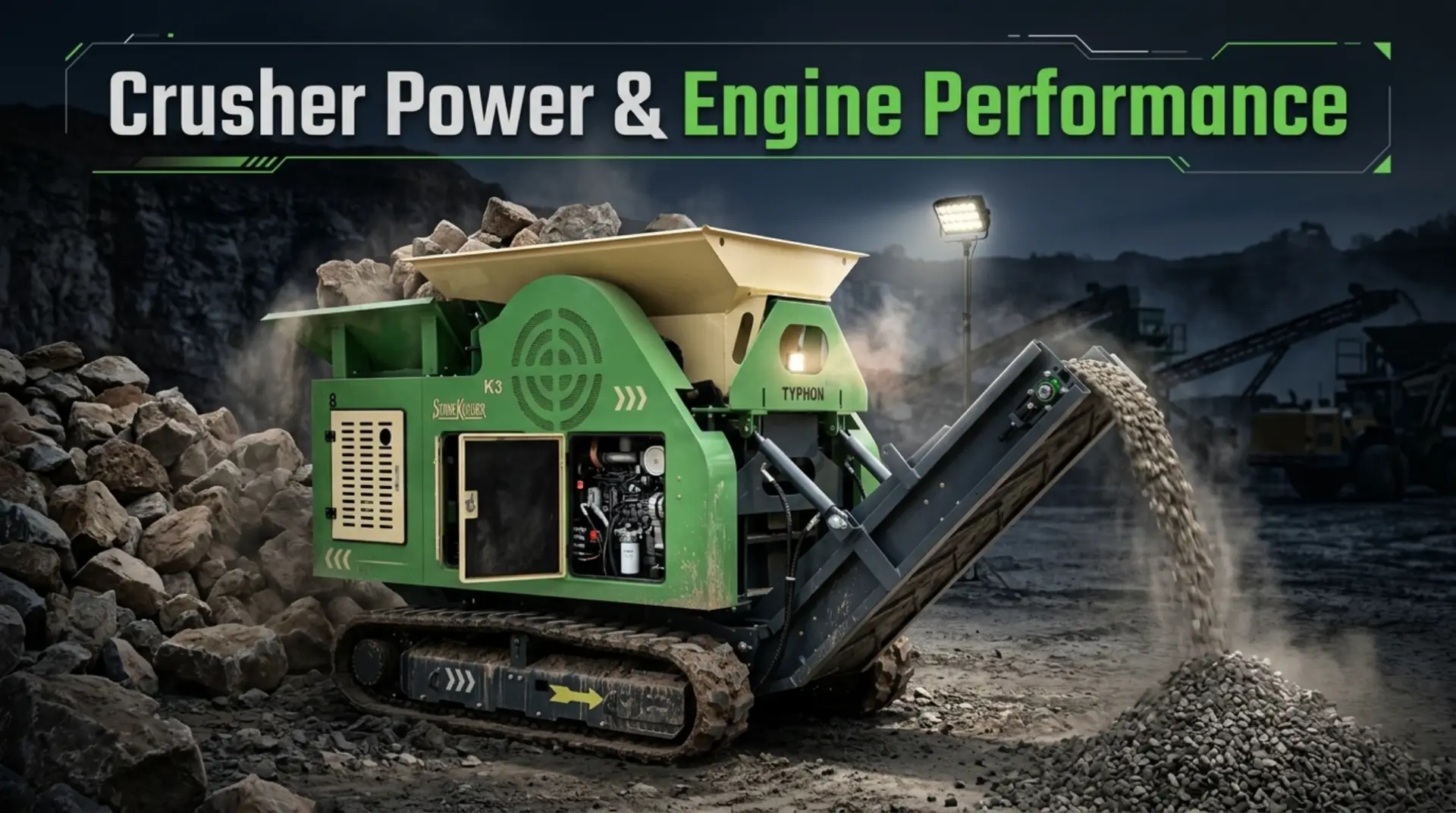
A crusher is only as capable as the engine driving it. Push a machine beyond what its power plant can handle, and you’ll see slower throughput, uneven output, and rising fuel bills. Match the power to the work, and the same machine runs smoothly through demanding material all day long. That difference shapes your production rates, your operating costs, and the life of your equipment.
This post explains why crusher power and engine performance matter so much, and how they work together to keep material moving. It’s written for contractors, quarry operators, and equipment buyers who want dependable production and predictable costs. You’ll learn how engine power drives crushing capacity, how hydraulics transfer that power, how power affects efficiency and fuel use, and how to match a machine to your jobsite.
Engine Power Determines Crushing Capacity
Engine power is the foundation of everything a crusher does. It supplies the energy needed to drive the crushing mechanism and process material at a productive rate. When an engine delivers strong, reliable power, the crusher can break down rock steadily and keep throughput high. When power falls short, the machine struggles, slows, and sometimes stalls under heavy demand. This is why crushing capacity always traces back to the power available at the source.
Higher available power supports more demanding crushing tasks. Breaking dense, hard, or oversized material takes considerable force, and that force has to come from somewhere. An engine with ample power reserves can meet those demands without straining, maintaining performance even as the workload intensifies. Consider a crew feeding large, hard rock into a jaw crusher throughout a shift. A well-powered machine holds its pace through the toughest pieces, while an underpowered one bogs down, forcing operators to slow the feed and sacrifice production.
There’s also a stability benefit that comes with adequate power. Crushing loads rarely stay constant. Material varies in size, hardness, and density from one scoop to the next, so the engine faces a shifting workload minute by minute. Power headroom allows the machine to absorb those spikes without losing momentum. Rather than surging and dropping, the crusher maintains a consistent rhythm that keeps output predictable.
For anyone judging a crusher’s real capability, the engine’s power rating deserves close attention. A machine’s advertised throughput assumes the engine can actually deliver the force that figure requires. Confirm that the power matches the material you intend to process, and you protect both your production targets and the machine itself from the strain of working beyond its means.
Hydraulic Performance Supports Crusher Operation
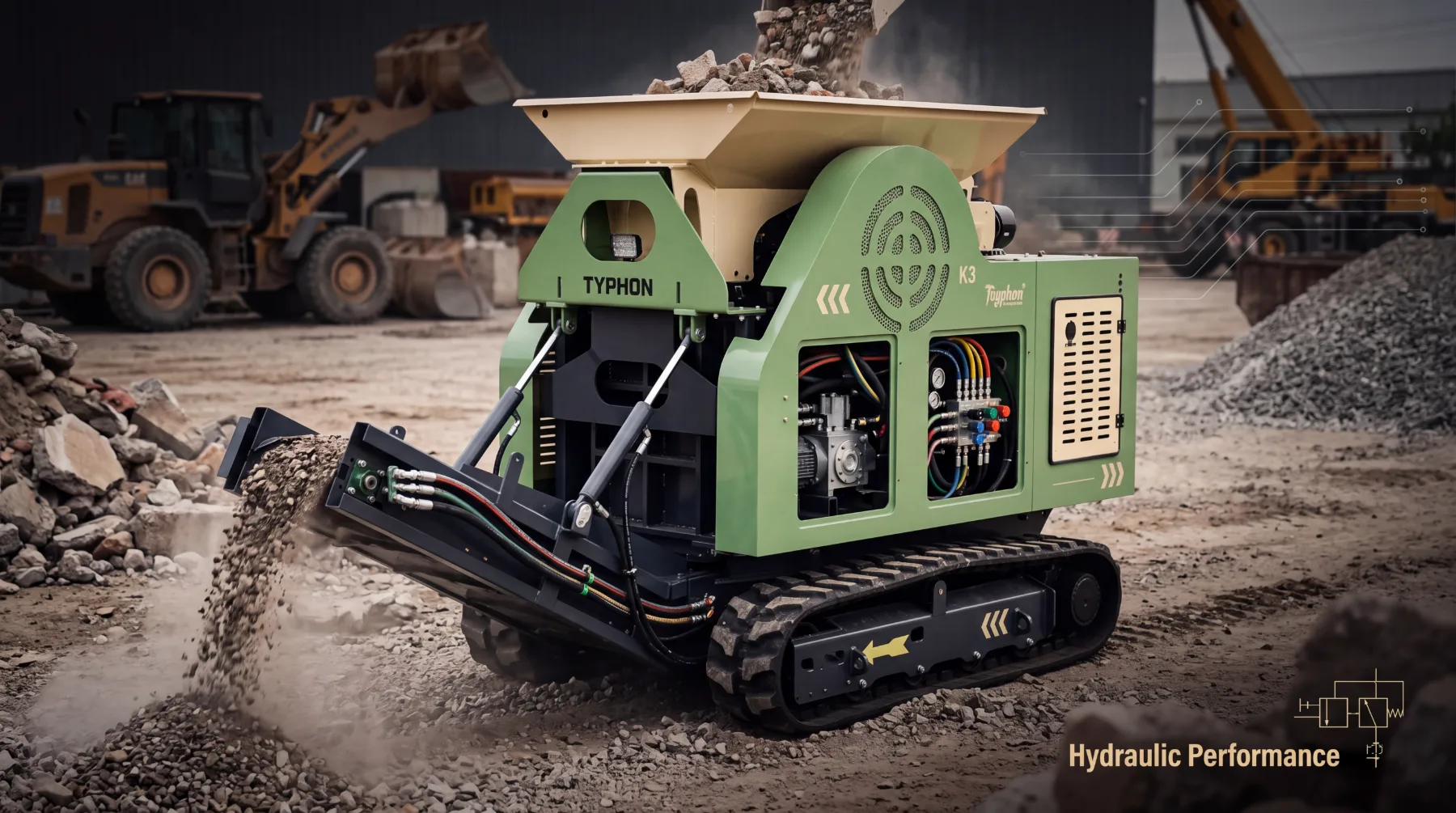
Engine power alone accomplishes little until it reaches the parts that do the work. That’s the job of the hydraulic system. A well-matched hydraulic setup transfers engine power to the crusher and the machine’s other functions, converting raw energy into the controlled force that processes material. Think of the engine as the source and the hydraulics as the delivery network. When both are properly sized to each other, power flows where it’s needed with minimal loss.
Consistent hydraulic performance contributes directly to smooth operation. The hydraulic system drives functions such as feeding, adjusting settings, clearing blockages, and in many machines the crushing action itself. When hydraulic pressure and flow stay steady, these functions respond predictably and the whole machine works in coordination. A crusher with reliable hydraulics feeds evenly, adjusts cleanly, and handles material without the hesitation that disrupts production.
Several elements determine how well a hydraulic system supports crushing work:
- System pressure, which sets the maximum force the hydraulics can deliver to each function
- Flow rate, which affects how quickly and smoothly components respond under load
- Component condition, including pumps, hoses, and seals that must stay in good repair
- Fluid quality, since clean, correct fluid keeps the system efficient and protected
When any of these falls out of balance, performance suffers. Low pressure or restricted flow can leave the crusher unable to apply the force the engine is producing, wasting power that never reaches the material. Leaks, worn pumps, or contaminated fluid quietly erode capability until the machine struggles with work it should handle easily. Regular maintenance keeps the system dependable, so the power your engine generates translates fully into productive crushing. A strong engine paired with weak hydraulics never reaches its potential, which is why the two must be considered together.
Power Affects Crushing Efficiency
Efficiency is where power proves its value in daily operation. The power available to a crusher influences how consistently it can handle different types and sizes of material. A machine with sufficient power maintains a steady crushing process across varied feed, breaking down hard chunks and soft material alike without dramatic swings in performance. That consistency is the heart of efficient crushing, because a steady process produces steady, predictable output.
Sufficient power also helps reduce strain on the machine. When an engine has enough force to meet the workload comfortably, the crushing mechanism operates within its designed limits rather than fighting for every scoop. This lowers stress on components and helps the machine sustain production over long shifts. An underpowered crusher, by contrast, works at the edge of its capacity constantly, which not only slows output but accelerates wear on the very parts that keep it running.
Consider what happens when material changes mid-operation, which is common on any real jobsite:
- A sudden run of harder, denser rock demands more force to break
- Oversized pieces require greater power to reduce to the target size
- Mixed material means the machine faces constant variation in resistance
- High feed rates push the crusher to process more volume per minute
A crusher with adequate power absorbs these shifts and keeps working smoothly. It maintains its throughput and output size even as conditions change, which is exactly what efficient operation looks like. A machine short on power reacts poorly to the same shifts, slowing down, producing inconsistent sizing, or requiring operators to reduce the feed to keep it running.
The practical result is straightforward. Adequate power lets a crusher work efficiently across the full range of material it encounters, delivering consistent production while protecting itself from unnecessary strain. That combination of steady output and reduced wear is what makes power such a central factor in efficiency.
Engine Performance Impacts Fuel Consumption
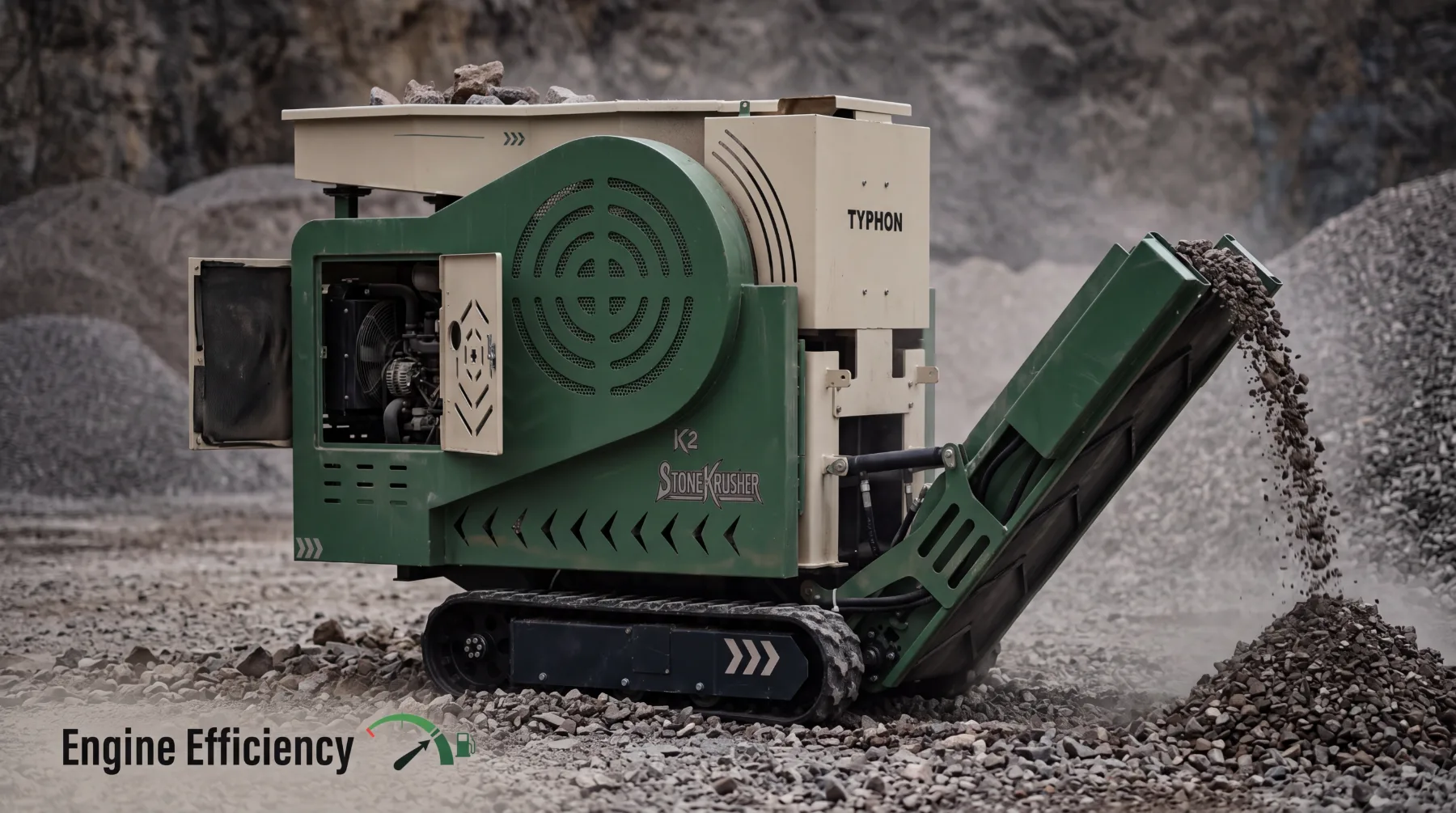
Fuel is one of the largest ongoing costs in any crushing operation, and engine performance plays a central role in controlling it. Engine efficiency determines how much fuel is burned to produce the power the crusher needs. An efficient engine converts more of each gallon into useful work, while a poorly matched or worn engine wastes fuel that never contributes to breaking material. Over a full season, that difference adds up to real money.
A properly matched engine provides the required power without unnecessary fuel use. This is the key idea, and it cuts against a common assumption. More power does not automatically mean more fuel burned, and less power does not automatically mean savings. What matters is how well the engine fits the workload. An engine sized correctly for the crushing task runs in its efficient range, delivering the force needed without straining or idling excessively.
Two scenarios illustrate why matching matters. An underpowered engine forced to handle heavy material runs at full output constantly, working hard and burning fuel inefficiently as it struggles to keep up. An oversized engine handling light work carries capacity it never uses, consuming fuel to run a machine larger than the job requires. In both cases, the mismatch wastes fuel. An engine matched to the actual workload avoids both extremes.
Beyond sizing, several factors shape fuel consumption during crushing operations. Operating speed, the load being processed, the injection system, and overall engine design all contribute to how efficiently fuel becomes crushing power. Keeping the engine well maintained protects that efficiency over time, since worn components and neglected service quietly increase consumption. When you choose an engine matched to your production demands and keep it in good condition, you get the power you need while keeping fuel costs under control. That balance of capability and economy is what dependable, cost-effective crushing depends on.
Matching Engine Power to Jobsite Requirements
All of these factors come together in one practical decision: choosing a crusher with the right power for your work. The right power level depends on the material you process, your production demands, and the conditions you operate in. There’s no single correct answer, because a machine ideal for one operation may be underpowered or oversized for another. The goal is to match the engine’s performance to the workload the machine will actually face.
Start by assessing the real demands of your jobs. A few key considerations guide the decision:
- Material type, since hard, dense, or abrasive rock requires more power than softer material
- Production demands, including how much volume you need to process per shift
- Operating conditions, such as continuous heavy use versus lighter, intermittent work
- Feed size, because larger material takes more force to reduce to the target output
Weigh these factors together rather than focusing on any single one. A machine handling hard rock at high volume all day needs substantial power and the hydraulic capacity to match. A machine processing lighter material in shorter cycles can perform well with a more modest, fuel-efficient engine. Choosing based on your toughest regular task, with a sensible margin for demanding days, protects you from buying a machine that can’t keep up.
Choosing a crusher with suitable engine performance ensures the machine is capable of handling its intended workload. That capability pays off in dependable production, controlled fuel costs, and reduced wear over the life of the equipment. It also protects your schedule, since a well-matched machine works through its daily tasks without the slowdowns and breakdowns that come from asking an engine to do more than it can. When you align engine power with your genuine requirements, you invest in a machine that performs reliably and rewards you with lasting value on every job.
Conclusion
Crusher power and engine performance shape nearly every aspect of a crushing operation. Engine power sets the capacity to break material, the hydraulic system transfers that power into productive force, and adequate power keeps the process efficient and consistent across varied conditions. Engine efficiency then determines how much fuel that work consumes, which directly affects your operating costs. Each of these factors connects to the others, and together they decide how well your machine performs day after day.
The most important step is matching the machine to your work. Assess the material you process, the volume you need, and the conditions you operate in, then choose a crusher whose engine and hydraulics are built to handle those demands. A well-matched machine delivers steady production, controlled fuel use, and lower wear, while a mismatched one costs you in slow output, wasted fuel, and premature repairs. Before your next purchase or project, take an honest look at your toughest regular task and confirm the power is there to meet it. That deliberate match is the foundation of dependable, cost-effective crushing.
Frequently Asked Questions
1. How much engine power does a crusher really need?
The right amount depends entirely on your work. Harder, denser material and larger feed sizes demand more power to break, while high production volumes require an engine that can sustain force throughout a full shift. The best approach is to base your decision on your toughest regular task rather than an average day, then allow a sensible margin for particularly demanding conditions. This ensures the machine performs consistently without straining. An engine matched to your genuine workload delivers steady throughput and protects the crusher from the wear that comes with running constantly at its limit.
2. Why does the hydraulic system matter as much as the engine?
The engine produces power, but the hydraulic system delivers it to the crusher and its other functions. Even a powerful engine accomplishes little if the hydraulics can’t transfer that force effectively. A well-matched system with adequate pressure and flow ensures the power reaches the material, keeping feeding, adjustment, and crushing functions responsive and smooth. When hydraulics are undersized, worn, or poorly maintained, power is wasted before it does any work. That’s why the engine and hydraulic system must be considered together, since balanced performance across both is what allows a crusher to reach its full potential.
3. Does a more powerful engine always burn more fuel?
Not necessarily. Fuel consumption depends on how well the engine matches the workload, not just on its power rating. An underpowered engine forced to handle heavy material runs at full output constantly and burns fuel inefficiently, while an oversized engine on light work wastes fuel running capacity it never uses. An engine matched to the actual task operates in its efficient range, delivering the required power without unnecessary consumption. Operating speed, load, injection system, and engine design also affect fuel use, so proper matching and regular maintenance are the keys to controlling costs.
4. How does insufficient power affect crushing quality?
When a crusher lacks the power to handle its material, the effects show up quickly in the output. The machine may slow down, produce inconsistent sizing, or force operators to reduce the feed rate to keep it running. Underpowered crushers also react poorly to changes in material, struggling when harder rock or oversized pieces enter the chamber. Beyond inconsistent results, the constant strain accelerates wear on components and raises the risk of breakdowns. Sufficient power keeps the crushing process steady across varied material, delivering consistent output size while reducing stress on the machine.
5. What factors should I weigh when matching a crusher to my jobsite?
Consider your material type, production demands, operating conditions, and typical feed size together. Hard, dense, or abrasive material needs more power than softer material, and high daily volumes call for an engine that can sustain output over long shifts. Continuous heavy use requires more capability than lighter, intermittent work. Weigh these factors as a whole rather than focusing on any single spec, and base your choice on your toughest regular task with a reasonable margin for demanding days. This approach ensures the machine handles its intended workload with dependable performance and controlled costs.