
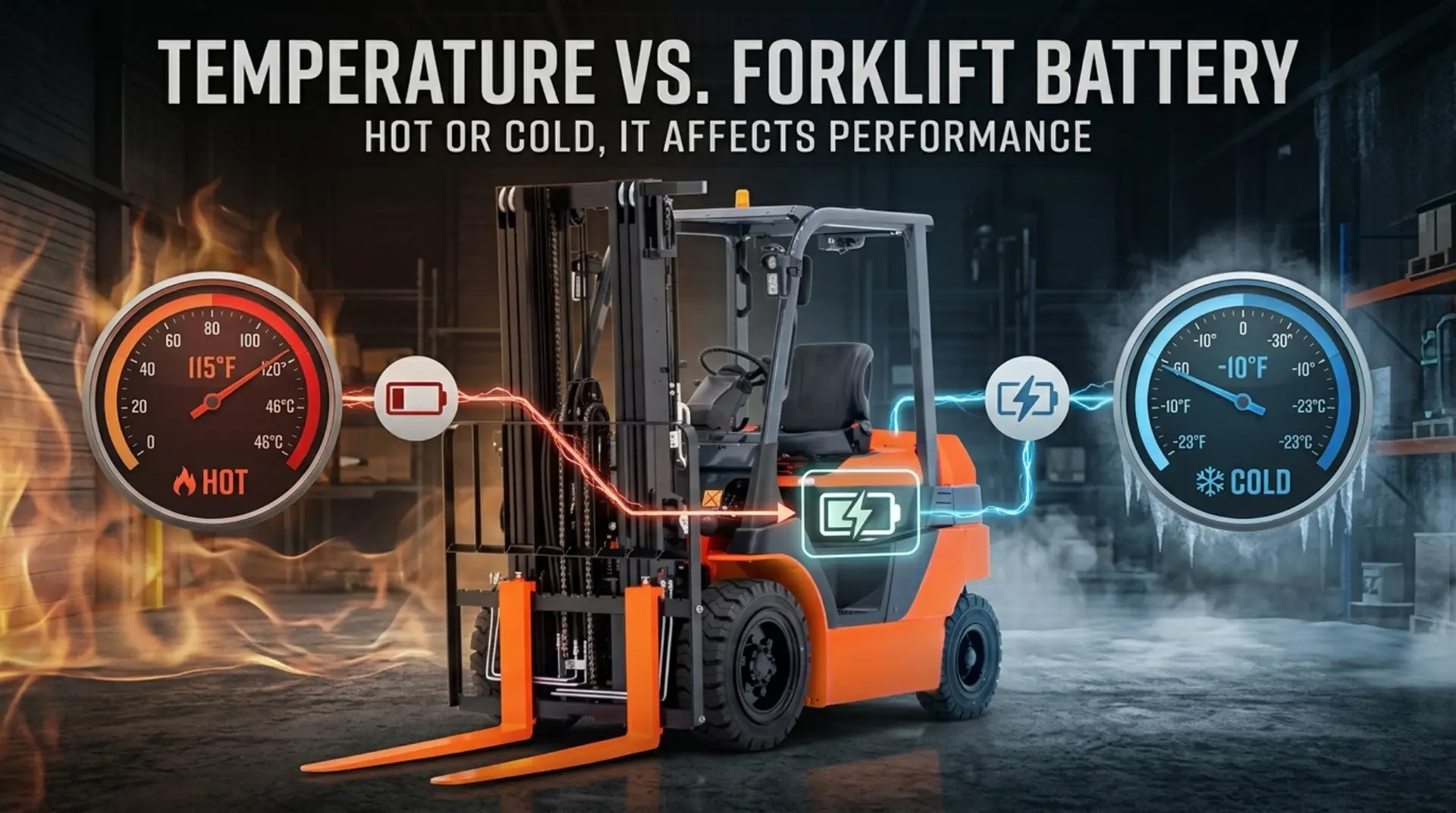
A forklift battery is one of the biggest investments in any material handling operation, and temperature quietly shapes how well that investment performs. Whether your machines run through a sweltering summer warehouse or a frigid cold-storage facility, the temperature around a battery affects its power, its charging behavior, and how many years of service you’ll get from it. Many operators notice their batteries behaving differently as the seasons change without fully understanding why, and that gap in knowledge can lead to shorter run times, unexpected downtime, and premature replacement.
This post explains exactly how temperature influences forklift battery life and performance. We’ll walk through how batteries behave in hot conditions, how cold weather affects power and operating time, the connection between temperature and charging efficiency, the long-term impact on battery lifespan, and the practices that keep performance steady all year. Understanding these relationships helps operators and equipment managers protect their batteries, plan around seasonal demands, and get dependable performance in any environment. The details that follow give you a clear, practical picture of what’s happening inside your battery when the temperature shifts.
Battery Performance in Hot Temperatures
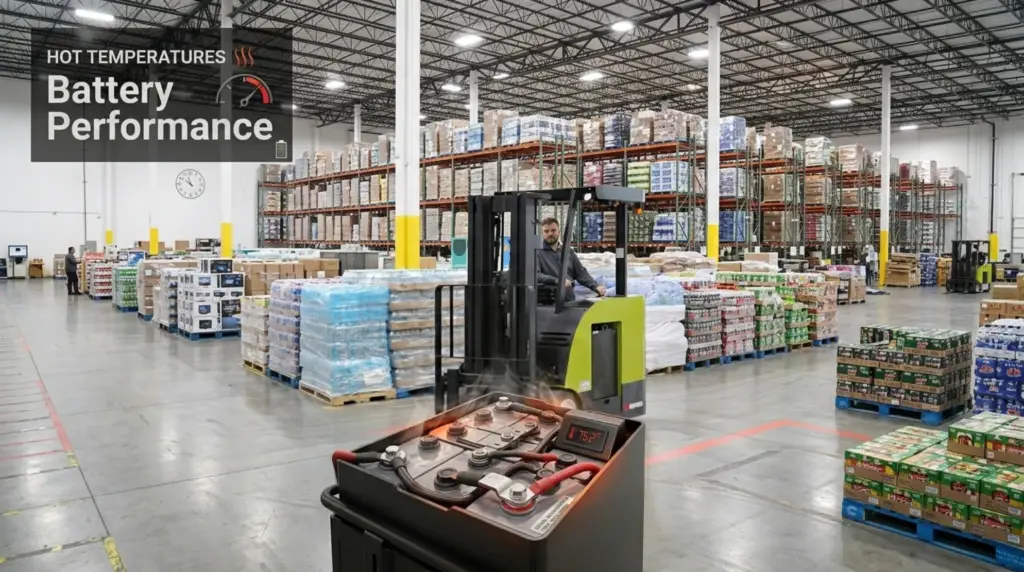
Heat is one of the hardest conditions a forklift battery has to endure, and its effects reach deep into the battery’s chemistry. When temperatures climb, the chemical reactions inside the battery speed up, which can briefly increase output but also places the battery under far greater stress. That accelerated activity generates additional internal heat, and the combination of a hot environment and a hard-working battery pushes the system well beyond its comfortable operating range. Over time, this added strain takes a real toll on the battery’s condition and reliability.
One of the most noticeable effects of heat is faster fluid loss. In a flooded lead-acid battery, high temperatures cause the water in the electrolyte to evaporate more quickly, lowering fluid levels and exposing the internal plates if the battery isn’t watered on schedule. Exposed plates can suffer permanent damage, reducing capacity and shortening the battery’s usable life. Heat also accelerates corrosion of internal components, which further chips away at performance and hastens the day the battery needs replacing.
Managing heat comes down to consistent cooling and attentive maintenance. Keeping batteries in well-ventilated areas, allowing them to cool before and after charging, and staying disciplined about watering all help counter the effects of high temperatures. Monitoring battery temperature during demanding shifts is especially valuable, since it lets you catch overheating before it causes lasting harm. When operators respect the strain that heat places on a battery and take steps to control it, they protect both daily performance and the long-term health of the equipment.
Battery Performance in Cold Temperatures
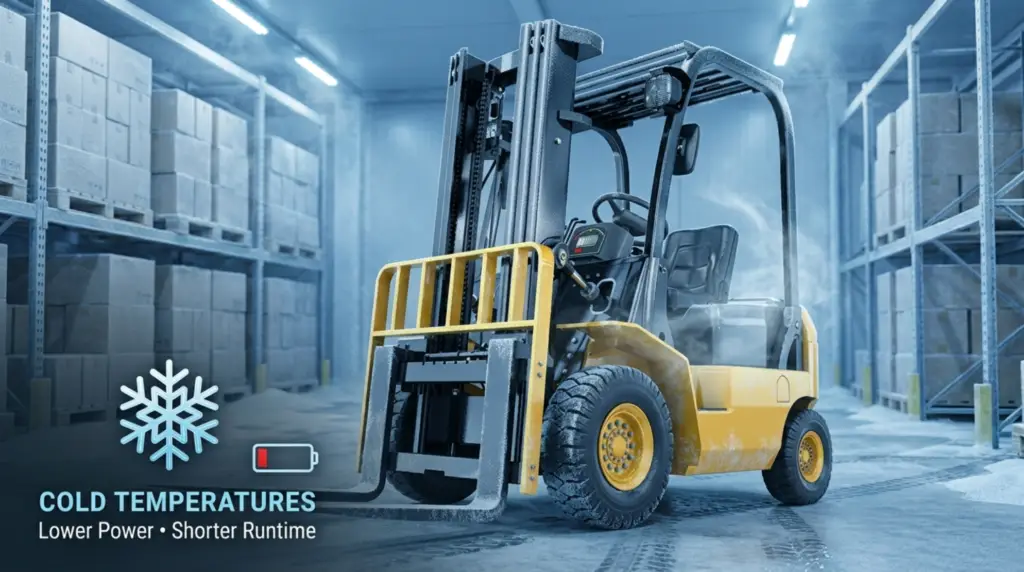
Cold conditions affect a forklift battery in the opposite way, slowing everything down rather than speeding it up. When temperatures drop, the chemical reactions that produce power inside the battery become sluggish, and that slowdown directly reduces the amount of energy the battery can deliver. Operators working in cold warehouses, refrigerated storage, or outdoor yards during winter often notice their machines feel weaker and run for shorter periods, and the cold battery chemistry is the reason behind it.
The most common frustration in cold weather is reduced available power and shorter operating time. A battery that easily powers a full shift in mild conditions may fall short when the temperature plunges, because the cold limits how much of its stored energy it can actually release. This doesn’t mean the battery is failing; it simply can’t perform at full strength until it warms up. Planning for this reality helps operations avoid mid-shift interruptions when cold weather sets in.
Cold also changes how a battery needs to be charged and managed. Batteries may require more charging time in low temperatures, and charging a very cold battery can be less effective or even harmful if done improperly. Careful temperature management makes a meaningful difference here. Some practical steps include:
- Store and charge batteries in a temperature-controlled area whenever possible.
- Allow cold batteries to warm up before demanding use or charging.
- Monitor run times closely so operators aren’t caught off guard by reduced capacity.
With thoughtful handling, cold-weather performance stays manageable, and batteries continue to deliver reliable service through the colder months.
Charging Efficiency and Temperature
Temperature doesn’t only affect how a battery discharges; it plays an equally important role in how well a battery accepts and stores a charge. Charging is a chemical process, and like every chemical reaction inside the battery, it’s sensitive to the surrounding temperature. When a battery is charged outside its recommended temperature range, the process becomes less efficient, meaning the battery may not fully charge, may take longer to charge, or may not store energy as effectively as it should.
In hot conditions, charging adds heat to a battery that’s already warm, and this excess heat can push the battery toward overcharging and accelerated wear. In cold conditions, the opposite problem appears: the sluggish chemistry resists accepting a charge, so the battery charges more slowly and may not reach a full state of charge. Both extremes reduce charging efficiency and, over repeated cycles, contribute to declining performance and a shorter service life. Charging at the recommended temperature is what keeps this process working the way it was designed to.
The most effective approach is to charge batteries in a controlled environment kept within the manufacturer’s specified temperature range. Allowing a battery to reach a suitable temperature before charging, rather than charging it while it’s extremely hot or cold, protects both the charge quality and the battery’s health. Following the charging guidelines provided by the battery manufacturer ensures the equipment gets the full, efficient charge it needs. When charging happens under the right conditions, batteries hold more energy, deliver more consistent performance, and stay healthier over the long run.
Impact on Battery Lifespan
Every battery has a finite service life, but temperature has a powerful influence over how much of that potential life you actually get. Repeated exposure to extreme heat or cold accelerates the degradation that naturally occurs inside a battery, wearing it out faster than it would under moderate conditions. A battery that regularly operates or charges in harsh temperatures simply won’t last as long as one kept within its recommended range, and that difference can translate into significant replacement costs over time.
Heat is particularly damaging to long-term lifespan. High temperatures speed up internal corrosion, drive fluid loss, and stress the battery’s components, all of which permanently reduce capacity with each exposure. Cold conditions, while less immediately destructive, still contribute to wear by forcing the battery to work harder and by complicating the charging process. Over months and years, these repeated stresses add up, gradually eroding the battery’s ability to hold and deliver a full charge until it can no longer meet the demands of daily work.
The encouraging news is that lifespan is largely within an operation’s control. Keeping batteries within their recommended operating temperature range is one of the most effective ways to extend their useful life. This means storing, charging, and operating batteries in suitable conditions and avoiding unnecessary exposure to extreme heat or cold. When batteries spend most of their working life in a moderate, well-managed environment, they degrade more slowly and deliver more years of dependable service, protecting the substantial investment they represent.
Maintaining Battery Performance Year-Round
Consistent battery performance across changing seasons doesn’t happen by chance; it’s the result of steady, informed maintenance practices. No matter the climate outside, a battery that’s regularly inspected, properly charged, and kept in suitable operating conditions will perform far more reliably than one that’s neglected. For operations that run in demanding or variable environments, building good habits around battery care is the surest way to keep machines productive throughout the year.
Regular inspection forms the foundation of year-round performance. Checking fluid levels, watching for corrosion, monitoring charge levels, and keeping an eye on battery temperature all help catch small issues before they grow into failures. Pairing inspection with proper charging practices, always within the recommended temperature range, keeps each battery working at its best regardless of the season. Temperature monitoring deserves particular attention in tough work environments, where extreme conditions can quietly undermine performance if no one is watching for the warning signs.
A few core practices keep batteries healthy through every season:
- Inspect batteries regularly for fluid levels, corrosion, and general condition.
- Charge within the recommended temperature range to protect efficiency and health.
- Maintain suitable storage and operating conditions to limit temperature extremes.
- Monitor battery temperature closely during demanding or seasonal shifts.
When these practices become routine, battery performance stays consistent whether the calendar reads January or July. A disciplined maintenance approach gives operators dependable power day after day and helps equipment managers plan confidently, knowing their batteries are protected against whatever conditions the year brings.
Conclusion
Temperature shapes nearly every aspect of a forklift battery’s performance, from the power it delivers to how efficiently it charges and how many years it lasts. Heat stresses the battery, accelerates fluid loss, and speeds up degradation, while cold slows its chemistry, reduces available power, and complicates charging. Both extremes affect charging efficiency and shorten lifespan when left unmanaged, which is why keeping batteries within their recommended temperature range matters so much. Through regular inspection, proper charging, and suitable operating conditions, operators and equipment managers can maintain steady, reliable performance in any climate. Understand how temperature affects your batteries, build sound maintenance habits around that knowledge, and your equipment will reward you with dependable power and a longer service life all year long.