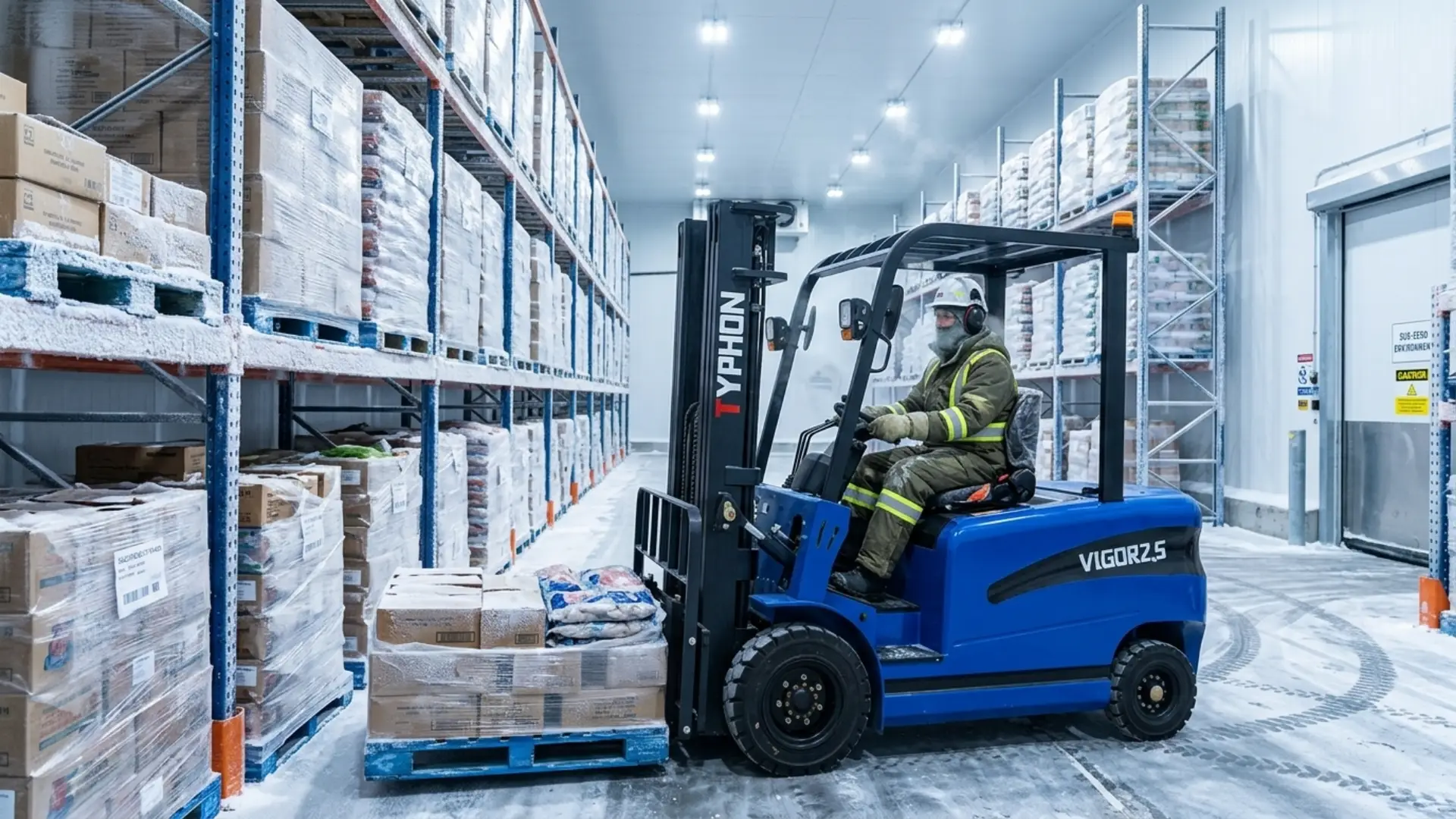
Cold storage and freezer warehouses present some of the most demanding conditions a forklift will ever face. Temperatures that hold below freezing, sealed environments with limited airflow, condensation that forms the moment equipment crosses a temperature threshold, and tight aisles built to maximize precious refrigerated space all combine to challenge equipment that was never designed for the cold. For warehouse managers and operations leaders running refrigerated facilities, choosing the right material handling equipment is not a minor decision. It directly affects worker safety, product integrity, energy costs, and the reliability of the entire operation. Electric forklifts for cold storage have become the standard choice for exactly these reasons, and the case for them grows stronger every year.
This guide walks equipment buyers, operations leaders, and warehouse managers through why electric forklifts suit refrigerated environments so well. It covers emissions, battery performance in the cold, maneuverability, operator comfort, maintenance, traction and tire selection, condensation management, charging practices, and how to select the right machine for your facility.
Why Cold Storage Demands a Different Approach
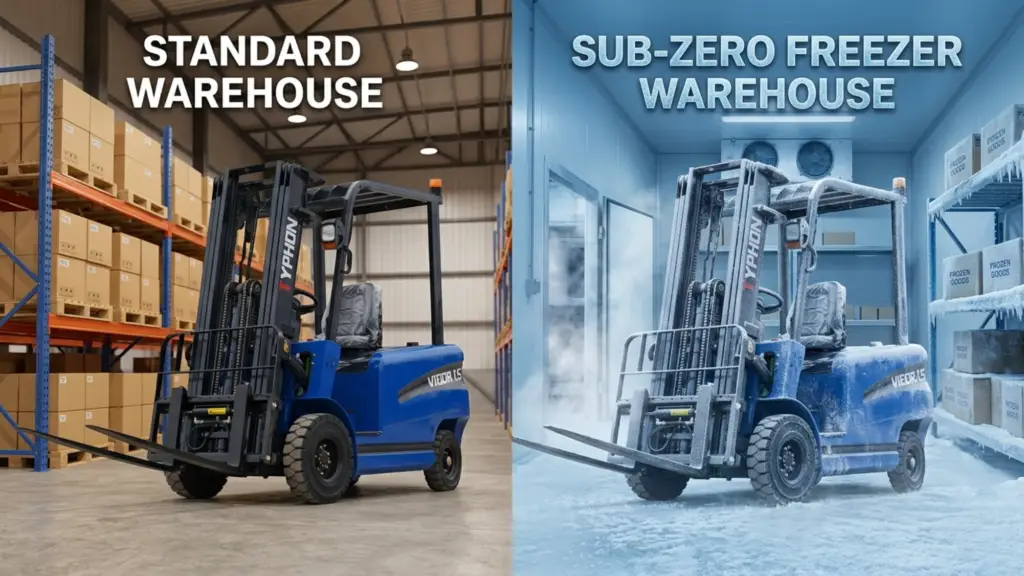
Refrigerated warehouses are not simply colder versions of standard distribution centers. The combination of low temperatures, sealed construction, and the constant fight against energy loss creates an environment where ordinary equipment choices break down. Internal combustion forklifts release exhaust that has nowhere to go in a tightly sealed freezer, batteries lose capacity as the mercury drops, and the repeated movement between warm staging docks and frozen storage zones produces condensation that can damage electronics and create slip hazards. Understanding these pressures is the first step toward appreciating why electric machines have earned their place as the preferred refrigerated warehouse equipment. Each of the advantages that follows answers a specific problem that the cold storage environment creates.
Zero Emissions Protect Workers and Product
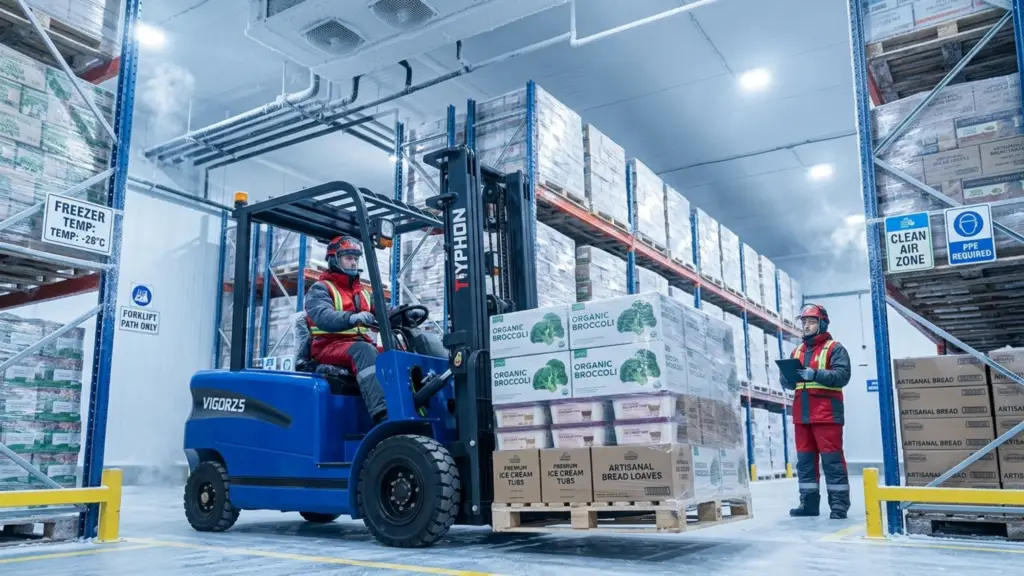
The most decisive cold storage forklift benefit is the complete absence of exhaust emissions. A freezer warehouse is sealed by design, because every gap that lets cold air escape costs money and strains the refrigeration system. That same seal traps anything an internal combustion engine produces. Carbon monoxide, nitrogen oxides, and particulate matter accumulate quickly in an enclosed, poorly ventilated space, creating a genuine health hazard for the crew and a contamination risk for the product. In food storage especially, the presence of combustion byproducts is unacceptable.
Electric forklifts remove this problem entirely. With no combustion, there is nothing to vent, so the air inside the freezer stays clean throughout the shift. This protects your workers from a serious and often invisible danger, and it keeps stored food free from contamination that combustion exhaust could introduce. It also relieves the facility of the heavy ventilation infrastructure that internal combustion equipment would otherwise demand in a sealed space. For any refrigerated operation handling consumable goods, clean operation is not a luxury feature. It is the baseline requirement, and electric power delivers it without compromise.
Battery Performance in Low Temperatures
A fair question that every buyer raises is how batteries hold up in sustained cold. The honest answer is that low temperatures do affect battery performance, but the technology has advanced to the point where this is a manageable factor rather than a barrier. Cold slows the chemical reactions inside a battery, which can reduce available capacity and runtime if the machine is not specified correctly. The key is to choose batteries and components rated for freezer service and to follow charging and storage practices suited to the environment.
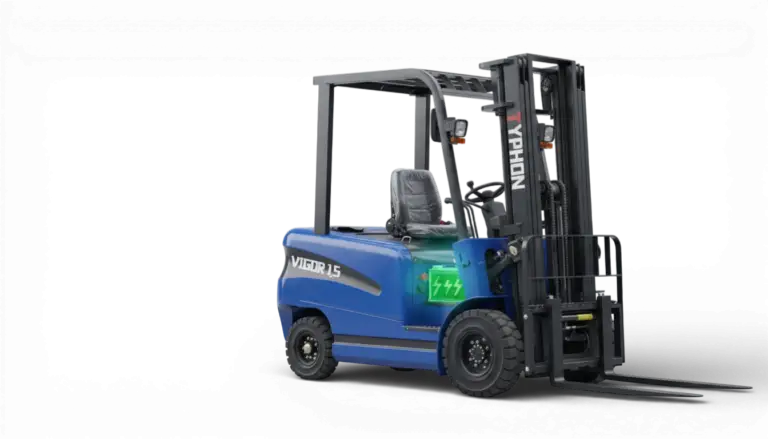
Lithium-ion batteries have become especially well suited to cold storage work. They tolerate low temperatures better than traditional lead-acid units, retain more of their usable capacity in the cold, and support opportunity charging that keeps machines productive across long shifts without lengthy downtime. Many manufacturers offer cold storage packages that include freezer-rated batteries, sealed connectors, and heating elements that protect sensitive components. When you specify a machine built for refrigerated duty rather than adapting a standard unit, battery performance ceases to be a concern and becomes a reliable, predictable part of daily operation. The practical lesson is straightforward: match the battery to the environment, and the cold stops being a problem.
Maneuverability in Narrow Aisles
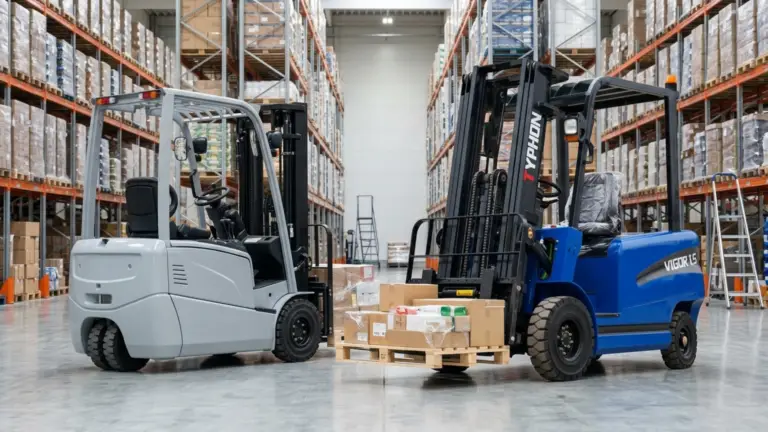
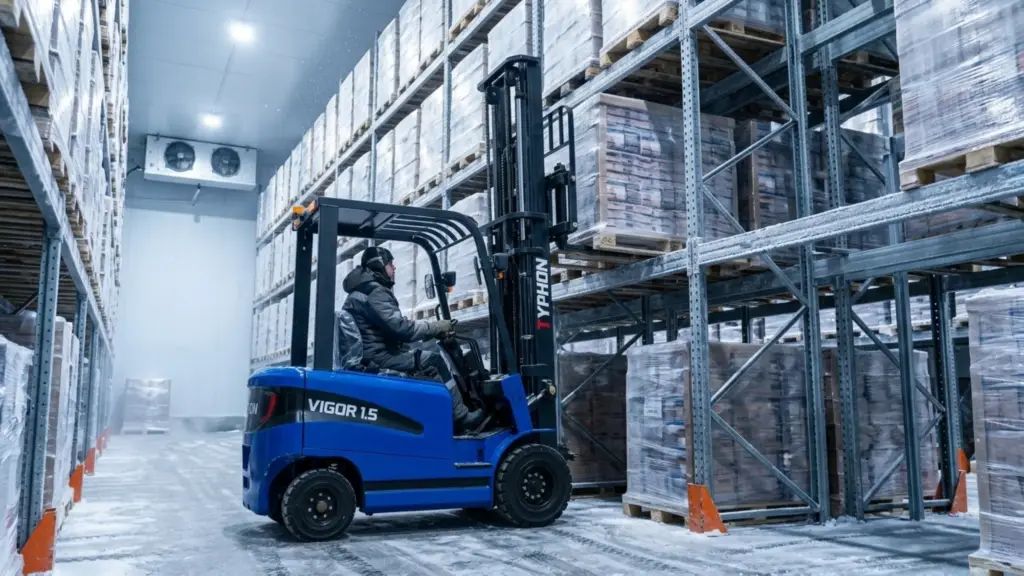
Refrigerated space is expensive to build and expensive to keep cold, so cold storage facilities are designed to pack as much product as possible into every cubic foot. That means tall racking and narrow aisles, and it means the forklifts working those aisles must be compact, precise, and easy to maneuver. Electric forklifts excel here. Their design allows for tight turning radiuses, and the instant, smooth response of an electric motor gives operators the fine control they need to position loads accurately in confined spaces without repeated repositioning.
Reach trucks, order pickers, and turret trucks, all electric by nature, are the backbone of high-density cold storage. These machines let a facility build rack systems high and run aisles narrow, dramatically increasing the pallet positions available within a fixed footprint. Because refrigerated square footage carries such a high cost, the ability to store more in the same chilled space delivers a direct financial return. The maneuverability of electric equipment is not just a convenience. It is a core part of what makes a dense, efficient cold storage layout possible in the first place.
Operator Comfort in a Punishing Environment
Working in a freezer is hard on people, and operator comfort has a direct effect on safety, accuracy, and retention. An operator who is cold, fatigued, and rushing to get out of the freezer makes more mistakes and faces a higher risk of injury. Electric forklifts contribute to a better operator experience in several ways. They run quietly, which reduces the cognitive strain of a loud machine over a long shift, and they vibrate less than combustion units, easing physical fatigue. Many cold storage models offer heated cabs, heated grips, and ergonomic controls designed to keep operators functional and focused despite the temperature.
A comfortable operator is a safer and more productive operator. When the machine itself does not add noise, fumes, and excessive vibration to an already challenging environment, the crew stays sharper and works more accurately. For operations leaders concerned with both safety records and workforce retention, the operator-friendly nature of well-specified electric equipment is a meaningful advantage that pays back across every shift.
Maintenance Considerations in the Cold
Electric forklifts carry a clear maintenance advantage in any setting, and the cold storage environment makes that advantage even more valuable. With no engine, transmission, radiator, exhaust system, or fuel system to service, the maintenance routine narrows considerably. There are no oil changes, coolant flushes, or fuel system repairs to schedule, which means fewer reasons to pull a machine out of service and fewer opportunities for cold-related complications to interfere with engine components that simply do not exist on an electric unit.
That said, cold storage does introduce maintenance considerations of its own that operations leaders should plan for. Condensation is the chief concern, and it makes sealed electrical connections, corrosion-resistant components, and proper drainage important features to specify. Lubricants must be rated for low temperatures so they do not thicken and impair moving parts. Tires and hydraulic seals should be suited to the cold as well. The good news is that machines built specifically for refrigerated service come engineered to handle these factors, and a maintenance program that accounts for the environment keeps them running reliably. Compared with the demanding upkeep an internal combustion fleet would require in the same conditions, the electric machine remains far simpler and less costly to maintain.
Traction and Tire Selection
Floors in cold storage facilities are frequently coated with thin ice, frost, or moisture, and that makes traction a serious safety consideration. A forklift that loses grip on a slick freezer floor endangers the operator, nearby workers, and the load. Tire selection is therefore a decision that deserves careful attention rather than a default choice. The right tire compound and tread design improve grip on cold, damp surfaces and help the machine maintain control during acceleration, braking, and turning in conditions that would challenge a standard tire.
Non-marking compounds are commonly chosen for cold storage because they protect finished floors and meet the cleanliness expectations of food handling environments. Some operations specify tires formulated to stay flexible at low temperatures, since rubber that hardens in the cold loses both grip and ride quality. Matching the tire to the specific floor conditions of your facility, and replacing tires before wear compromises their grip, is a simple step that meaningfully improves safety in a setting where slips and skids carry real consequences. When you specify a cold storage machine, treat the tires as a safety component, not an afterthought.
Managing Condensation
Condensation is one of the defining challenges of cold storage material handling, and it deserves focused attention. Every time a forklift moves from a warm dock or staging area into a sub-freezing storage zone and back again, moisture condenses on its surfaces and components. Over time, this repeated cycle can corrode metal, foul electrical connections, and create the surface moisture that contributes to slick floors. Left unmanaged, condensation shortens equipment life and introduces reliability problems that interrupt the operation.
Electric forklifts built for refrigerated service address condensation through sealed electrical systems, conformal coatings that protect circuit boards, corrosion-resistant materials, and thoughtful component placement that limits moisture intrusion. Operational practices matter just as much as the machine’s construction. Allowing equipment to acclimate gradually rather than shuttling it abruptly between temperature extremes and storing machines in a consistent environment when practical reduces the condensation cycle and protects both the equipment and the people working around it. A facility that understands condensation and plans for it will see longer equipment life and fewer cold-related failures, which is precisely why specifying a purpose-built machine matters so much.
Charging Practices for Refrigerated Operations
Charging an electric forklift that works in the cold requires a bit more planning than charging one in a temperate warehouse, but the practices are straightforward once established. Batteries charge best at moderate temperatures, so charging stations are typically located outside the freezer in a controlled environment where the battery can warm slightly and accept a charge efficiently. Bringing a frozen battery directly to a charger is less effective and can stress the cells, so allowing a short acclimation period improves both charging performance and battery life.
Lithium-ion technology simplifies cold storage charging considerably. Its tolerance for opportunity charging means operators can top off during breaks without committing to a full charge cycle, and its better cold-weather performance reduces the runtime anxiety that can come with lead-acid units in a freezer. Establishing a clear charging routine, locating charging infrastructure thoughtfully, and training operators to manage the temperature transition keeps machines available and extends battery service life. For multi-shift refrigerated operations, a well-planned charging strategy is the difference between machines that are always ready and machines that create bottlenecks, so it deserves real attention during facility planning.
How to Choose the Right Electric Forklift for Cold Storage
Selecting the right machine begins with an honest assessment of your facility and the work it performs. Start with the environment itself, confirming the temperature range the equipment must endure and specifying a machine rated for that range rather than adapting a standard unit to conditions it was never built for. A genuine cold storage package, with freezer-rated batteries, sealed electrical systems, condensation protection, and components selected for low-temperature reliability, is the foundation of a machine that will perform and last in refrigerated service.
From there, match the machine type to your storage layout and your loads. Narrow, high-density aisles call for reach trucks, order pickers, or turret trucks that maximize storage capacity in expensive chilled space, while standard layouts may be served well by a counterbalance electric forklift. Consider your shift structure when choosing battery technology, since multi-shift operations benefit greatly from lithium-ion opportunity charging, and single-shift work may be served adequately by other options. Confirm that floor load ratings support the machine’s weight, specify tires suited to cold, damp floors, and plan your charging infrastructure before the equipment arrives. Most importantly, work with a knowledgeable equipment partner who understands refrigerated warehouse equipment and can match a specification precisely to your conditions. The right machine, chosen with care for your specific environment, repays that diligence in reliability, safety, and long-term value.
Conclusion
Electric forklifts for cold storage answer the unique demands of refrigerated and freezer warehouse environments in a way no other equipment can match. They operate without emissions in sealed spaces, protecting both workers and products. They deliver the maneuverability that dense, high-value cold storage layouts require, support operator comfort in a punishing environment, and ask far less of a maintenance program than combustion alternatives. With batteries and components engineered for the cold, thoughtful tire selection, condensation management, and a well-planned charging strategy, these machines run reliably shift after shift in conditions that would defeat lesser equipment.
The path forward for any refrigerated operation is clear. Assess your temperature range, your storage layout, your shift structure, and your floor conditions honestly, then specify a machine built for the cold and partner with an equipment supplier who understands refrigerated work. Make that investment with care, and your electric forklift fleet will protect your people, safeguard your product, and keep your cold storage operation running efficiently for years to come.