Warehouse space keeps getting more expensive, so the smartest move is often to build up rather than out. High-reach forklifts, or reach trucks, make that possible by lifting pallets into racks that climb well past 30 feet. But height brings its own challenges. The higher you lift, the smaller your margin for error becomes, and mistakes at elevation carry real consequences for your product, your equipment, and your people.
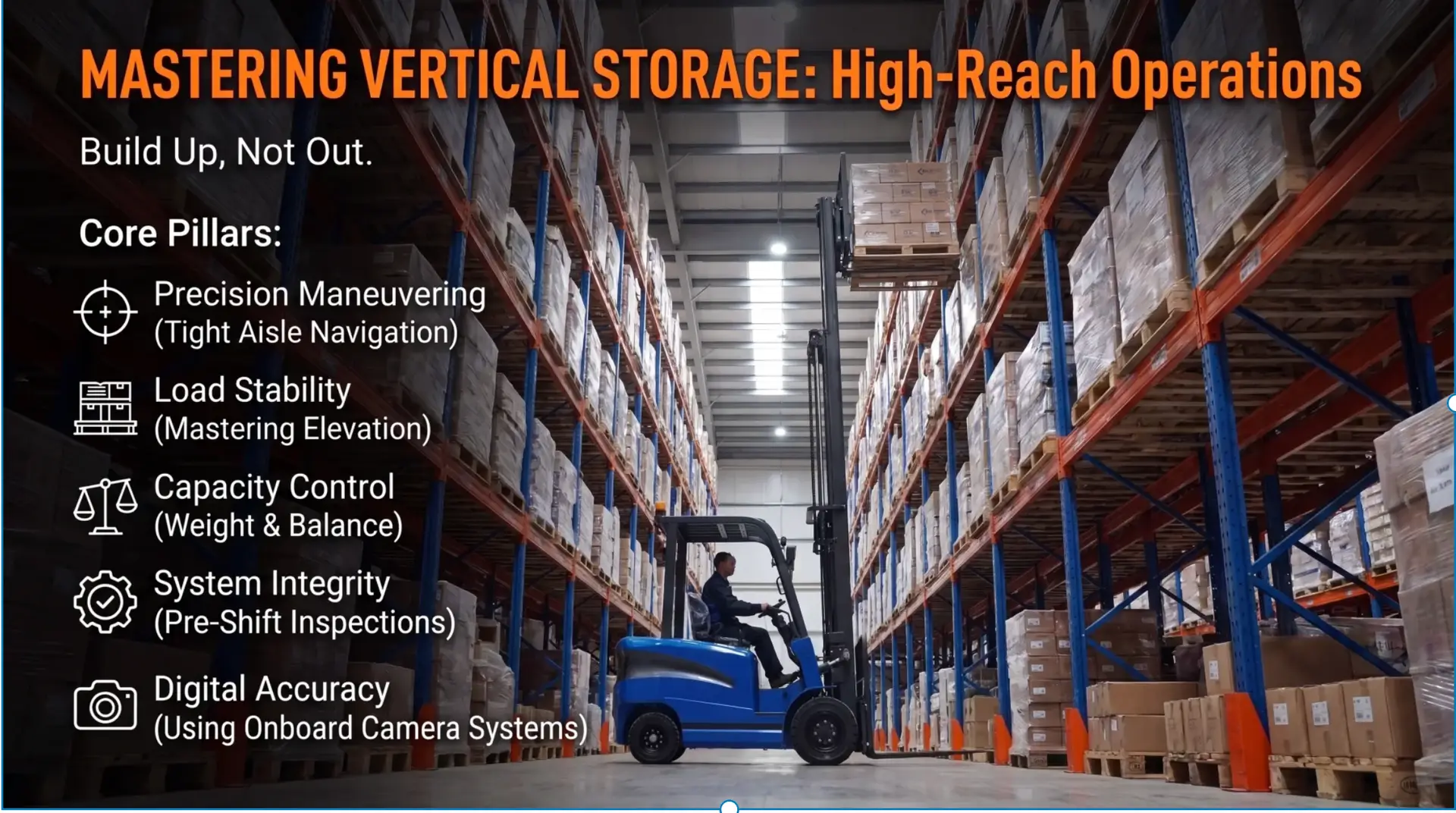
This guide walks you through the core skills and habits that keep vertical storage safe and efficient. You will learn how to maneuver in tight aisles, handle loads smoothly at height, manage capacity as you lift, inspect your equipment before each shift, and use onboard cameras to place pallets with precision. Whether you are training new operators or sharpening an experienced crew, these fundamentals help you get the most out of every square foot of your facility.
Mastering Narrow Aisle Maneuvering
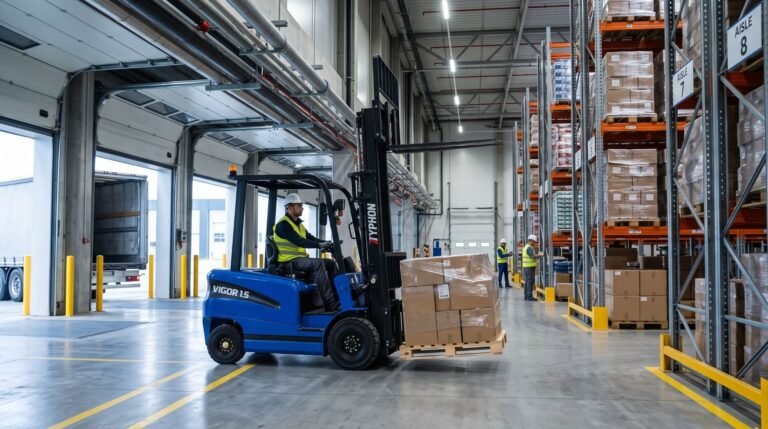
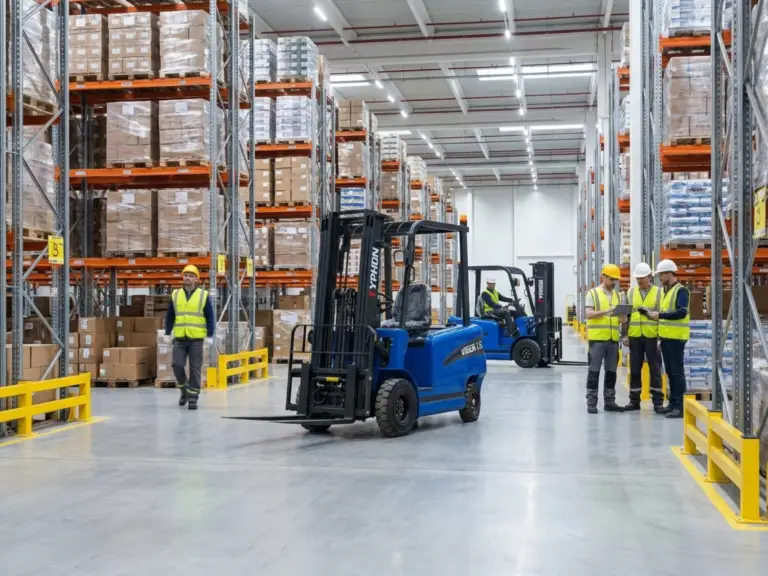
High-reach forklifts are engineered to work where standard equipment cannot. They operate in aisles only slightly wider than the machine itself, which is exactly what lets you pack more racking into the same footprint. That tight clearance is a major advantage for storage density, but it demands a level of control that leaves no room for sloppy driving. A single careless turn can put the mast or the load into a rack upright, and at that point you are dealing with damaged product, bent steel, and lost time.
The foundation of safe aisle work is center-line driving. Keep the truck tracking straight down the middle of the aisle so you maintain equal clearance on both sides. This habit protects the machine from contact with the uprights and gives you a consistent reference point every time you enter and exit. Precise steering matters just as much, since small corrections at low speed are far safer than sharp adjustments made too late.
Fork alignment is the step operators most often rush, and it is the one that pays off most. Before you enter the aisle, square the truck up and confirm the forks are perfectly aligned with the rack position you are targeting. Lining up early means you drive in straight and place the load cleanly rather than trying to correct your angle inside the aisle where there is no space to do so. Slow down as you approach, commit to your line, and let the geometry work in your favor. Operators who treat aisle entry as a deliberate setup rather than a casual roll-in consistently avoid the collisions that plague busy vertical storage operations.
Optimized Lift and Reach Techniques
Placing a pallet 30 feet in the air is a test of finesse, not speed. The taller the mast extends, the more any movement at the base is amplified at the top, so a jerky input near the floor can turn into significant load sway high above. That sway is dangerous. It can shift the pallet, strain the mast, and make accurate placement nearly impossible. Smooth hydraulic operation is the single most important skill for working at height, and it comes down to controlling your inputs with patience.
When you extend the mast, use slow, deliberate movements. Feather the controls rather than jamming them, and give the load a moment to settle before you make your next adjustment. This measured approach keeps the pallet stable and lets you position it over the racking beam with confidence. Rushing the lift only forces you to fight the sway you created, which wastes time and increases risk.
Travel discipline is equally critical, and it is where stability is most often compromised. Follow these practices every time you move the truck:
- Fully retract the reach carriage before you travel, keeping the load pulled in tight against the mast
- Lower the mast to a safe travel height rather than driving with the load elevated
- Confirm the path is clear before moving, since a raised or extended load blocks part of your view
Traveling with an extended mast or a raised load dramatically raises the center of gravity and makes the truck far more likely to tip. Keep the load low and retracted whenever the wheels are turning, and reserve your lifting and reaching for when the machine is stationary and properly positioned. That separation between traveling and placing is what keeps both the operator and the product safe.
Load Center and Weight Management

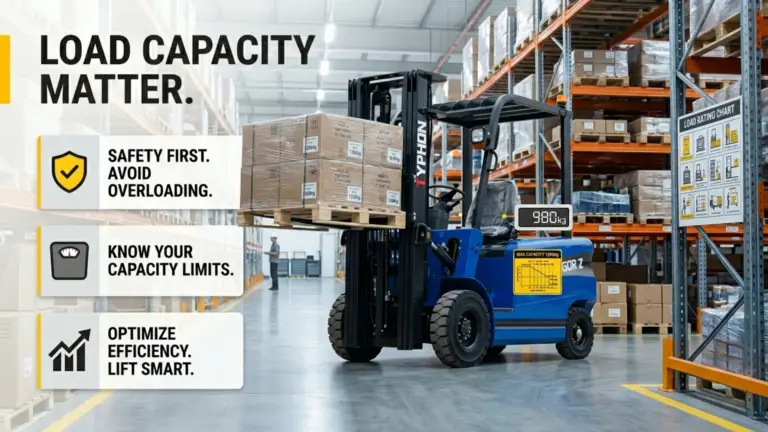
One of the most misunderstood aspects of reach truck operation is that lift capacity is not a fixed number. Exceeding the rated capacity at height is a common cause of accidents, precisely because the effective capacity drops as the forks rise. A truck that handles a heavy pallet comfortably at floor level may be dangerously overloaded when that same pallet is lifted to the top beam. Operators who assume a single capacity figure applies everywhere put themselves and their loads at serious risk.
The capacity plate on the machine is your authoritative reference, and it exists for exactly this reason. Always consult it for the specific load-to-height ratio before lifting anything unusual or heavy. The plate spells out how much weight the truck can safely handle at various heights and load centers, and treating those numbers as firm limits rather than suggestions is fundamental to safe operation. When you know the pallet weight and the target height, the plate tells you immediately whether the lift is within bounds.
Managing the center of gravity ties everything together. As you raise a load, the combined center of gravity of the truck and pallet rises with it, which reduces stability. A load center that sits too far forward, or a pallet heavier than the height allows, pushes that center of gravity outside the safe envelope and invites a tip-over. Keep loads properly positioned on the forks, avoid front-heavy or unevenly distributed pallets, and respect the derated capacity at elevation. By treating weight and load center as active variables that change with height rather than constants, you keep the machine balanced and stable through every lift in your racking.
Pre-Shift Safety and Mast Inspection
Reach trucks rely on complex, multi-stage mast assemblies to reach the heights that make vertical storage worthwhile. That complexity means more moving parts, more hydraulic components, and more potential failure points than a standard forklift carries. A daily pre-shift inspection is not a formality. It is your best chance to catch a developing problem on the ground before it becomes a failure at 30 feet, where the stakes are far higher.
Start your walkaround with the hydraulic system, since it does the heavy lifting and shows trouble early. Look closely for leaks, damp spots, or drips around the cylinders, hoses, and fittings. A small leak left unchecked can rob the system of the pressure it needs for smooth, controlled lifting, and it often signals a seal or line that is about to fail. Catching that early keeps your lift responsive and prevents an unexpected breakdown mid-shift.
The mast itself deserves careful, methodical attention during every inspection. Work through these key checks before you put the truck to work:
- Mast chains should be properly tensioned, evenly matched, and adequately lubricated so the stages raise and lower smoothly
- Rollers and channels should be free of debris and show no signs of excessive wear or damage
- The overhead guard must be intact and free of cracks or deformation that could compromise operator protection from falling objects
Any chain that looks slack, dry, or frayed needs attention before the truck lifts a load, because chain failure at height is catastrophic. The overhead guard is your last line of defense against dropped product, so never dismiss damage to it as cosmetic. Building this inspection into the start of every shift protects both the operator and the equipment, and it keeps small issues from turning into expensive, dangerous ones.
Utilizing Camera Systems for Height Precision
Placing a pallet accurately becomes genuinely difficult once it climbs above the operator’s natural line of sight. At the top levels of tall racking, the beam and the pallet forks disappear behind the load and the mast, leaving the operator to guess at alignment. That guesswork slows down placement and invites the kind of misjudged approach that damages product or knocks a pallet out of position. This is the exact problem that carriage-mounted camera systems are built to solve.
Many modern high-reach units come equipped with a camera mounted on the carriage that rises with the forks. The camera feeds a live view to a display in the operator’s compartment, showing the racking shelf and the pallet position from up close even when the load is dozens of feet above the floor. Instead of craning their neck and straining to interpret an obstructed view, the operator simply watches the screen and guides the forks onto the beam with clear, direct feedback.
The benefits of leaning on these systems are practical and immediate. First, they cut operator fatigue, since constantly looking straight up while managing controls wears a person down over a full shift and reduces accuracy as tiredness sets in. Second, they sharply reduce the risk of product damage by giving the operator a precise view of exactly where the forks meet the shelf, so pallets set down squarely and cleanly the first time. For managers, that combination means faster cycle times, fewer damaged goods, and a crew that stays sharper through the day. Where the equipment offers a camera, training operators to trust and use it consistently turns one of the hardest parts of vertical storage into a controlled, repeatable task.
Conclusion
High-reach forklifts unlock the vertical space that makes modern warehousing efficient, but that capability rewards discipline and punishes shortcuts. Center-line driving and careful fork alignment keep you clear of the racking in tight aisles. Smooth, deliberate hydraulic control and a fully retracted carriage before travel keep loads stable at height. Respecting the derated capacity on your machine’s plate protects against tip-overs, while a thorough pre-shift inspection of hydraulics, mast chains, and the overhead guard catches problems before they reach elevation. Camera systems then bring precision to the placements your eyes cannot reach.
Put these practices to work by reviewing them with your operators and folding the inspection and load-center checks into your daily routine. Consistent habits at every height are what keep your vertical storage safe, productive, and reliable for the long haul.