A wheel loader is only as productive as the way you operate, equip, and maintain it. Move the same material in fewer passes, and you cut fuel use, save time, and get more done before the shift ends. But small inefficiencies add up fast, quietly draining productivity and driving up your costs. The good news is that most of them are easy to fix once you know where to look. This post walks through five practical ways to increase material handling efficiency with a wheel loader, covering smarter bucket techniques, the right attachments, better jobsite organization, consistent maintenance, and stronger operator training. Apply these together, and you’ll see faster cycles, lower running costs, and more reliable performance across every job.
Optimize Loading Cycles With Better Bucket Techniques
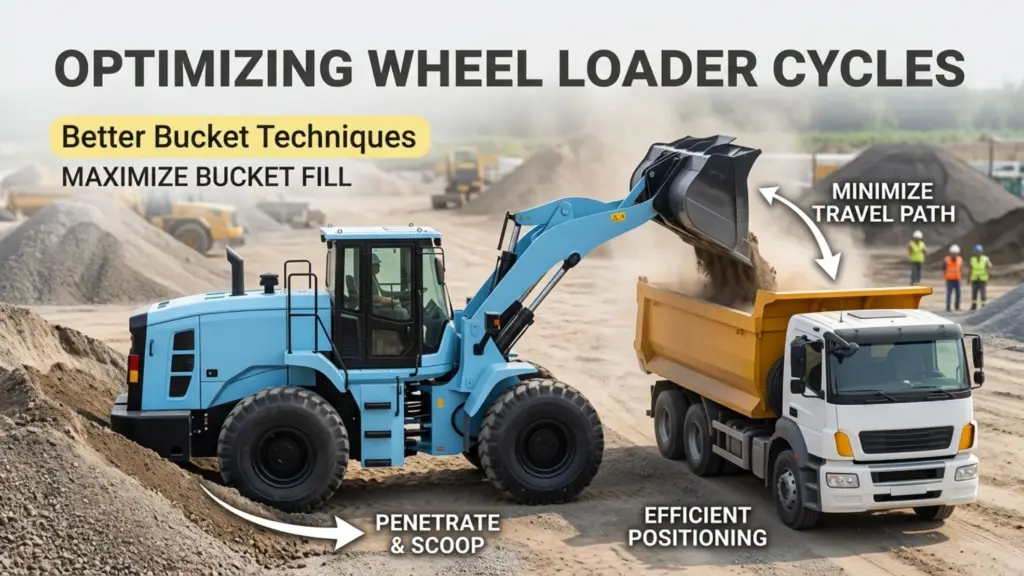
The loading cycle is where a wheel loader earns its keep, and refining how you fill and carry the bucket delivers some of the fastest efficiency gains available. Every pass involves approaching the pile, digging in, lifting, and hauling, and small improvements in each step compound over hundreds of cycles a day. The goal is simple: move more material per pass while wasting as little motion, time, and fuel as possible.
Start with how you enter the material. Approach the pile square and low, then drive into it with steady throttle while gently crowding the bucket to fill it fully. Forcing the machine or over-digging strains the drivetrain and wastes fuel, while a smooth, deliberate entry fills the bucket cleanly in one motion.
A few proven techniques keep loading cycles tight and productive:
- Use the V-loading pattern, positioning the truck at an angle so the loader travels the shortest path between pile and target.
- Fill the bucket completely on each pass to avoid unnecessary return trips.
- Keep the bucket low while traveling to protect stability and control.
- Minimize reversing and repositioning, which burn time and fuel without moving material.
Adopting these patterns reduces the wasted movement that quietly erodes productivity throughout the day.
The payoff shows up in both output and operating costs. A shorter, smoother cycle means the loader completes more passes per hour, moving more material without working harder. Cutting unnecessary travel and aggressive digging also improves fuel economy noticeably, since the engine spends less time straining or idling between loads. When operators master these bucket techniques and repeat them consistently, the machine delivers steady, efficient performance that keeps the whole job moving on schedule.
Choose the Right Attachments for Different Materials
A wheel loader performs best when it’s fitted with the right tool for the material at hand. The standard general-purpose bucket handles a broad range of work, but it isn’t the ideal choice for every task. Matching your attachment to the specific material and application improves handling speed, protects the machine, and helps you move each load safely and efficiently. Using the wrong tool, by contrast, slows the work and accelerates wear.
Different materials call for different bucket and tool designs, each engineered to handle its job well:
- General-purpose buckets, versatile for soil, gravel, and everyday mixed loads.
- Light-material buckets, larger in volume for low-density materials like mulch, snow, or grain.
- Rock buckets, reinforced and shaped to handle dense, abrasive stone and aggregate.
- Pallet forks, for lifting and moving palletized goods, supplies, and bundled materials.
Selecting from these options based on your typical work ensures the loader handles each material at its best rather than struggling with a poor fit.
The reasoning behind proper matching is practical and direct. A light-material bucket moves a large volume per pass because low-density material weighs little, letting you clear stockpiles faster without overloading. A rock bucket, built smaller and stronger, safely handles heavy material that would quickly wear out a standard bucket. Load capacity, handling speed, and durability all improve when the attachment suits the task.
Just as important, matching the attachment to the machine’s rated capacity keeps operation safe and stable. An attachment sized correctly for both the material and the loader’s lifting capability lets the machine work within its design limits, avoiding the strain and instability that come from mismatched equipment. Choosing the right attachment is a straightforward decision that pays off in faster cycles, better job performance, and longer equipment life.
Improve Jobsite Organization and Travel Paths
Even a well-operated loader loses efficiency on a poorly organized site. Every extra foot of travel and every moment spent waiting adds up across a shift, quietly cutting into productivity. A thoughtfully planned work area keeps the machine moving material rather than covering unnecessary ground, and this kind of organization often delivers gains that cost nothing but a little planning.
The core principle is to minimize the distance the loader travels between picking up and dropping material. Positioning stockpiles, loading zones, and dump areas close together and in a logical flow shortens each cycle directly. When the machine spends less time traveling empty or repositioning, it completes more passes in the same amount of time, and fuel use drops along with cycle length.
A few organizational steps make a clear difference on almost any site:
- Position stockpiles near loading zones to shorten the travel path on every pass.
- Plan clear, one-directional travel routes that reduce backing up and congestion.
- Separate machine paths from foot and vehicle traffic to prevent delays and improve safety.
- Keep loading and dump areas clear of debris so the loader can work without interruption.
Applying these measures keeps the work area flowing smoothly and eliminates much of the wasted time that disorganized sites create.
Reducing waiting time matters as much as reducing travel. When trucks, equipment, and workers are coordinated and the layout supports a steady flow, the loader rarely sits idle waiting for the next task. That continuous productivity is where real efficiency comes from, because a machine that keeps moving material is a machine earning its cost. Take the time to plan the layout before work begins, and adjust it as conditions change. A well-organized jobsite lets operators complete tasks faster and more efficiently, turning good equipment and skilled operation into consistent, dependable output.
Maintain Your Wheel Loader for Peak Performance
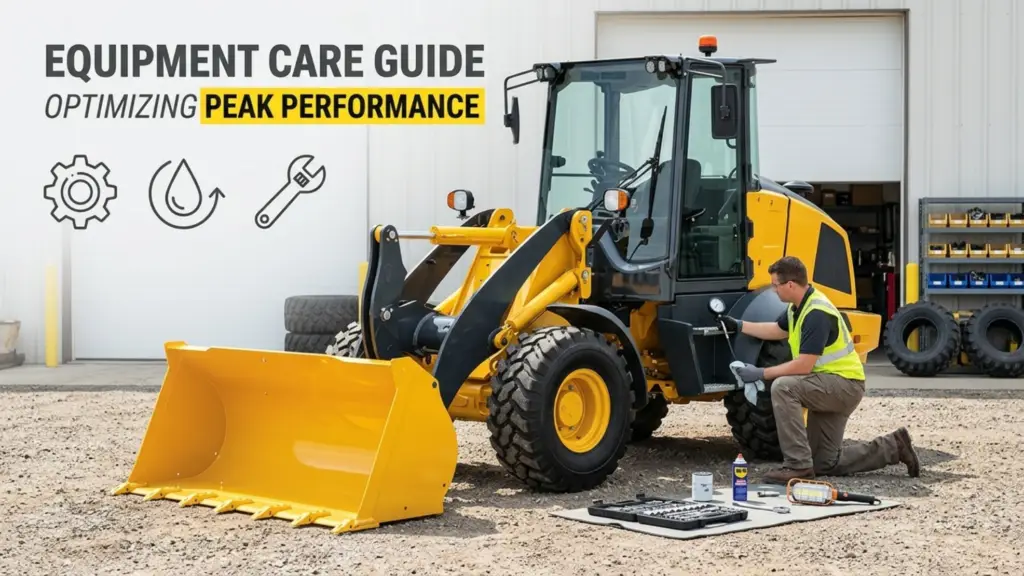
A wheel loader can only work efficiently when it’s in good mechanical condition, and consistent maintenance is what keeps it that way. A neglected machine loses power, burns more fuel, and breaks down at the worst possible moments, undoing every other efficiency gain you’ve worked to achieve. Treating maintenance as a priority rather than an afterthought protects both your productivity and your investment over the long run.
The foundation of strong performance is a routine of regular inspections and preventive maintenance. Checking the machine before each shift catches small problems while they’re still minor, before they grow into costly repairs or unexpected downtime. Preventive maintenance performed on schedule keeps every system operating the way it was designed to, so the loader delivers full power and steady output shift after shift.
Focus your attention on the systems that most affect efficiency and reliability:
- Engine and cooling system, kept clean and serviced for consistent power and reliable operation.
- Hydraulic system, checked for leaks and proper fluid levels to maintain crisp lifting and loading.
- Tires, inspected for correct pressure and wear to protect traction and fuel economy.
- Fluids and filters, changed on schedule to keep every system running smoothly.
Staying ahead of these items ensures the machine performs dependably and avoids the failures that halt work unexpectedly.
The benefits of diligent maintenance reach across the entire operation. A well-maintained loader delivers consistent power and better fuel economy, since a healthy engine and hydraulics work efficiently rather than straining. Just as importantly, it experiences fewer unexpected delays, keeping the machine available when you need it. Following the manufacturer’s recommended maintenance schedule gives you a reliable framework to work from. Commit to that discipline, and your wheel loader rewards you with the steady, efficient performance that keeps jobs on track and costs under control.
Train Operators for Safer and Faster Operation
The operator in the seat has more influence over efficiency than any single piece of equipment. A skilled operator draws out the full capability of a wheel loader through smooth control and smart work habits, while an untrained one wastes fuel, time, and machine life. Investing in proper training is one of the most cost-effective ways to boost productivity, because it improves performance on every task the loader takes on.
Well-trained operators understand how to run the machine smoothly, and that smoothness translates directly into efficiency. Gentle, deliberate control of acceleration, steering, and the bucket keeps cycles fast and consistent while reducing the mechanical stress that abrupt inputs cause. An operator who works with steady, practiced movements completes more passes with less effort and keeps the machine stable and safe throughout the shift.
Effective training builds several habits that pay off day after day:
- Smooth control inputs, avoiding the harsh movements that waste fuel and strain components.
- Efficient loading patterns, applying proven techniques to fill and move material quickly.
- Awareness of machine limits, working within rated capacities to protect stability and safety.
- Consistent pre-shift checks, catching issues early and keeping the machine in top condition.
Reinforcing these habits through regular training keeps operators sharp and ensures good practices become second nature.
The advantages extend well beyond speed. Smoother, smarter operation reduces machine wear, which lowers maintenance costs and extends the loader’s service life. Safer operation protects both the operator and everyone on the site, avoiding the accidents and delays that disrupt any job. When operators combine strong skills with disciplined habits, the whole operation runs faster, safer, and more economically. Ongoing training isn’t a one-time expense; it’s an investment that continues to deliver efficiency, reliability, and lower operating costs for as long as the machine is at work.
Conclusion
Increasing material handling efficiency with a wheel loader comes down to working smarter across five key areas. Refine your bucket techniques to move more per cycle, choose attachments matched to each material, and organize the jobsite to cut travel and waiting time. Back that up with consistent maintenance for reliable power and fuel economy, and invest in operator training to get smooth, safe, and productive operation. Each of these steps strengthens the others, and together they turn a capable machine into a highly efficient one. Put them into practice, and your wheel loader will move more material, at lower cost, on every job you tackle.