Electric Forklift Safety & Operating Procedures
Electric forklift safety starts with proper operator training, daily equipment inspections, controlled driving, safe load handling, and awareness of workplace conditions. Follow these essential practices to support safer and more productive material handling operations.
Why Electric Forklift Safety Matters
Electric forklift safety is essential for warehouses, factories, logistics centers, distribution facilities, and other material handling environments. Proper electric forklift operation can help reduce equipment damage, product loss, workplace incidents, and unnecessary downtime. Operator training, routine inspections, and safe operating procedures all contribute to more efficient daily operations.

Workplace Safety
Proper electric forklift operation helps reduce rollover risks, load handling problems, equipment collisions, and other workplace hazards.

Better Efficiency
Trained electric forklift operators can improve material flow, support efficient loading operations, and reduce unnecessary equipment downtime.

Equipment Protection
Correct electric forklift operating procedures can help reduce unnecessary wear and support dependable long-term equipment performance.

Electric Forklift Operator Responsibilities
Electric forklifts should only be operated by appropriately trained and authorized personnel. Operators should understand the equipment, load limits, workplace conditions, pedestrian traffic, and safe electric forklift operating procedures before beginning work.
- ✓ Perform an electric forklift inspection before operation
- ✓ Wear appropriate workplace safety equipment
- ✓ Follow facility operating procedures
- ✓ Understand load capacity and stability
- ✓ Keep hands and feet inside the operator area
- ✓ Stay alert to pedestrians and obstacles
Daily Electric Forklift Inspection Checklist
A daily electric forklift inspection helps identify visible damage, battery problems, tire wear, brake issues, hydraulic leaks, and other conditions that may affect safe operation. Equipment problems should be addressed according to workplace procedures before the electric forklift returns to service.
Battery & Electrical
Inspect the electric forklift battery, connectors, cables, warning indicators, charging condition, and visible electrical components before operation.
Tires & Brakes
Inspect tire condition, wheels, steering response, and braking performance to help maintain controlled electric forklift operation.
Forks & Mast
Check the forks, mast, lift chains, hydraulic components, and visible structural areas for wear, leaks, or damage.
Safe Electric Forklift Loading & Material Handling
Proper load handling is an important part of electric forklift safety. Operators should understand rated capacity, load position, stability, fork placement, and visibility before transporting materials around the workplace.
- ✓ Keep loads balanced across both forks
- ✓ Fully position forks under the load
- ✓ Stay within the electric forklift rated capacity
- ✓ Keep loads stable during transportation
- ✓ Maintain a clear direction of travel
- ✓ Keep people away from raised loads

Safe Electric Forklift Driving Practices
Safe electric forklift driving requires operators to consider travel speed, turning space, pedestrian traffic, aisle width, ramps, blind spots, floor conditions, and load stability. Operators should adjust their driving behavior to match the working environment.
Ramp & Slope Safety
Operate an electric forklift carefully on approved ramps and slopes, following workplace procedures and equipment operating instructions.
Turning Safety
Reduce travel speed before turning and maintain adequate clearance to help reduce load movement and stability risks.
Pedestrian Awareness
Electric forklift operators should remain alert for pedestrians, intersections, obstacles, overhead clearances, and blind areas.
Important Electric Forklift Safety Reminder
Follow the electric forklift manufacturer's operating instructions and your workplace safety procedures. When parking, position the electric forklift in the designated area, lower the forks, secure the equipment, and follow the required shutdown procedure.
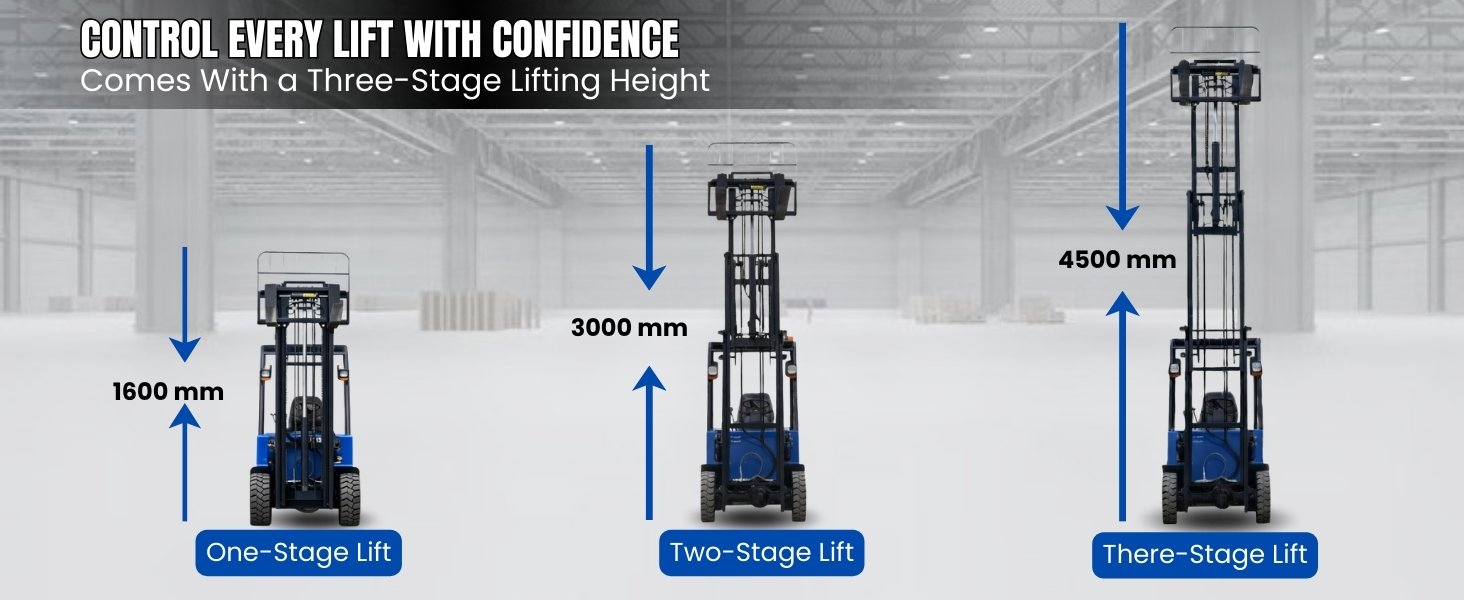
Electric Forklift High Lift & Overhead Safety
High-lift electric forklift applications require careful load positioning and controlled mast operation. Elevated loads can affect stability and may create additional hazards around pedestrians, racks, ceilings, overhead structures, and nearby equipment.
- ✓ Use appropriate operator protection equipment
- ✓ Confirm loads are stable before lifting
- ✓ Use smooth and controlled mast movements
- ✓ Check overhead clearance before lifting
- ✓ Follow safe electric forklift lifting procedures
- ✓ Keep people away from active lifting areas
Explore More Electric Forklift Topics
Continue learning about electric forklift applications, maintenance, operator best practices, and choosing the right electric forklift for your operation.
Need Help Choosing an Electric Forklift?
Contact our team for electric forklift information, material handling solutions, application guidance, maintenance support, and help finding equipment suited to your warehouse or industrial operation.
Contact Us