Electric Forklift Maintenance Tips
Electric forklift maintenance helps improve reliability, reduce downtime, protect important components, and extend equipment service life. Learn battery care, daily inspections, hydraulic system checks, mast maintenance, and proper storage practices.
Why Electric Forklift Maintenance Matters
Regular electric forklift maintenance can help improve reliability, reduce unexpected downtime, lower repair costs, and extend equipment service life. Preventive inspections also help identify battery problems, worn components, hydraulic leaks, tire damage, and other maintenance concerns before they become more serious.

Better Reliability
Routine electric forklift inspections can help identify developing problems early and reduce unexpected equipment downtime.

Improved Safety
Proper maintenance supports reliable operation by keeping brakes, tires, forks, steering, batteries, and hydraulic components in suitable condition.

Lower Operating Costs
Preventive electric forklift maintenance can help reduce major repair costs and minimize unnecessary interruptions to daily material handling operations.

Daily Electric Forklift Inspection Checklist
Electric forklift operators should inspect equipment before use to identify visible problems and help maintain reliable operating conditions. Any significant defects should be addressed according to workplace procedures.
- ✓ Check battery charge and visible battery condition
- ✓ Inspect forks for cracks, bending, or damage
- ✓ Check tire condition and visible wear
- ✓ Inspect hydraulic hoses and fittings for leaks
- ✓ Test brakes and steering response
- ✓ Check lights, alarms, and warning indicators
- ✓ Verify mast and lifting operation
Electric Forklift Battery Maintenance Tips
The battery is one of the most important components of an electric forklift. Battery type, charging practices, operating hours, temperature, charger compatibility, and maintenance requirements can all affect performance and service life.
Proper Charging
Follow the battery and charger manufacturer's recommended charging procedure. Suitable charging practices can help maintain dependable electric forklift battery performance.
Battery Monitoring
Check battery charge levels, warning indicators, connectors, cables, and visible battery condition as part of routine electric forklift maintenance.
Clean Connections
Keep battery connections clean and secure. Damaged cables, loose connectors, or visible electrical problems should be addressed before use.
Electric Forklift Hydraulic System Care
Electric forklift hydraulic systems control important lifting, mast, and tilt functions. Routine inspection can help identify leaking hoses, damaged fittings, unusual mast movement, or reduced lifting performance.
- ✓ Check hydraulic fluid according to manufacturer guidance
- ✓ Inspect hydraulic hoses and fittings for leaks
- ✓ Look for damaged hydraulic components
- ✓ Keep dirt and contamination away from the system
- ✓ Follow recommended maintenance intervals
- ✓ Monitor lifting and mast performance
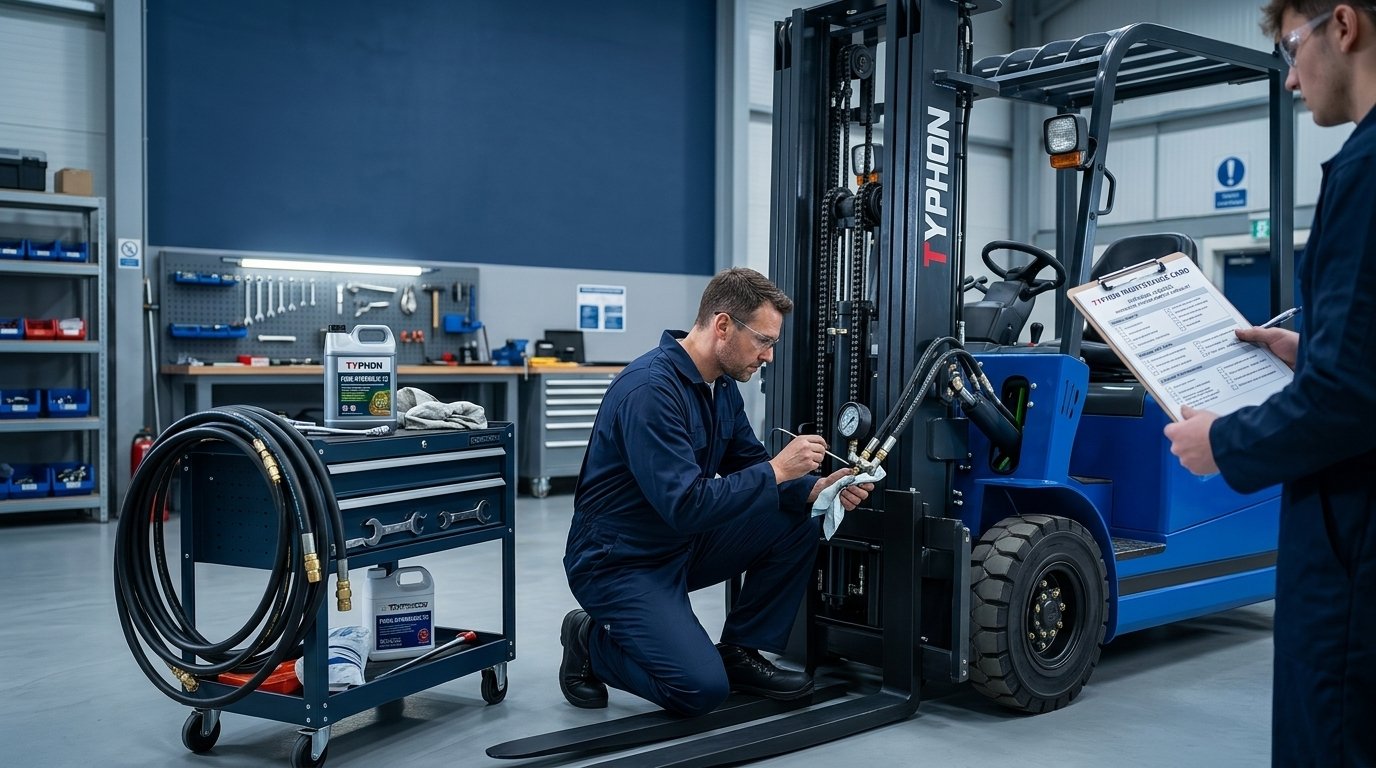
Electric Forklift Chain & Mast Maintenance
Electric forklift chains and mast components play an important role in lifting and load handling. Regular inspection can help identify wear, corrosion, damaged components, lubrication concerns, and unusual movement.
Lubrication
Maintain chain and mast lubrication according to the electric forklift manufacturer's service recommendations to help support smooth operation.
Wear Inspection
Inspect lift chains, rollers, mast channels, and other visible lifting components for wear, corrosion, damage, or unusual movement.
Component Service
Worn or damaged electric forklift lifting components should be evaluated and serviced according to manufacturer and workplace maintenance procedures.

Electric Forklift Tires, Brakes & Steering
Tires, brakes, and steering components directly affect electric forklift handling and control. Regular checks are especially important in facilities with frequent turning, heavy loads, ramps, or high daily operating hours.
- ✓ Inspect tires for damage and excessive wear
- ✓ Check wheels and visible fasteners
- ✓ Test braking performance before operation
- ✓ Check steering response and unusual movement
- ✓ Watch for vibration or uneven handling
- ✓ Report unusual noises or performance changes
Electric Forklift Long-Term Storage Recommendations
Proper storage can help protect electric forklift components and battery condition when equipment will remain unused for an extended period. Follow the manufacturer’s storage and battery maintenance instructions for the specific model.
- ✓ Store the electric forklift on a suitable flat surface
- ✓ Lower the forks before storage
- ✓ Follow the required shutdown procedure
- ✓ Maintain battery charge according to battery requirements
- ✓ Protect equipment from moisture and contamination
- ✓ Inspect the forklift before returning it to service

Important Electric Forklift Maintenance Reminder
Follow the electric forklift manufacturer's maintenance schedule, operating instructions, and workplace procedures. Equipment with known safety-related defects should be evaluated and serviced before returning to normal operation.
Explore More Electric Forklift Topics
Continue learning about electric forklift safety, applications, operator best practices, and choosing the right electric forklift for your operation.
Need Electric Forklift Maintenance Support?
Contact our team for electric forklift maintenance information, battery support, replacement parts, technical guidance, and material handling equipment assistance.
Contact Us