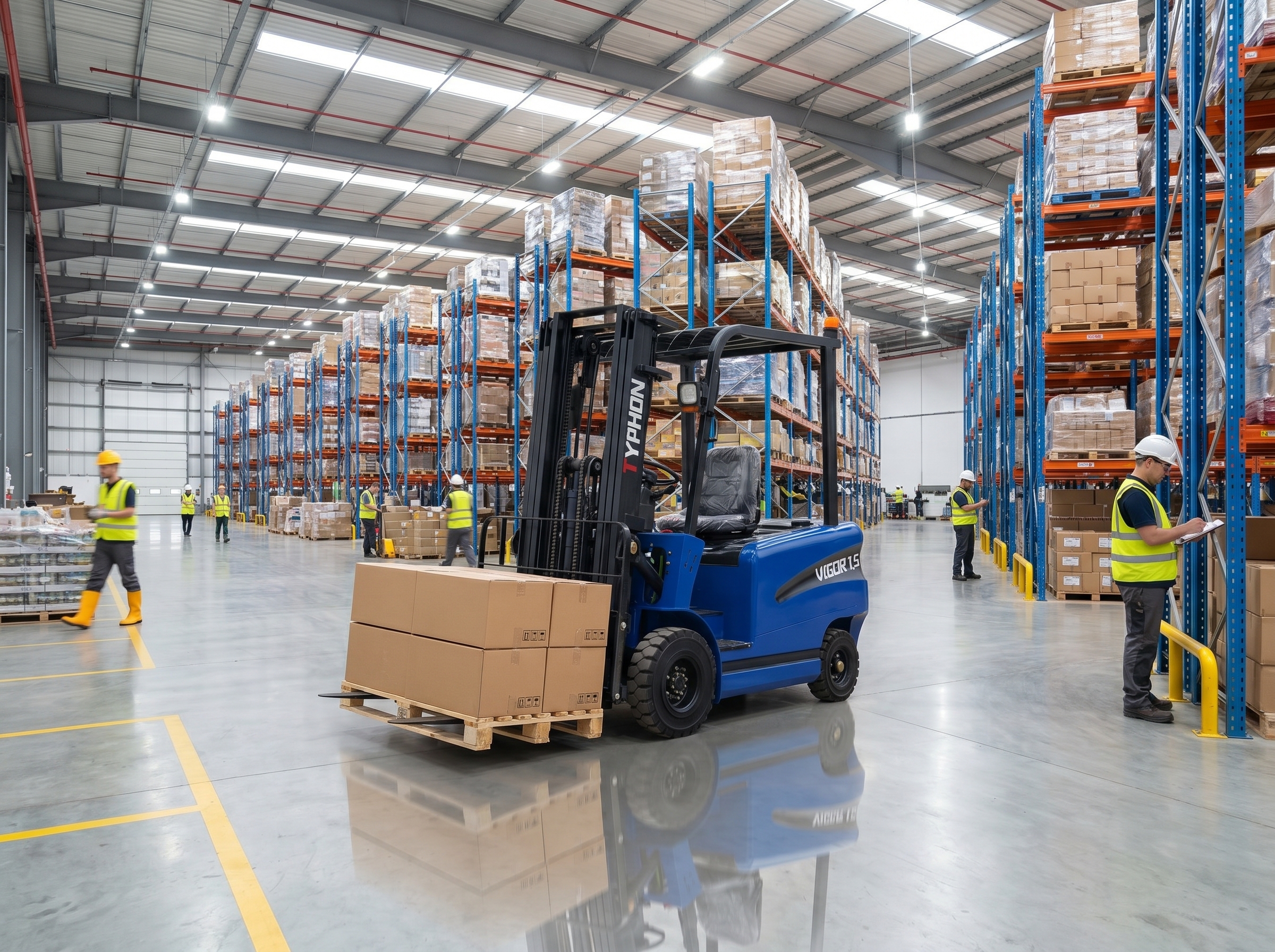

Choosing the right forklift for indoor work shapes your facility’s productivity, safety record, and operating budget for years. For warehouse managers and operations leaders weighing equipment decisions, indoor electric forklift advantages have made these machines the clear standard — and the reasons go well beyond a clean energy story.
Indoor electric forklifts eliminate exhaust emissions, run quietly, cost less to maintain, and handle tight aisles with precision that propane and diesel machines cannot match. These benefits compound over time, turning a single smart purchase into a lasting operational edge.
By the end of this guide, you will understand exactly why electric forklifts dominate indoor environments and how each benefit translates into measurable value. We cover emissions, noise, maintenance, maneuverability, operating costs, air quality, narrow-aisle capability, and the productivity gains that connect them all, plus a practical framework for choosing the right machine.
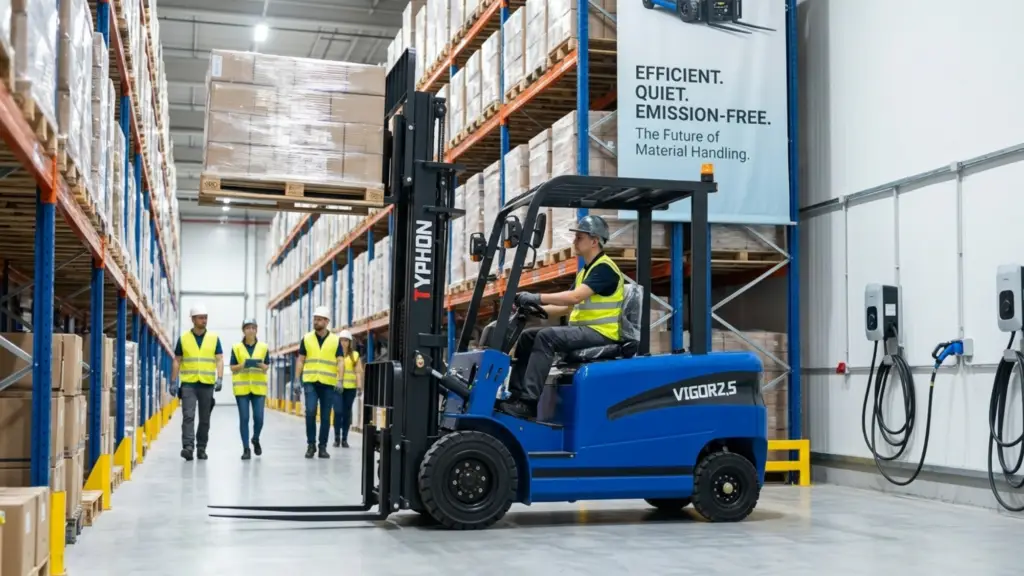
Why Indoor Environments Demand Electric Power
Enclosed buildings create challenges that internal combustion forklifts struggle to manage. Sealed spaces trap exhaust fumes, amplify engine noise, and limit the room available for bulky machines to operate safely.
Propane, diesel, and gasoline forklifts were built for power and outdoor versatility. Inside a warehouse or on a manufacturing floor, though, those same strengths become liabilities. They need ventilation, generate constant noise, and demand frequent engine service.
Electric forklifts were engineered to solve these exact problems. Each advantage below addresses a specific friction point that affects your safety record, your budget, or your throughput.
Zero Emissions Protect Your Workers and Your Compliance
The most significant of all indoor electric forklift advantages is straightforward: these machines produce zero exhaust emissions.
Internal combustion forklifts release carbon monoxide, nitrogen oxides, and other combustion byproducts. In an enclosed building, those gases build up fast. Carbon monoxide is colorless and odorless, and prolonged exposure causes headaches, fatigue, impaired judgment, and, in severe cases, fatal poisoning.
Electric forklifts remove that hazard entirely. With no combustion, there is nothing harmful to vent. That delivers two concrete benefits:
- Worker safety: Your crew breathes clean air across every shift, which reduces health complaints and absenteeism.
- Regulatory compliance: You avoid the OSHA air quality and ventilation requirements that combustion forklifts trigger in enclosed spaces.
For food processing plants, pharmaceutical warehouses, and cold storage facilities, this advantage is non-negotiable. The strict air quality standards in those settings make electric the only practical choice.
Key takeaway: Zero emissions protect both your people and your standing with regulators.
Quieter Operation Improves Communication and Reduces Fatigue
Noise is an underestimated drain on productivity. A loud floor forces workers to shout, wear hearing protection, and absorb the cognitive strain of a constant engine roar.
Electric forklifts operate at a fraction of the noise produced by combustion machines. The main sounds are the soft hum of the electric motor and the hydraulic system, a sharp contrast to a propane engine running at full throttle.
That quiet operation produces measurable results:
- Clearer communication: Supervisors and operators coordinate without shouting or relying solely on hand signals, which cuts down handling errors.
- Less operator fatigue: Quieter conditions keep operators alert and accurate through a full shift.
- Flexible operating hours: Facilities sharing space with offices, retail, or residential neighbors can run electric forklifts without violating noise ordinances.
Picture a distribution center running an overnight shift next to a residential zone. Electric forklifts let that operation extend its hours without generating complaints, a flexibility that directly supports throughput.
Lower Maintenance Frees Your Budget and Your Team
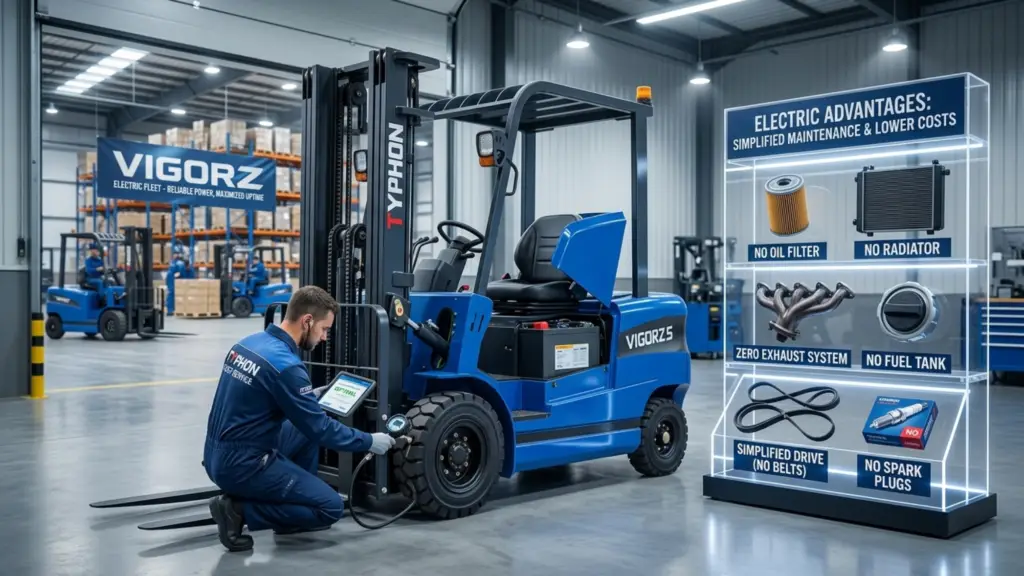
Electric forklifts have far fewer moving parts than combustion machines. No engine, no transmission, no radiator, no exhaust system, and no fuel system means entire categories of routine service simply disappear.
Here is what you no longer have to maintain:
- Engine oil and oil filter changes
- Coolant flushes and radiator inspections
- Air filter and spark plug replacements
- Belt and exhaust system repairs
- Fuel system upkeep
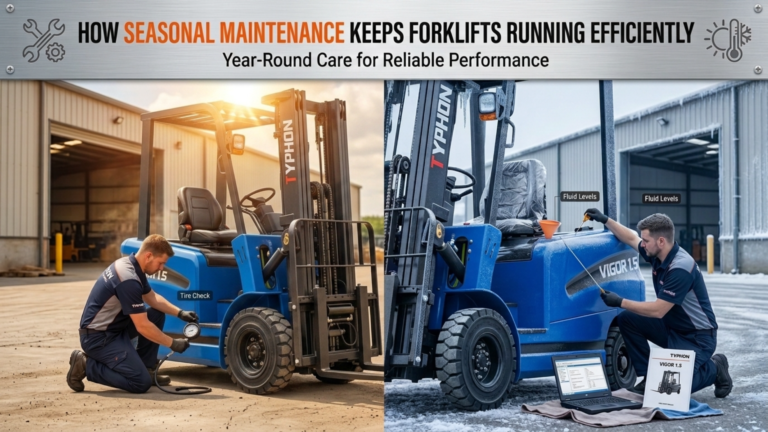
What remains is a leaner checklist: tire checks, brake inspections, hydraulic fluid levels, and battery care. This reduction lowers both parts and labor costs across the machine’s lifespan.
There is a workforce angle here too. Recruiting qualified diesel mechanics is increasingly difficult and expensive. Electric forklifts need less specialized mechanical knowledge for routine upkeep, which makes maintenance easier to handle with your existing team or a smaller service contract.
For a facility running 20 or more forklifts, the cumulative savings across the fleet free up real budget for staffing, technology, or facility improvements that further drive warehouse efficiency.
Key takeaway: Fewer parts mean fewer repairs, lower costs, and easier fleet management.
Superior Maneuverability Maximizes Your Floor Space
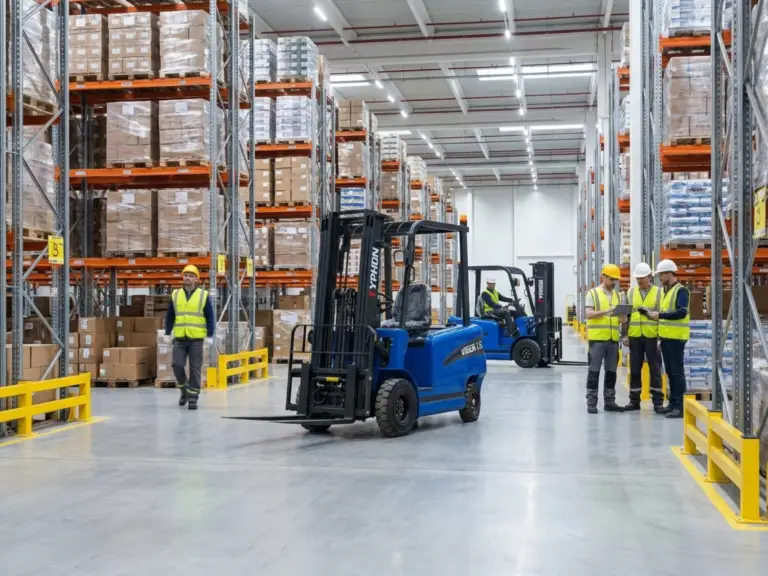
Indoor space is expensive, and every square foot that goes unused is wasted capacity. Electric forklifts are built with compact designs that handle tight corners, crowded pick areas, and narrow aisles far better than bulky combustion models.
Tight Turning Radius
Electric forklifts offer an exceptionally tight turning radius, often completing full turns within very short aisle widths. That precision lets operators work confidently around racking, dock areas, and busy staging zones without constant repositioning.
Precise Control
Electric motors respond instantly and smoothly to operator input, with none of the throttle lag found in combustion engines. This makes delicate load placement faster and reduces the risk of rack damage, product loss, or operator strain over a long shift.
Lower Operating Costs Strengthen Your Bottom Line
One of the most compelling electric forklift benefits for operations leaders is the long-term drop in operating costs. The upfront purchase price typically runs higher than a comparable combustion model, but the total cost of ownership favors electric across the machine’s lifecycle.
The savings come from three sources:
- Energy costs: Electricity consistently costs less per operating hour than propane or diesel. Charging during off-peak overnight hours pushes those savings higher still.
- Maintenance savings: As noted above, fewer parts and simpler service mean a lower total maintenance spend year after year.
- Longer equipment life: With fewer systems exposed to combustion heat and friction, well-maintained electric forklifts often deliver reliable performance for 10 or more years.
When you build a total cost of ownership analysis instead of comparing sticker prices, electric forklifts typically pay back their premium within two to four years in high-utilization indoor operations.
You might be wondering whether the higher purchase price is worth it for a smaller fleet. The honest answer depends on utilization — but the more hours your machines run, the faster electric wins.
Improved Indoor Air Quality Supports a Healthier Workforce
Beyond eliminating dangerous exhaust gases, electric forklifts create a cleaner, more comfortable working environment overall.
Combustion forklifts produce heat, fumes, and particulate matter that linger in enclosed spaces even with ventilation running. Over a full shift, that degrades air quality and operator comfort. Electric forklifts remove the burden entirely.
This matters most in environments with strict contamination controls:
- Food and beverage operations: No exhaust means no risk of product contamination from combustion byproducts.
- Pharmaceutical and cleanroom facilities: Electric power supports the air purity these settings demand.
- Cold storage: Sealed, refrigerated spaces with limited airflow are far safer with zero-emission equipment.
Cleaner air also lightens the engineering load on your facility. You can simplify or eliminate the costly ventilation infrastructure combustion forklifts require, lowering both construction and energy costs.
Key takeaway: Cleaner air protects your workforce and simplifies your facility design.
Narrow-Aisle Suitability Increases Storage Density
For operations focused on maximizing storage capacity, the narrow-aisle capability of electric forklifts is a decisive advantage.
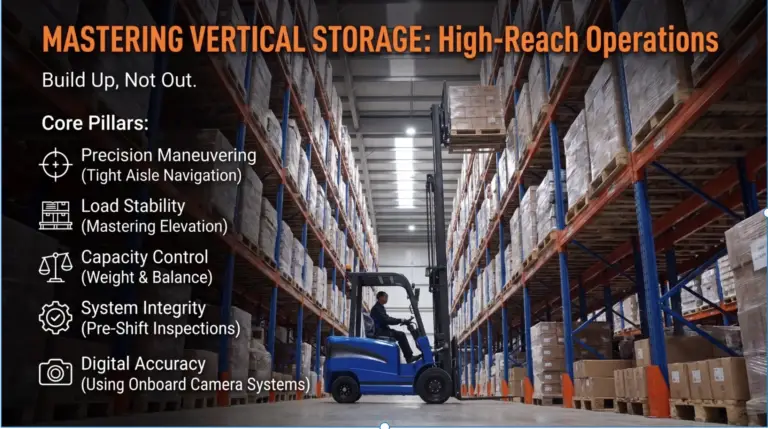
Very narrow aisle (VNA) systems rely entirely on electric-powered equipment. Reach trucks, order pickers, and turret trucks — all electric — let warehouses build rack systems 40 feet high or more and operate confidently in aisles as narrow as six feet.
That configuration delivers a direct financial return:
- More rack rows per square foot of floor space
- Higher pallet position counts within the same footprint
- Reduced need for costly facility expansion
Consider a distribution center operating at capacity. By switching to narrow-aisle electric equipment and reconfiguring its racking, that facility can sharply increase pallet positions without leasing additional space, turning an equipment decision into a capacity solution.
Productivity Gains Tie Every Advantage Together
Each benefit above contributes to one outcome: a more productive operation. The advantages of indoor electric forklifts do not work in isolation—they reinforce one another.
- Lower downtime: Fewer mechanical components mean fewer unplanned breakdowns and more predictable equipment availability.
- Faster maneuverability: Tight turning and precise control speed up every pick, put-away, and load cycle.
- Sustained operator performance: Quiet operation and clean air keep your team sharp and accurate across full shifts.
- Reliable multi-shift support: With battery rotation or lithium-ion opportunity charging, electric forklifts sustain round-the-clock operations.
When you remove the friction points that slow a combustion fleet’s fueling stops, ventilation constraints, and frequent repairs, your crew spends more time moving product and less time managing equipment problems. That is the foundation of measurable warehouse efficiency.
How to Choose the Right Indoor Electric Forklift
Capturing these advantages depends on matching the right machine to your operation. Use this framework before you buy.
Assess Your Aisle Width
- Standard aisles: A three- or four-wheel counterbalance electric forklift offers versatile, general-purpose performance.
- Narrow aisles: Reach trucks and order pickers maximize storage density and operate where counterbalance machines cannot.
Match the Battery to Your Shift Structure
- Single shift: A standard lead-acid battery with overnight charging works reliably.
- Multi-shift: Lithium-ion batteries support opportunity charging and eliminate the labor of battery swapping.
Verify Floor and Capacity Requirements
- Confirm your floor’s load rating supports the machine’s gross weight, including the battery.
- Match the forklift’s rated capacity to your heaviest typical loads, with margin to spare.
Specify the Right Tires
- Choose non-marking cushion tires for smooth, finished concrete to protect your floors and maximize maneuverability.
Key takeaway: Match aisle width, battery type, capacity, and tires to your specific operation for the best return.
Common Mistakes to Avoid
Even strong equipment decisions can fall short when these errors creep in:
- Comparing sticker prices instead of total cost of ownership. The upfront premium misleads buyers who overlook long-term fuel and maintenance savings.
- Undersizing the battery for multi-shift work. Forcing lead-acid batteries through repeated partial charges shortens their life dramatically.
- Overlooking floor load ratings. Electric forklifts are heavier than combustion models because of the battery pack, and a weak floor creates real risk.
- Specifying the wrong tires. Standard black tires leave scuff marks on finished floors that hurt your facility’s appearance.
Conclusion
Indoor electric forklifts deliver a clear, compounding set of advantages: zero emissions, quiet operation, lower maintenance, superior maneuverability, reduced operating costs, cleaner air, and the narrow-aisle capability that drives storage density. Together, these benefits make your operation safer, leaner, and more productive.
The best operations leaders do not wait for their current fleet to fail before evaluating better options. They assess the full cost and performance of their equipment honestly, then make decisions grounded in data.
If improving warehouse efficiency is a priority for your organization, evaluate your current fleet against the advantages outlined here. Walk your floor, measure your aisles, review your shift structure, and talk with a trusted equipment partner who can match the right electric forklift to your operation. The sooner you make the move, the sooner those advantages start working for you.