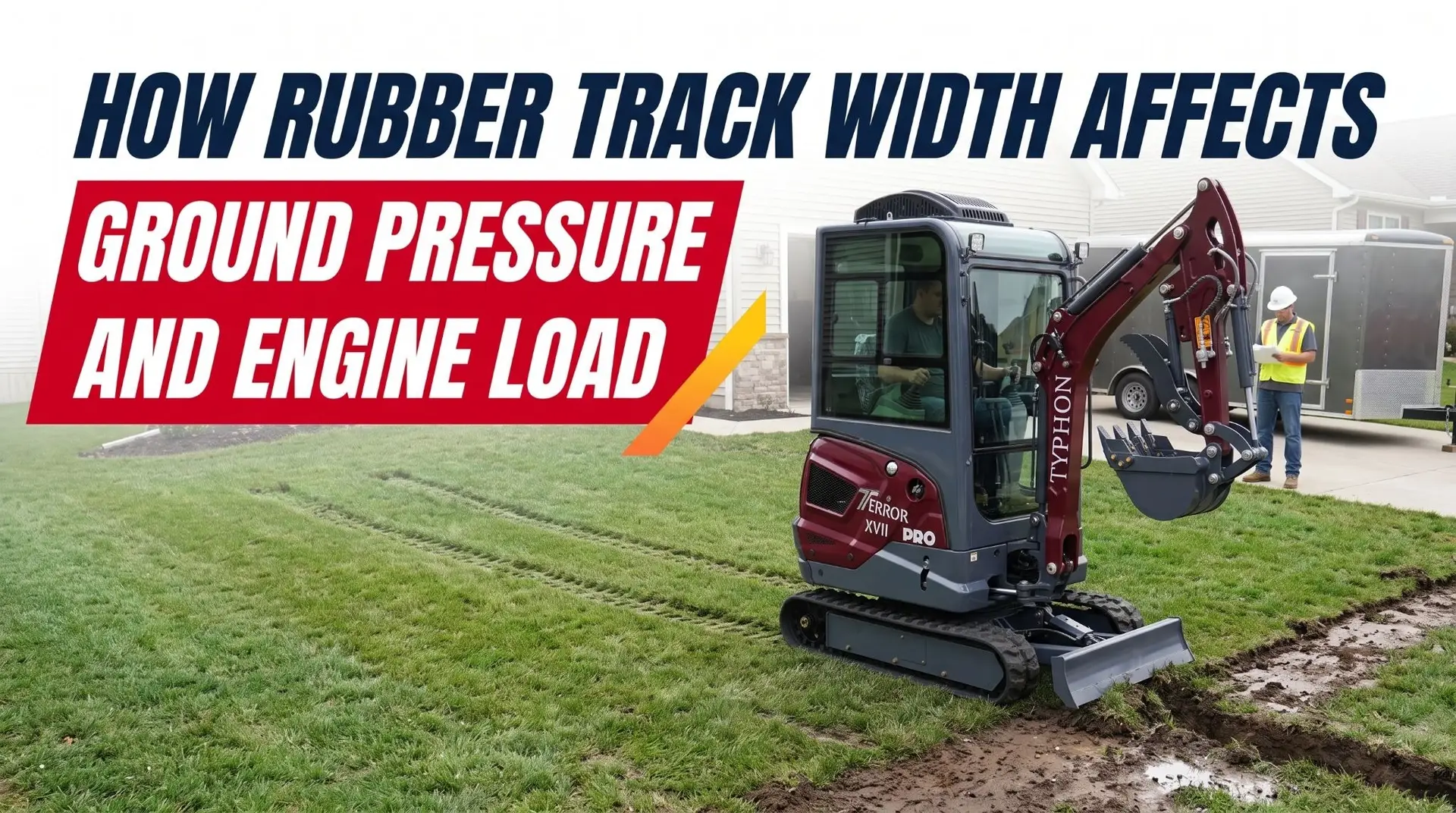
A utility contractor rolls a mini excavator off the trailer at a backyard job where a homeowner’s freshly seeded lawn stretches between the driveway and the trench line that needs digging. The soil is soft from a week of rain, and the machine has to cross forty feet of that lawn to reach the work. An operator running narrow tracks eases forward and watches the edges begin to sink, carving two muddy ruts that will cost a full afternoon of repair and an unhappy customer. A second operator on the same job runs wider tracks, floats across the same ground leaving barely a mark, and reaches the trench with the lawn intact. That single difference in track width decides whether the machine works with the ground or fights it, and understanding why is what keeps a job clean, efficient, and profitable.
Rubber track width shapes how a mini excavator interacts with the ground beneath it and how hard its engine must work to move. Knowing how width connects to ground pressure and engine load helps you choose the right setup, protect delicate surfaces, and run the machine efficiently.
The Role of Track Width in Machine Performance
Contact with the ground runs through the tracks, so their width governs how a mini excavator behaves on every surface it crosses. The rubber tracks carry the full weight of the machine, the operator, and whatever load the arm holds, spreading that mass across the ground below. A width suited to the surface lets the machine move freely, while a poor match either sinks into soft earth or wears roughly across firm ground.
Stability rides on that same width, because a broader footprint plants the machine more firmly as it digs and swings. Wider tracks widen the base the excavator stands on, which steadies the machine when the arm reaches out to the side and shifts the balance point. That added footing lets an operator work with confidence rather than feeling the machine rock under a heavy load.
Traction, flotation, and surface protection all trace back to how much track meets the terrain. Narrow tracks slip into tight spaces and press firmly into hard ground, while wide tracks float over mud and spare a finished lawn from damage, so the width shapes what the machine can safely tackle. Rubber track width determines ground contact, stability, and flotation, which is why it sits at the center of how a mini excavator performs.
Understanding How Ground Pressure Is Calculated
Ground pressure describes how much force a machine presses onto each unit of the surface beneath it, and the concept is simpler than it sounds. Take the total operating weight of the mini excavator and divide it by the total area of track touching the ground, and the result tells you how heavily the machine bears down on every square inch. Engineers usually express this figure in pounds per square inch or kilopascals.
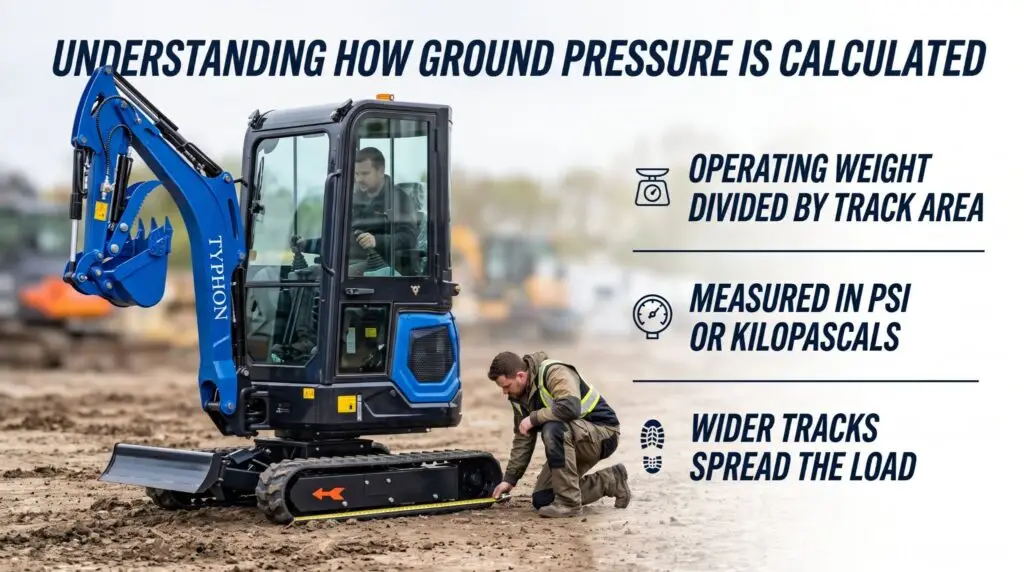
Two numbers drive that calculation, and track width feeds directly into one of them. The operating weight sits on top of the equation, while the contact area of both tracks sits underneath, and widening the tracks enlarges that contact area without adding meaningful weight. Because the same weight now spreads across more surface, the pressure on any single point drops.
Picture two people standing on fresh snow, one in narrow boots and one on broad snowshoes, to grasp why the math matters. Each person weighs the same, yet the snowshoe wearer stays on top because their weight spreads across far more area, exactly as wider tracks lower a machine’s ground pressure. Ground pressure equals operating weight divided by track contact area, so widening the tracks enlarges that area and lowers the pressure the machine exerts.
Seeing How Wider Tracks Float Over Soft Ground
Soft terrain is where wider tracks prove their worth most clearly, because loose, wet, or muddy ground gives way under concentrated force. When a machine’s weight presses onto a small footprint, that force punches into the surface and the tracks begin to sink, but spreading the same weight across a broader track keeps the machine riding on top. This ability to stay above the surface is what operators call flotation.
Sinking causes a chain of problems that wider tracks help you avoid entirely. A machine that digs itself into soft ground loses traction, strains to climb out, tears up the surface into deep ruts, and in the worst cases becomes stuck and needs another machine to recover it. Keeping the excavator on top of the ground sidesteps every one of those costly setbacks.
Sensitive surfaces gain the same protection from a wider footprint, which matters on any job where the ground must survive the work. Crossing a manicured lawn, a landscaped yard, or a soft field with wide tracks leaves a light, even impression rather than the gouges narrow tracks would carve, so the customer’s property stays intact. Wider tracks lower ground pressure enough to float over soft terrain and protect delicate surfaces, preventing the sinking, ruts, and damage that narrow tracks invite.
Weighing How Track Width Draws on Engine Load
Power enters the picture the moment you consider how much effort it takes to move wider tracks across the ground. A broader track carries more rubber, meets more surface resistance, and demands more force to turn, so the drive motors and the engine behind them work a little harder to propel and steer the machine. This extra demand is the trade-off that comes with the flotation width provides.
Resistance climbs further when the ground itself fights back, which is where the relationship grows more interesting. On firm, level ground the added load from wider tracks stays modest, but pushing wide tracks through thick mud or turning them sharply on grippy soil raises the drive effort noticeably. The engine must supply that extra muscle, drawing more fuel to keep the machine moving at pace.
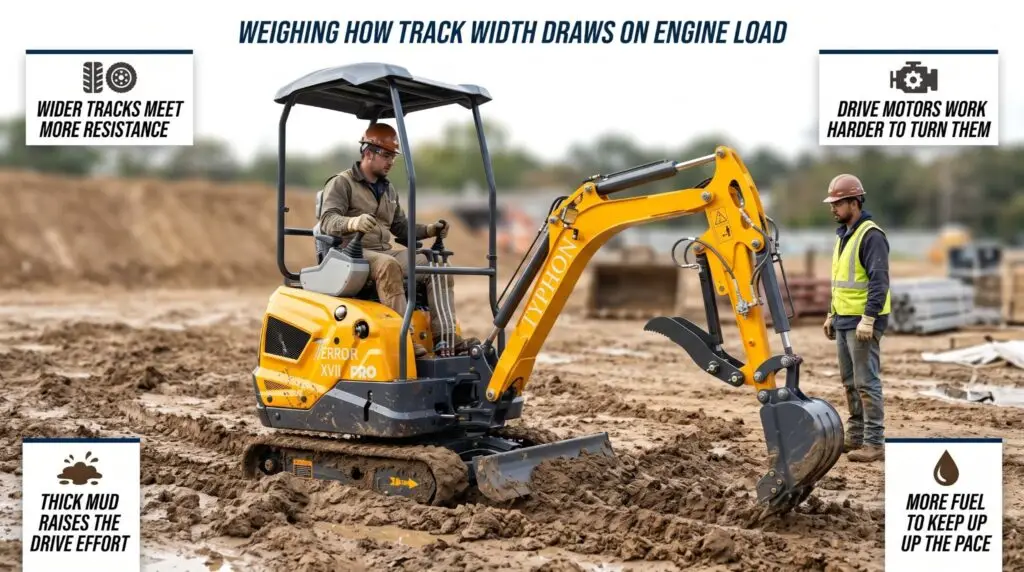
Balance is the key idea here, because the flotation that saves a job on soft ground can cost efficiency on firm ground. Wide tracks that keep a machine from sinking in mud earn their keep many times over, yet the same tracks on a hard, dry site simply add rolling resistance and fuel use without a matching benefit. Wider tracks raise engine load and drive system demand through greater resistance, so the flotation they offer must be weighed against the added effort they require.
Reading Your Site and Surface Before You Choose
Ground conditions should lead every decision about track width, because the surface a machine works on decides which setup pays off. Soft, wet, muddy, or sandy sites call for wider tracks that float and spread the load, while firm, dry, or paved ground rewards narrower tracks that grip and roll with less resistance. Naming your typical surface honestly is the first step toward the right choice.
Space around the work adds a second consideration that width directly affects. Wider tracks broaden the whole machine, which can block passage through narrow gates, tight alleys, and cramped indoor spaces where a slim footprint is the only way in, so a job defined by tight access may demand narrower tracks regardless of the ground. Measuring the tightest point the machine must clear guards against a width that simply will not fit.
Surface protection requirements finish the assessment, since some jobs judge success partly by the condition of the ground left behind. Working over finished landscaping, established turf, or a client’s yard raises the value of low ground pressure, while a rough excavation site with no surface to preserve lowers it. Reading your ground conditions, your access constraints, and your surface protection needs together points you toward the track width your site truly requires.
Matching Track Width to the Job at Hand
Selection pulls every earlier factor together, because the surest path to the right track width is weighing your real work against what each setup delivers. Begin by naming the surfaces you cross most often, the tightest access your machine must clear, and how much the finished ground matters, then read those answers against the flotation, traction, and efficiency each width offers. Choosing for the work you actually do keeps the machine suited to the job rather than to a single extreme.
Standard and wide track options give most operators a practical way to tailor the machine to their conditions. Many mini excavators offer a choice of track widths from the factory or accept different tracks later, so an operator working mostly soft ground can lean wide for flotation while one facing tight access and firm surfaces can stay narrow for maneuverability and lower engine load. Knowing which option a machine supports shapes the decision before purchase.
Mixed work often steers the choice toward a sensible middle ground or a considered plan. An operation that crosses soft lawns one day and firm sites the next may favor a versatile width that handles both reasonably, or pair a primary machine with the right tracks for its most common task and rent for the exceptions. Matching track width to your surfaces, access, and priorities, with room for mixed work, ensures the machine floats, fits, and runs efficiently where it earns its keep.
Conclusion
Rubber track width shapes both how a mini excavator meets the ground and how hard its engine works to move, and the full picture holds once you follow each piece in turn. Start by recognizing why track width sits at the center of contact, stability, and flotation, then understand how ground pressure is calculated as operating weight divided by track contact area. See how wider tracks float over soft ground and protect delicate surfaces by lowering that pressure, and weigh how the same width raises engine load and drive system demand through added resistance. Read your site conditions, access constraints, and surface protection needs before you decide, and finish by matching the track width to the surfaces, access, and priorities your work truly involves. Attend to all six, and the machine works with the ground rather than against it, sparing you ruts, fuel waste, and setbacks. Before your next job, name your typical surface, measure your tightest access, and weigh how much the finished ground matters so the machine performs from the first pass. When you’re ready to put a dependable mini excavator with the right tracks to work, or need help matching track width to your projects, reach out to a trusted equipment specialist who can match reliable equipment to the results your work depends on.
Frequently Asked Questions
How do wider rubber tracks lower ground pressure on a mini excavator?
Wider tracks spread the machine’s weight over a larger contact area, lowering ground pressure. This helps the excavator float over soft, wet, or muddy ground and reduces ruts on lawns and finished surfaces.
Do wider tracks make a mini excavator use more fuel?
They can slightly increase fuel use because wider tracks create more rolling and turning resistance. The difference is usually small on firm ground but can increase in mud or during frequent turning.
How do I choose the right track width for my jobs?
Choose wider tracks for soft ground and turf protection, and narrower tracks for firm surfaces and tight access. Consider your typical terrain, access width, and need to protect finished surfaces.