A forklift engine depends on a steady supply of clean fuel, and one small component quietly makes that possible: the fuel filter. It guards the fuel system against dirt, water, and debris that would otherwise reach the most sensitive parts of the engine. When the filter works as intended, your forklift starts reliably, runs smoothly, and holds its power through a full shift. When it fails or clogs, you invite rough performance and costly repairs.
This post explains exactly how forklift fuel filters protect the engine system, from trapping contaminants to separating water and keeping fuel flowing. It’s written for fleet managers, operators, and maintenance crews who want dependable equipment and fewer surprise breakdowns. By the end, you’ll understand what the filter does and how to keep it doing its job.
Removing Contaminants From Fuel
Fuel rarely arrives perfectly clean. Dirt, rust, dust, and tiny particles can enter the system during refueling, from a contaminated storage tank, or as internal components age and shed material. The fuel filter is the first line of defense against all of it. As fuel passes through, the filter media traps these particles and holds them, so contaminated fuel never reaches the engine’s inner workings.
This matters because even microscopic debris can cause real damage over time. Particles that slip through can scratch precision surfaces, clog narrow passages, and accelerate wear on parts that were built to tight tolerances. A clean filter keeps that debris out of circulation and protects the entire fuel path.
The kinds of contaminants a forklift fuel filter typically captures include:
- Dirt and dust drawn in during refueling or from the surrounding environment
- Rust and scale that flake off from tanks, lines, and fittings over time
- Metal particles produced by normal component wear inside the system
- Sediment and debris that settle in fuel during storage
By catching these impurities early, the filter keeps the fuel supply clean before it moves deeper into the engine. This protection is especially important in demanding warehouse and jobsite settings, where dust and grit are constant. A quality filter, maintained on schedule, gives your forklift a dependable barrier between dirty fuel and the components that keep it running. That barrier is simple, but it does heavy work every hour the machine operates.
Protecting the Fuel Injection System
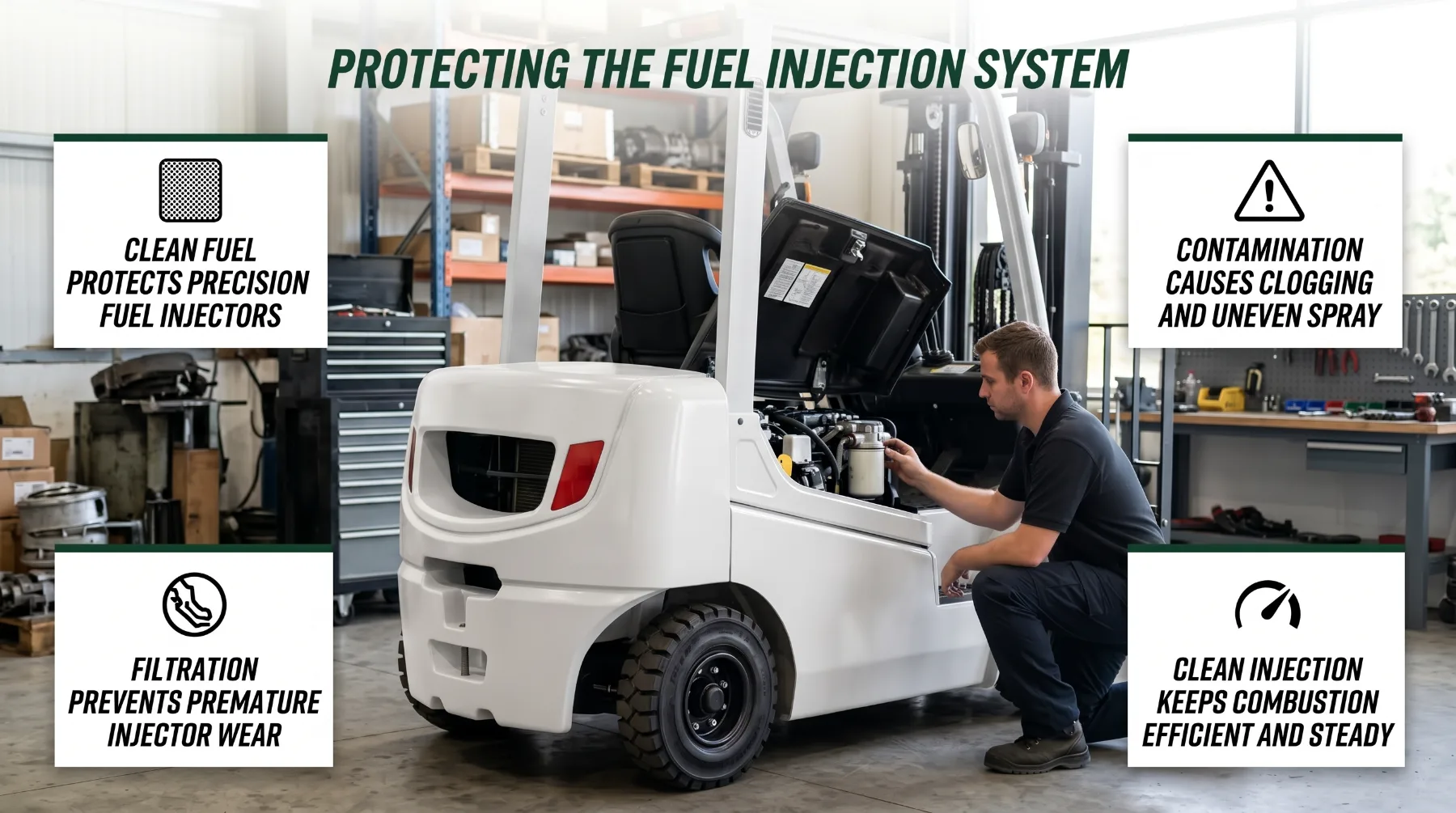
The fuel injection system is where clean fuel truly earns its value. Injectors and related components are engineered with extremely fine tolerances, spraying precise amounts of fuel into the engine at exact moments. Those tiny openings and moving parts leave no room for contamination. Even a small particle can disrupt the spray pattern, restrict flow, or damage an injector, and injectors are expensive to repair or replace.
A properly functioning fuel filter shields these precision parts from harm. By removing debris before fuel reaches the injectors, it lowers the risk of blockage, wear, and poor fuel delivery. This keeps the injection system spraying cleanly and accurately, which is essential for efficient combustion and steady power.
Here’s what clean, well-filtered fuel helps prevent in the injection system:
- Injector clogging that disrupts the fuel spray and reduces efficiency
- Premature wear on injector tips and other precision surfaces
- Uneven fuel delivery that leads to misfires or inconsistent power
- Costly component failures caused by accumulated contamination
When the filter allows only clean fuel through, the injection system operates the way it was designed to. Fuel atomizes properly, combustion stays efficient, and the engine responds predictably to demand. This is particularly valuable in modern diesel forklifts, where injection systems often run at high pressure and are even less forgiving of contamination.
Protecting the injection system is one of the most important jobs the fuel filter performs. Skimp on filtration or delay a replacement, and the damage often shows up first in these delicate, high-value components. A reliable filter keeps them safe and helps you avoid repair bills that far exceed the cost of routine maintenance.
Supporting Consistent Engine Performance
Consistent engine performance depends on a reliable, uninterrupted flow of fuel, and the filter plays a central role in maintaining that flow. When fuel passes freely through clean filter media, the engine receives a steady supply exactly when it needs it. That steady delivery translates into smooth idling, responsive acceleration, and dependable power across the entire workday.
The problem begins when a filter becomes clogged. As contaminants build up, they restrict the flow of fuel, and the engine starts to starve for the volume it requires. This restriction rarely announces itself all at once. Instead, performance degrades gradually, and operators may notice the machine simply isn’t running the way it used to.
Common symptoms of a restricted or clogged fuel filter include:
- Rough or uneven running, especially under load
- Reduced power when lifting heavy loads or climbing grades
- Difficulty starting or extended cranking before the engine catches
- Stalling or hesitation during acceleration and demanding tasks
These issues do more than frustrate operators. They slow productivity, increase fuel waste, and can signal deeper trouble if left unaddressed. A forklift that hesitates under load or struggles to start is a machine you cannot fully rely on, and in a busy operation that unreliability quickly becomes expensive.
Keeping the filter clean protects against all of it. When fuel flows without restriction, the engine maintains a stable supply and delivers consistent output shift after shift. This steady performance is exactly what warehouse and jobsite operations depend on. A clean filter helps your forklift stay ready for work, giving your crew equipment that performs the same way at the end of the day as it did at the start.
Preventing Water From Reaching the Engine
Water is one of the most damaging contaminants a fuel system can face, and it’s especially common in diesel forklifts. Condensation forms inside fuel tanks as temperatures shift, and water can also enter through refueling or contaminated storage. Left unchecked, that water travels with the fuel toward the engine, where it causes corrosion and disrupts combustion. Many forklift fuel filters include water-separation features designed specifically to address this threat.
A water-separating filter works by allowing water to collect and settle, keeping it apart from the fuel that continues on to the engine. Because water and diesel have different densities, the separator captures water droplets and holds them in a collection area, often in a bowl that can be drained. This simple function makes a significant difference in protecting the fuel system.
Reducing water contamination helps guard against several serious problems:
- Corrosion and rust forming on metal fuel-system components
- Damage to injectors and pumps that rely on proper lubrication from clean fuel
- Poor combustion caused by water disrupting the fuel burn
- Microbial growth that can develop in fuel where water is present
For operations that store fuel for extended periods or work in humid environments, water separation is not a minor feature. It’s a critical safeguard. Water that reaches high-pressure injection components can cause rapid wear, since it fails to lubricate the way diesel does, and corrosion inside the system can lead to leaks and failures over time.
Draining the water separator regularly and keeping the filter in good condition ensures this protection stays effective. By stopping water before it reaches the engine, the fuel filter defends your forklift against a form of damage that is often silent until it becomes severe.
Replacing the Filter at the Right Time
Even the best fuel filter has a limited service life. As it does its job, it steadily collects the contaminants it removes from the fuel. Over time, that accumulation restricts flow and reduces the filter’s ability to protect the system. A filter that once shielded your engine can eventually become a bottleneck, which is why timely replacement is essential to keeping the fuel system healthy.
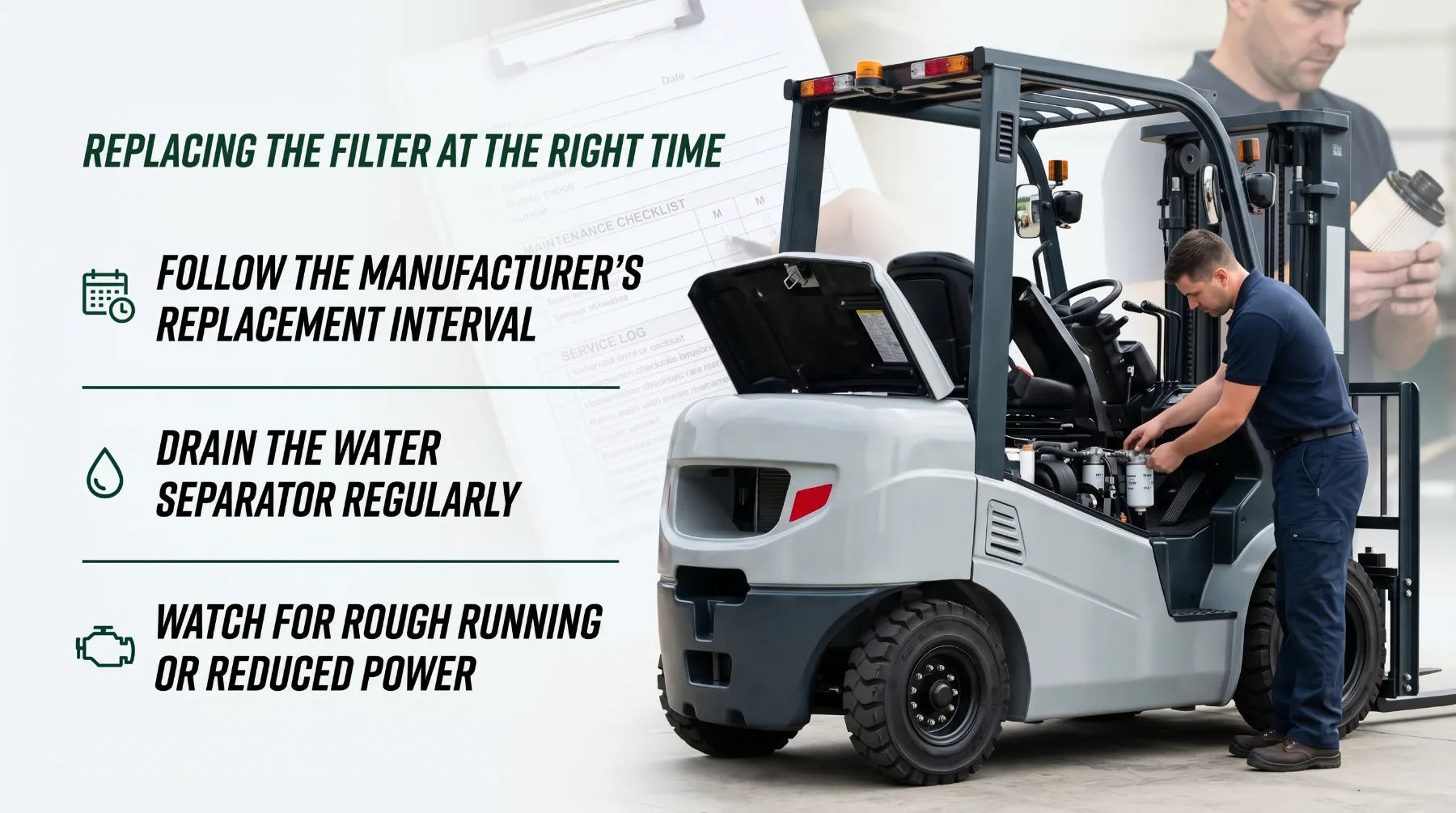
The most reliable guide is the manufacturer’s recommended maintenance interval. These intervals are set based on testing and real-world use, and following them keeps your forklift within its designed protection window. Waiting too long risks the very damage the filter is meant to prevent, while replacing on schedule keeps everything running as intended.
Good filter maintenance practice includes a few key habits:
- Follow the manufacturer’s interval for replacement rather than waiting for symptoms
- Inspect the filter and separator during routine service checks
- Drain the water separator regularly, especially in humid conditions
- Replace immediately if you notice signs of restriction or reduced performance
It also helps to watch for warning signs between scheduled services. Difficulty starting, reduced power, rough running, or a visibly dirty filter all suggest the component may need attention sooner. Catching these signs early prevents a small maintenance task from turning into a major repair.
Using quality replacement filters matters just as much as timing. A properly matched, well-made filter provides the filtration your engine was designed to receive, while a poor-quality substitute can let contaminants through or fail prematurely. Pairing the right filter with a disciplined replacement schedule keeps your forklift’s fuel system operating properly and protects the engine investment you rely on every day.
Conclusion
The forklift fuel filter is a small part that carries a large responsibility. It removes contaminants, shields the fuel injection system, supports steady engine performance, and keeps damaging water away from vital components. Each of these functions protects your engine and helps your equipment run reliably, shift after shift.
The best way to preserve that protection is straightforward: follow your manufacturer’s maintenance schedule, drain the water separator regularly, and replace the filter with a quality part before it clogs. Build these checks into your routine service, and you’ll extend engine life, avoid costly repairs, and keep your forklifts ready for work. Review your maintenance plan today and confirm your fuel filter replacements are on track.
Frequently Asked Questions
1. How often should I replace a forklift fuel filter?
Follow the interval specified in your forklift’s maintenance manual, since manufacturers set these schedules based on the engine’s design and typical operating conditions. Many forklifts call for fuel filter replacement at regular service intervals measured in operating hours. If you work in dusty environments, use fuel from questionable storage, or notice performance issues, you may need to replace it sooner. Regular inspection between services helps you catch a dirty or restricted filter before it affects the engine.
2. What are the warning signs of a clogged fuel filter?
The most common signs include difficulty starting, reduced power under load, rough or uneven running, hesitation during acceleration, and stalling. These symptoms appear because a clogged filter restricts fuel flow, starving the engine of the steady supply it needs. Performance usually degrades gradually rather than all at once. If your forklift shows any of these symptoms, inspecting and replacing the fuel filter is a good first step before pursuing more expensive diagnostics.
3. Why is water separation important in a diesel forklift fuel filter?
Water is highly damaging to diesel fuel systems. It causes corrosion on metal components, fails to lubricate high-pressure injection parts the way diesel does, and disrupts proper combustion. Condensation naturally forms in fuel tanks as temperatures change, so water contamination is common. A water-separating filter collects and holds this water apart from the fuel, preventing it from reaching the engine. Draining the separator regularly keeps this protection working and helps you avoid corrosion and costly injector damage.
4. Can a dirty fuel filter damage the fuel injectors?
Yes. Fuel injectors are precision components with extremely fine tolerances, and they depend on clean fuel to function correctly. When a filter is dirty or failing, contaminants can slip through and clog injector openings, wear precision surfaces, or disrupt the fuel spray pattern. This leads to poor fuel delivery, reduced efficiency, and potentially expensive injector repairs. A properly maintained filter keeps debris away from the injectors, which is one of the most valuable forms of protection it provides.
5. Does using a cheaper aftermarket fuel filter matter?
It can matter a great deal. A quality filter provides the level of filtration your engine was designed to receive, capturing contaminants effectively and maintaining proper fuel flow. A poorly made substitute may allow debris through, restrict flow prematurely, or fail sooner than expected, putting sensitive components at risk. To protect your engine investment, choose a properly matched, well-made filter that meets your forklift’s specifications. Pairing a quality filter with timely replacement gives you the most reliable protection.