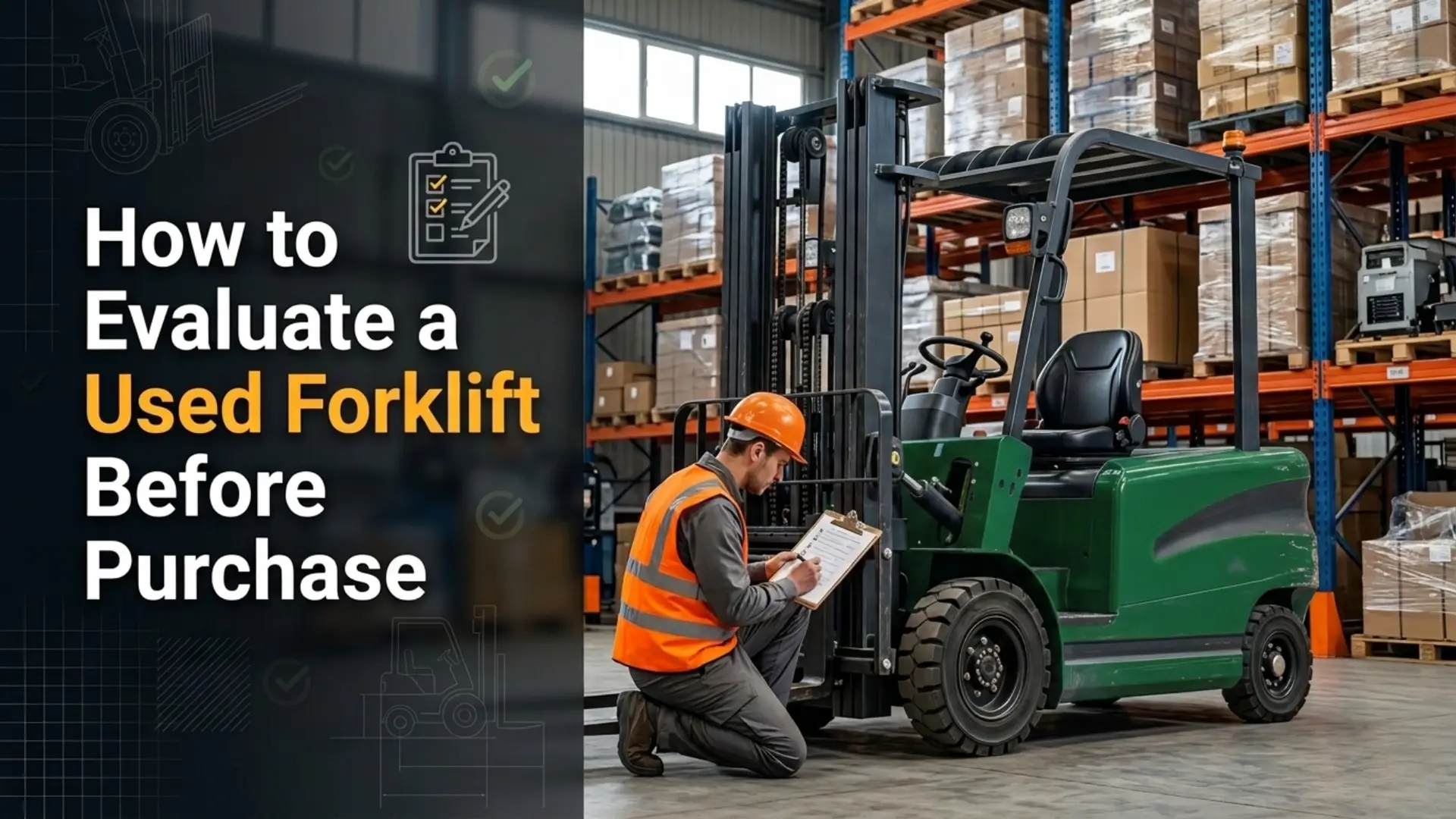
Buying a used forklift can be one of the smartest decisions for your operation, delivering dependable material handling at a fraction of the cost of new. But a used machine only pays off when you know exactly what you’re buying. A careful evaluation protects you from hidden mechanical trouble, safety risks, and repair bills that quietly erase your savings. This guide walks you through five essential steps for evaluating a used forklift before purchase, covering everything from overall condition and maintenance history to engine health, safety features, a proper test drive, and matching the machine to your workload. Follow these steps, and you’ll buy with confidence.
Inspect the Overall Condition and Maintenance History
Your evaluation should begin with a slow, deliberate walk around the entire forklift. The physical condition of a machine tells you a great deal about how it was used and how well it was cared for. Look closely for visible signs of wear, dents, cracks, and rust, paying special attention to the frame, counterweight, and overhead guard. Surface scuffs are normal on a working machine, but structural rust or crude, poorly executed repairs are warning signs that deserve a closer look.
As you inspect, keep an eye out for a few specific red flags that often reveal deeper problems:
- Rust on structural components, which can compromise strength and signal long-term neglect.
- Poor or improvised repairs, such as welds, mismatched parts, or patched panels that suggest past damage.
- Fluid stains or buildup, which point to leaks that may still be active.
- Excessive wear on the operator area, hinting at very high usage the seller may not have disclosed.
These clues help you judge whether the asking price reflects the machine’s true condition.
Just as important as the physical inspection is the paper trail. Always request the forklift’s maintenance and service records, then review them carefully. Consistent, documented servicing shows the machine was maintained by owners who valued reliability, while missing or spotty records leave you guessing about its true history. A forklift with a complete service history is almost always the safer, smarter purchase, because it removes much of the uncertainty that makes buying used feel risky.
Evaluate the Engine, Hydraulics, and Key Components
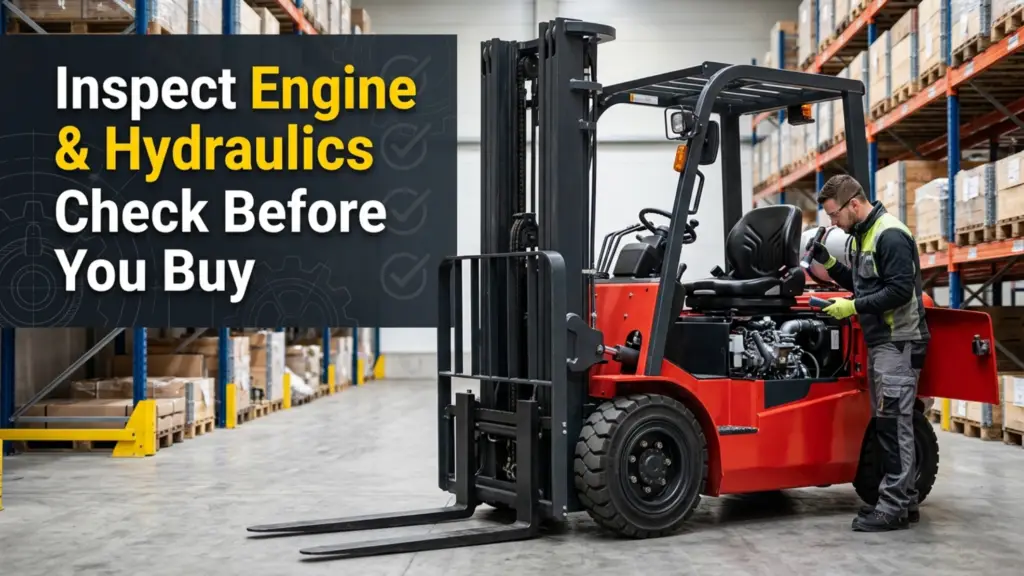
With the exterior checked, turn your attention to the systems that determine how well the forklift actually performs. Start the engine and let it run, listening carefully as it warms up. A healthy engine idles smoothly and pulls cleanly, while knocking, excessive smoke, or rough running often signals wear or neglect that could lead to expensive repairs. Check the transmission as well, watching for smooth shifting and steady power delivery without hesitation or slipping.
The hydraulic system deserves particular scrutiny, since it powers the lifting and tilting functions at the heart of the machine’s job. Inspect these critical components methodically for trouble:
- Engine, checking for unusual noises, smoke, and clean, healthy fluids.
- Transmission, confirming smooth engagement and consistent power.
- Hydraulic system, looking for leaks, low fluid, or sluggish operation.
- Mast, watching for drift, hesitation, or uneven movement under load.
- Steering, testing for responsiveness and checking for fluid leaks or play.
Any leaks, unusual noises, or performance issues in these areas can dramatically affect reliability and future repair costs.
Take your time here, because these components represent the most costly parts of a forklift to repair or replace. A hydraulic system that drifts, an engine that smokes, or a transmission that slips can turn an apparent bargain into a money pit. If you’re not confident evaluating these systems yourself, bringing along an experienced mechanic is a worthwhile investment. Spending a little on a professional inspection now can save you thousands later, and it gives you solid ground for negotiating the price or walking away entirely.
Check the Forks, Mast, and Safety Features
The forks and mast do the real work of lifting, so their condition directly affects both productivity and safety. Examine the forks closely for cracks, bends, and excessive wear, especially at the heel where stress concentrates most. Worn or damaged forks are a serious safety hazard and may need replacing, which adds cost to your purchase. Check that both forks match in length and thickness, and look for any signs that they’ve been overloaded or abused.
Next, operate the mast through its full range of motion several times. It should lift and lower smoothly, without jerking, hesitation, or unusual noise, and the chains should be evenly tensioned and properly lubricated. A mast that binds, drifts down under load, or moves unevenly points to hydraulic or mechanical problems that will only worsen with use.
Safety features are non-negotiable, and every one should be tested to confirm it works. Run through this checklist before you consider any purchase:
- Brakes, which must stop the machine firmly and reliably.
- Lights, ensuring headlights and work lights function.
- Horn, confirming it sounds clearly to warn others.
- Seat belt, checking that it latches and retracts properly.
- Warning alarms, verifying backup and movement alarms activate.
A forklift with faulty safety equipment puts your operators and everyone around them at risk. These systems protect lives, so any that fail must be repaired before the machine goes to work. Treat working safety features as a baseline requirement, not an optional extra, when judging whether a used forklift is worth your money.
Test Drive the Forklift Under Real Operating Conditions
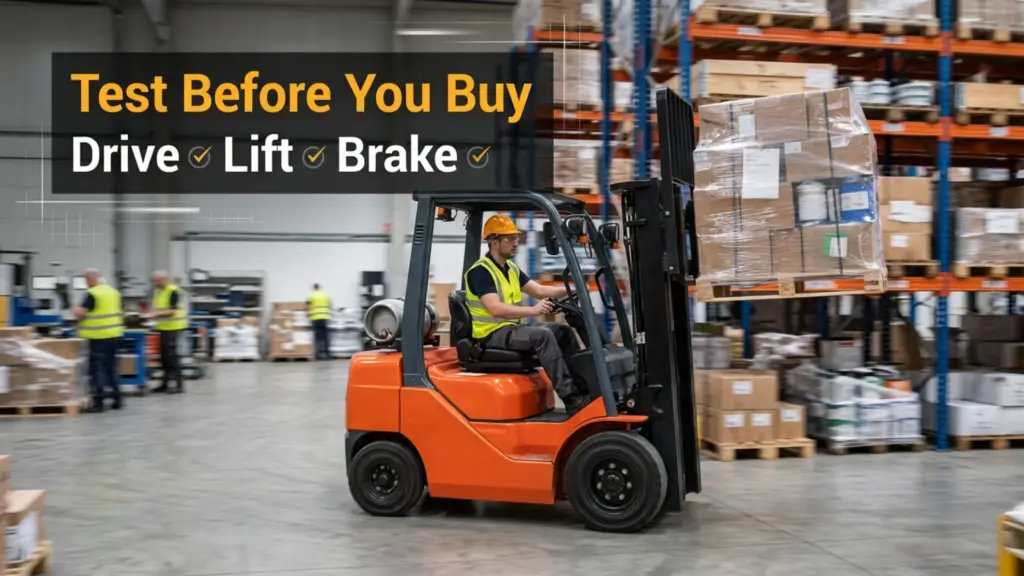
A visual inspection tells you a lot, but nothing reveals a forklift’s true condition like putting it to work. Whenever possible, test drive the machine under conditions that resemble your actual operation. Start by driving it across the yard or warehouse floor, paying attention to how it accelerates, steers, and brakes. The controls should feel responsive and predictable, with no hesitation, grinding, or wandering that could signal trouble underneath.
Then move on to the lifting functions, which are where many hidden problems surface. Raise and lower the forks repeatedly, both empty and, if you can, with a representative load. Watch closely for these performance indicators as you operate:
- Acceleration and power, confirming the machine moves and pulls without straining.
- Steering response, checking for tight, accurate control with no excessive play.
- Braking, ensuring the forklift stops smoothly and holds on an incline.
- Lifting under load, watching for smooth, steady raises without drift or stalling.
- Maneuverability, testing how it handles tight turns and confined spaces.
Any weakness in these areas can point to problems that a static inspection would never catch.
A thorough test drive is your best defense against buying a machine with expensive, hidden faults. Mechanical issues that stay quiet during a walk-around often show themselves under the stress of real operation, whether it’s a transmission that slips under load or a hydraulic system that struggles to lift. Take your time, run the machine through its full range of tasks, and trust what you feel. If something seems off during the test drive, treat it as a serious signal worth investigating before you commit.
Verify Capacity, Hours, and Suitability for Your Application
Even a mechanically sound forklift is a poor purchase if it doesn’t fit the work you need it to do. Before making any decision, confirm that the machine’s specifications genuinely match your operation. Start with the rated load capacity, checking the data plate to verify it can safely handle the heaviest loads you regularly move. Buying a forklift that’s underpowered for your needs invites overloading, premature wear, and serious safety risks, while an oversized machine may cost more than necessary to buy and run.
Consider several key specifications together, since they determine whether the forklift truly suits your workload:
- Rated load capacity, matching or exceeding your typical and maximum loads.
- Lift height, reaching the racking or stacking heights your facility requires.
- Fuel type, whether electric, propane, or diesel, suited to your environment and infrastructure.
- Operating hours, giving a realistic picture of how much life the machine has left.
Weighing these factors as a set helps ensure the forklift will perform well for years, not just for the first few months.
Operating hours deserve special attention, because they function much like mileage on a vehicle. A forklift with low, well-documented hours generally has more service life ahead of it, while a high-hour machine may be nearing costly repairs regardless of how clean it looks. Balance the hours against the price and the machine’s overall condition to judge real value. Choosing a forklift that fits your capacity, height, fuel, and usage needs helps you maximize productivity while avoiding the premature wear and unnecessary expenses that come from a poor match.
Conclusion
Evaluating a used forklift before purchase comes down to a disciplined, step-by-step approach. Inspect the overall condition and maintenance history, examine the engine, hydraulics, and key components, and confirm the forks, mast, and safety features all work as they should. Follow up with a real test drive, then verify that capacity, hours, and specifications match your workload. Taken together, these steps remove the guesswork and protect you from costly surprises. A careful evaluation turns a used forklift from a gamble into a smart, reliable investment, giving you dependable performance and lasting value for your operation for years to come.