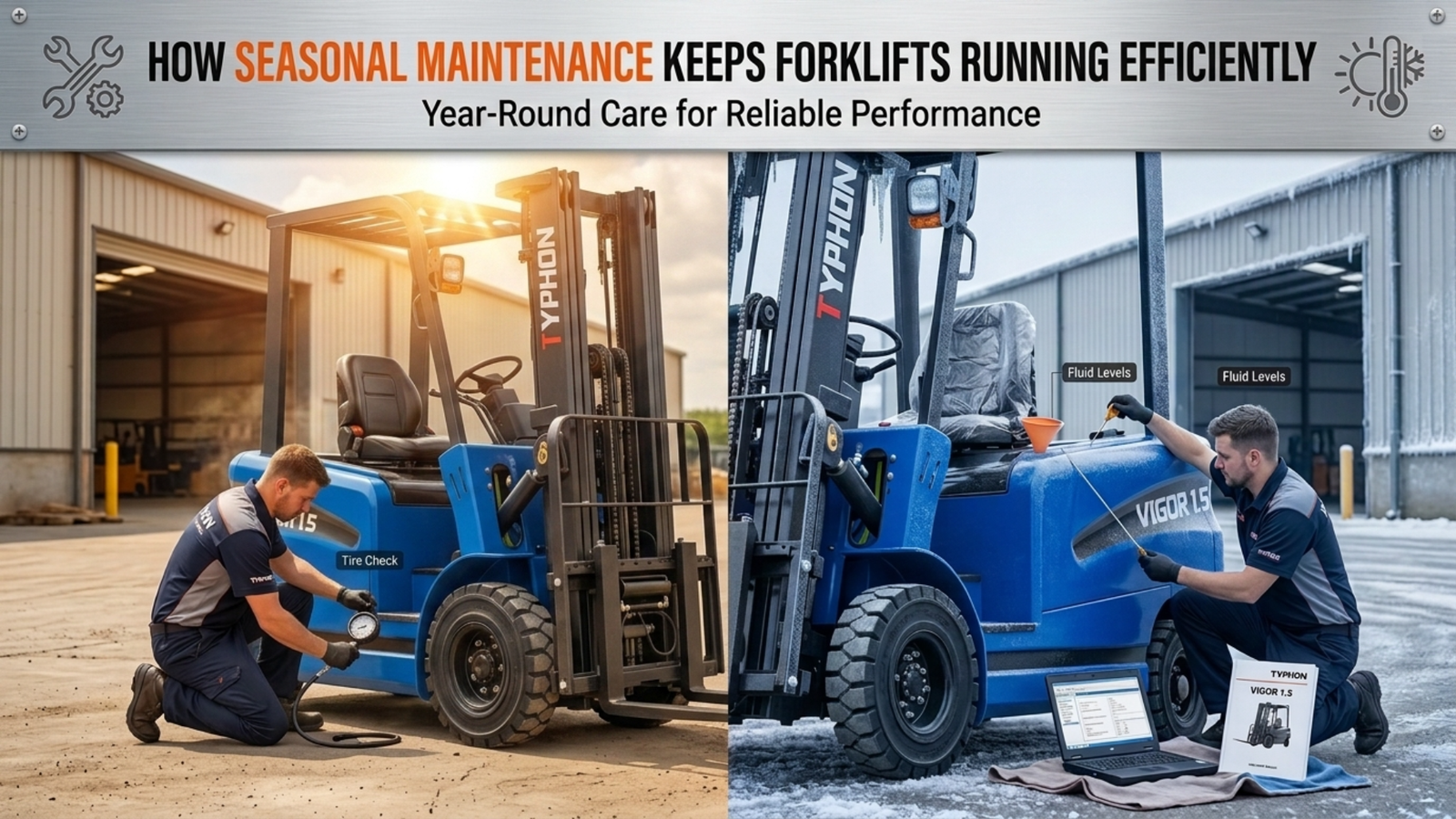
A forklift works hard no matter the weather, but the weather itself works hard on the forklift. As temperatures swing, humidity rises and falls, and dust and rain come and go, the machine’s components face very different demands across the year. Ignore those shifting conditions, and you invite breakdowns, safety risks, and repair bills that could have been avoided. Adjust your maintenance to match the seasons, and your forklift rewards you with steady, dependable performance month after month. This guide walks you through why seasonal changes matter, what to prioritize in warm and cold weather, how to build a reliable inspection routine, and the lasting benefits of a proactive, year-round approach.
Why Seasonal Changes Affect Forklift Performance
A forklift operates in the same building or yard all year, yet the conditions around it never stay still. Temperature, humidity, rain, and dust each act on the machine’s components in distinct ways, and understanding those effects is the first step toward preventing unexpected performance problems. Heat is one of the most demanding factors. High temperatures make engines and hydraulic systems run hotter, thin out fluids, and push cooling systems and batteries to work harder. A machine that runs flawlessly in mild weather can overheat or lose power when the mercury climbs, especially during long, busy shifts.
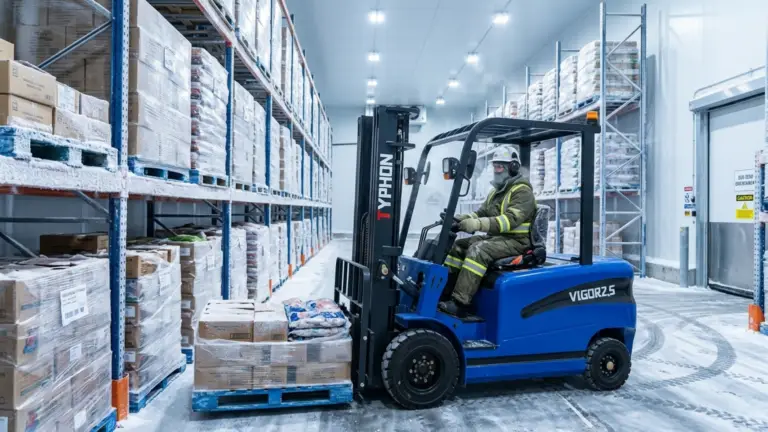
Cold weather creates the opposite set of challenges. Low temperatures thicken engine oil and hydraulic fluid, making cold starts harder and slowing the response of the boom, mast, and lift functions. Batteries also lose a meaningful share of their capacity in the cold, so a unit that starts easily in summer may struggle on a frosty morning. Moisture and dust compound these seasonal stresses in their own ways throughout the year.
Different conditions target different parts of the machine:
- Heat strains cooling systems, batteries, and hydraulic fluids while thinning lubricants.
- Cold thickens fluids, weakens batteries, and slows hydraulic response.
- Humidity and rain promote corrosion, electrical faults, and slippery surfaces.
- Dust clogs filters, coats components, and accelerates wear on moving parts.
Recognizing how each seasonal factor affects your forklift lets you stay ahead of trouble rather than reacting to it. When you know that heat threatens the cooling system, cold weakens the battery, moisture invites corrosion, and dust chokes filters, you can time your maintenance to counter each risk before it disrupts operation. That awareness is the foundation of a maintenance routine that keeps the machine running efficiently no matter what the calendar brings.
Spring and Summer Maintenance Priorities
Warm weather brings longer daylight hours, heavier workloads, and a real risk of overheating, so spring and summer maintenance centers on keeping your forklift cool and running reliably through demanding shifts. The cooling system deserves your first and closest attention. Check coolant levels and condition, inspect hoses and the radiator for leaks or blockages, and clear away any debris that restricts airflow. A cooling system in good order is your best defense against the heat-related failures that sideline machines during the busiest time of year.
Batteries, tires, and hydraulic fluids round out the warm-weather priorities. Heat accelerates battery fluid evaporation and can shorten battery life, so check electrolyte levels on lead-acid batteries, keep terminals clean, and confirm charging systems work correctly. Tires take a beating in summer too, as high temperatures and hard use raise the risk of wear and pressure changes, so inspect them for damage, tread condition, and correct inflation. Hydraulic fluid thins in the heat, which can reduce lifting performance, making it important to check fluid levels, condition, and the system for leaks.
Focus your warm-season inspections on the systems most affected by heat and heavy use:
- Cooling system: Coolant level, hoses, radiator, and clear airflow.
- Batteries: Fluid levels, clean terminals, and reliable charging.
- Tires: Wear, damage, and proper inflation under summer conditions.
- Hydraulic fluids: Correct level, good condition, and no leaks.
Staying disciplined with these routine inspections pays off directly in uptime and reliability during your peak season. Overheating and heat-related breakdowns tend to strike exactly when you can least afford them, in the middle of a demanding stretch of work. By keeping the cooling system, batteries, tires, and hydraulics in top condition before the heat sets in, you protect both your equipment and your productivity through the busiest, hottest months of the year.
Preparing Forklifts for Fall and Winter
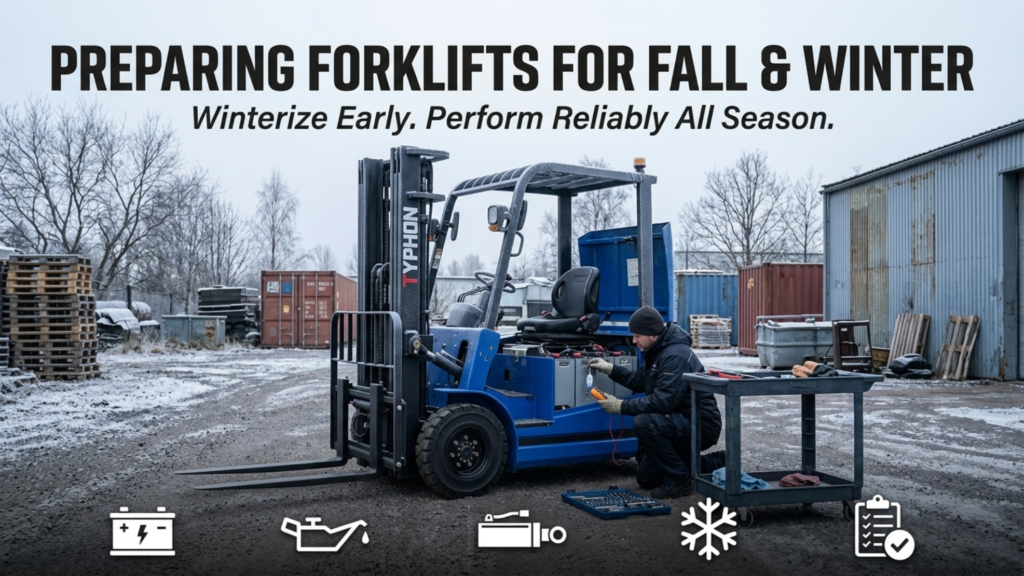
As temperatures drop, forklifts face a fresh set of challenges that make proper winterization essential to dependable operation. Cold-start difficulty is often the first sign of trouble. Low temperatures thicken engine oil and diesel fuel, forcing the engine to work harder to turn over and reach operating temperature. Switching to the manufacturer’s recommended winter-grade oil helps the engine start and run smoothly, while treated or winter-blend fuel on diesel machines prevents gelling that can clog the fuel system on the coldest mornings. A little preparation here prevents the frustrating, productivity-killing failure to start.
Battery capacity and hydraulic efficiency both suffer in the cold as well. Batteries lose a significant portion of their cranking power in low temperatures, so a unit that seems fine in autumn may struggle once winter sets in. Test batteries as the season turns, keep them fully charged, and replace any showing signs of weakness. Hydraulic fluid thickens in the cold too, making the mast, lift, and tilt functions respond sluggishly until the system warms up. Using the correct cold-weather hydraulic fluid and allowing the machine to warm up before heavy work keeps those functions smooth and protects the pump and seals from strain.
Thorough winterization comes down to a handful of key steps:
- Engine: Use winter-grade oil and treated or winter-blend fuel.
- Battery: Test capacity, keep fully charged, and replace weak units.
- Hydraulics: Switch to cold-weather fluid and warm up before heavy use.
- Tires and coolant: Check tire condition and confirm proper antifreeze concentration.
Preparing your forklifts before the cold arrives keeps them dependable when harsh conditions would otherwise slow them down. Fall is the ideal time to complete this work, giving you a buffer before the first hard freeze. A properly winterized machine starts reliably, responds smoothly, and holds up through the demanding winter months, keeping your operation moving when others grind to a halt.
Seasonal Inspection Checklist for Maximum Reliability
A structured inspection checklist is the backbone of effective seasonal maintenance, turning good intentions into consistent, repeatable action. Without a written routine, it is easy to overlook a component or lose track of when a system was last serviced. A well-designed checklist, reviewed as each season changes, ensures that every critical system receives attention at the right time. It also creates accountability across your team, so anyone performing an inspection follows the same thorough process and nothing important slips through the cracks.
An effective seasonal checklist covers the systems most vulnerable to changing conditions while leaving room for the specific demands of each season. Working through these areas methodically keeps the whole machine in reliable shape:
- Cooling system: Coolant, hoses, radiator, and airflow, especially before summer.
- Battery and electrical: Charge, fluid levels, terminals, and connections.
- Hydraulic system: Fluid level and condition, plus checks for leaks.
- Tires: Wear, damage, and inflation suited to the season’s conditions.
- Engine and fluids: Oil grade, fuel condition, and filters matched to the weather.
- Safety systems: Lights, horn, brakes, and warning devices tested and working.
Following a checklist like this delivers benefits that reach well beyond the inspection itself. Regular, structured checks catch small problems before they grow into major failures, which directly reduces unplanned downtime. They also improve safety, since verifying brakes, lights, and warning devices protects operators and everyone working nearby. Over time, consistent inspections extend the life of the equipment by ensuring wear and developing faults are addressed promptly rather than left to worsen.
Make the seasonal checklist a permanent part of how you manage your fleet. Assign responsibility clearly, keep completed checklists on file, and adjust the routine as each season approaches. This simple discipline keeps your forklifts reliable, your operators safe, and your operation running smoothly through every change in the weather.
The Long-Term Benefits of Year-Round Seasonal Maintenance
Committing to seasonal maintenance throughout the year is one of the smartest investments a business can make in its forklift fleet, and the payoff shows up clearly over time. The most immediate benefit is fewer costly repairs. Small issues caught during a seasonal inspection, such as a weak battery, low hydraulic fluid, or a worn hose, are inexpensive and simple to address. Left unchecked, those same issues can cascade into major failures that require expensive parts, extended downtime, and emergency service. Proactive care consistently costs far less than reactive repair.
Improved efficiency is another lasting advantage that directly affects your operating costs. A forklift kept in top condition runs more efficiently, whether it burns fuel or draws from a battery. Clean filters, proper fluid levels, well-maintained tires, and a healthy cooling or charging system all help the machine perform its work using less energy. Over a full year of operation, those efficiency gains add up to meaningful savings, lowering the ongoing cost of running your fleet without any sacrifice in performance.
Perhaps the greatest long-term benefit is a longer equipment lifespan. Consistent seasonal maintenance protects components from the premature wear that neglect and seasonal stress cause, so the machine serves your operation dependably for more years before it needs replacing. That extended life spreads the cost of the equipment across a longer period, improving the return on your investment considerably.
Taken together, these benefits make a compelling case for a proactive, year-round approach. Lower repair costs, better fuel and energy efficiency, and longer equipment life all work in the same direction, helping you maximize productivity while reducing operating expenses. A business that maintains its forklifts in step with the seasons keeps its fleet reliable, its costs controlled, and its operations running smoothly, gaining a steady advantage over those that wait for something to break.
Conclusion
Seasonal maintenance is not an occasional chore but an ongoing strategy that keeps your forklifts running efficiently all year long. Temperature, humidity, rain, and dust each place different demands on the machine, so adjusting your care to match the season is what prevents unexpected failures. Warm weather calls for close attention to cooling systems, batteries, tires, and hydraulics to guard against overheating, while cold weather demands thorough winterization for reliable starts and smooth performance. A structured seasonal checklist keeps every critical system in top condition, reducing downtime, improving safety, and extending equipment life. Best of all, a proactive, year-round approach minimizes costly repairs, improves fuel and energy efficiency, and lengthens the working life of your fleet. Commit to seasonal maintenance, and your forklifts will deliver dependable, cost-effective performance through every season.