A forklift can move two tons of product across your warehouse in seconds. That same power can crush a foot, topple a rack, or pin a worker just as fast. Forklifts are among the most useful machines on any site and among the most dangerous, and the frustrating truth is that most accidents trace back to a handful of preventable causes. One skipped inspection, one rushed turn, one overloaded fork, and a routine shift turns into a serious injury.
The good news is that safe forklift operation isn’t complicated. Most incidents can be avoided by following consistent operating procedures, keeping equipment in good condition, and ensuring operators understand both the machine’s limits and the conditions around them. Small habits practiced every shift often make the biggest difference.
Whether you manage a busy warehouse, construction site, manufacturing facility, or distribution center, understanding the most common forklift hazards is the first step toward preventing them. In this guide, we’ll look at the risks that lead to the majority of accidents and the practical steps you can take to create a safer, more efficient workplace.
Speeding and Reckless Operation
Forklifts aren’t built for speed, but the pressure to move fast tempts operators to push them anyway. Speeding cuts reaction time, lengthens stopping distance, and makes turns far more likely to end in a tip-over or collision. Reckless habits compound the risk. Sharp turns, sudden stops, and horseplay all destabilize the machine and its load. In tight warehouse aisles, even a few extra miles per hour leaves no room to react when a pedestrian steps out.
Maintaining a safe, controlled pace allows operators to respond to changing conditions, navigate blind corners, and stop smoothly when unexpected obstacles appear. A few seconds saved by rushing are never worth the increased risk of injuries, damaged inventory, or costly equipment repairs.
The Hidden Costs of Rushing on the Warehouse Floor
Speeding feels efficient until it isn’t. Operators who consistently push the machine’s speed often do so under real or perceived time pressure, moving loads faster to hit throughput targets or recover lost time. In the short run, they might save a few minutes per shift. In the long run, they erode the safety margin that keeps everyone else on the floor safe. A forklift traveling too fast through an intersection cannot stop in time for a pedestrian who steps out from behind a rack, and that collision causes far more downtime than the seconds saved ever recovered.
Reckless operation isn’t always intentional. Fatigue, distraction, and overconfidence all contribute. An experienced operator who has run the same route hundreds of times may stop scanning for hazards because the path feels predictable. That’s when the unexpected pedestrian, the misplaced pallet, or the wet floor patch causes an incident that a fresh, attentive operator would have avoided.
Setting and Enforcing Speed Standards That Stick
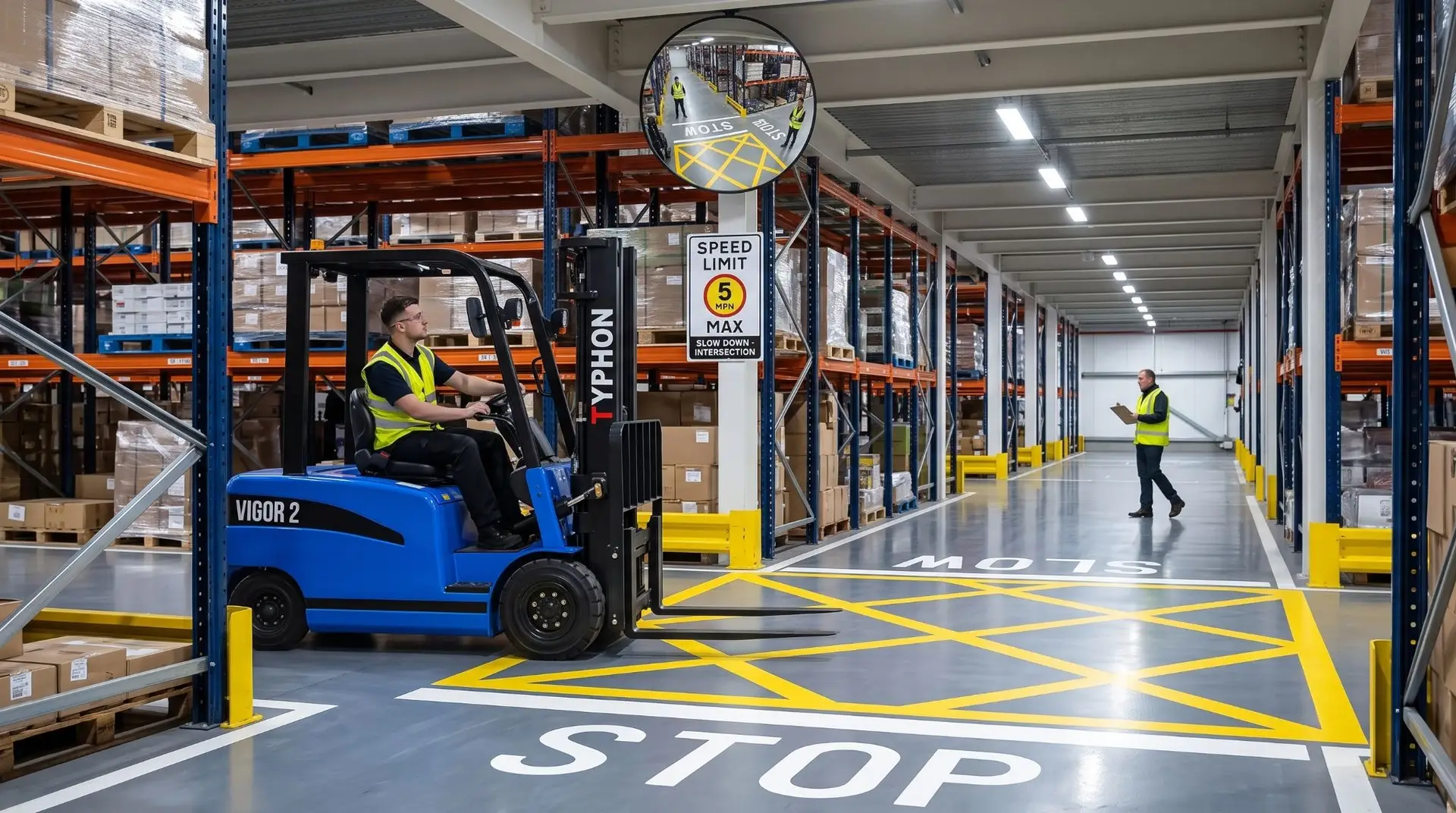
Speed limits work only when they’re enforced consistently and tied to real consequences. Post limits in every zone of the facility, and make them specific to the space: a wide receiving dock may allow higher speeds than a narrow picking aisle or a pedestrian crossing. Train operators slow at every intersection and blind corner without exception, and to sound the horn at aisle ends and doorways as a standard reflex, not an afterthought.
Enforcement matters just as much as the rules themselves. When managers overlook speeding because a shift is busy, operators learn that the limit is flexible. When violations are addressed consistently and throughput pressure is managed without pushing operators into unsafe speeds, the whole floor operates at a pace that’s both productive and safe.
Takeaway: Slower, deliberate operation costs a few seconds per trip and prevents the collisions and tip-overs that cost lives.

Poor Visibility
Operators can only avoid what they can see, and forklifts create plenty of blind spots. Tall loads block the forward view, warehouse corners hide pedestrians, and poor lighting or bad weather in outdoor yards makes hazards vanish until it’s too late. Visibility problems cause a large share of forklift-pedestrian collisions, and they’re one of the easiest root causes to underestimate because near-misses often go unreported.
Reducing these risks requires more than simply slowing down. Operators should travel in reverse when a load blocks their view, use mirrors and warning devices where available, and approach intersections and blind corners with extra caution. Maintaining clear sightlines and staying alert to nearby workers can prevent accidents before they happen.
How Visibility Gaps Create Pedestrian Collision Risks
A fully loaded forklift traveling forward with a tall pallet on the forks gives the operator almost no forward visibility at all. Many operators travel in this configuration without reversing or using a spotter because it feels routine. The problem is that pedestrians on the other side of that load cannot see the forklift coming either, and neither party has enough warning to react when their paths cross at an intersection.
Facility design can make visibility problems even worse. Blind corners, poorly positioned racks, and dimly lit work areas reduce reaction time and increase the risk of collisions between forklifts and pedestrians. These are common workplace conditions, which is why maintaining clear sightlines and improving visibility are essential parts of forklift safety.
Practical Steps to Improve Visibility Across the Facility
Improving visibility starts with safe operating practices. Operators should travel in reverse when a load blocks the forward view, use spotters when handling oversized or awkward loads, and slow down at blind corners and intersections. Consistently following these practices helps reduce the risk of collisions and keeps both operators and nearby workers safer.
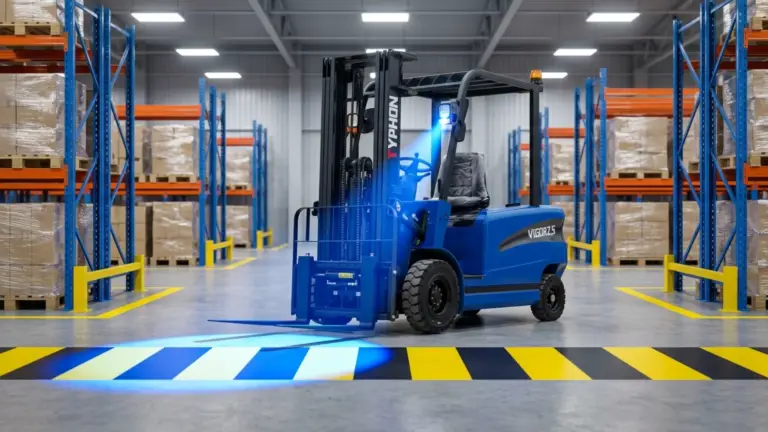
On the facility side, convex safety mirrors installed at blind corners and intersections give both operators and pedestrians a wider line of sight. Good lighting throughout the building, including in dock areas and outdoor yards, reduces the chance that a hazard stays hidden until it’s too late. Blue spot lights mounted on the forklift project a visible warning on the floor ahead, alerting pedestrians to an approaching machine even before they can see it directly. Together, these measures close the visibility gaps that cause the most serious pedestrian collisions.
Takeaway: Give operators a clear line of sight and warn everyone nearby, and you close one of the biggest gaps that leads to serious collisions.
Untrained or Uncertified Operators
A forklift in untrained hands is a serious hazard. Operators who don’t understand load limits, stability, or safe maneuvering make mistakes that a trained driver would never make, and many facilities let people operate without proper certification or refresher training. The problem often hides until something goes wrong.
Proper training gives operators the knowledge and confidence to inspect equipment, handle loads safely, recognize workplace hazards, and respond correctly in unexpected situations. Keeping certifications current and providing regular refresher training helps maintain safe operating practices while reducing the likelihood of preventable accidents.
Why Gaps in Training Show Up at the Worst Moments
Proper training helps operators recognize hazards, handle different load types safely, and respond appropriately to changing jobsite conditions. A well-trained operator is more likely to make safe decisions, reducing the risk of accidents, equipment damage, and workplace injuries.
Training gaps are also contagious. When a facility tolerates untrained operators, it signals to everyone that the standards are flexible. Other operators may begin to skip steps, assume the rules don’t apply to them, or take risks they’ve seen go unpunished. A single untrained operator working a shift quietly degrades the safety culture for everyone around them.
Building a Training Program That Prevents Incidents
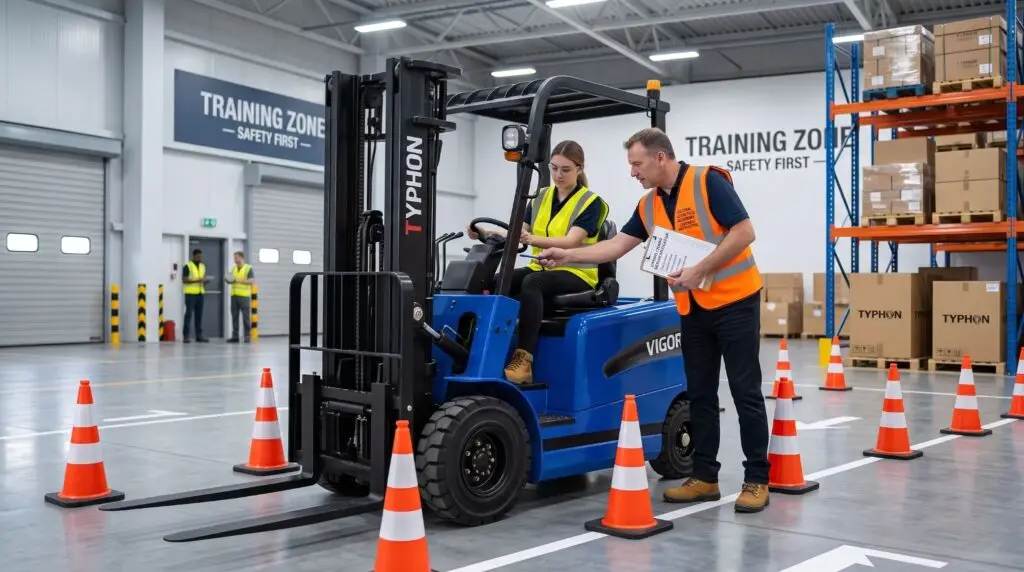
Solid forklift training goes beyond a one-time certification test. It requires hands-on evaluation in the actual facility where the operator works, on the specific machine types they’ll run, and through the real scenarios they’ll face. Classroom knowledge is a starting point, not a finish line. Operators who pass written tests but haven’t been evaluated maneuvering a loaded machine in a narrow aisle aren’t truly ready.
Regular refresher training helps reinforce safe operating practices and correct unsafe habits before they lead to accidents. Providing additional training after near-misses, equipment changes, or observed safety concerns ensures operators remain confident, compliant, and prepared to work safely in changing conditions.
Takeaway: Proper, ongoing training turns operators into your first line of defense against accidents rather than a source of them.
Unstable or Poorly Secured Loads
A load that shifts, slides, or topples turns a controlled lift into a hazard in an instant. Unstable loads come from uneven stacking, damaged pallets, loose items, or picking up a load that was never balanced correctly in the first place. Once a load starts to move, it’s hard to recover, and the consequences reach well beyond the operator.
What Makes a Load Unstable and Why It Matters
Load stability depends on more than whether the product fits on the pallet. How the weight is distributed, how high it’s stacked, whether the pallet itself is in good condition, and whether items are secured all determine how the load behaves once it’s in the air. A load that looks fine on the ground can shift the moment the mast tilts or the forklift turns. Loose items near the top of a tall stack are especially prone to falling, and in a busy warehouse, a falling load endangers anyone below it.
Damaged pallets are a chronic source of unstable loads that operators often overlook because they’re under time pressure or because the damage isn’t immediately obvious. A cracked stringer or a missing board can hold up through several lifts before failing at exactly the wrong moment. Operators who pick up pallets without checking their condition are accepting a risk that’s easy to eliminate with a quick visual inspection.
Best Practices for Securing and Handling Loads
Preventing load failures starts before the forks engage. Stack loads evenly and keep the center of gravity low, because a wide, low load is far more stable than a tall, narrow one. Inspect every pallet for cracks, missing boards, and rot before lifting. Wrap or strap loose items so they stay put during travel, and center the load squarely on the forks rather than carrying it off to one side.
Keep the load stable by ensuring it is properly positioned on the forks before moving. Traveling with a secure, well-balanced load improves control, reduces the risk of dropped materials, and helps maintain safe forklift operation throughout the job.
Takeaway: A properly balanced, secured load stays put, protecting your people, your product, and the operator behind the wheel.
Frequently Asked Questions
What are the most common types of forklift accidents?
The most frequent forklift accidents include tip-overs, collisions with pedestrians, workers struck by falling loads, and people pinned between the forklift and a fixed object. Tip-overs alone account for a large share of serious injuries and deaths. Most of these incidents stem from the same root causes: overloading, speeding, poor visibility, and inadequate training. Addressing those core issues prevents the majority of accidents across all categories.
Do smaller warehouses really need formal forklift safety programs?
Absolutely. Accidents don’t scale down with facility size, and a smaller operation often has less margin to absorb an injury, a damaged inventory, or downtime. A formal program doesn’t have to be complicated: clear traffic rules, certified operators, daily inspections, and marked pedestrian zones cover the essentials. Even a handful of forklifts in a compact space create real risk, and a simple, consistently enforced program protects both your people and your business.
Conclusion
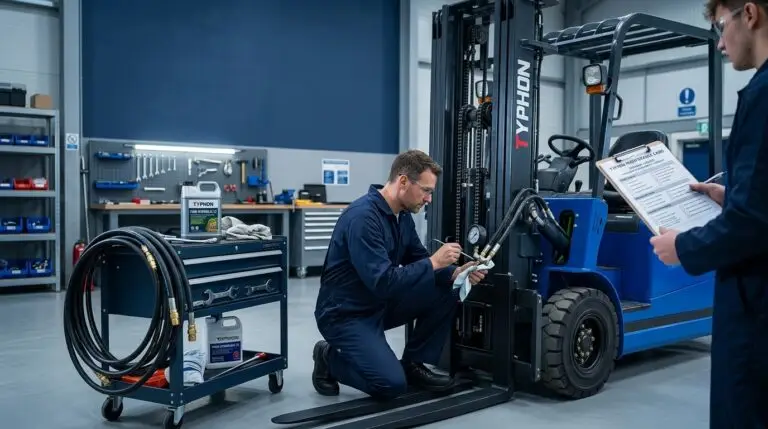
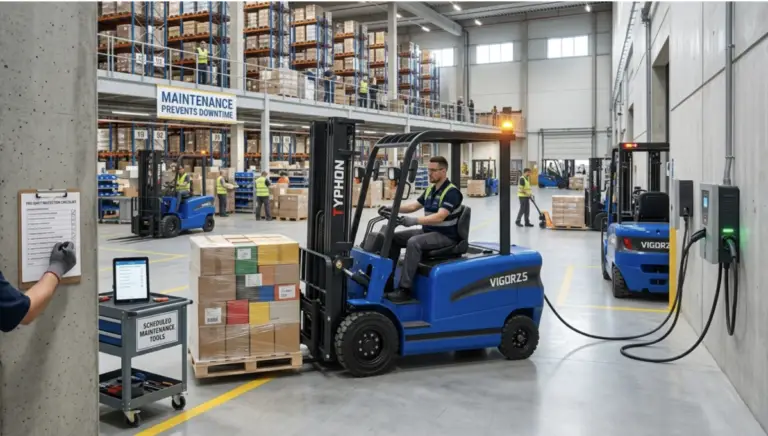
Safe forklift operation depends on consistent practices rather than a single precaution. Operator training, routine inspections, proper load handling, clear traffic management, and regular equipment maintenance all work together to reduce risk on the job. When these safety measures become part of everyday operations, they help create a workplace where forklifts can be used efficiently without compromising the well-being of employees.
Improving forklift safety is an ongoing process that should evolve alongside your operation. Regularly reviewing procedures, reinforcing safe work habits, and addressing potential hazards before they lead to incidents helps maintain a safer and more productive workplace. By making safety a continuous priority instead of a one-time effort, businesses can protect their workforce while keeping operations running smoothly.