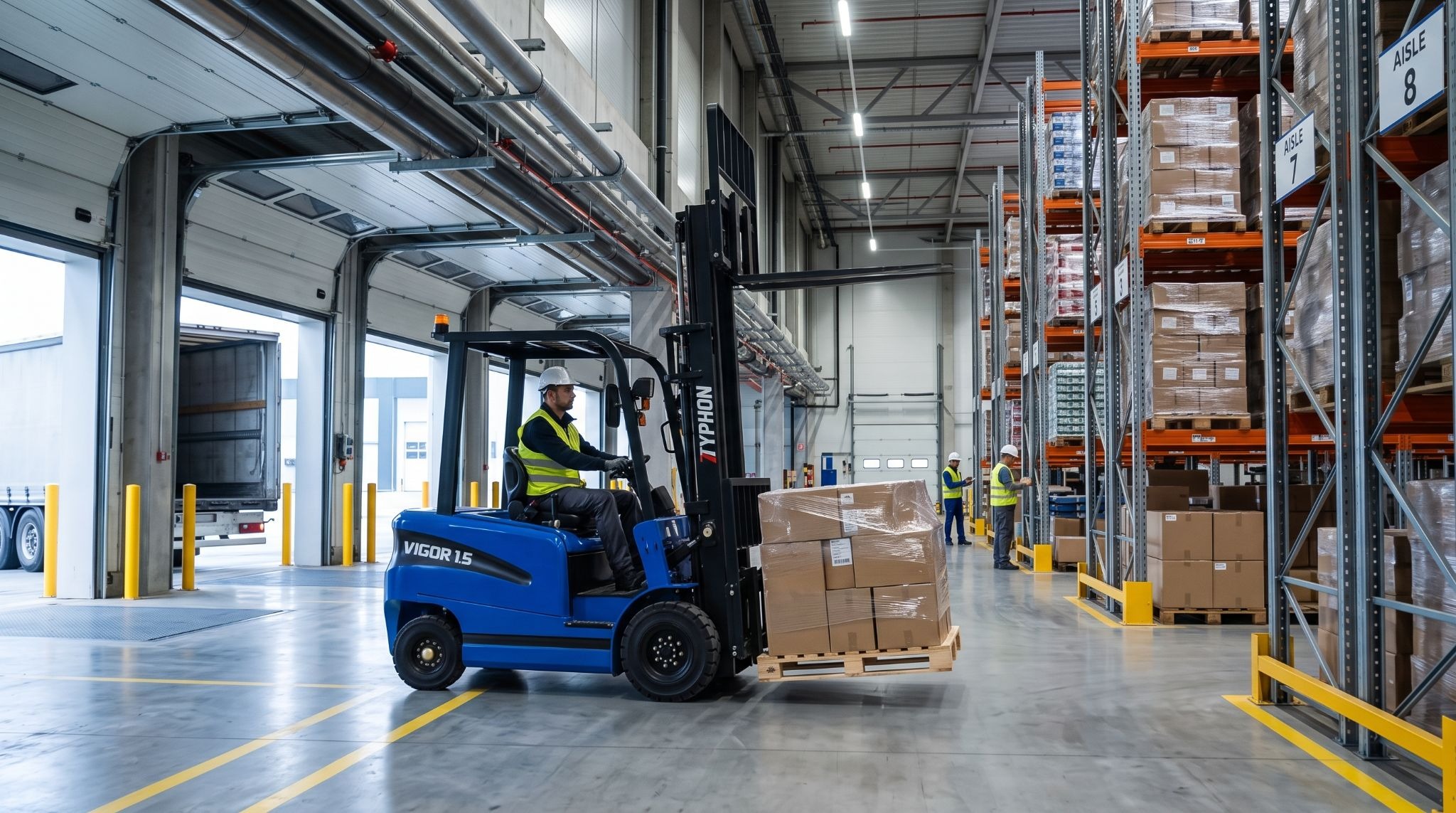
You raise a loaded pallet toward the top rack, ease off the lever to set it down gently, and instead the forks lurch, overshoot the beam, then drift back down an inch as you fight to hold position. The load teeters, the rack shudders, and what should have been a two-second placement turns into a tense, sweaty correction thirty feet up. That rough, unpredictable motion almost always traces back to one thing you can’t see from the seat: the hydraulic flow feeding the mast. Get it right, and the forks glide, creep, and hold exactly where you want them. Get it wrong, and every placement becomes a gamble with your load, your racking, and your safety.
Hydraulic flow is the quiet force behind every precise lift, tilt, and placement a forklift makes. In this guide, you’ll learn how flow controls mast movement, why flow rate and pressure decide your precision, how poor flow creates jerky or drifting motion, the role control valves play in smooth handling, how contaminated or low fluid steals accuracy, and what to weigh when buying and maintaining a machine. By the end, you’ll understand exactly why proper hydraulic flow is the difference between placing a load and wrestling one.
How Hydraulic Flow Controls Mast Movement
Hydraulic flow is the force behind every mast movement on a forklift. Whenever the forks lift, lower, or tilt, pressurized hydraulic fluid travels through the system to power the cylinders that control those actions. The amount of fluid reaching the cylinders determines how quickly and smoothly the mast responds to operator input.
Consistent hydraulic flow allows the forklift to handle loads with better control and predictable movement. If the flow is too low, lifting becomes slow and less responsive; if it is uneven, the mast may move inconsistently. Understanding how flow affects performance helps operators identify issues early and maintain efficient lifting operations.
Lifting and Lowering the Forks
When you pull the lift lever, the hydraulic pump sends fluid into the lift cylinders, and that fluid pushes the mast and forks upward. The more fluid flowing in, the faster the forks rise; ease the flow, and they slow. Lowering reverses the process, metering fluid back out of the cylinders in a controlled release so the load settles instead of dropping.
That relationship between flow and speed is the whole basis of controlled lifting. A steady, well-regulated flow lets the forks climb smoothly and stop cleanly, while erratic flow makes them surge and stall. The fluid isn’t just moving the load; it’s setting the pace and steadiness of every vertical move you make.
Tilting the Mast for Control
Tilt works the same way through a separate set of cylinders. Push the tilt lever forward or back, and fluid flows into the tilt cylinders to angle the mast, letting you level the forks under a load or tip them back to cradle it securely for travel. Precise tilt control is what keeps a raised load stable and square to the rack.
Fine tilt adjustments demand fine flow control. When you’re leveling forks under a pallet on a high beam, a small, smooth flow lets you nudge the angle exactly right. A crude, surging flow overshoots that adjustment, and at height a few degrees of unwanted tilt can shift or spill a load fast.
Takeaway: Hydraulic flow drives both the lift and tilt of the mast, so the smoothness and precision of that flow directly sets how steadily the forks move and hold.
Why Flow Rate and Pressure Matter for Precision
Flow doesn’t work alone. It partners with pressure, and together they decide whether the mast responds with fingertip accuracy or blunt force. Understanding the two, and how they differ, is the key to seeing why precise load placement depends on both being right.
Flow and pressure must stay balanced because each affects a different part of the lifting process. Flow controls the speed of hydraulic movement, while pressure provides the force needed to handle heavy loads. When both operate correctly, the mast moves smoothly, responds accurately, and gives operators better control during lifting and positioning tasks.
Flow Rate Sets the Speed
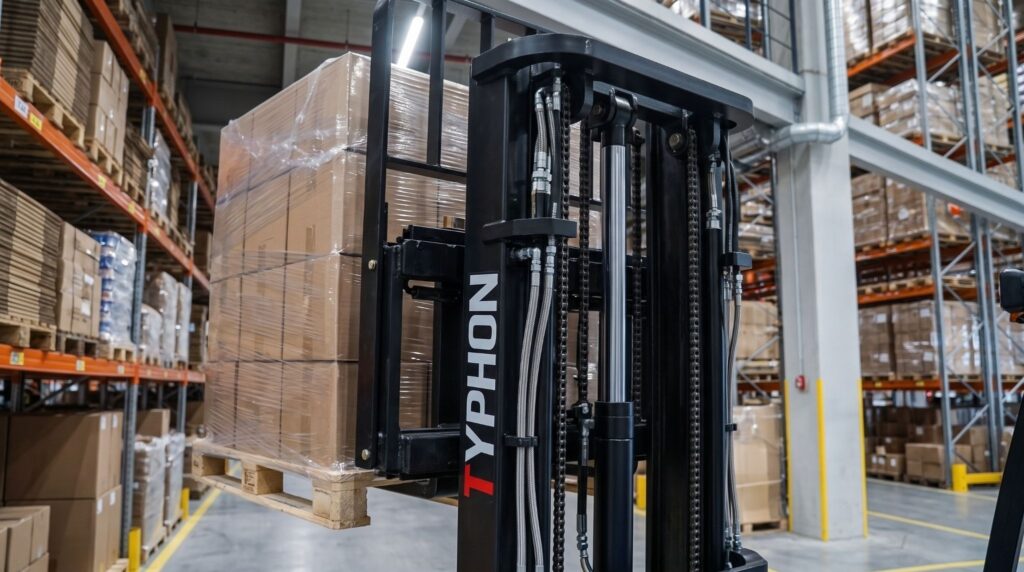
Flow rate, the volume of fluid moving per minute, controls how fast the mast moves. A properly matched flow rate gives you a lift speed that’s brisk enough to be productive yet controllable enough to place loads precisely. Too little flow, and the forks crawl; too much, and they move faster than you can accurately command.
Precision lives in the low end of that range. The ability to feather the controls and move the forks slowly, an inch at a time, is what lets you thread a load onto a high beam or set it gently on an uneven surface. A system delivering smooth, consistent flow at low speed is what makes that delicate placement possible.
Pressure Delivers the Force
Pressure is what lets the flow do work against a load. It’s the force the hydraulic fluid exerts, and it has to be high enough to lift the machine’s rated capacity smoothly. When pressure is adequate and steady, the forks raise a heavy load at a consistent, predictable speed you can rely on.
Trouble starts when pressure sags under load. If the system can’t hold pressure, a heavy pallet slows or stutters as it rises, and placement becomes guesswork because the mast responds differently depending on the weight. Consistent pressure is what keeps the machine behaving the same way whether the forks are empty or fully loaded.
Takeaway: Flow rate governs mast speed and pressure delivers the force to move the load, and precise placement needs both to stay steady and matched to the work.
How Poor Flow Causes Jerky or Drifting Movement
When hydraulic flow goes wrong, you feel it in the controls immediately. The mast stops responding smoothly and starts lurching, hesitating, or sinking on its own. Recognizing these symptoms helps you understand what’s happening inside the system and why lifting accuracy suffers. These changes often point to restricted hydraulic lines, worn components, or inconsistent hydraulic pressure. Addressing these issues early helps restore smooth mast operation, improve load control, and keep the forklift operating safely and efficiently. Regular hydraulic maintenance also helps this material handling machine deliver stable lifting performance and reliable mast control during daily operations.
Jerky, Surging Motion
Jerky movement, where the forks lurch and stutter instead of gliding, usually points to inconsistent flow. Air trapped in the hydraulic fluid is a common cause, since air compresses where fluid doesn’t, making the mast jump and hesitate as pockets pass through the system. Low fluid and a struggling pump produce the same erratic result.
That surging motion wrecks precision. Every lurch forces a correction, and at height those corrections sway the load and eat into your confidence. Instead of easing a pallet onto a beam, you’re chasing a moving target, tapping the controls and hoping the forks land where you meant them to.
Platform Drift and Sinking Loads
Drift is the opposite problem: the forks slowly sink or the mast tilts on its own when you’ve given no command. This creep almost always traces to fluid leaking internally past a worn cylinder seal or a faulty control valve, letting the load settle under its own weight instead of holding fast.
Drift is dangerous precisely because it undermines a held position. You set a load exactly right, then watch it sag out of place as you try to withdraw the forks, or feel a raised pallet slowly tilt toward the rack. A machine that won’t hold position can’t place loads reliably, and any drift is a signal that seals or valves need attention right away.
Takeaway: Jerky motion usually means air or inconsistent flow, while drift means fluid leaking past worn seals or valves, and both destroy the steady control accurate placement demands.
How Contaminated or Low Fluid Impacts Accuracy
The hydraulic system is only as good as the fluid running through it. Contaminated or low fluid quietly undermines every part of the flow, and it’s behind a large share of the precision problems operators blame on the machine itself. Understanding this connection points you straight to the most common, and most preventable, cause of poor placement.
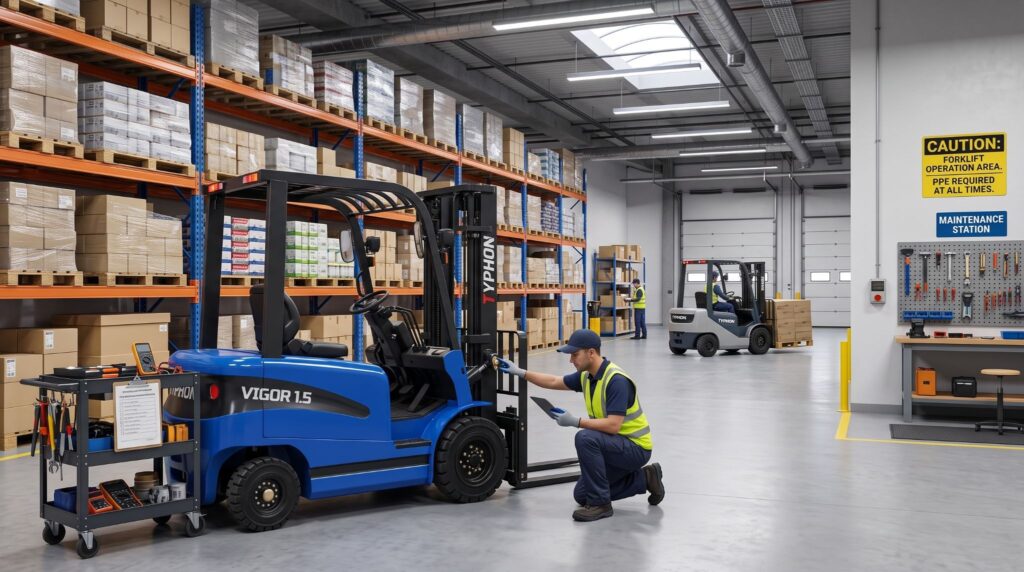
Clean hydraulic fluid helps maintain smooth movement, protect internal components, and keep the system responding accurately. Regular fluid checks, proper filtration, and timely replacement prevent contamination-related issues and ensure the mast continues to perform reliably during demanding lifting tasks.
What Contamination Does to Flow
Contaminated fluid, carrying dirt, water, or metal particles, disrupts flow at every point it touches. Debris clogs filters and narrows passages, restricting the volume of fluid reaching the cylinders so the mast moves slowly or unevenly. The same particles wear pumps and valves, steadily degrading the smooth response the system was built to deliver.
That gradual decline is deceptive. The machine doesn’t fail all at once; it just gets rougher and less predictable as contamination builds, until placing loads that were once easy becomes a fight. Clean fluid is what keeps flow consistent, and letting it degrade trades away your precision a little at a time.
Why Low Fluid Wrecks Precision
Low fluid starves the system of the volume it needs to work correctly. When the reservoir runs low, the pump can draw in air along with the fluid, and that air is the classic cause of the jerky, spongy mast motion that makes precise placement impossible. The forks bounce and hesitate instead of moving cleanly.
Low fluid also strains the pump and can leave the system unable to hold pressure under load, so heavy pallets rise slowly or stutter. Keeping the reservoir at the correct level is one of the simplest things you can do, and it prevents a whole family of flow problems before they ever reach the controls.
Takeaway: Contaminated fluid restricts and roughens flow while low fluid introduces air and starves the pump, so clean, properly filled fluid is the foundation of accurate load placement.
Conclusion
Hydraulic flow is the foundation behind accurate forklift lifting and load placement because it controls how the mast raises, lowers, and tilts under different conditions. Flow rate affects movement speed, while hydraulic pressure provides the force needed to handle heavy loads. Control valves help convert operator input into smooth mast adjustments, but issues such as contaminated fluid, worn valves, trapped air, or low oil levels can quickly lead to slow response, uneven movement, or unwanted drift. A properly maintained hydraulic system keeps fork positioning predictable and improves control during critical handling tasks.
Reliable forklift performance comes from understanding how the hydraulic system responds under real working conditions. Operators should monitor changes in mast movement, check fluid condition, inspect for leaks, and address early signs of hesitation or drifting before they affect safety and productivity. By keeping hydraulic components in good condition and matching the forklift’s capabilities to the load demands, businesses can maintain smoother operation, protect materials, and reduce unnecessary downtime.
Frequently Asked Questions
How can I tell if my forklift placement problems are hydraulic or operator-related?
If forks move slowly, drift, feel jerky, or behave the same with different operators, the issue is likely hydraulic. Problems like low fluid, air in the system, worn seals, or faulty valves can reduce control and should be inspected.
Why does my forklift lift smoothly when empty but struggle with heavy loads?
A forklift that works fine without a load but struggles under weight may have trouble maintaining hydraulic pressure. Common causes include low fluid, worn pumps, internal leaks, or air in the system. Checking fluid conditions is a good first step.
How often should forklift hydraulic fluid and filters be changed?
Follow the manufacturer’s service schedule, but adjust based on operating conditions. Heavy use, dust, and heat can require more frequent maintenance. Regular fluid checks help prevent rough movement and costly hydraulic repairs.