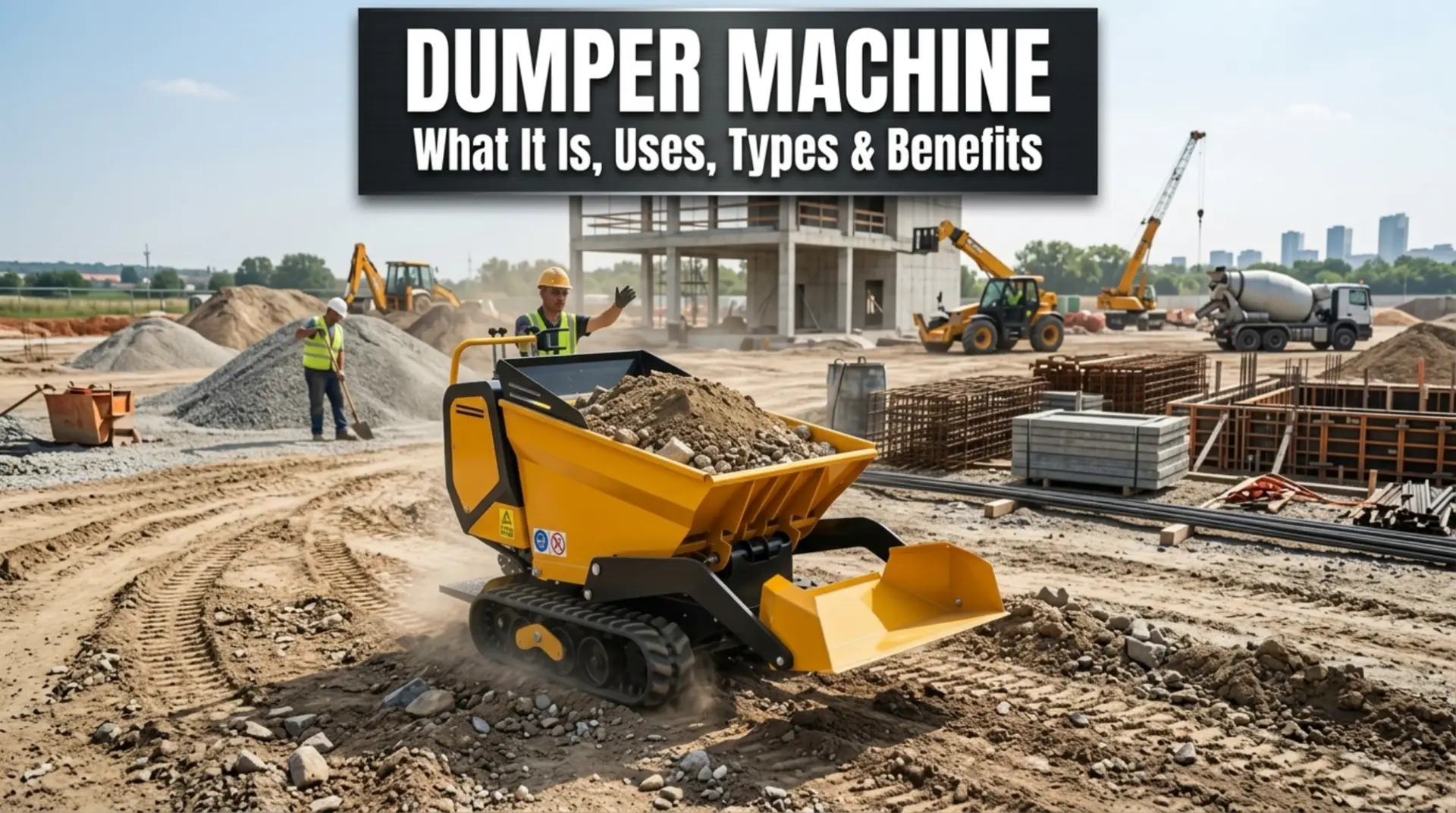
Moving material by hand is one of the slowest, most expensive parts of any jobsite. Every wheelbarrow of soil, every shovel of gravel, and every load of debris eats into hours that could go toward productive work. A dumper machine solves that problem directly, hauling and unloading material far faster than a crew ever could on foot. This guide explains what a dumper machine is, where it earns its keep, the main types available, the benefits it brings, and how to choose the right one for your work. Whether you run a small landscaping outfit or manage a busy construction site, understanding these compact haulers helps you move material efficiently and keep projects on schedule. By the end, you will know exactly what a dumper does and which model fits your operation.
What Is a Dumper Machine?
A dumper machine is a compact construction vehicle built for one core purpose: transporting and unloading loose material quickly and efficiently around a jobsite. It carries a load in an open skip or bucket at the front or center of the machine, then tips that load out at the destination, saving the time and effort that manual hauling demands. Common materials include soil, sand, gravel, aggregate, and construction debris, all of which are heavy, awkward, and slow to move by hand. The dumper turns that grinding task into a fast, repeatable cycle.
What sets a dumper apart from other haulers is its combination of compact size and serious carrying capacity. These machines are designed to work in the confined, uneven, and often muddy conditions typical of active worksites, where larger trucks cannot easily reach. A dumper can shuttle material from a loading point, such as an excavator or a stockpile, to wherever it needs to go, whether that is a trench, a foundation, or a spreading area. Because it moves under its own power and tips its own load, one operator can accomplish what would otherwise require several laborers.
The design is deliberately practical. Most dumpers feature a rugged frame, strong drive system, and a tipping mechanism that empties the skip cleanly in seconds. This focus on hauling and unloading, rather than digging or lifting, is precisely why dumpers are so effective at their job. On sites where material constantly needs to move from one place to another, a dumper machine becomes an essential workhorse, keeping the flow of soil, sand, gravel, and debris moving so the rest of the crew can stay productive and the project can keep pace.
Common Uses of Dumper Machines
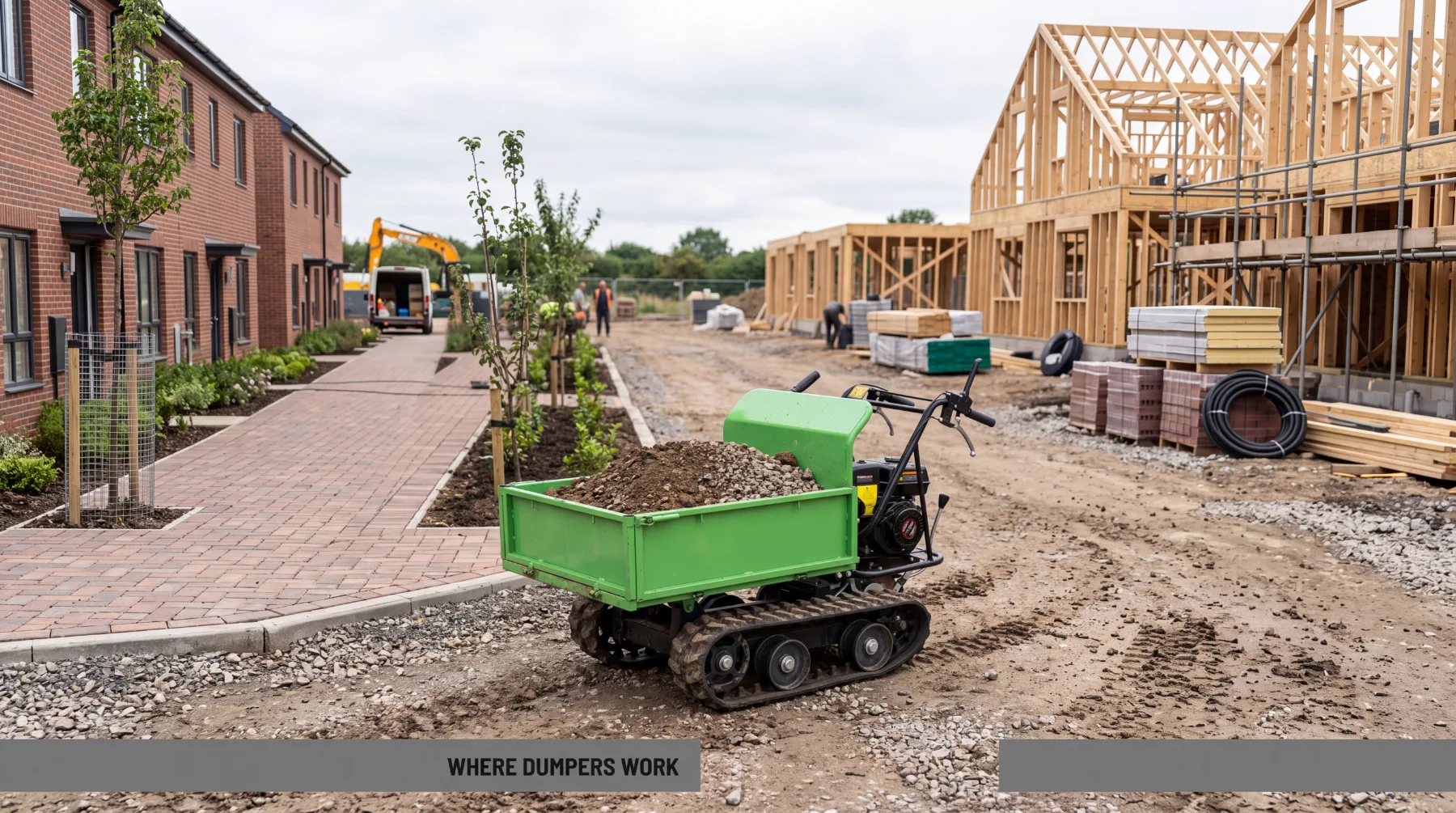
Dumper machines earn their place across a wide range of industries, and their value shows most clearly wherever material needs to move quickly and manual hauling would be slow and labor-intensive. On construction sites, they are a constant presence, shuttling excavated soil away from digs, delivering sand and aggregate to work areas, and clearing debris during demolition and cleanup. A dumper keeps pace with an excavator, carrying away each bucketload so work never stalls waiting for material to be cleared by hand.
Landscaping is another natural fit. Landscapers rely on dumpers to move topsoil, mulch, decorative stone, and green waste around gardens, parks, and residential projects. Because many dumpers are compact and maneuverable, they navigate the tight access points, narrow paths, and soft ground common to landscaping work without tearing up finished surfaces. This makes them ideal for jobs where a full-size truck would be impractical or damaging.
Beyond these, dumpers serve several other important applications:
- Roadwork: hauling aggregate, asphalt, and fill material along road and pavement projects where material must be delivered continuously to work crews.
- Agriculture: moving feed, manure, harvested crops, soil, and general farm materials across fields and around farmyards, often over rough or muddy terrain.
- Utilities and civil work: transporting spoil from trenching and delivering backfill for pipe, cable, and drainage installations.
Across all of these settings, the common thread is repetitive material movement over ground that makes manual hauling impractical. Anywhere a crew would otherwise spend hours pushing wheelbarrows or loading trucks by hand, a dumper completes the same work in a fraction of the time. This versatility is why dumpers appear on so many different kinds of jobsites, from major construction projects to small farms, adapting to whatever material-handling challenge the work presents.
Types of Dumper Machines
Dumper machines come in several distinct types, each engineered for particular terrain, load capacities, and working conditions. Choosing among them starts with understanding what each one does best, because the right type depends heavily on where and how you work.
Mini dumpers are the smallest and most maneuverable option, built for tight spaces and lighter loads. Their compact size lets them pass through narrow gates, doorways, and confined access points, making them popular for landscaping, residential projects, and indoor or restricted-access work. Despite their modest footprint, they move material far faster than manual hauling.
Tracked dumpers run on rubber or steel tracks rather than wheels, spreading their weight across a larger surface area. This gives them excellent traction and stability on soft, muddy, steep, or uneven ground where wheeled machines would struggle or sink. They are a strong choice for challenging terrain and wet conditions common on active construction and civil sites.
The remaining types suit larger or more specialized work:
- Wheel dumpers: fast and efficient on firm, level surfaces, these are a common sight on general construction sites where ground conditions are reasonably stable and quick travel between points matters.
- Site dumpers: rugged, medium-to-large machines designed specifically for construction site conditions, carrying substantial loads of soil, aggregate, and rubble across demanding ground.
- Articulated dumpers: featuring a pivoting joint between the front and rear sections, these handle rough, uneven terrain with superior maneuverability and are built for larger payloads over longer hauls.
As the machines grow in size from mini to articulated, load capacity generally increases, but so do their space requirements. A mini dumper carries a light load through the tightest gaps, while an articulated dumper moves heavy loads across open, rugged sites. Matching the type to your terrain and load needs is the key to getting dependable performance, which is why understanding these categories matters before you invest in any single machine.
Key Benefits of Using a Dumper
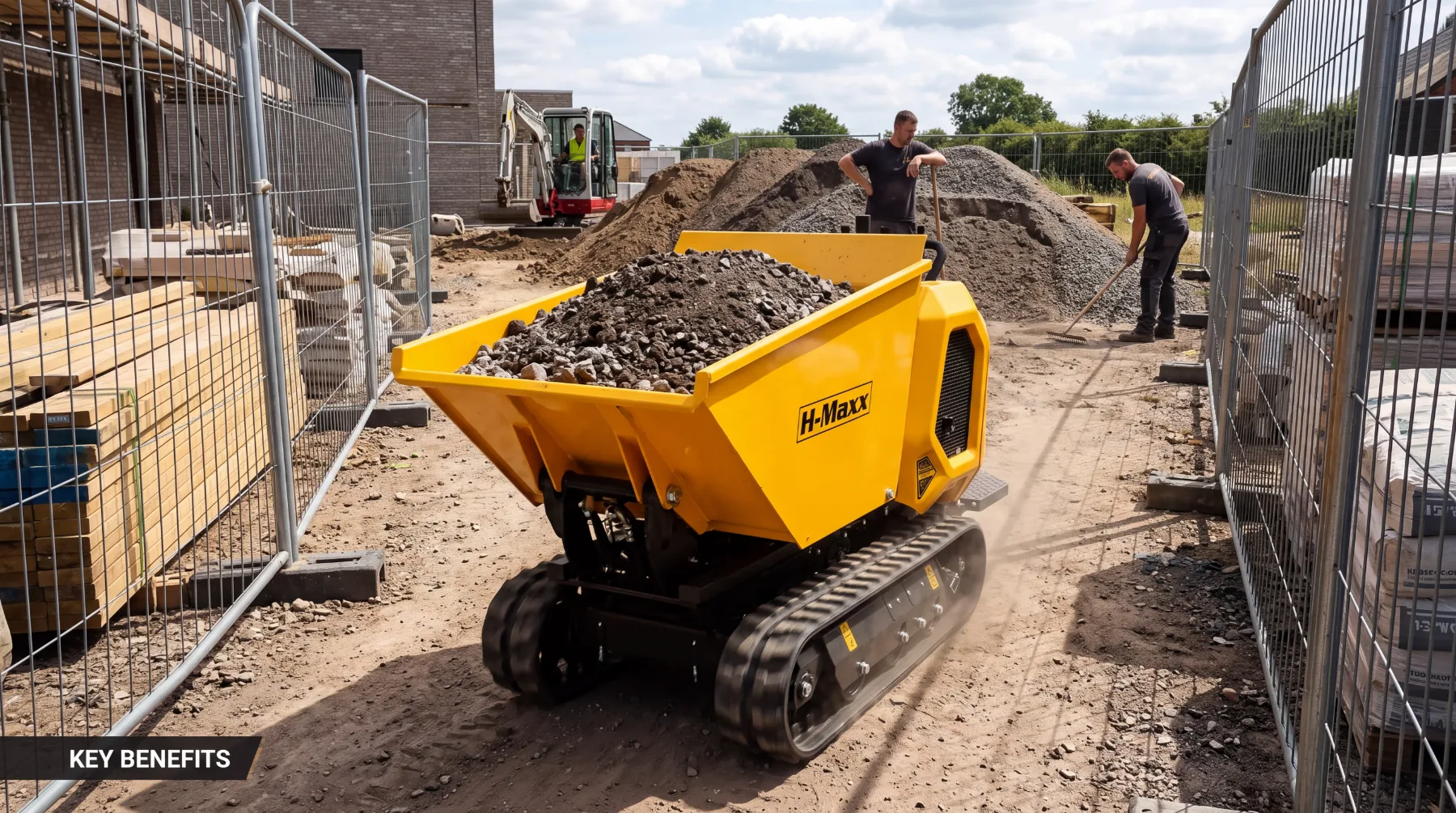
The advantages of a dumper machine come together into a compelling case for any operation that regularly moves material. The most immediate benefit is a significant reduction in manual labor. Hauling soil, sand, gravel, and debris by hand is exhausting, slow, and demands multiple workers, whereas a single dumper operated by one person accomplishes the same work with far less physical strain. This frees your crew to focus on skilled tasks rather than repetitive carrying, making better use of your labor across the project.
Efficiency is the second major benefit, and it follows naturally from the first. A dumper improves material-handling efficiency by turning a slow, piecemeal process into a fast, continuous cycle. Instead of many trips with a wheelbarrow, the machine carries a full load in one pass, tips it in seconds, and returns for more. This steady flow keeps material moving to where it is needed and prevents the bottlenecks that occur when hauling cannot keep up with the rest of the work. Over a full day, that difference translates into meaningful gains in how much a crew can accomplish.
Two further benefits round out the picture:
- Moving heavy loads quickly: dumpers are built to carry substantial weight that would be impractical or unsafe to move manually, transporting it across the site rapidly and reducing the time each load takes.
- Better maneuverability: many dumpers, especially compact and articulated models, navigate tight, congested, and challenging jobsites with ease, reaching areas that larger trucks cannot access.
Together, these benefits protect both productivity and your workforce. Less manual labor means lower fatigue and reduced strain on your crew, while faster, more efficient material movement keeps projects on schedule. For operations where material constantly needs to shift from one place to another, a dumper is not a luxury but a practical investment that pays back in saved time and smoother workflow on every job.
How to Choose the Right Dumper Machine
Selecting the right dumper means matching the machine to the real demands of your work rather than choosing by size or price alone. Several factors deserve careful thought, and weighing them together will point you toward the model that fits your operation. The goal is a dumper that handles your heaviest routine loads, moves confidently across your ground, and fits the spaces you work in.
Start with the practical requirements of the material you move and the site you work on. Consider the following factors before you decide:
- Payload capacity: identify your heaviest routine load and choose a machine rated to carry it comfortably, leaving a sensible margin rather than working at the limit.
- Machine size: match the dumper’s footprint to your access points and working space, since a machine too large for your site will struggle to reach where it is needed.
- Terrain: assess whether your ground is firm and level or soft, muddy, steep, and uneven, then choose wheels for stable surfaces or tracks for challenging conditions.
- Dumping height: make sure the machine can tip its load to the height you need, whether emptying into a trench, over a barrier, or into a container.
Beyond these, a few more considerations shape the right choice. Power source matters, as dumpers are available with different drive options, and your decision may depend on whether you work indoors, where emissions and noise are concerns, or outdoors on open sites. Maneuverability is closely tied to machine size and design, so if you work in congested or tight areas, prioritize a compact or articulated model that turns and positions easily.
Finally, consider the type of material you transport. Loose soil, heavy aggregate, wet spoil, and bulky debris each place different demands on a machine, and the skip design and capacity should suit what you carry most often. By thinking through payload, size, terrain, dumping height, power, maneuverability, and material together, you can select a dumper that delivers reliable, efficient performance for years rather than one that falls short of your needs.
Conclusion
A dumper machine is one of the most practical investments an operation can make when material needs to move constantly and efficiently. It transports and unloads soil, sand, gravel, and debris far faster than manual hauling, serving construction sites, landscaping projects, roadwork, agriculture, and more. The main types, from compact mini dumpers to rugged articulated models, each suit different terrain, load capacities, and working conditions, so there is a machine for nearly every job. The benefits are clear and consistent: less manual labor, improved efficiency, faster movement of heavy loads, and better maneuverability around difficult sites. To choose well, weigh payload capacity, machine size, terrain, dumping height, power source, maneuverability, and material type together. Match the dumper to your real working needs, and you will gain a dependable workhorse that keeps material moving and your projects on schedule.
Frequently Asked Questions
1. What is a dumper machine used for?
A dumper machine is used to transport and unload loose material quickly and efficiently around a jobsite. It carries loads such as soil, sand, gravel, aggregate, and construction debris in an open skip, then tips that load out at the destination, replacing the slow, labor-intensive work of hauling material by hand. Dumpers are common on construction sites, where they shuttle excavated soil, deliver aggregate, and clear debris. They are equally valuable in landscaping for moving topsoil, mulch, and stone, in roadwork for hauling fill and aggregate, and in agriculture for transporting feed, manure, and farm materials. The common thread across all these uses is repetitive material movement over ground where manual hauling would be impractical. Because the machine moves under its own power and empties its own load, a single operator can accomplish what would otherwise take several laborers.
2. What are the main types of dumper machines?
There are several main types, each suited to different terrain, load sizes, and conditions. Mini dumpers are the smallest and most maneuverable, built for tight spaces, narrow access points, and lighter loads, which makes them popular for landscaping and residential work. Tracked dumpers run on tracks that spread their weight, giving excellent traction and stability on soft, muddy, steep, or uneven ground. Wheel dumpers are fast and efficient on firm, level surfaces and are common on general construction sites. Site dumpers are rugged, medium-to-large machines designed specifically for construction conditions, carrying substantial loads of soil, aggregate, and rubble. Articulated dumpers feature a pivoting joint between front and rear sections for superior maneuverability on rough terrain and are built for larger payloads over longer hauls. As machines grow from mini to articulated, capacity generally increases along with their space requirements.
3. How do I choose the right dumper for my work?
Start by identifying your heaviest routine load and choosing a machine with a payload capacity that carries it comfortably, leaving a sensible margin rather than running at the limit. Next, match the machine size to your access points and working space, since a dumper too large for your site cannot reach where it is needed. Assess your terrain carefully: firm, level ground suits wheeled machines, while soft, muddy, or steep conditions call for tracks. Check that the dumping height meets your needs, whether you are emptying into a trench or over a barrier. Consider the power source based on whether you work indoors or outdoors, and prioritize maneuverability if your sites are tight or congested. Finally, think about the type of material you move most often, since loose soil, heavy aggregate, and bulky debris place different demands on the skip and capacity.
4. What are the benefits of using a dumper instead of manual hauling?
The benefits are substantial. First, a dumper dramatically reduces manual labor, since one operator can move material that would otherwise require several workers carrying it by hand, easing fatigue and physical strain on your crew. Second, it improves material-handling efficiency by turning a slow, piecemeal process into a fast, continuous cycle, carrying a full load in one pass rather than many trips with a wheelbarrow. Third, dumpers move heavy loads quickly, transporting weight that would be impractical or unsafe to shift manually and cutting the time each load takes. Fourth, many models offer better maneuverability, navigating tight and challenging sites that larger trucks cannot reach. Together, these advantages keep material flowing to where it is needed, prevent bottlenecks, protect your workforce from exhausting repetitive work, and help keep projects on schedule, making the dumper a genuinely practical investment.
5. Can dumper machines work on rough or muddy terrain?
Yes, though the best choice depends on the machine type. Tracked dumpers are specifically designed for difficult ground. Their tracks spread the machine’s weight across a larger surface area, providing strong traction and stability on soft, muddy, steep, or uneven terrain where wheeled machines might slip or sink. This makes them a reliable option for active construction and civil sites in wet or challenging conditions. Articulated dumpers also handle rough, uneven ground well, thanks to their pivoting joint, which improves maneuverability while carrying larger payloads over longer hauls. Wheel dumpers, by contrast, perform best on firm, level surfaces and are less suited to boggy or steep conditions. When your work regularly involves demanding terrain, matching the machine to those conditions is essential, so assessing your ground honestly before choosing will ensure the dumper performs dependably rather than struggling against the environment.