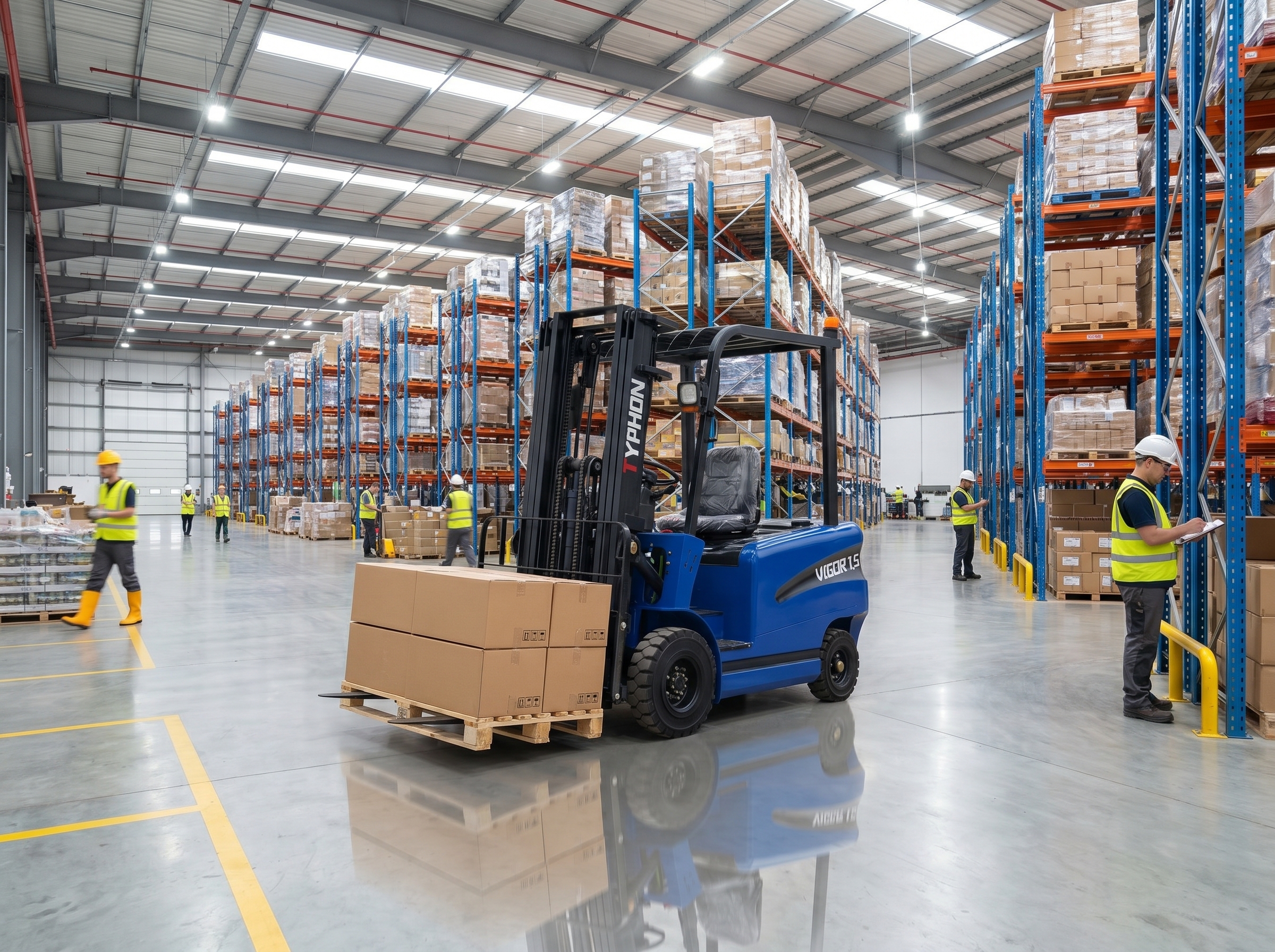
In busy warehouses and industrial facilities, forklifts operate almost nonstop throughout the day. They move pallets, organize inventory, load shipments, and keep daily operations running on schedule. Because forklifts play such a critical role, the type of machine a business chooses can directly affect productivity, operating costs, and workplace conditions.
For years, diesel and LPG forklifts dominated the industry because they were viewed as the strongest and most reliable option. But modern electric forklifts are changing that perception.
Many companies now realize that electric forklifts are not just cleaner alternatives — they can also improve efficiency, reduce downtime, and lower long-term operating expenses.
One common mistake businesses make is focusing only on purchase price while overlooking fuel costs, maintenance requirements, and operator comfort over time. In real-world operations, those factors often have a bigger financial impact than the machine itself.
Understanding the advantages of electric forklifts helps businesses make smarter equipment decisions that support both productivity and long-term growth.
Lower Operating Costs in Daily Operations
One of the biggest reasons companies switch to electric forklifts is the reduction in operating expenses.
Traditional combustion forklifts require fuel, engine servicing, oil changes, and more frequent mechanical maintenance. Over time, those costs add up quickly, especially for fleets operating every day.
Electric forklifts remove many of those expenses because they use battery-powered systems instead of internal combustion engines.
Without engine oil, fuel filters, spark plugs, or complex transmission components, maintenance becomes simpler and often less expensive.
Electricity costs are also generally more stable than fuel prices, making it easier for businesses to predict long-term operating budgets.
For a warehouse running multiple shifts daily, even small reductions in fuel and maintenance expenses can lead to significant annual savings.
Lower operational costs are often the first noticeable advantage businesses experience after switching to electric equipment.
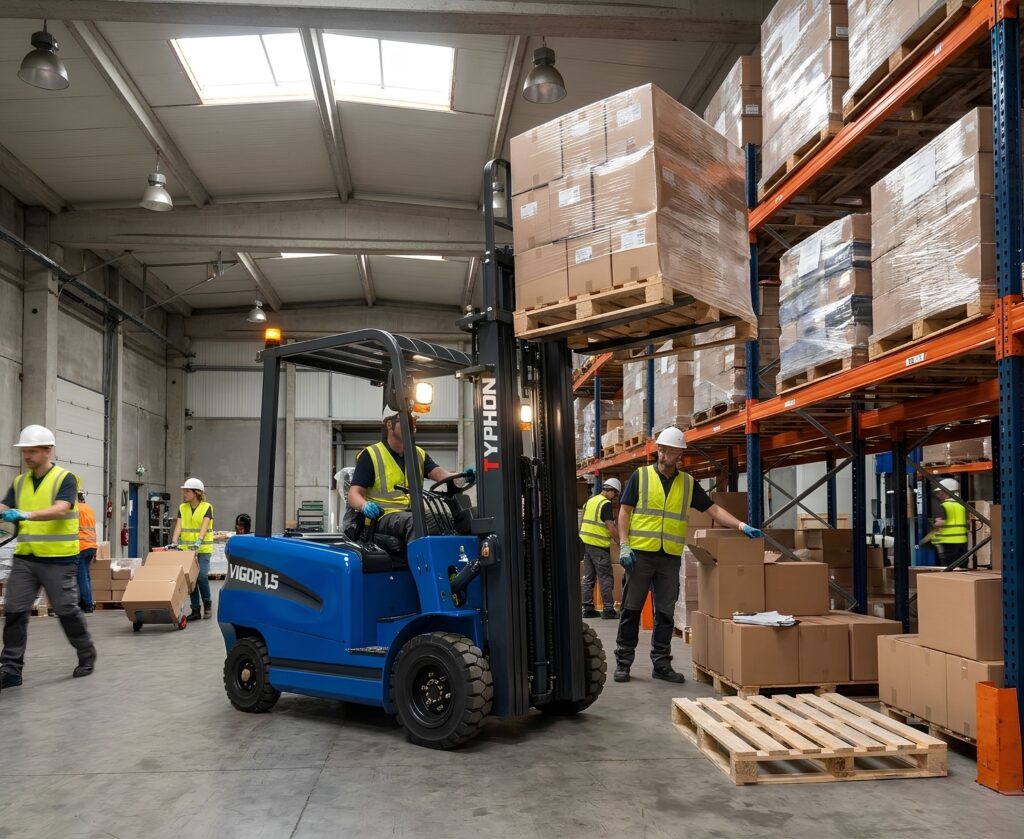
Cleaner and Safer Indoor Work Environments
Indoor air quality is a major concern in warehouses, manufacturing plants, and storage facilities.
Diesel and LPG forklifts produce exhaust emissions that can build up inside enclosed spaces if ventilation is limited. This can create uncomfortable and potentially unsafe working conditions for operators and warehouse staff.
Electric forklifts eliminate direct exhaust emissions during operation, making them ideal for indoor environments.
This is especially important in industries such as
- Food and beverage storage
- Pharmaceutical facilities
- Retail distribution centers
- Cold storage warehouses
- Electronics manufacturing
Cleaner operation also helps reduce dust and airborne contaminants that may affect sensitive products or equipment.
In addition to cleaner air, electric forklifts operate much more quietly than combustion-powered models. Lower noise levels improve communication between workers and create a more comfortable work environment during long shifts.
For many businesses, workplace safety and employee comfort are becoming just as important as lifting performance.
Reduced Maintenance and Less Downtime
Forklift downtime can disrupt an entire workflow.
When a machine requires unexpected repairs, loading schedules slow down, inventory movement gets delayed, and labor efficiency decreases.
Electric forklifts are designed with fewer moving mechanical components than diesel or LPG machines. Since there’s no combustion engine, there are fewer systems that wear down from heat, vibration, and fuel combustion.
This often results in:
- Fewer maintenance interruptions
- Lower repair frequency
- Reduced fluid replacement
- Simpler servicing routines
Modern lithium-ion battery systems also improve reliability compared to older battery technologies.
Some electric forklifts now support opportunity charging, allowing operators to recharge during breaks instead of removing batteries for long charging cycles.
In high-volume operations, reducing downtime can have a major impact on overall productivity and operational consistency.
Better Maneuverability and Operator Comfort
Warehouse efficiency is not only about lifting capacity. It also depends on how smoothly forklifts move through daily operations.
Electric forklifts are often more compact and easier to maneuver in tight indoor spaces. Their responsive controls and smaller turning radius make them ideal for narrow warehouse aisles and crowded storage areas.
Operators typically notice smoother acceleration and less vibration compared to fuel-powered forklifts.
This matters because forklift operators may spend entire shifts inside the machine. Reduced vibration and noise can improve comfort and reduce fatigue over time.
Electric forklifts also provide more precise handling for delicate or high-density inventory storage.
For example, warehouses using tall shelving systems often rely on electric forklifts because they allow more accurate positioning in tight spaces.
Improved maneuverability can lead to faster pallet movement, fewer handling errors, and better overall workflow efficiency.


Supporting Sustainability and Environmental Goals
Many companies today are working to reduce emissions and improve sustainability across their operations.
Electric forklifts support these goals by lowering fuel consumption and reducing direct carbon emissions during use.
This is becoming increasingly important for businesses that want to meet environmental standards, improve energy efficiency, or strengthen sustainability reporting.
Large distribution centers and logistics companies are especially focused on reducing operational emissions because transportation and material handling contribute significantly to their environmental footprint.
Using electric forklifts can also help facilities qualify for certain environmental programs or energy-efficiency initiatives depending on local regulations.
While sustainability alone may not justify equipment replacement, it often becomes an additional long-term benefit alongside cost savings and operational improvements.
Choosing the Right Electric Forklift for Your Operation
Not every electric forklift is designed for the same workload.
Choosing the right model depends on how materials move through the facility each day.
Businesses should evaluate factors such as the following:
- Average load weight
- Lift height requirements
- Indoor or outdoor operation
- Daily operating hours
- Charging availability
- Warehouse aisle width
- Floor conditions
For smaller warehouses, compact electric forklifts may provide the best balance of maneuverability and efficiency.
Larger operations handling heavier pallets may require higher-capacity models with advanced lithium-ion battery systems for longer runtime.
The goal is to match the forklift to the real demands of the operation instead of choosing equipment based only on maximum lifting capacity.
A properly selected electric forklift can improve workflow, reduce operating costs, and support long-term operational reliability.
Conclusion
Electric forklifts have become one of the most practical solutions for modern warehouses and industrial facilities.
They offer lower operating costs, cleaner indoor performance, quieter operation, and reduced maintenance compared to traditional fuel-powered forklifts.
More importantly, they help businesses create more efficient and comfortable working environments while supporting long-term productivity goals.
The best forklift is not always the largest or most powerful machine. It’s the one that fits the actual workflow, workload, and operational priorities of the business.
As battery technology continues improving, electric forklifts will likely play an even bigger role in the future of material handling.
Frequently Asked Questions
What are the benefits of using electric forklifts?
Electric forklifts offer lower operating costs, cleaner indoor operation, reduced maintenance, quieter performance, and improved maneuverability in warehouse environments.
Are electric forklifts better for warehouses?
Yes. Electric forklifts are ideal for warehouses because they produce no direct exhaust emissions and operate more quietly in enclosed indoor spaces.
Do electric forklifts require less maintenance?
Electric forklifts generally require less maintenance because they have fewer moving mechanical parts and do not use combustion engines.
Are electric forklifts worth the investment?
For many businesses, electric forklifts provide long-term value through fuel savings, lower repair costs, and improved operational efficiency.
What is the difference between electric and LPG forklifts?
Electric forklifts use rechargeable battery systems, while LPG forklifts use combustion engines powered by liquefied petroleum gas. Electric models are typically cleaner and quieter for indoor use.