Travel speed is one of the most influential settings an operator controls on a road roller, yet it is easy to treat it as a simple matter of going faster to finish sooner. In compaction work, speed does far more than determine how quickly the machine covers ground. It shapes how effectively each pass compacts the material, how many passes the job requires, and whether the finished surface meets its density target. Getting the balance right is the difference between a productive operation and one that wastes passes, fuel, and time. This guide explains how travel speed affects road roller productivity, so you can set a pace that delivers both efficient coverage and dependable compaction quality on every job.
How Travel Speed Affects Rolling Coverage
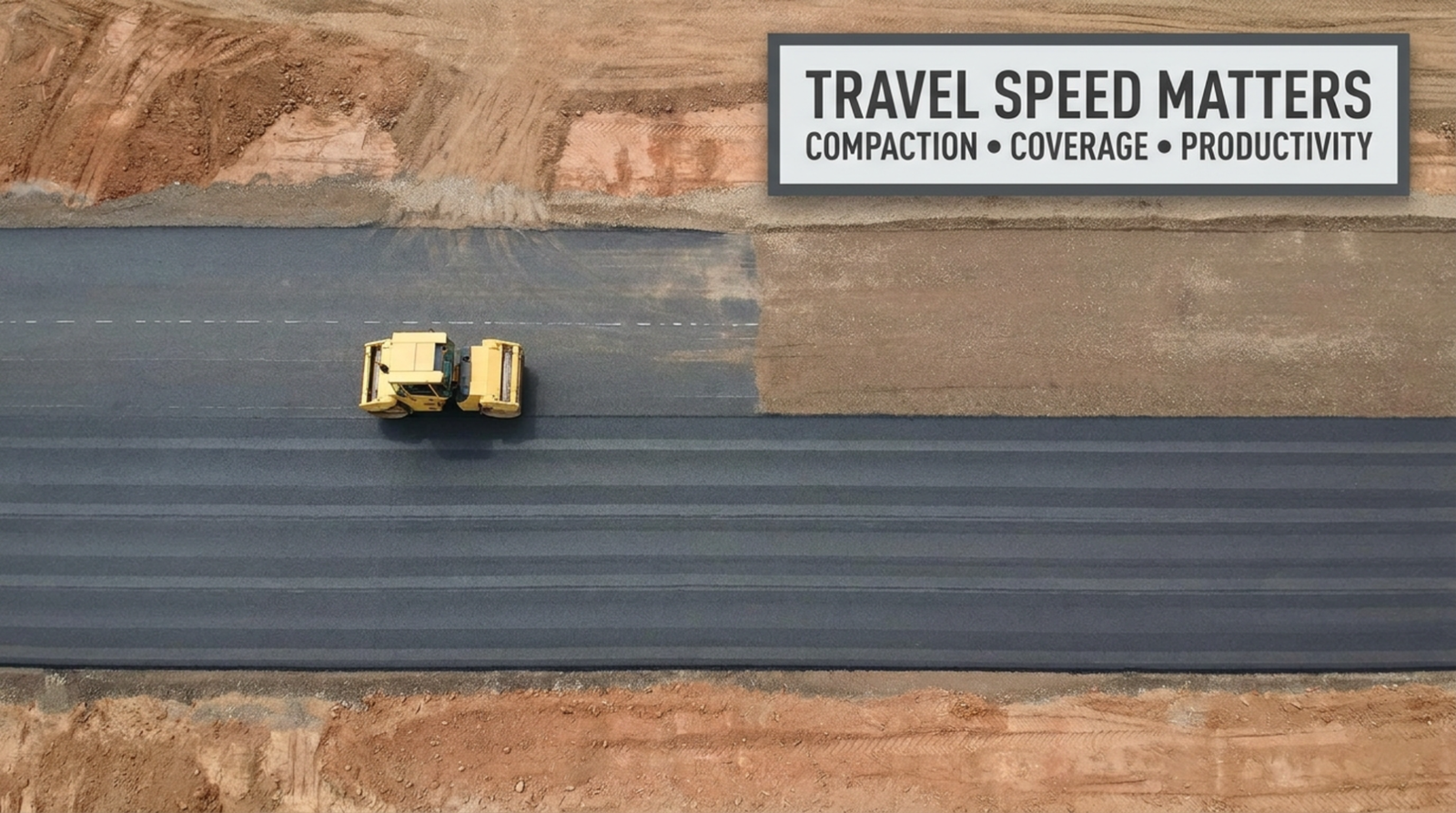
Travel speed has an obvious appeal when it comes to coverage. The faster a road roller moves, the more ground it covers in a given amount of time, which seems like a direct route to higher productivity. On a large paving job with a lot of surface area to compact, covering more ground per hour matters, and a higher travel speed can help the operation keep pace with the paver and the material being laid. Speed, in this sense, is a genuine tool for productivity when the conditions allow it.
The catch is that speed must remain appropriate for the material and the compaction requirements. Coverage means little if the compaction is not effective, because ground covered too quickly may need to be rolled again. When the roller moves too fast, each pass delivers less compaction effort to the material, and the effectiveness of that pass drops. The drum simply does not spend enough time on any given section to do its job fully.
This creates a trade-off worth understanding clearly:
- Higher speed covers more ground per hour, which suits large areas and keeps up with paving.
- Excessive speed reduces the compaction effect of each pass, undermining the very coverage it provides.
- Appropriate speed balances ground covered against the compaction each pass must achieve.
The lesson is that raw coverage is not the same as productive coverage. A roller that races across the surface but leaves the material under-compacted has not saved time at all, since additional passes will be needed to reach the required density. Productive coverage comes from moving as quickly as the material and compaction requirements genuinely allow, no faster. Matching speed to what each pass must accomplish is what turns ground covered into work completed.
Why Slower Speeds Can Improve Compaction
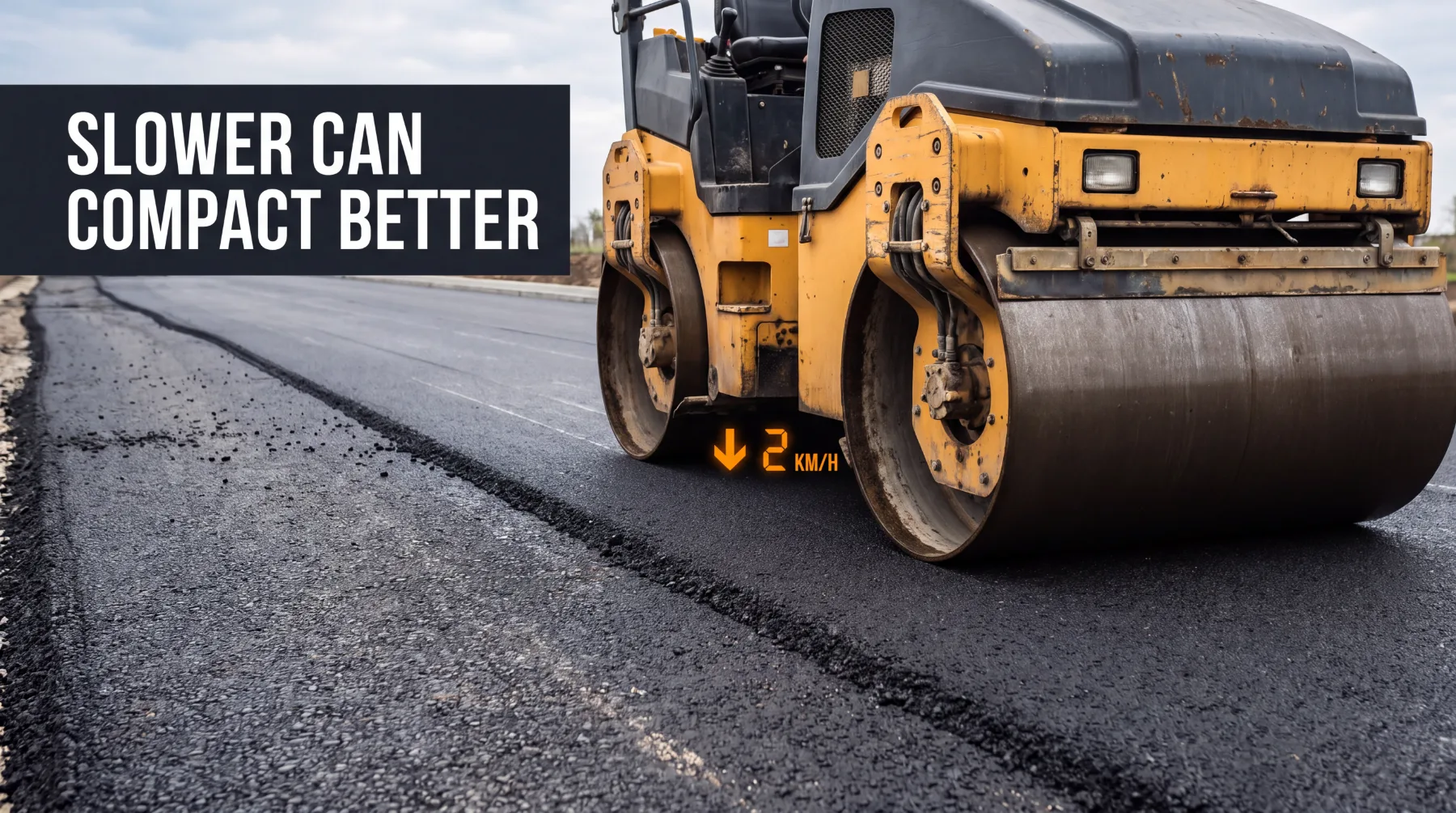
There are clear situations where slowing down is the more productive choice, and the reason lies in how compaction actually happens. A road roller compacts material by applying the static weight of its drum and, on vibratory machines, the energy of vibration. Both of these need time to work on the material. When the roller travels more slowly, the drum spends more time in contact with each section, giving that static weight and vibration a longer opportunity to press the material into a denser state.
This extra contact time can make a real difference to the result. Compaction is not instantaneous, and material worked too briefly may not reach the density the job requires. By slowing the pace, the operator lets the drum deliver its full compaction effort to each part of the surface, which helps achieve the target density more reliably. The material has the time it needs to respond to the weight and vibration applied to it.
The practical benefit shows up in the number of passes required. A slower, more effective pass can accomplish what two hurried passes cannot, because each slower pass does more of the work. This means fewer ineffective passes overall, and fewer passes can translate directly into a more efficient operation despite the reduced speed. An operator who slows down to compact properly the first time often finishes a section sooner than one who races across it repeatedly without achieving density.
This is why slower is sometimes faster in compaction work. The goal is not the highest travel speed but the most effective compaction per pass. When slowing down means reaching the required density with fewer passes, the reduced speed pays for itself in overall productivity, delivering a properly compacted surface without wasted effort.
Finding the Right Balance Between Speed and Passes
Productivity in compaction is never about travel speed alone. It depends on two factors working together: how quickly the roller travels and how many passes are needed to reach the target density. A machine that travels fast but requires many passes may be no more productive than one that travels slower but needs fewer. Understanding this relationship is what allows an operator to find the pace that actually completes the work in the least time.
Think of it as a simple equation of total effort. If a higher speed cuts the compaction effect of each pass so much that extra passes become necessary, the time saved on speed is lost to the additional passes. Conversely, a moderate speed that achieves solid compaction per pass can reach density in fewer trips across the surface, completing the section sooner even though each pass takes a little longer. The optimal speed is the one that provides effective compaction without unnecessarily slowing the paving operation.
Consider what shapes this balance in practice:
- Travel speed, which determines how quickly each pass is completed.
- Passes required, which depends on how much compaction each pass achieves.
- Target density, the standard the finished surface must meet before the work is done.
The goal is to find the speed at which the roller reaches the required density in the fewest passes and the least overall time. This is rarely the maximum speed the machine can travel, nor the slowest. It sits at the point where compaction per pass and ground covered per hour combine most efficiently. Reaching that point takes attention to how the material responds, but once an operator settles into the right pace, the operation moves smoothly, meeting density targets without wasting time on either excessive speed or unnecessary passes.
How Vibration and Travel Speed Work Together
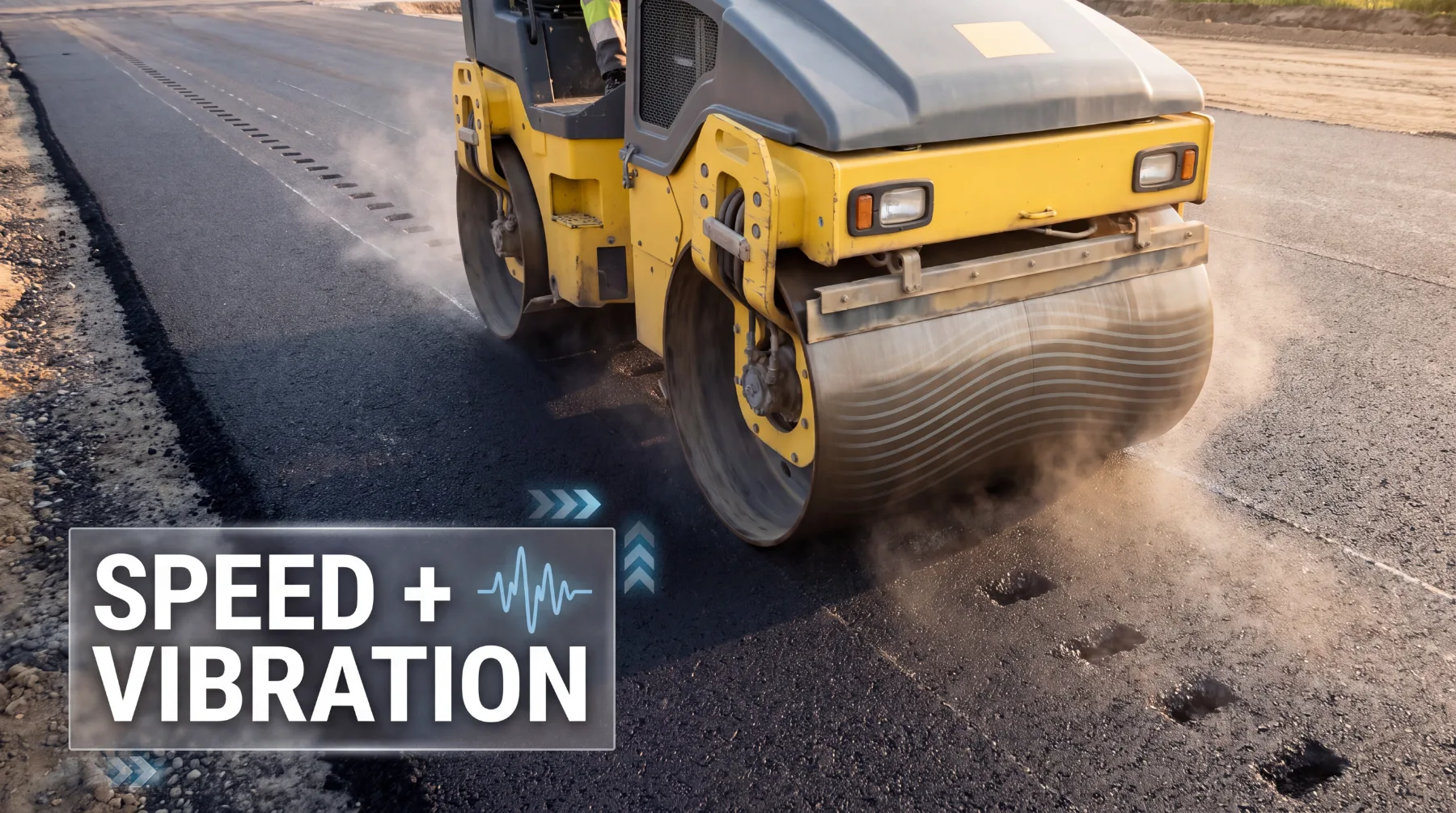
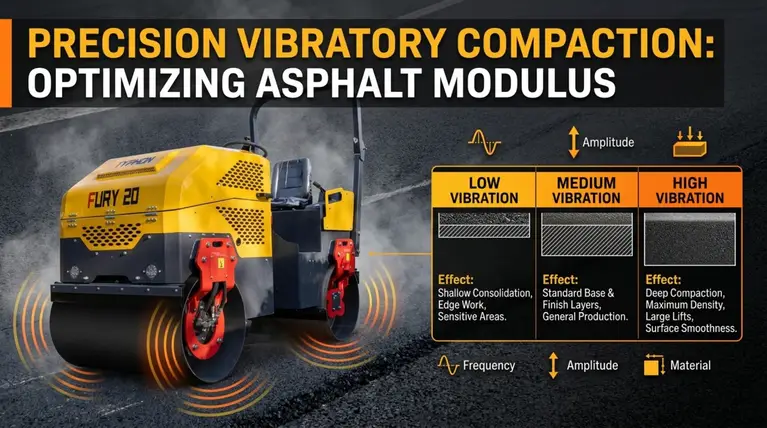
On vibratory rollers, travel speed cannot be considered in isolation, because it works in close partnership with the vibration the drum produces. These machines compact material by combining their static weight with rapid vibration, and the effectiveness of that vibration depends on a proper relationship between the vibration frequency and the travel speed. When the two are matched well, the drum delivers consistent, effective compaction across the whole surface. When they are mismatched, the results suffer.
The vibration frequency determines how many times the drum imparts an impact to the material each second. Travel speed determines how quickly the drum moves across the surface. Together, these set how many impacts each section of material receives as the roller passes over it. If the roller moves too fast for the selected vibration setting, the drum spreads its impacts over too much ground, and each section receives fewer of them. The result is that the drum may not deliver enough compaction effort to each part of the material, leaving it under-compacted despite the pass being made.
This is why matching speed to the vibration setting is so important on a vibratory machine. The aim is to ensure that every section of material receives enough impacts to be compacted properly. Traveling at a speed suited to the vibration frequency keeps those impacts closely spaced, so no part of the surface is passed over without receiving its full share of compaction energy. An operator who understands this relationship sets the travel speed to complement the vibration rather than working against it. That coordination between vibration and speed is what allows a vibratory roller to compact evenly and efficiently, delivering the consistent density that quality compaction requires across the entire job.
Why Jobsite Conditions Determine Roller Speed
No single travel speed is correct for every job, because the right pace depends on the actual conditions on site. Several factors influence how a material responds to compaction, and each one bears on the speed an operator should choose. Material type, layer thickness, moisture content, surface temperature, and the required density all play a part in determining the appropriate operating speed for the work at hand. Ignoring these conditions and applying a fixed speed regardless is a reliable way to compromise either productivity or compaction quality.
Each condition shapes the compaction task in its own way:
- Material type, since different materials compact at different rates and respond differently to weight and vibration.
- Layer thickness, because thicker layers generally need more compaction effort and often a slower pace.
- Moisture content, which affects how readily the material densifies under the drum.
- Surface temperature, particularly with asphalt, where the workable window depends on the material staying warm enough.
- Required density, the standard that ultimately dictates how much compaction effort each section demands.
Because these factors vary from job to job and even across a single site, the appropriate travel speed varies with them. Asphalt work, for instance, is often governed by temperature, since the material must be compacted while it remains within its workable range, which can call for a pace that keeps the roller working efficiently before the surface cools. Thicker or denser material may require a slower speed to achieve the target density, while thinner or easily compacted material may permit a faster pace.
Adjusting travel speed to match the real conditions on site is what allows an operator to maximize productivity while maintaining consistent compaction quality. Rather than relying on a habitual speed, the skilled operator reads the material and the conditions, then sets a pace suited to them. That responsiveness is what keeps compaction both efficient and dependable across the varied situations a road roller encounters.
Conclusion
Travel speed shapes road roller productivity in ways that go well beyond how quickly the machine covers ground. Move too fast, and each pass loses compaction effect, forcing extra passes that erase any time saved. Slow down appropriately, and the drum applies its static weight and vibration more fully, often reaching the target density in fewer passes. True productivity comes from balancing travel speed against the number of passes required, matching vibration frequency to speed on vibratory machines, and adjusting the pace to real conditions such as material type, layer thickness, moisture, temperature, and required density. The most productive speed is rarely the fastest the machine can travel. It is the one that delivers effective, consistent compaction without slowing the paving operation. Read the material, match the pace to it, and your roller will complete quality work efficiently on every job.
Frequently Asked Questions
1. Does driving a road roller faster always increase productivity?
No. While a higher travel speed lets the roller cover more ground in less time, speed only improves productivity when it remains appropriate for the material and the compaction requirements. If the roller moves too quickly, each pass delivers less compaction effort because the drum spends less time on any given section, and the material may not reach the required density. Ground covered too fast often has to be rolled again, so the time apparently saved is lost to additional passes. Real productivity comes from covering ground as quickly as the material genuinely allows, no faster. That way, each pass accomplishes meaningful compaction and the surface reaches its target density without wasted repetition, which is what turns ground covered into work actually completed.
2. How does slowing down improve compaction results?
A road roller compacts material by applying the static weight of its drum and, on vibratory machines, the energy of vibration, and both need time to work. When the roller travels more slowly, the drum stays in contact with each section longer, giving that weight and vibration a greater opportunity to press the material into a denser state. Because compaction is not instantaneous, material worked too briefly may not reach the density the job requires. Slowing the pace lets the drum deliver its full effort to each part of the surface, helping achieve the target density more reliably. The benefit often shows in the number of passes, since a slower, more effective pass can do the work of two hurried ones, reducing wasted passes and improving overall efficiency.
3. How do I balance travel speed against the number of passes needed?
Productivity depends on both how fast the roller travels and how many passes are needed to reach the target density, so the two must be weighed together. A fast speed that cuts the compaction effect of each pass may require so many extra passes that the time saved on speed is lost. A moderate speed that achieves solid compaction per pass can reach density in fewer trips, finishing the section sooner even though each pass takes a little longer. The optimal speed provides effective compaction without unnecessarily slowing the paving operation. It is rarely the maximum the machine can travel, nor the slowest. It sits where compaction per pass and ground covered per hour combine to reach the required density in the least overall time.
4. Why does travel speed need to match the vibration setting on a vibratory roller?
Vibratory rollers compact by combining static weight with rapid drum vibration, and the effectiveness of that vibration depends on a proper relationship between the vibration frequency and the travel speed. The frequency sets how many impacts the drum imparts each second, while the travel speed determines how fast the drum moves across the surface. Together they decide how many impacts each section of material receives. If the roller moves too fast for the selected vibration setting, the impacts spread over too much ground and each section receives fewer of them, so the drum may not deliver enough compaction effort to properly densify the material. Matching speed to the vibration setting keeps the impacts closely spaced, ensuring every section receives its full share of compaction energy for consistent, even results.
5. What jobsite conditions should influence the roller’s travel speed?
Several conditions affect how a material responds to compaction, and each bears on the appropriate speed. Material type matters because different materials compact at different rates and react differently to weight and vibration. Layer thickness matters because thicker layers generally need more compaction effort and often a slower pace. Moisture content affects how readily the material densifies under the drum, and surface temperature is critical with asphalt, which must be compacted while it stays within its workable range before cooling. Required density is the standard that ultimately dictates how much effort each section demands. Because these factors vary from job to job and even across a single site, the right speed varies with them. Reading the material and conditions, then setting a pace to suit them, keeps compaction both efficient and consistent.