A skid steer earns its reputation for versatility. Swap the bucket for an auger, a grapple, or a brush cutter, and the same machine takes on an entirely new job in minutes. What many buyers overlook is that each attachment asks something different from the engine. Some draw heavily on hydraulic power, others add weight and resistance, and a few demand far more flow than a standard tool. The engine has to meet those demands without straining, or performance suffers. This guide explains how attachment type changes the engine requirements of a skid steer, so you can match power to the tools you actually use and get dependable results on every job.
Matching Engine Power to Attachment Demands
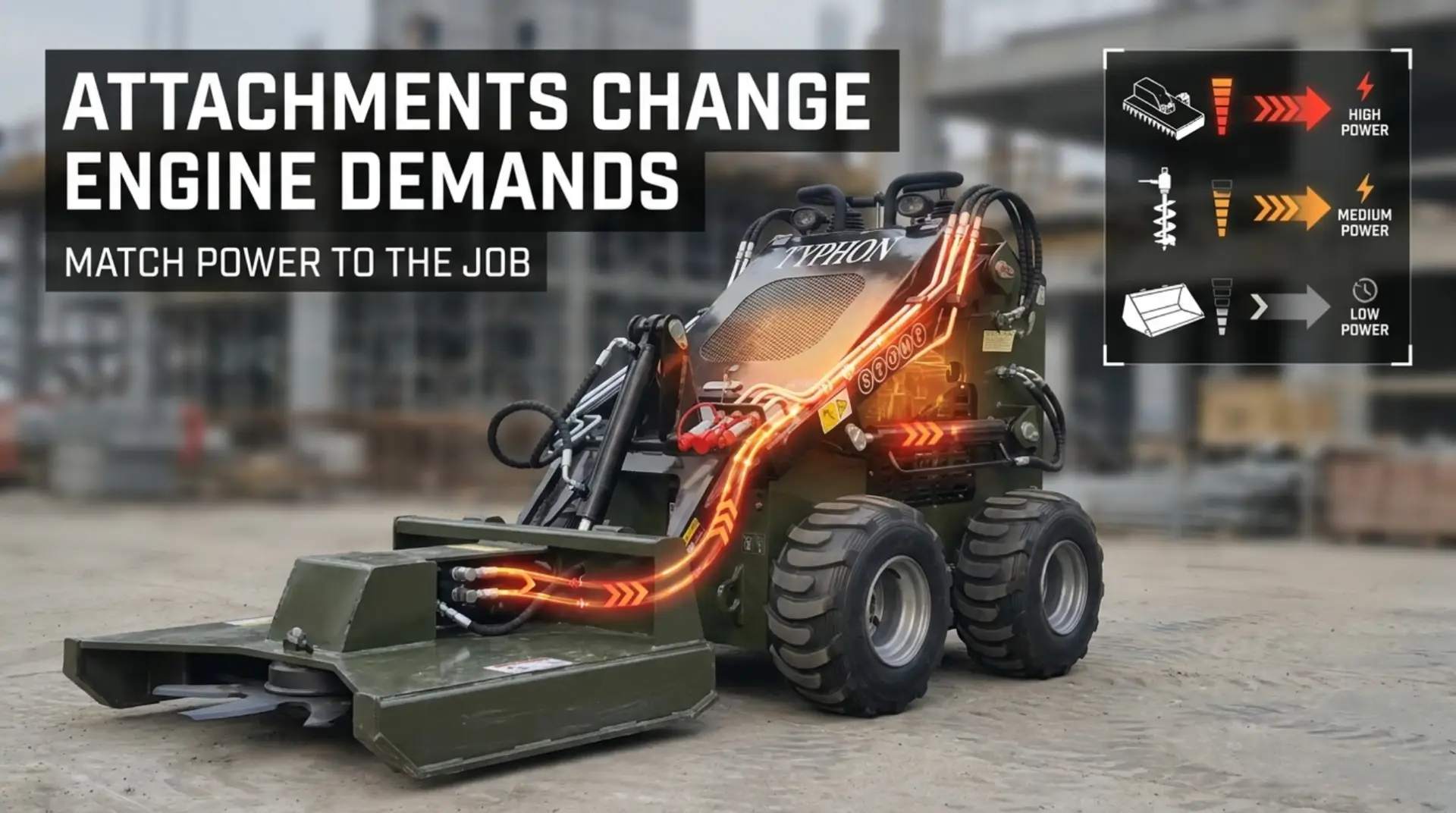
Every attachment you mount places a different load on the skid steer’s engine, and the engine has to supply enough power to handle that load without excessive strain or a drop in performance. A light broom asks very little, while a heavy grapple or a demanding hydraulic tool pushes the engine much harder. Because the engine drives both the machine’s movement and its hydraulic system, the demands of the attachment ripple through everything the machine does. When the engine has power to spare, the attachment works smoothly and the machine stays responsive. When it does not, cycles slow down and the whole operation labors.
The key idea is that engine power and attachment demand must line up. An engine sized comfortably above the attachment’s needs runs within its efficient range, holds steady performance under load, and avoids the heat and wear that come from constant strain. An underpowered engine, by contrast, struggles to keep pace, especially when the attachment is working hard.
Consider how different tools call on the engine in different ways:
- Light attachments such as brooms and small buckets leave plenty of power in reserve.
- Heavy attachments such as grapples and large buckets add weight and resistance that demand more output.
- Hydraulic attachments such as augers and cutters draw directly on engine-driven hydraulic power.
Judging an attachment by whether it fits the coupler is not enough. What matters is whether the engine can drive it with confidence. When you match engine power to the real demands of the attachments you plan to run, the skid steer performs reliably across every task rather than faltering when the work turns demanding.
Hydraulic Attachments Require More Engine Support
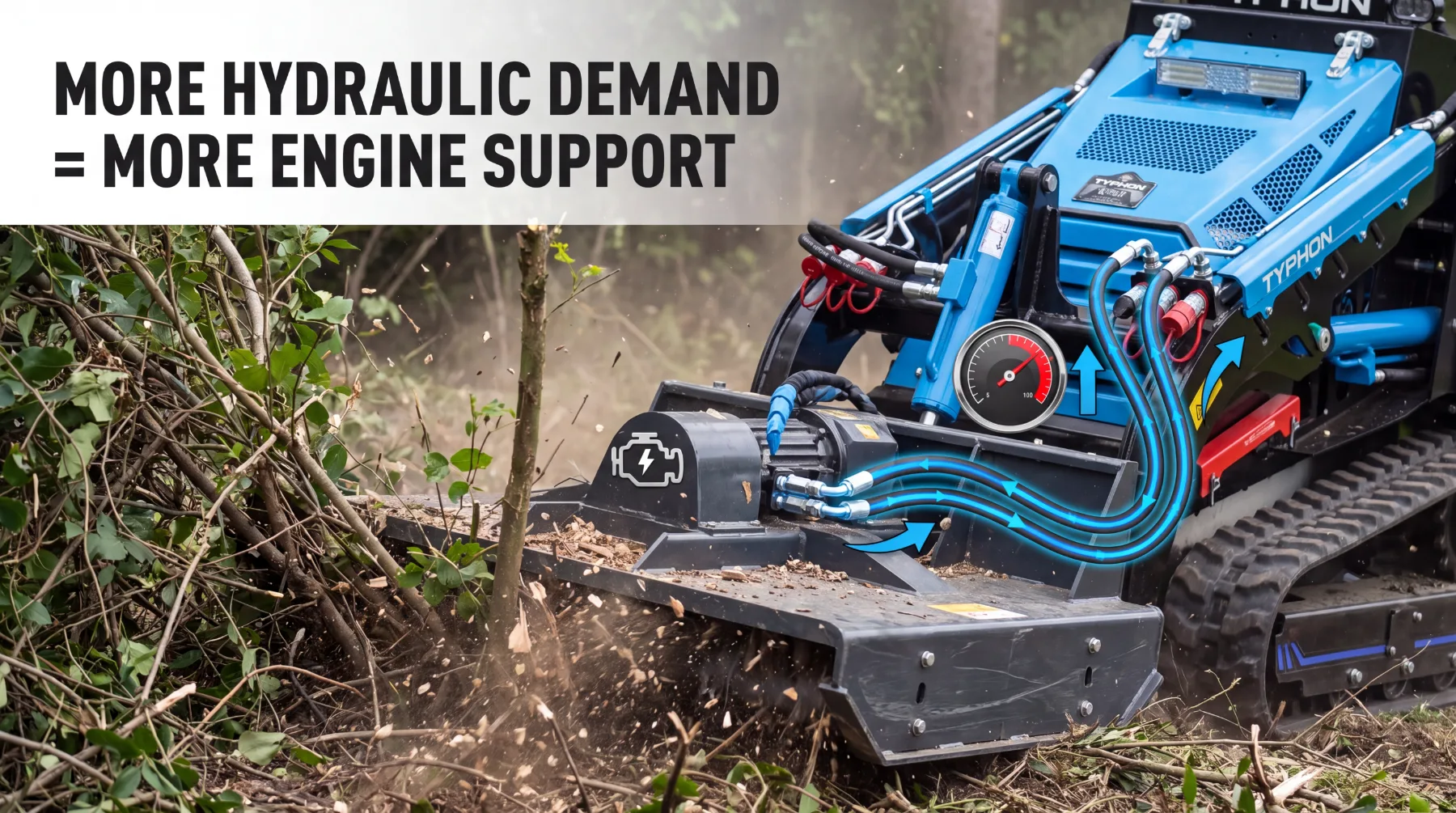
Hydraulic attachments change the engine’s job in a fundamental way. Tools such as augers, trenchers, and brush cutters do not simply ride along on the machine. They rely on the hydraulic system for their working power, and that system draws directly on the engine. The engine turns the hydraulic pump, and the pump supplies the flow and pressure these attachments need to dig, cut, and drill. When the attachment demands more hydraulic power, the engine has to supply more, or the tool cannot reach its rated performance.
Flow controls how fast a hydraulic attachment operates, and pressure controls how much force it generates. A brush cutter needs steady flow to keep its blades spinning through thick growth. An auger needs both flow and pressure to drive a bit into hard ground without stalling. A trencher works continuously, drawing on the hydraulics for long stretches at a time. Higher-demand attachments like these call for an engine with enough power to keep the pump supplied even under sustained load.
This connection becomes most obvious when the work gets tough. If the engine cannot keep the pump performing while also driving the machine, the hydraulics weaken exactly when the attachment needs them most. Cutting slows, drilling stalls, and the tool loses the responsiveness that makes it productive. A skid steer with an engine matched to its hydraulic demands keeps these attachments running strong and consistent, shift after shift. When you plan to run demanding hydraulic tools, look closely at how the engine supports the rated hydraulic flow and pressure, since that pairing determines whether the attachment delivers the performance you count on.
Heavy Attachments Increase Engine Load
Not every demanding attachment relies on hydraulics. Heavy attachments such as buckets, grapples, and other substantial tools place a different kind of load on the engine, one driven by weight and physical resistance. A loaded bucket of dense material, a grapple full of debris, or a heavy tool at the front of the machine all add mass that the engine must move, lift, and control. That added weight increases the effort required to travel, raise the lift arm, and push through material, and the engine has to meet that effort to keep the machine performing.
The demand shows up across three core functions. Lifting a heavy load draws on both the engine and the hydraulic system, and the engine must supply steady power to raise the arm without laboring. Pushing into a pile or driving through resistant material calls for strong driving force at the tracks or wheels, which again depends on engine output. Traveling with a heavy attachment adds resistance the travel system must overcome to hold a useful pace.
Here is how a heavy attachment affects the machine’s key movements:
- Lifting: raising a loaded attachment requires sustained power to avoid slow, straining cycles.
- Pushing: driving into material demands strong force that a well-matched engine supplies steadily.
- Travel: moving a heavy load across a site takes extra power to maintain consistent speed.
A properly matched engine handles these combined demands without faltering, letting the skid steer lift, push, and travel with confidence even when the attachment is heavy and the load is near capacity. An underpowered engine loses pace on all three fronts, stretching out cycles and reducing productivity. Matching engine output to the weight of your heaviest attachments keeps the machine working steadily through the toughest tasks.
High-Flow Attachments Need the Right Power Balance
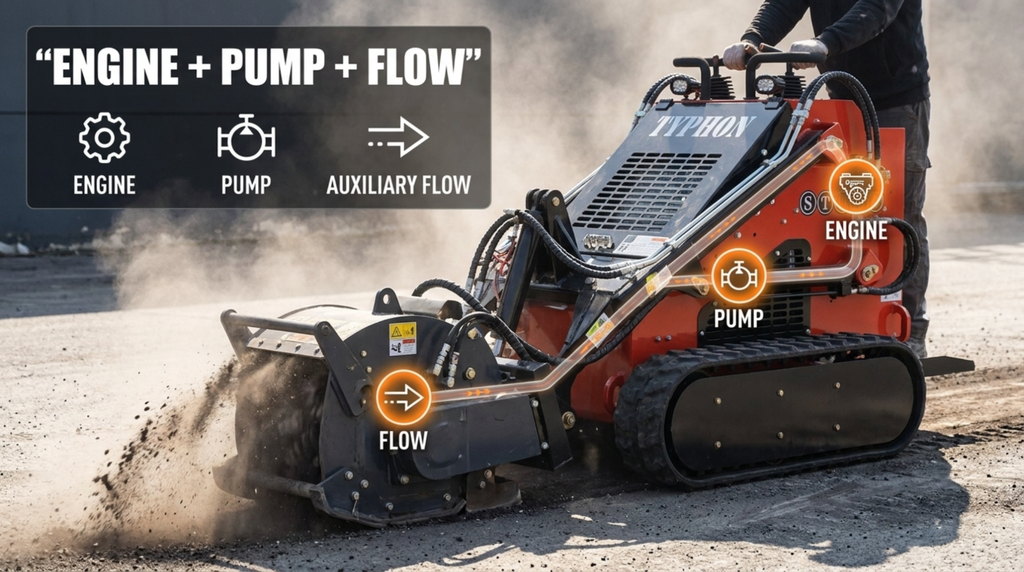
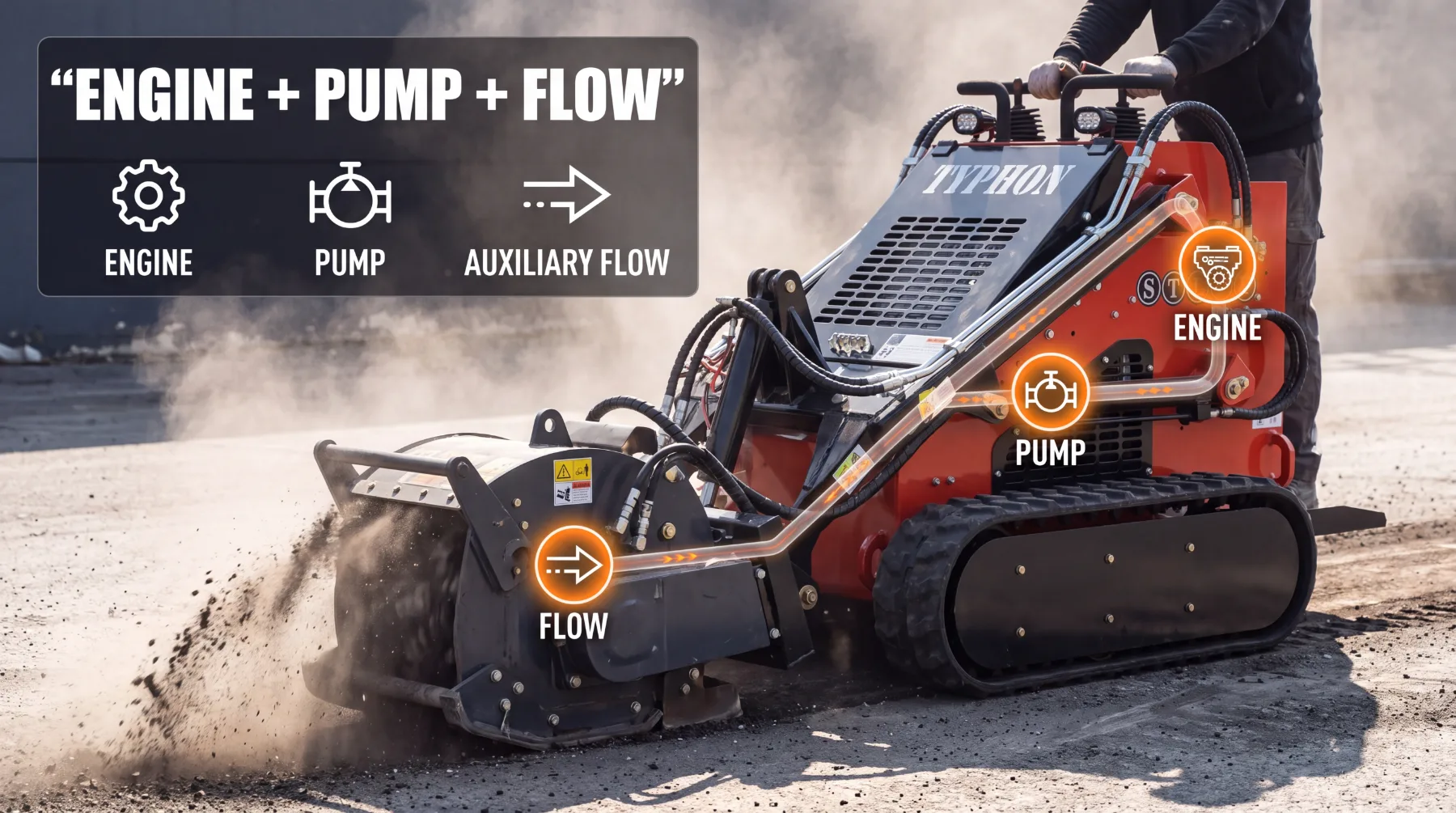
High-flow attachments sit at the top of the hydraulic demand scale, and they call for careful attention to how the whole system is balanced. Tools such as large cold planers, heavy-duty mulchers, and high-capacity snow blowers can consume significantly more hydraulic power than standard attachments. Running them well is not just a matter of engine size. It depends on the engine, the hydraulic pump, and the auxiliary circuit all working together to deliver the required flow without unnecessary power loss.
The distinction between standard-flow and high-flow systems matters here. A standard auxiliary circuit supplies a certain level of hydraulic flow, which suits most everyday attachments. High-flow attachments need considerably more, and a machine set up only for standard flow simply cannot supply it. That is why high-flow tools require a machine equipped with a high-flow hydraulic system, and that system in turn needs an engine powerful enough to drive the pump at the higher output without straining.
Balance is the operative word. Consider how the pieces have to align:
- Engine: must supply enough power to drive the pump at high-flow output under sustained load.
- Hydraulic pump: must be capable of generating the higher flow the attachment demands.
- Auxiliary circuit: must be rated to carry that flow to the attachment efficiently.
If any one of these falls short, the attachment cannot perform as intended, and power is wasted rather than converted into productive work. A machine engineered with a balanced high-flow system delivers the flow and pressure these demanding tools require, letting them run at full capability. When you plan to use high-flow attachments, confirm that the engine, pump, and auxiliary circuit are matched to the attachment’s requirements, since that balance is what turns raw power into reliable, high-output performance.
Choosing Engine Size Based on Intended Attachments
The most powerful engine is not automatically the right one. The smarter approach is to match engine output to the attachments you actually plan to use, so the machine delivers the performance the work demands without paying for capability you never call on. An engine sized around your real attachment needs runs efficiently, performs reliably, and keeps operating costs sensible. One that is undersized strains under demanding tools, while one that is needlessly oversized adds cost and fuel use without a matching benefit.
Start by taking an honest look at the attachments that define your work. If you run demanding hydraulic tools like augers, trenchers, or brush cutters, the engine must supply enough power to drive the hydraulics fully while still moving the machine. If you rely on heavy buckets and grapples, the engine needs the output to lift, push, and travel under weight. And if high-flow attachments are part of your plan, the engine has to support a high-flow system without straining.
A sound choice weighs several factors together:
- Attachment type: identify whether your tools are hydraulic, heavy, high-flow, or a mix.
- Hydraulic demand: confirm the engine supports the flow and pressure your attachments require.
- Workload and duty cycle: long shifts and continuous heavy work call for more reserve power.
- Efficiency and cost: an engine matched to the work runs in its efficient range and controls running costs.
When engine output aligns with your intended attachments, the skid steer delivers dependable performance, sensible fuel use, and lasting durability. Rather than chasing the largest engine available, focus on the tools you will use most and match the power to them. That balanced decision gives you a machine that performs reliably and represents a sound, lasting investment.
Conclusion
Attachment type shapes engine requirements more than any single specification suggests. Hydraulic tools such as augers, trenchers, and brush cutters demand steady flow and pressure that the engine must drive through the pump. Heavy buckets and grapples add weight and resistance that call for strong lifting, pushing, and travel power. High-flow attachments raise the bar further, requiring a balanced system where the engine, pump, and auxiliary circuit work together. Regardless of the attachment, daily maintenance should be part of the operator’s routine, including checking engine oil and coolant levels, inspecting hydraulic fluid and hoses, cleaning the radiator and air intake, checking tracks or tires, and looking for leaks or loose components before work begins. The right engine is not the biggest one available but the one matched to the attachments you actually use. When you plan your next skid steer around your real tools and workload, you gain efficient, dependable performance and a machine you can count on for years of demanding work.
Frequently Asked Questions
1. Why does the attachment I use affect the engine power I need?
Every attachment places a different load on the engine, because the engine drives both the machine’s movement and its hydraulic system. A light broom asks very little, while a heavy grapple or a demanding hydraulic tool pushes the engine much harder. Hydraulic attachments draw on engine-driven hydraulic power, and heavy attachments add weight and resistance the engine must overcome. If the engine lacks the power the attachment demands, performance drops, cycles slow, and the machine strains. Matching engine power to the attachments you plan to use ensures the skid steer works smoothly and reliably rather than laboring under the tools you depend on most.
2. What makes hydraulic attachments like augers and brush cutters so demanding?
Hydraulic attachments rely on the machine’s hydraulic system for their working power, and that system draws directly on the engine. The engine turns the pump, which supplies the flow and pressure the attachment needs. Flow controls how fast the tool operates, and pressure controls how much force it generates. An auger needs both to drive a bit into hard ground, a brush cutter needs steady flow to keep cutting through thick growth, and a trencher works continuously for long stretches. These sustained demands require an engine with enough power to keep the pump supplied, so the attachment holds consistent performance even under heavy load.
3. How do heavy attachments like buckets and grapples affect engine performance?
Heavy attachments add weight and physical resistance that the engine must move, lift, and control. A loaded bucket or a full grapple increases the effort needed to raise the lift arm, push into material, and travel across the site. Lifting draws on both the engine and hydraulics, pushing demands strong driving force, and traveling with weight adds resistance the travel system must overcome. A well-matched engine supplies steady power across all three functions, so the machine keeps its pace even with a heavy load. An underpowered engine loses momentum, stretching out cycles and reducing how much work the machine completes.
4. What is the difference between standard-flow and high-flow attachments?
Standard-flow attachments run on the machine’s standard auxiliary hydraulic circuit, which supplies a certain level of flow suited to most everyday tools. High-flow attachments, such as large cold planers, heavy-duty mulchers, and high-capacity snow blowers, consume significantly more hydraulic power and need a machine equipped with a high-flow hydraulic system. Running them well depends on the engine, the pump, and the auxiliary circuit all working together to deliver the higher flow without wasting power. A machine set up only for standard flow cannot supply what these tools require, so high-flow attachments demand a machine and engine specifically matched to their higher output.
5. How do I choose the right engine size for the attachments I plan to use?
Match engine output to your real attachment needs rather than simply picking the most powerful option. Start by identifying the tools that define your work, then confirm the engine supports their demands. Demanding hydraulic tools need enough power to drive the hydraulics fully while moving the machine. Heavy buckets and grapples need output to lift, push, and travel under weight. High-flow attachments require an engine that supports a high-flow system without straining. Also weigh your workload and duty cycle, since long shifts call for more reserve. An engine matched to your attachments runs efficiently, performs reliably, and keeps operating costs sensible.