
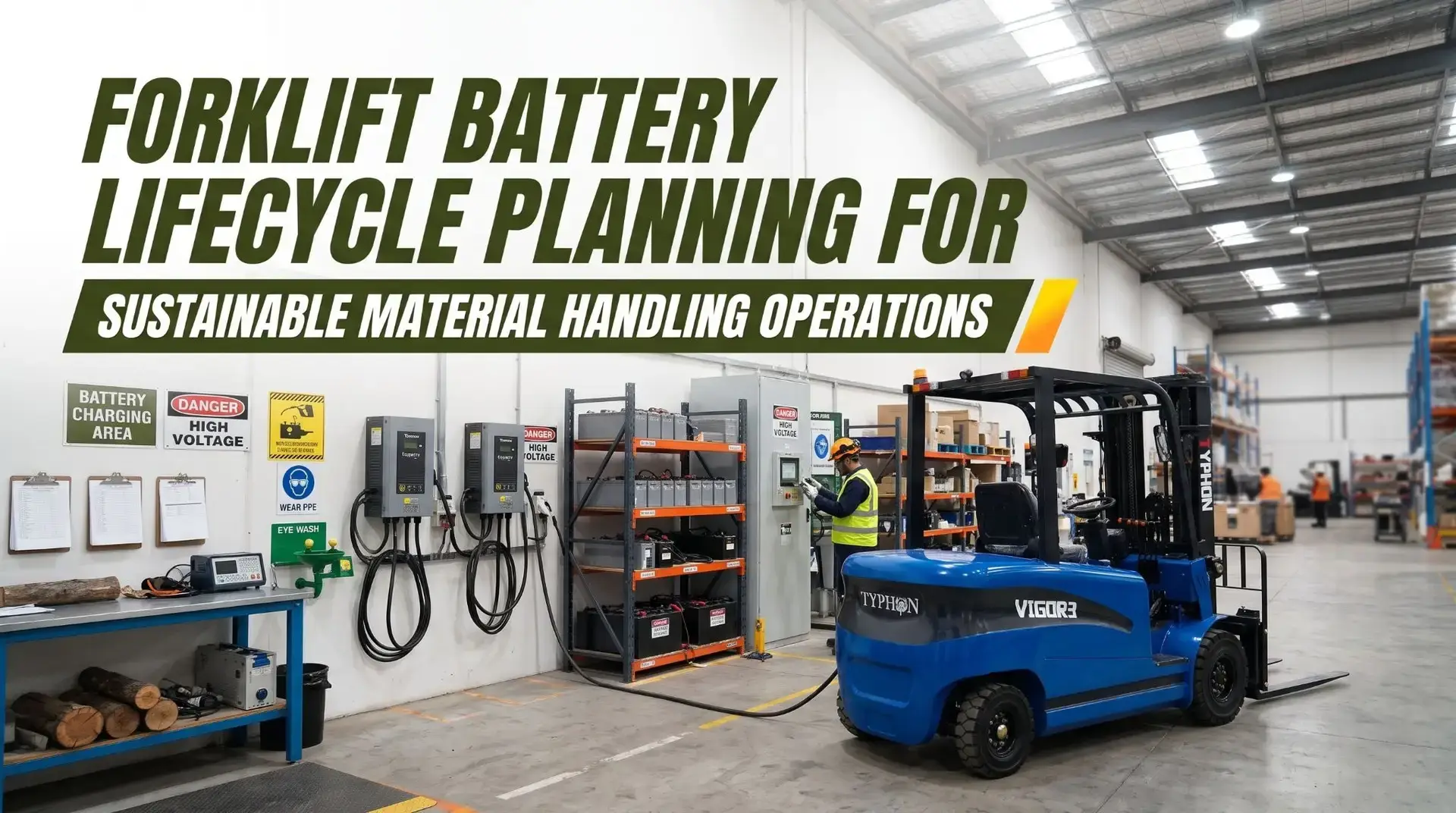
Forklift Battery Lifecycle Planning for Sustainable Material Handling Operations
Warehouse and manufacturing productivity often depends on whether electric forklifts have enough battery power to complete their assigned shifts. Battery condition affects runtime, equipment availability, operating expenses, and the timing of replacement purchases. When battery care is neglected, forklifts may lose working time unexpectedly, creating delays and additional costs for the operation.
Effective lifecycle management covers battery selection, performance tracking, charging, maintenance, and end-of-life handling. Battery chemistry and capacity should match the forklift’s workload and operating schedule, while charging equipment must meet the battery manufacturer’s requirements. Monitoring runtime, charging patterns, and changes in performance helps maintenance teams identify deterioration before it causes repeated interruptions.
A planned lifecycle strategy allows fleet managers to schedule maintenance and replacements based on actual battery condition rather than waiting for failure. Regular inspections, correct charging practices, and accurate service records help preserve battery performance and control long-term costs. When batteries reach the end of their useful life, approved recycling and disposal channels support responsible handling and compliance with applicable requirements.
Selecting Battery Technology
Lifecycle planning begins at the point of purchase. The battery you choose shapes your maintenance workload, charging infrastructure, energy costs, and replacement schedule for years. The two main options in most fleets are lead-acid and lithium-ion, and each brings distinct strengths and demands.
Lead-Acid Batteries
Flooded lead-acid batteries have powered electric forklifts for decades. They are proven, widely available, and familiar to most maintenance teams. Their key characteristics include:
Lead-acid batteries typically cost less up front than lithium-ion batteries of similar capacity, but they come with a structured maintenance routine that includes regular watering, cleaning, and periodic equalization charges. Most perform best with full charge cycles followed by a cooling period, which generally limits a single battery to one shift of work. Multi-shift operations often need two or three batteries per forklift, along with a dedicated battery room and approved changing equipment. Charging areas must also have adequate ventilation and ignition control, since these batteries release hydrogen gas during charging. Finally, their considerable weight is worth noting. It often serves as part of the forklift’s counterweight, which matters when considering any change in battery type.
Lithium-Ion Batteries
Lithium-ion batteries have become a common choice for high-utilization and multi-shift operations. Their key characteristics include:
Lithium-ion batteries carry a higher initial purchase price than lead-acid, but they offer flexible charging. Many systems accept partial and opportunity charging without the service-life penalty that lead-acid batteries experience. They are sealed and need no watering, and a built-in battery management system (BMS) balances cells automatically, reducing routine maintenance demands. Many lithium-ion batteries are rated for more charge cycles than comparable lead-acid units, although actual life depends on design and use. They also tend to deliver consistent voltage throughout the discharge, keeping forklift performance more uniform late in a shift. One limitation to account for is temperature. Charging and operation may be restricted in very cold or very hot conditions, depending on the design.
Key takeaway: Select battery technology based on shift patterns, charging infrastructure, temperature, fleet size, and forklift compatibility, and compare total lifecycle cost rather than purchase price alone.
Charging Practices and Battery Health
How a battery is charged has a major effect on how long it lasts. Good charging habits extend service life and protect safety. Poor habits can cut years off a battery and create hazards in the charging area.
Using the correct charger is essential for reliable battery performance. Each battery type has specific voltage and charging requirements that must be followed. Using an incompatible charger or incorrect settings can cause overheating, reduce battery capacity, and damage internal components. Operators should check the manufacturer’s recommendations and inspect charging cables, connectors, and equipment before use.
Charging conditions also influence battery health. Excessive heat, moisture, poor ventilation, and repeated deep discharges can affect performance and shorten service life. Keep the charging area clean, dry, and properly ventilated according to the battery type. Avoid interrupting charging unnecessarily, and allow the battery to complete its recommended charging cycle before returning the equipment to work. Regular checks and consistent charging practices help maintain dependable operation and reduce unexpected downtime.
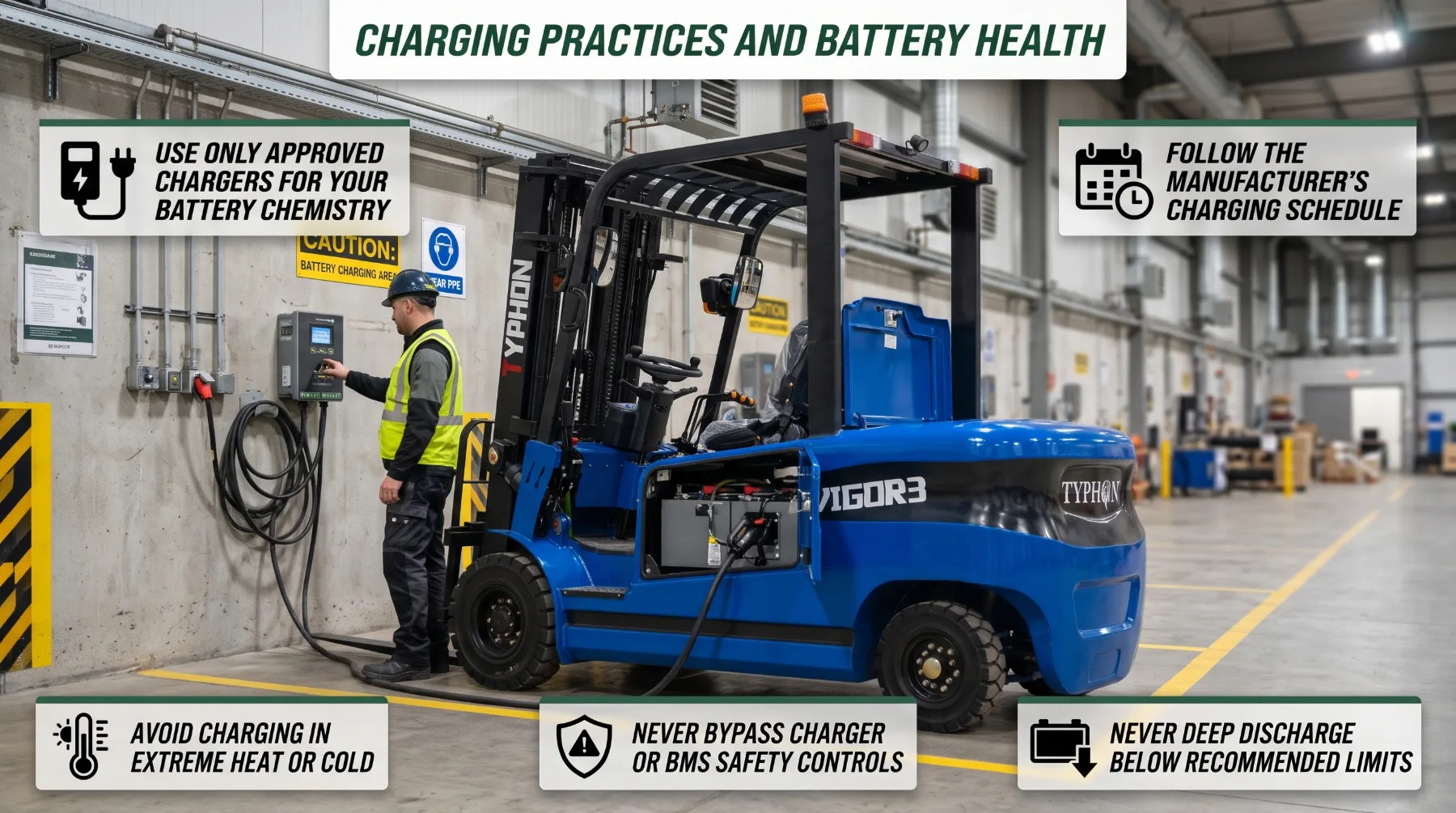
Use Compatible Chargers
Every battery must be paired with a charger approved for its voltage, chemistry, capacity, and charging profile. A matching connector does not confirm compatibility. Lithium-ion systems often require communication between the BMS and the charger, and charging without that link can prevent charging or allow it outside safe limits. Label chargers and batteries clearly, and restrict charger settings to trained personnel.
Follow the Approved Charging Schedule
Use the charging schedule the battery manufacturer approves for your operation. Charging practices differ by chemistry:
Lead-acid batteries perform best when charged fully once they reach their recommended discharge level, followed by a cooling period before returning to use. Frequent partial charging can shorten their service life unless the battery is specifically designed for opportunity charging. Lithium-ion batteries, by contrast, support opportunity charging during breaks and shift changes, within the manufacturer’s limits for charge rate, temperature, and frequency. Opportunity-rated lead-acid batteries occupy a middle ground. They may accept daytime partial charges, but still typically require regular full charges and scheduled equalization to maintain performance.
Avoid Practices That Exceed Battery Limits
Common practices that shorten battery life include:
Several common practices shorten battery life significantly. Running a lead-acid battery below its recommended minimum, often around 20 percent remaining charge, can cause lasting damage through deep discharging. Disconnecting lead-acid batteries before a charge cycle completes leaves cells undercharged over time, creating cumulative harm. Repeatedly charging hot batteries without adequate cooling in between accelerates wear. Changing charger profiles or output settings without manufacturer guidance risks overcharging or undercharging a battery. Finally, never override a BMS or charger that restricts charging because of temperature or a fault. Bypassing those safety controls removes the protection the system is designed to provide.
Manage Temperature
Avoid leaving batteries in unsuitable temperature conditions. High heat speeds up chemical aging, while cold can reduce available capacity and restrict charging, especially for lithium-ion batteries. Practical steps include:
Locate chargers away from heat sources and direct sunlight, and always follow the manufacturer’s stated charging temperature limits. In cold storage or freezer environments, use only batteries and chargers rated for those conditions, and store any spare batteries in the conditions the manufacturer specifies.
Chemistry-Specific Requirements
Lead-acid batteries may require specific watering and cooling procedures. Water levels should be checked and topped up as the manufacturer directs, typically after charging is complete, and equalization charges should be scheduled at the specified interval. Lithium-ion systems require their own monitoring and service rules, including review of BMS alerts, any required software updates, and periodic service by authorized personnel.
Key takeaway: Pair every battery with an approved charger, follow the manufacturer’s charging schedule for its chemistry, avoid deep discharge, interrupted cycles, and temperature extremes, and never bypass charger or BMS safety controls.
Tracking Battery Performance
A reliable battery lifecycle plan starts with accurate and consistent recordkeeping. Managers need to track each battery’s operating hours, completed charge cycles, charging time, and runtime under normal working conditions. Temperature readings during charging and operation are also important, especially when a battery becomes unusually hot. Keep a complete maintenance history that includes inspections, cleaning, watering for lead-acid batteries, equalization when required, repairs, and any faults or alarms. Assign each battery a unique identification number so its records remain accurate when it is moved between forklifts or charging stations. These details help managers understand battery condition and make better maintenance and replacement decisions.
Changes in battery performance can reveal early signs of aging or maintenance problems. A battery that runs for less time after a full charge may have lost capacity, while longer charging times can indicate reduced charging efficiency or a problem with the charger. Rising temperatures, repeated low-voltage warnings, and uneven voltage readings between lead-acid battery cells may also require further inspection. However, these signs do not always mean the battery has reached the end of its service life. Damaged connectors, poor charging practices, insufficient maintenance, and faulty equipment can create similar symptoms. Investigating the cause before replacing a battery can help avoid unnecessary costs and restore reliable performance when the problem is correctable.
Battery monitoring tools make it easier to organize records and identify changes over time. Many lithium-ion batteries have a battery management system (BMS) that monitors charge levels, temperature, cycle counts, and system faults. For lead-acid batteries, suitable monitoring equipment can help track voltage, temperature, and charging history. Modern chargers and fleet management platforms may also provide information about energy use, charging cycles, and error codes. Review these records regularly to compare battery performance across the fleet and identify units that need attention. Store all information in one central system, such as a spreadsheet or maintenance management platform, where authorized staff can access it across shifts. Well-organized records support preventive maintenance, warranty claims, replacement planning, and budgeting while helping extend battery service life and reduce unexpected forklift downtime.
Key takeaway: Record operating hours, charge cycles, charge time, runtime, temperature, and maintenance for every battery by its unique ID, investigate performance changes before assuming end of life, and use monitoring tools to compare batteries across the fleet.
Maintenance and Inspection
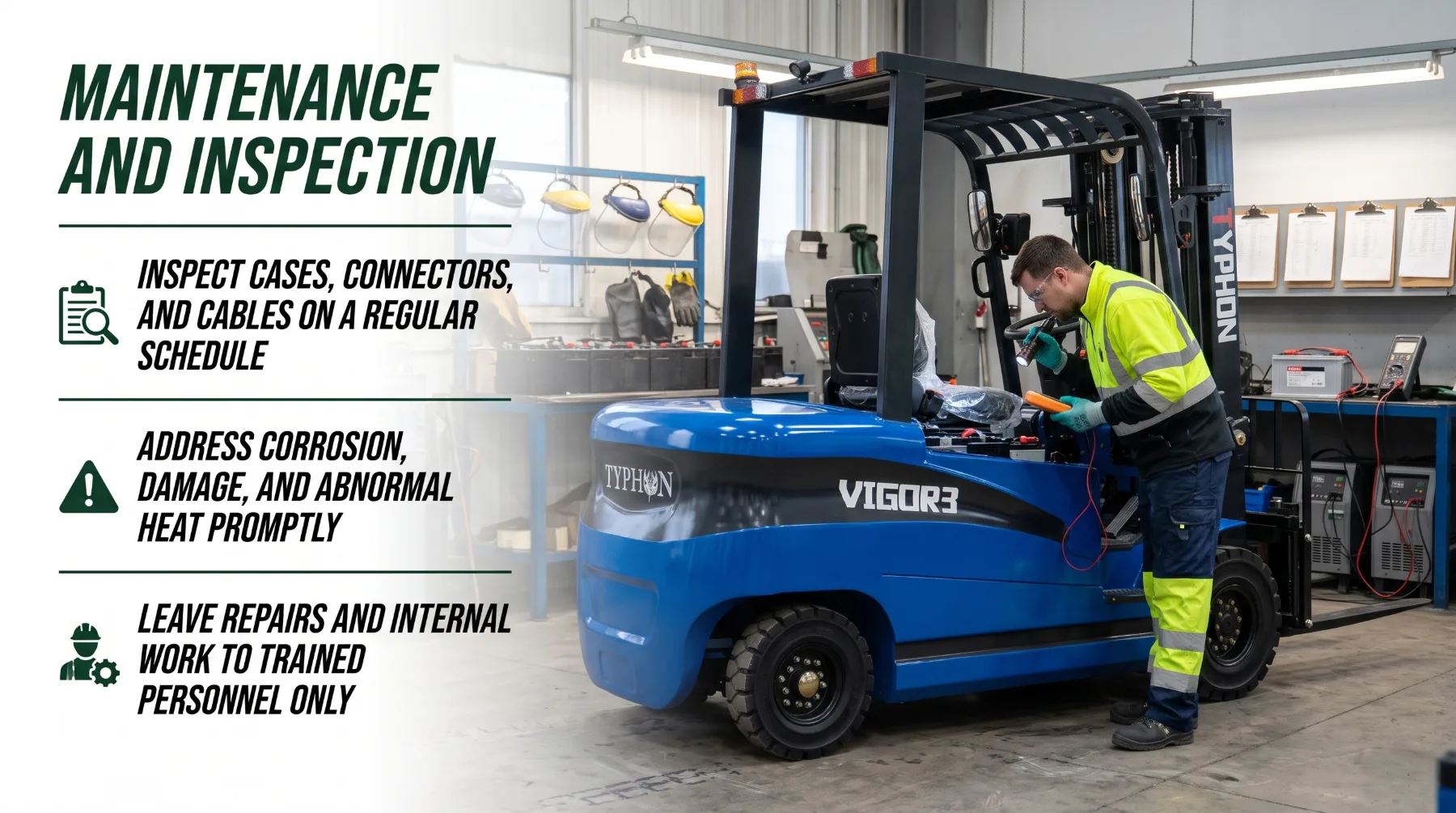
Regular battery maintenance and inspection help identify damage, wear, corrosion, and loose connections before they become serious problems. Operators should check the battery case, cables, connectors, terminals, and charging equipment before each shift. Weekly checks should include a closer look at battery condition, water levels for lead-acid batteries, and charger performance. More detailed inspections and testing should follow the manufacturer’s recommended schedule. These routine checks help maintain reliable performance, prevent unexpected downtime, and protect workers from electrical, chemical, and fire hazards.
During inspections, look for cracked or swollen battery cases, electrolyte leaks, damaged cables, loose terminals, burned connectors, corrosion, and unusual heat. Any damaged components should be reported and addressed promptly. Loose connections can create resistance and overheating, while corrosion can reduce charging efficiency and damage electrical contacts. Batteries, connectors, or chargers showing signs of serious damage should be removed from service until they have been inspected and repaired or replaced with approved parts. Keeping clear maintenance records also helps identify recurring problems and determine when additional servicing is needed.
Maintenance requirements vary depending on battery chemistry. Lead-acid batteries need appropriate watering, terminal cleaning, and equalization charging according to the manufacturer’s instructions. Workers should avoid overfilling cells and use the specified water quality. Lithium-ion batteries generally require less routine maintenance, but operators should monitor battery management system alerts and inspect the case, cables, and connectors regularly. Swelling, smoke, unusual odors, or excessive heat require immediate attention under the manufacturer’s safety procedures. Only trained personnel should perform battery repairs or open battery packs. Appropriate protective equipment, eyewash stations, and spill response materials should be available wherever lead-acid batteries are serviced. Following these practices helps extend battery life, reduce repair costs, and maintain a safer working environment.
Key takeaway: Inspect battery cases, connectors, cables, terminals, and chargers on a regular schedule, address corrosion, damage, loose connections, and abnormal heat promptly, and leave repairs and internal work to trained personnel.
Planning Replacement and Fleet Availability
Every battery eventually reaches the end of its useful service life. The goal of lifecycle planning is to make that moment predictable, so replacements happen on schedule rather than in a crisis.
Use Data, Not Just Age
Estimate replacement timing using actual performance, service history, and manufacturer guidance rather than age alone. Two batteries purchased on the same day can wear at very different rates depending on workload, charging habits, temperature, and maintenance. A battery in a lightly used single-shift role may stay healthy well past its expected life, while one in a demanding multi-shift role may wear out early.
Signs that a battery is approaching replacement include:
Several signs indicate a battery is approaching the end of its useful life. The most direct is a runtime that can no longer cover an assigned shift without extra charging. Alongside that, a steady drop in recorded runtime or capacity over recent months points to a declining trend that will only continue. Rising maintenance demands, including more frequent service, watering, or repairs, also signal a battery that is wearing out. In lead-acid batteries, persistent cell imbalance that equalization cannot correct is a clear warning, while lithium-ion systems will show this through BMS data as the battery approaches its rated cycle count or capacity threshold. Finally, when the cost of continued repairs starts to approach the cost of replacement, keeping the battery in service no longer makes financial sense.
Many operations set a capacity threshold, such as a percentage of original rated capacity, to trigger a replacement review. Confirm appropriate thresholds with the battery manufacturer.
Schedule Around Warehouse Demand
Plan replacement around warehouse demand so batteries or forklifts can be taken out of service without disrupting operations. Practical steps include:
Replacements should be scheduled before or after high-volume periods to avoid disrupting peak operations. Order batteries well ahead of time, since supplier lead times can stretch for specialized or high-capacity units. Stagger replacements across the fleet rather than swapping large numbers at once, unless a full transition is planned. Coordinate delivery, removal of the old battery, and commissioning of the new one within a single planned window. Use performance trends to forecast replacements one to two years out and build those costs into capital planning well in advance.
Consider Spare Capacity and Infrastructure
Fleet planning should account for more than the batteries themselves:
A small pool of spare batteries can cover unexpected failures and keep critical forklifts running without disruption. New or larger batteries may require different chargers or additional charging stations, and adding chargers or switching to fast-charging systems can also trigger electrical supply upgrades. If the fleet is moving from lead-acid to lithium-ion, expect changes to charging areas, maintenance routines, and training needs. Plan that transition in phases where practical. Finally, align any battery replacement with the remaining service life of the forklift itself, since installing a new battery in a machine near retirement may not be the best use of capital.
Key takeaway: Base replacement decisions on runtime, capacity trends, maintenance history, and manufacturer guidance rather than age alone, schedule replacements around warehouse demand, and plan for spares, chargers, and electrical capacity as part of fleet strategy.
Conclusion
Lifecycle planning connects battery selection, maintenance, charging, replacement, and recycling into one fleet strategy. It starts with choosing the right technology for your shift patterns, infrastructure, and environment, measured by total lifecycle cost rather than purchase price. Consistent performance tracking gives every battery a documented history, revealing aging, charging problems, and maintenance needs before they disrupt operations. Compatible chargers and approved charging schedules protect battery health, while regular inspection of cases, connectors, and cables catches damage early and keeps workers safe.
When the time comes to replace a battery, performance data and manufacturer guidance provide a far better basis than age alone, and careful scheduling keeps the fleet available through every demand cycle. Finally, approved recycling channels close the loop responsibly, recovering valuable materials and keeping hazardous components out of the waste stream.
When you treat every battery as a managed asset from purchase to recycling, you gain more predictable operating costs, stronger equipment availability, and a material handling operation that supports both productivity and sustainability.
FAQs
How long does a forklift battery last?
Service life varies by battery type, usage, charging practices, maintenance, and operating conditions. Lead-acid batteries are commonly rated for around 1,500 charge cycles, which often translates to roughly five years in a single-shift operation with proper care. Many lithium-ion batteries are rated for more cycles, though actual life depends on the design, depth of discharge, and temperature. Heavy multi-shift use, poor charging habits, and missed maintenance can shorten life significantly.
Can battery replacement be planned by age alone?
Age is one factor, but performance records and manufacturer guidance provide a better basis for replacement decisions. Batteries of the same age can wear at very different rates depending on workload and care. Track runtime, capacity trends, charge times, maintenance history, and cycle counts, and review them against the manufacturer’s thresholds. This approach avoids replacing healthy batteries too early or keeping failing ones in service too long.
Are lithium-ion batteries maintenance-free?
No. They still require inspection, monitoring, compatible charging, and manufacturer-approved service. While lithium-ion batteries do not need watering or routine equalization, operators and technicians should review BMS data, inspect cases and connectors for damage, keep connections clean, and follow any required software updates or service visits. Any swelling, unusual heat, odor, or smoke requires immediate removal from service.
What should happen to an old forklift battery?
Send it through an approved collection or recycling program suited to its chemistry and condition. Battery suppliers, forklift dealers, manufacturers, and licensed recyclers commonly offer take-back and recycling services. Never place industrial batteries in ordinary waste. Store end-of-life batteries securely until collection, isolate damaged units under qualified guidance, and keep records of each battery’s disposal for compliance and reporting.