A wheel loader is one of the most significant equipment investments a business can make, and the right choice pays dividends for years while the wrong one drains time, money, and productivity. With so many sizes, configurations, and specifications on the market, narrowing the field can feel overwhelming. The good news is that a smart decision follows a logical path. By understanding your work, matching the machine to your environment, weighing the specifications that matter, planning for versatility, and looking closely at long-term costs, you can select a loader that fits your operation precisely. This guide walks you through each of those steps so you can buy with confidence and get lasting value from your machine.
Understand Your Job Requirements Before Buying
The right wheel loader starts with a clear understanding of the work you do most often. Before comparing models or specifications, take an honest look at your daily operations, because the machine should be chosen to fit your business rather than forcing your business to adapt to the machine. The materials you handle are the natural starting point. Loading light, loose material like mulch or gravel places very different demands on a loader than scooping dense, heavy aggregate, rock, or wet soil. A machine sized and built for one may struggle or wear prematurely with the other, so knowing exactly what you move day in and day out sets the foundation for every decision that follows.
Job site size and layout matter just as much, since they shape how the machine will actually operate. A loader working across a wide, open quarry has room to maneuver and can carry a larger footprint, while one operating in a tight yard, a busy loading dock, or a confined recycling facility needs to turn, reverse, and reposition in limited space. Choosing a machine that fits comfortably within your working area keeps operators productive and reduces the risk of damage to the loader or its surroundings.
Frequency of use rounds out the picture and directly affects how durable and capable a machine needs to be. Consider these questions as you assess your workload:
- How many hours will the loader run each day or week?
- How continuous is the work, from occasional tasks to constant, heavy-duty cycles?
- How demanding are the conditions the machine will face over time?
A loader used sparingly for light tasks has very different requirements than one running long shifts under heavy load. Matching the machine’s durability to your real usage protects your investment and ensures the loader holds up dependably for the life of your operation.
Match Machine Size to Your Work Environment
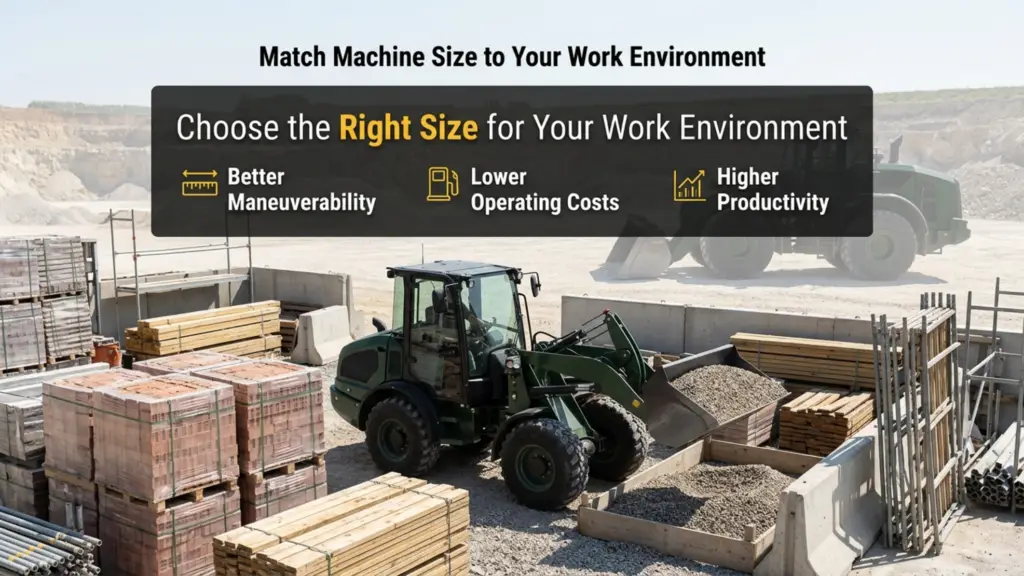
Wheel loaders come in a wide range of sizes, from compact machines built for tight, light-duty work to large units engineered for high-volume, heavy-duty production. Each size class is suited to different applications, and choosing correctly has a direct effect on how well the machine serves you. The goal is to match the loader’s scale to your work environment so it performs efficiently without wasting capacity you will never use. A machine that fits your operation well feels like a natural extension of your workflow, while one that is poorly sized creates friction at every turn.
Maneuverability is often the deciding factor in confined or busy settings. A compact or mid-size loader turns tightly, navigates narrow spaces, and repositions quickly, keeping work flowing smoothly where room is limited. A larger machine, by contrast, delivers greater reach and carrying capacity but demands more space to operate safely. Matching size to your environment ensures operators can work confidently without constantly fighting the machine’s footprint, and it protects both the loader and the surroundings from avoidable damage.
Just as important is avoiding the temptation to over-specify. It can seem safer to buy the biggest machine you can afford, but that reasoning often backfires:
- Higher purchase cost ties up capital you could invest elsewhere in the business.
- Greater fuel consumption raises your operating expenses on every shift.
- Excess capacity you rarely use delivers little return for the money spent.
The smarter approach is to choose a machine sized to handle your typical workload comfortably, with a reasonable margin for demanding days. This balance improves maneuverability, boosts productivity, and keeps operating efficiency high, giving you a loader that does exactly what you need without the burden of paying for capability that sits idle. Right-sizing your machine is one of the most practical ways to protect both your productivity and your bottom line.
Evaluate Performance and Key Specifications
Once you understand your work and the size class that suits it, the next step is to compare the specifications that determine real-world performance. Numbers on a spec sheet only mean something when you connect them to your daily tasks, so focus on the figures that reflect how the loader will actually work under your load. Reading these specifications thoughtfully lets you judge whether a machine can keep pace with your operation rather than relying on impressions or brand reputation alone.
Several key specifications deserve close attention because each one shapes a different aspect of performance:
- Operating weight influences stability and the machine’s ability to handle heavy loads securely.
- Bucket capacity determines how much material the loader moves in each pass, directly affecting productivity.
- Engine power provides the strength the machine needs to work efficiently under demanding conditions.
- Breakout force measures how well the bucket digs into and pries loose compacted or resistant material.
- Lift capacity decides how much weight the loader can raise, which matters greatly when loading trucks or hoppers.
These figures work together, and evaluating them as a set gives a far more accurate picture than any single number in isolation. A loader with strong engine power but limited lift capacity may disappoint when loading high-sided trucks, while one with generous bucket capacity but modest breakout force may struggle in dense, packed material. The right machine balances these specifications in a way that matches your typical tasks.
Think carefully about the demands you place on a loader most often, then weigh the specifications against those demands. A business moving heavy aggregate all day needs strong breakout force and lift capacity, while an operation handling lighter material may prioritize bucket capacity and efficiency. Matching the specifications to your real workload ensures the machine performs dependably shift after shift, delivering the productivity your business relies on without straining under the work you ask of it.
Consider Attachments and Long-Term Versatility
A wheel loader is far more capable when it can do more than one job, and attachment compatibility is what unlocks that potential. A machine that supports multiple attachments can handle a wider variety of tasks well beyond standard bucket loading, transforming a single loader into a flexible tool ready for changing demands. Rather than being locked into one role, a versatile machine adapts to the work in front of it, which is a significant advantage for any business whose tasks shift from day to day or season to season.
The range of attachments available for modern wheel loaders makes this versatility practical and valuable. With the right tools, one machine can take on jobs that might otherwise require separate, specialized equipment:
- Pallet forks for lifting and moving palletized goods and materials.
- Grapples for handling logs, brush, debris, and irregular loads.
- Snow blades or pushers for clearing lots and roadways in winter.
- Specialty buckets for specific materials, from high-capacity light-material buckets to heavy-duty rock buckets.
This adaptability delivers real financial and operational benefits. When a single loader can switch between loading, lifting, grappling, and clearing, you maximize equipment utilization by keeping the machine productive across a broader range of work. Instead of a loader sitting idle when its primary task is done, it moves on to the next job with a quick attachment change.
Just as importantly, investing in versatility reduces the need for additional machines. Every piece of equipment you avoid buying saves not only its purchase price but also the ongoing costs of maintenance, storage, and insurance that come with it. For businesses looking to control their fleet size and get the most from every dollar, a versatile wheel loader that handles many tasks well is a smart, forward-looking choice. Choosing a machine with strong attachment support today gives you the flexibility to take on new work tomorrow without expanding your fleet.
Compare Ownership Costs and After-Sales Support
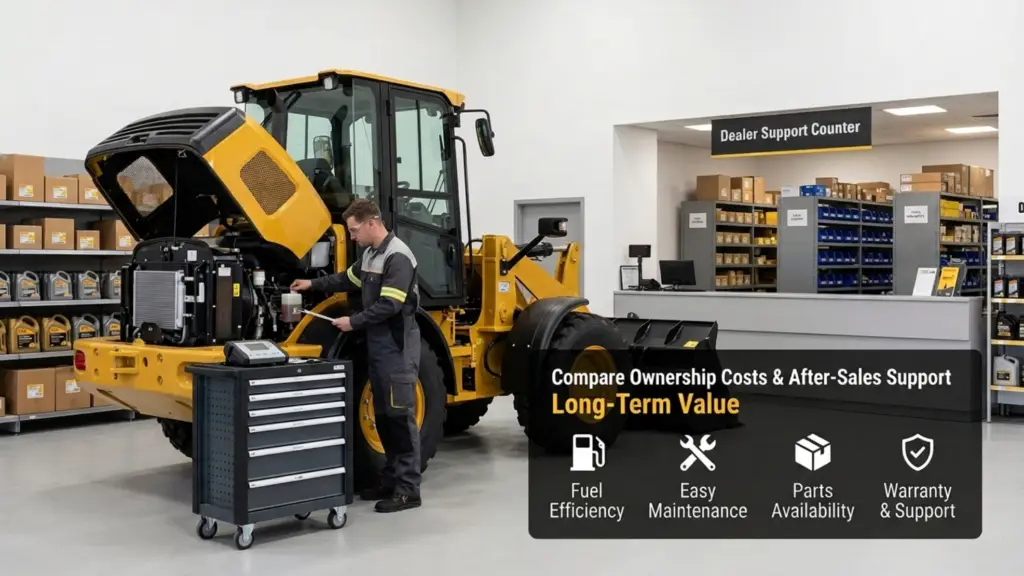
The purchase price of a wheel loader is only the beginning of what it truly costs to own, so a wise buyer looks well beyond the sticker figure. The total cost of ownership unfolds over years of operation, and a machine that seems affordable upfront can prove expensive over its lifespan if it burns through fuel, demands frequent repairs, or sits idle waiting for hard-to-find parts. Evaluating these long-term factors gives you a far more accurate sense of value than price alone ever could.
Several ongoing costs deserve careful consideration before you commit to a machine:
- Fuel efficiency, since fuel is a recurring expense that adds up substantially over thousands of operating hours.
- Maintenance requirements, including how often service is needed and how straightforward it is to perform.
- Parts availability, because quick access to components keeps downtime short and work moving.
- Warranty coverage, which protects you against unexpected repair costs during the machine’s early life.
Each of these factors shapes how much the loader will cost to run year after year, and a machine that scores well across them delivers greater value even if its purchase price is higher than a cheaper alternative.
After-sales support ties everything together and can make the difference between a smooth ownership experience and a frustrating one. Reliable dealer support means help is available when you need it, whether that is routine servicing, technical guidance, or urgent repairs that get your machine back to work quickly. A strong dealer relationship, backed by dependable parts supply and responsive service, protects your productivity and gives you confidence that the machine will keep earning its keep for years. When you weigh lower operating costs against reliable support, you often find that the machine offering the best long-term value is the one that keeps running dependably, costs less to operate, and stands behind you well after the sale is complete.
Conclusion
Choosing the right wheel loader comes down to one guiding principle: match the machine to your work, not the other way around. Start by understanding what you move, where you operate, and how intensively the loader will be used. From there, select a size that fits your environment without sacrificing efficiency, and compare the specifications that directly shape daily performance. Think beyond the bucket by choosing a machine with strong attachment compatibility, so it adapts to changing demands and keeps earning its place in your fleet. Finally, look past the purchase price and weigh fuel costs, maintenance, parts availability, warranty, and dealer support. A loader that costs less to run and is backed by reliable service delivers far greater value over its working life. Take the time to evaluate each of these factors honestly, and you will invest in a machine that performs dependably, protects your budget, and supports your business for years to come.