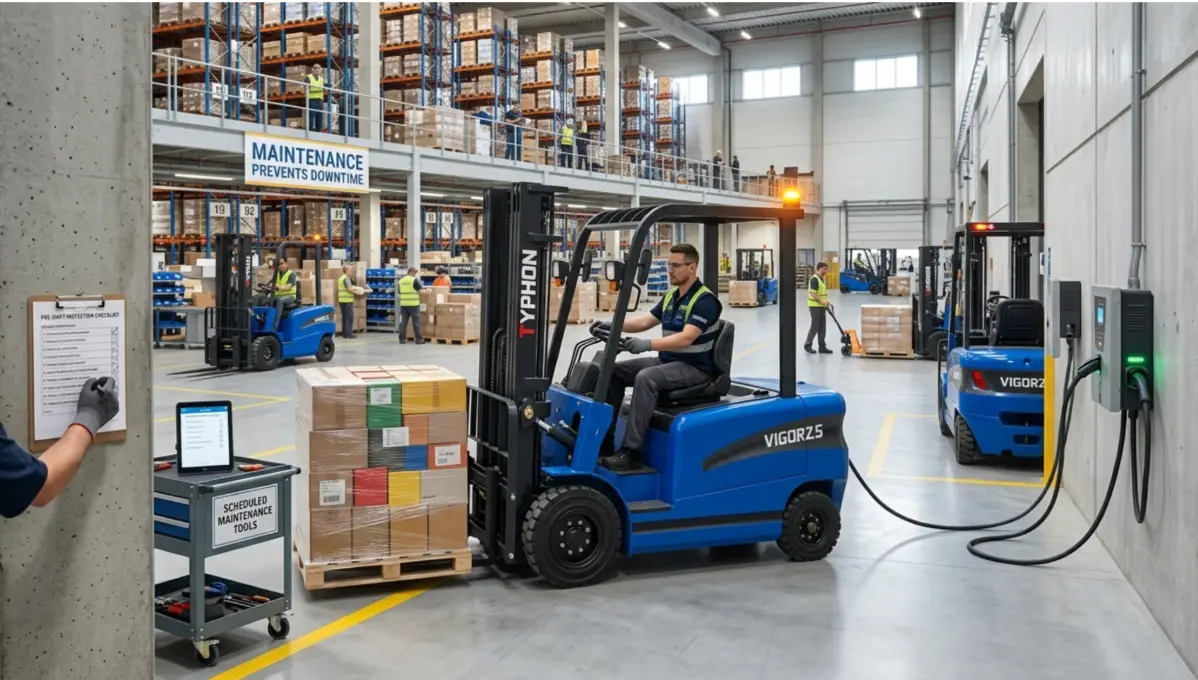
A forklift sitting idle during your busiest hours is one of the most expensive problems in any warehouse. When equipment stops, orders back up, crews are left standing around waiting, and a single breakdown can throw off an entire shift’s schedule. The frustrating reality is that most forklift downtime is not just bad luck. It often traces back to small, manageable issues that were left unchecked until they finally failed at the worst possible moment.
The good news is that this downtime is largely preventable. With the right habits in place, you can catch mechanical problems before they actually stop the machine, keep your equipment running reliably through periods of peak demand, and protect the productivity your operation depends on. Reducing downtime does not require a complex overhaul; instead, it relies on five core pillars: consistent pre-shift inspections, disciplined preventative maintenance, smart battery care, well-trained operators who treat the equipment with respect, and maintaining a clean, debris-free floor. By focusing on these areas, you transform your fleet from a source of constant worry into a dependable engine for your business. This proactive approach saves money on emergency repairs, extends the lifespan of your machines, and ensures your team stays on track even during your busiest days.
Perform Consistent Daily Inspections
Most major forklift failures start as minor problems that anyone could have spotted during a basic check. A small fluid leak, a slight nick in a tire, or a drive chain showing early signs of wear rarely stops a machine on the first day. However, when left unchecked through a few busy shifts, those seemingly small issues grow into significant breakdowns that pull a forklift out of service entirely. The root of the problem is often that operators skip the pre-shift walkaround when they feel rushed, incorrectly assuming the machine is fine simply because it operated without incident yesterday. Wear accumulates quietly; a slow hydraulic leak drops fluid levels until the lift strength fades, a damaged tire eventually fails under the weight of a load, and a stretched chain finally gives out during a mid-shift maneuver.
This becomes especially critical during peak demand, which is exactly when a forklift is pushed to run its hardest and longest. The added physical strain accelerates wear and turns a small defect into a total failure far faster than it would on a slow, light-duty day. A breakdown during your busiest hours costs the most money and causes the most frustration, because that is precisely when every single machine in your fleet is needed to keep orders moving. To prevent this, build a quick daily inspection into the start of every shift. These few focused minutes of attention protect hours of productive uptime. You should look for fluid leaks by checking the ground under the machine and inspecting hoses, fittings, and the hydraulic system. Inspect all tires for cuts, flat spots, chunking, or uneven wear that signals a deeper issue. Examine the lift chains for signs of stretch, rust, kinks, or worn links, and confirm they are properly lubricated. Finally, test the basics like brakes, the horn, lights, and steering before the machine takes its first load. Log every inspection so that issues get tracked, reported, and fixed before they escalate into something that stops your operation cold.
Stick to a Strict Maintenance Schedule
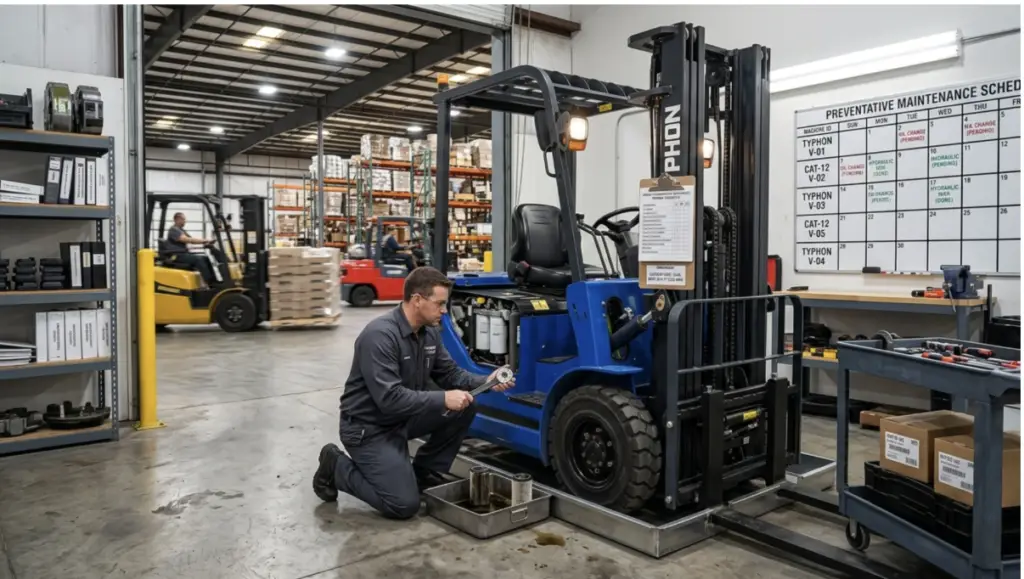
Waiting for a dashboard warning light to appear is a losing strategy. By the time an alert finally glows on your screen, a component is often already failing, and the necessary repair is inevitably bigger, costlier, and more disruptive than the routine service that would have prevented it in the first place. Reactive maintenance is one of the leading causes of avoidable downtime in any warehouse environment. The problem often arises when operations become extremely busy and scheduled service begins to slip. Oil remains unchanged past its required interval, filters become heavily clogged, and worn parts are allowed to keep running until they snap. Each missed service interval quietly degrades the engine and hydraulic performance until something inevitably gives way under heavy, everyday use.
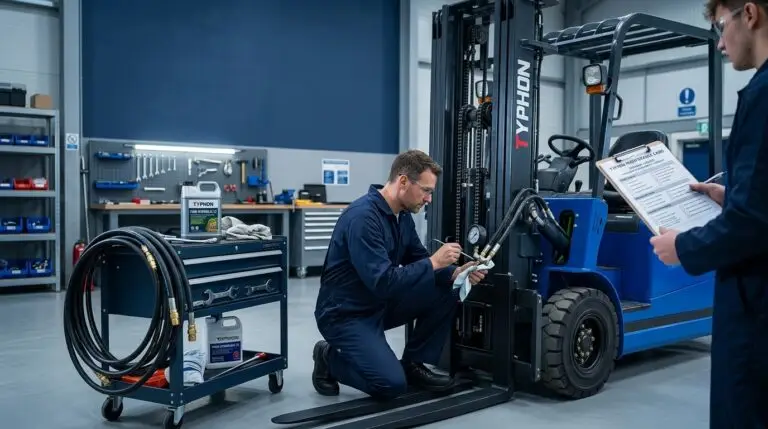
This logic is particularly flawed during your busiest periods. Hard-worked machines need their maintenance the most, yet busy seasons are precisely when teams are most tempted to postpone it. Skipping service during peak demand stacks extra strain on systems that are already overdue for attention, setting up a failure when you can least afford one. The best approach is to treat the manufacturer service schedule as a firm commitment, not a suggestion. Follow the recommended intervals for oil changes, filter replacements, and hydraulic service exactly as the manufacturer specifies. You should schedule service proactively based on actual hours of use and aim to book it before your peak season rather than during it. Use professional servicing so that engines, transmissions, and hydraulics get inspected by trained technicians who can catch what a quick daily check might miss. Track the complete service history for each individual machine so nothing falls through the cracks across your entire fleet. By avoiding the wait for warning lights, you ensure that your engine and hydraulic systems remain in top condition right through your hardest-working hours, delivering the consistent reliability your operation counts on.
Keep the Battery Properly Charged
For electric forklifts, the battery is the heart of the machine, and poor battery habits are a frequent cause of unexpected mid-shift stalls. A forklift that suddenly dies in the middle of a run leaves a load stranded in the aisle and an operator sitting idle while the battery is forced to charge or gets swapped out. That lost time adds up extremely fast, and it can throw off your entire delivery schedule. The issue occurs when operators run a battery until it is nearly dead before they scramble to find a charge. Deep discharges significantly shorten the total lifespan of the battery and often leave too little power to finish a long, demanding shift. Furthermore, skipped watering schedules and inconsistent charging routines further weaken the battery until it can no longer hold the charge it once did.
These habits become problematic during busy shifts, as demanding workloads drain batteries much faster than they would on light days. Without a smart charging routine, a battery that would easily last a slow shift gives out partway through a busy one, taking your forklift out of service exactly when every machine is in high demand. To prevent this, adopt disciplined battery practices and stick to them across every single shift. Charge the battery whenever the machine is not in use; follow an opportunity-charging or “charge when idle” rule rather than running the battery all the way down to empty. Avoid full discharge, as deep draining stresses the internal components and shortens the working life of the battery. Maintain proper water levels on flooded lead-acid batteries by checking and topping them off with distilled water on a strict schedule. Keep the terminals clean and tight, since corrosion and loose connections rob the battery of reliable power. If you manage multiple shifts, rotate batteries so each one gets a full, proper charge between uses. A well-maintained and consistently charged battery is the simplest way to prevent unexpected stalls.
Train Operators on Proper Handling
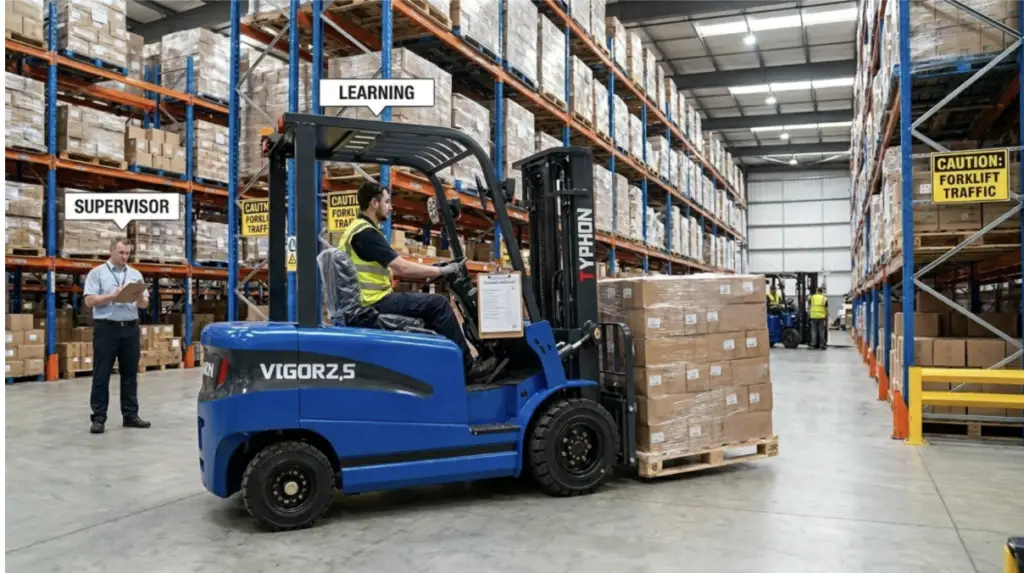
The way a forklift is driven has a direct, measurable effect on how often it breaks down. Rough handling puts an immense amount of unnecessary stress on the machine that careful operation never does, and over time, that repetitive stress translates into damaged components and unexpected downtime. Skilled, well-trained operators are one of your strongest defenses against machine failure. The problem often starts when operators are in a rush; they slam the mast, drive at excessive speeds, and clip rack uprights or door frames. Each rough action, whether it is sudden braking or hitting an obstacle, jolts the forks, mast, hydraulics, and frame. While the damage might not be obvious at first, repeated abuse wears down internal components and eventually leads to a sudden mechanical failure.
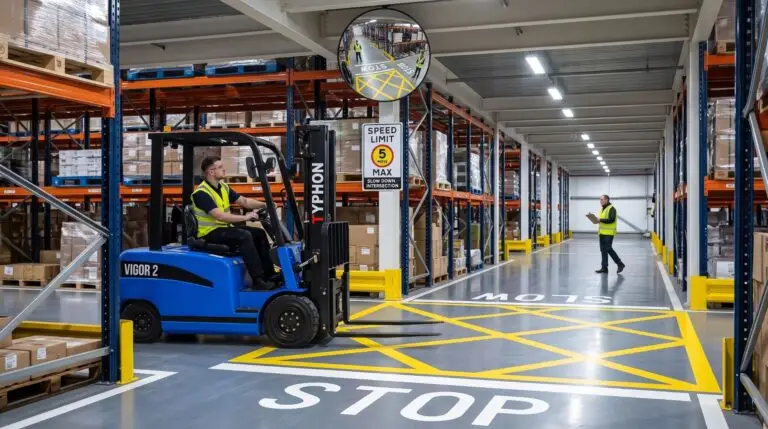
This pressure to move faster during peak demand is exactly what pushes operators toward rougher driving styles. The result is more accidental impacts and significantly more strain on the machine, precisely when you need it running as smoothly as possible. A collision with a rack not only breaks the forklift but can also damage product and warehouse infrastructure, multiplying the financial cost of the mistake. To prevent this, invest in comprehensive operator training and reinforce those lessons consistently. Train your team on smooth handling techniques, including gentle mast operation, controlled acceleration, and careful braking. Reinforce the importance of safe speeds that are appropriate for the specific load, the aisle width, and the current floor conditions. Coach your staff on spatial awareness so that they clear rack uprights, door frames, and other obstacles with plenty of room to spare. Hold regular refresher sessions to keep good habits sharp and correct bad ones before they lead to damage. Build a culture of care where operators fully understand that careful driving protects the equipment and keeps their schedule on track.
Keep the Work Area Clean
A messy warehouse floor is much more than an eyesore; it is a genuine threat to the health of your forklifts. Loose debris is capable of tangling in moving parts, forcing time-consuming stops that interrupt a busy shift. A clean floor is one of the easiest and most overlooked ways to protect your fleet uptime. The issue happens when materials like shrink wrap, plastic strapping, and broken pallet pieces accumulate on the floor throughout a busy day. Forklifts drive right over this waste, and the loose material wraps around the axles, wheels, and undercarriage, where it binds moving parts and can cause serious mechanical damage.
This is a bigger issue during busy shifts because high activity generates more debris while simultaneously leaving less time for your team to clean it up. As the mess builds, the risk of a forklift picking up tangled material climbs with it. Stopping to cut plastic wrap out of a drive axle in the middle of peak demand is exactly the kind of delay that you cannot afford. To prevent this, make floor cleanliness a shared, ongoing habit for everyone in the warehouse. Clear away shrink wrap and strapping promptly rather than letting it pile up on the floor. Remove heavy debris like broken pallets and banding material before it ever has the chance to end up under a machine. Assign specific cleanup responsibilities so aisles and work zones get checked and cleared throughout every shift. Provide clearly marked bins and stations for waste wrap and strapping so that material has a place to go immediately. Finally, inspect the undercarriage periodically for material that may have already started to wrap around the axles. Keeping the floor clean prevents damage and avoids the time-consuming stops that quietly eat into a productive day.
Conclusion
Reducing forklift downtime during busy shifts comes down to consistent, disciplined habits rather than relying on luck. By making these practices a standard part of your daily operations, you ensure your equipment stays ready for work when you need it most. Inspect each machine thoroughly before every shift to catch small issues early, before they have a chance to turn into major repairs. Follow the manufacturer’s maintenance schedule strictly instead of waiting for warning lights or mechanical failures.
For electric models, ensure batteries are properly charged, watered on schedule, and never run to a full discharge, which preserves their lifespan and reliability. Invest in operator training to encourage handling that prioritizes smooth, careful movement, which significantly reduces unnecessary wear and tear. Finally, keep your warehouse floors clear of the plastic wrap, strapping, and debris that easily tangles in moving parts and forces frustrating, time-consuming stops. Each of these practices protects your machine uptime on its own, and when implemented together, they keep your entire fleet dependable even when seasonal demand peaks. Taking this proactive approach to equipment care transforms your warehouse into a highly productive environment where you spend your time moving goods rather than fixing machines.