The engine is the heart of any skid steer, but how that engine breathes has a bigger effect on performance than most operators realize. Air intake shapes how much power the machine can produce, how it holds up under heavy demands, and how efficiently it turns fuel into work. Two skid steers with similar displacement can perform very differently depending on whether their engines are naturally aspirated or turbocharged.
Understanding the difference helps you choose a machine that fits your work rather than fighting against it. This post walks through five ways engine intake type affects skid steer performance and efficiency, from raw power output to fuel consumption, then closes with a conclusion and a short FAQ to guide your decision.
Naturally Aspirated vs. Turbocharged Engines
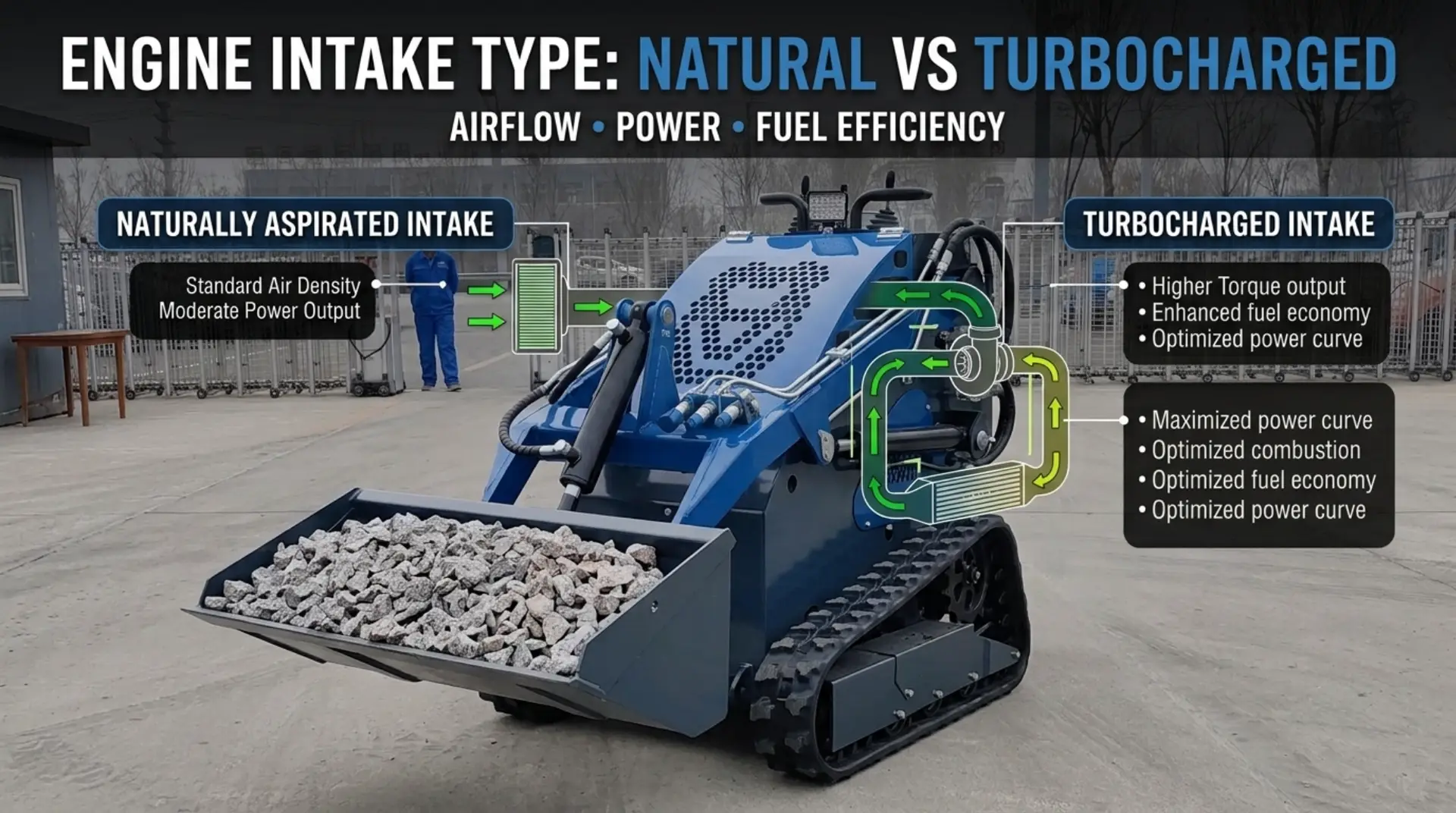
The core difference between these two engine types comes down to how they get air into the cylinders. A naturally aspirated engine relies on atmospheric pressure alone. As the pistons move, they create a vacuum that draws in outside air at normal pressure. It’s a simple, proven design with fewer moving parts, and it has powered reliable equipment for decades.
A turbocharged engine takes a different approach. It uses a turbine, driven by the engine’s own exhaust gases, to force additional air into the cylinders under pressure. This packs more air into the same space, which allows the engine to burn more fuel and produce more power from a compact package. In practical terms, turbocharging lets a smaller engine deliver output that would otherwise require a larger, heavier one.
For a skid steer, that distinction carries real weight. These machines pack a lot of capability into a small frame, and engine bay space is always limited. Consider what each design brings to the table:
- Naturally aspirated engines offer straightforward operation, fewer components, and generally simpler maintenance.
- Turbocharged engines deliver stronger power from the same displacement, which suits demanding hydraulic and loading tasks.
Neither design is universally superior. The naturally aspirated engine rewards operators who value simplicity and steady, predictable performance for lighter to moderate work. The turbocharged engine rewards those who need maximum output from a compact machine. Knowing how each one breathes is the first step toward matching the right engine to the work you actually do.
More Air Can Support Higher Engine Output
Combustion is fundamentally about mixing air and fuel, then burning that mixture to produce power. The more air an engine can bring in, the more fuel it can burn effectively, and the more power it can generate. This is exactly why a turbocharger matters so much. By forcing additional air into the cylinders, it supports more complete combustion and higher output from an engine of a given size.
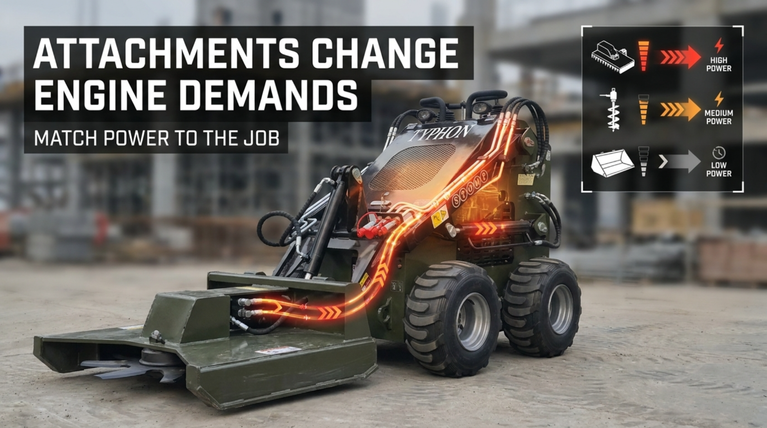
For a skid steer, this extra air translates directly into working capability. These machines don’t just move themselves around; their engines also drive demanding hydraulic systems that power the lift arms, tilt functions, and any attachments in use. When you’re loading heavy material, running a hydraulic breaker, or pushing through a tough pile, the engine needs to supply strong, sustained power. A turbocharged engine’s added air supply helps it meet those peaks without bogging down.
The benefit shows up most clearly under real working stress. Picture a skid steer carrying a full bucket up a ramp while the hydraulics work at the same time. That combination places heavy demand on the engine, and the additional air a turbocharger provides helps the machine hold its power rather than losing momentum. A naturally aspirated engine can absolutely handle plenty of work, but when the same displacement is asked to deliver its highest output, the turbocharged version generally has more to give.
This is why turbocharging has become so common on skid steers designed for heavy-duty tasks. It offers a way to get serious power from a compact, practical engine without stepping up to a larger machine. The result is a skid steer that stays nimble while still delivering the muscle demanding jobs require.
Intake Type Affects Performance at High Loads
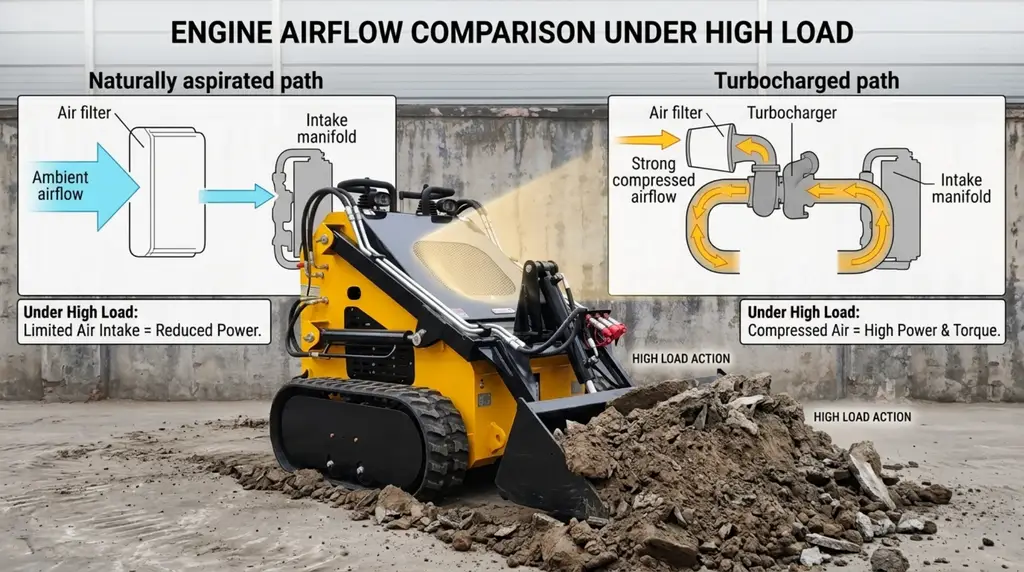
Where intake design really proves itself is under heavy, sustained load. As a skid steer’s workload climbs, the engine needs more air to keep producing power. A turbocharged engine has an advantage here because its turbo continues forcing air into the cylinders even as demand rises. This helps the machine maintain stronger power output through tough tasks rather than fading when the going gets hard.
A naturally aspirated engine, by contrast, is limited by atmospheric pressure. It can only draw in as much air as the surrounding environment provides, which caps how much power it can extract from a given displacement. For lighter and moderate work, this is rarely an issue, and the simplicity of the design is a genuine benefit. But when the machine faces continuous heavy loading, the ceiling on power potential becomes more noticeable.
Altitude adds another dimension worth understanding. At higher elevations, the air is thinner, which reduces the oxygen available for combustion. This affects naturally aspirated engines more directly, since they depend entirely on ambient conditions. A turbocharged engine can compensate to a degree by compressing the thinner air, helping it hold performance in situations where a naturally aspirated engine would lose output. For operations working at elevation, that difference can matter a great deal.
The practical lesson is to match intake type to your workload intensity. If your skid steer regularly operates at or near its limits, moving dense material or running power-hungry attachments for long stretches, a turbocharged engine helps sustain the performance you need. If your work stays lighter and more variable, a naturally aspirated engine can handle it comfortably while keeping operation simple. The right choice depends on how hard, and how often, you push the machine.
Air Supply Influences Fuel Efficiency
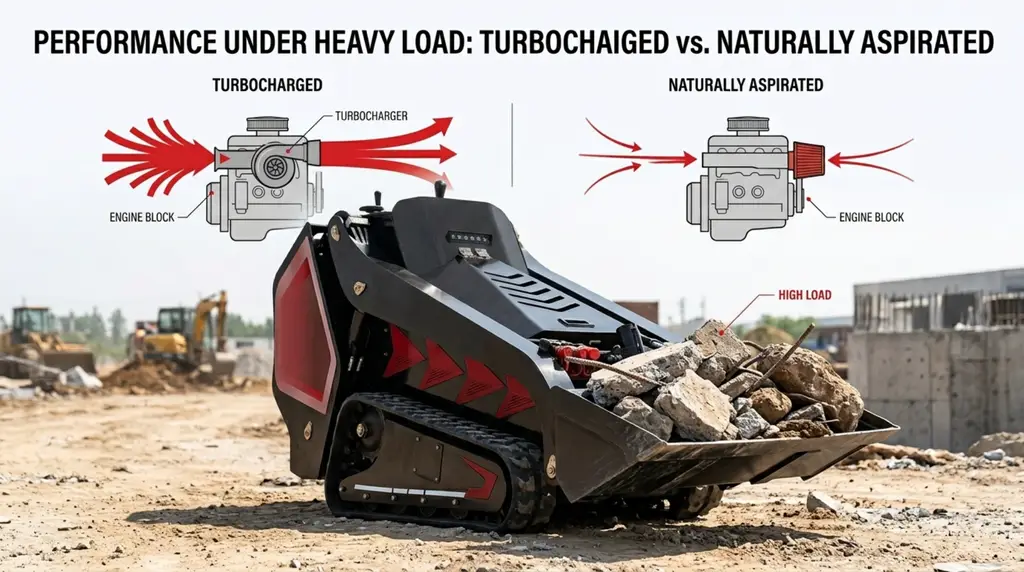
Efficiency isn’t just about how much power an engine makes; it’s about how well it turns fuel into that power. Combustion efficiency depends heavily on the balance between air and fuel. When an engine has the right amount of air to burn its fuel completely, more of that fuel becomes useful work and less is wasted. A well-matched intake system plays a central role in getting that balance right.
Turbocharging can support efficiency by supplying ample air for thorough combustion. When fuel burns more completely, the engine extracts more energy from each drop, which can help it produce the required power without leaning on excessive fuel consumption. In many cases, a smaller turbocharged engine can do the work of a larger naturally aspirated one while using fuel more sensibly, because it isn’t carrying the extra size and weight of bigger displacement.
That said, efficiency is never guaranteed by intake type alone, and how the machine is used matters enormously. A turbocharged engine pushed constantly to its limit will still burn plenty of fuel, just as any engine does under heavy demand. The efficiency advantage appears when the engine operates within its designed range, using its air supply to burn fuel cleanly and productively rather than straining at the edge of its capability.
For operators, the takeaway is that intake design is one piece of the fuel-efficiency picture. A properly matched engine, sized appropriately for the work and operated within a sensible range, makes the most of every gallon. When you compare machines, it’s worth looking at how the intake system, engine size, and typical workload fit together, because that combination determines real-world fuel use far more than any single specification on its own.
Choose the Intake Type for the Application
After weighing power, high-load performance, and efficiency, the conclusion is clear: neither intake design is automatically the right choice for every skid steer. The best option depends entirely on your work. A naturally aspirated engine and a turbocharged engine each have genuine strengths, and matching those strengths to your application is what delivers dependable, cost-effective performance.
Start by thinking honestly about your typical workload. If you regularly handle demanding tasks, such as loading dense material, running hydraulic attachments continuously, or working at elevation, a turbocharged engine offers the sustained power and altitude compensation those conditions call for. If your work leans toward lighter or moderate tasks with more variety, a naturally aspirated engine can handle the job while keeping operation simple and straightforward.
Several factors should guide the decision together:
- Required power: Heavy, continuous tasks favor turbocharging, while lighter work suits naturally aspirated designs.
- Operating conditions: High altitude and demanding environments reward the turbo’s ability to hold performance.
- Engine size: Turbocharging lets a compact engine punch above its displacement.
- Maintenance needs: Naturally aspirated engines have fewer components, which some operators prefer for simplicity.
- Type of work: The nature of your daily tasks should anchor the entire decision.
It also helps to remember that the intake type works alongside the rest of the machine. Engine size, hydraulic capacity, operating weight, and intended use should all align with each other and with your jobsite reality. When they do, the skid steer delivers the power you need while running efficiently and reliably. The right intake type isn’t the most advanced or the simplest available. It’s the one that fits the work in front of you.
Conclusion
Engine intake type shapes skid steer performance in ways that reach far beyond a single spec on the sheet. Turbocharging helps a compact engine produce stronger power, sustain output under heavy loads, and burn fuel efficiently when matched to the right work. Naturally aspirated engines reward operators who value simplicity and steady performance for lighter to moderate tasks. Neither is better in every case. The smartest choice comes from matching the intake type to your required power, operating conditions, engine size, maintenance preferences, and the kind of work your machine performs. Assess your real workload honestly, consider how the whole machine fits together, and choose the engine that supports your job rather than working against it.
Frequently Asked Questions
1. What is the main difference between a naturally aspirated and a turbocharged skid steer engine?
A naturally aspirated engine draws air into its cylinders using atmospheric pressure alone, relying on the vacuum created by the pistons. A turbocharged engine uses a turbine driven by exhaust gases to force additional air in under pressure. That extra air lets a turbocharged engine burn more fuel and produce more power from the same displacement, which is why turbocharging is common on skid steers built for heavy-duty tasks.
2. Does a turbocharged skid steer always outperform a naturally aspirated one?
Not automatically. A turbocharged engine generally produces more power from the same displacement and holds performance better under heavy loads and at altitude. But for lighter or moderate work, a naturally aspirated engine handles the job comfortably while offering simpler operation and fewer components. The better performer depends on your workload, not the intake type alone. Match the engine to how hard and how often you push the machine.
3. Is a turbocharged engine more fuel efficient?
It can be, when matched to the work and operated within its designed range. Turbocharging supplies ample air for more complete combustion, so the engine extracts more energy from each drop of fuel. A smaller turbocharged engine can often do the work of a larger naturally aspirated one while using fuel more sensibly. However, any engine pushed constantly to its limit will burn more fuel, so operation habits matter too.
4. How does altitude affect engine intake choice?
At higher elevations, the air is thinner and holds less oxygen, which reduces combustion and power. Naturally aspirated engines feel this more directly because they depend entirely on ambient air. A turbocharged engine can compress that thinner air to compensate, helping it hold performance where a naturally aspirated engine would lose output. If you regularly operate at elevation, a turbocharged engine offers a meaningful advantage.
5. Which intake type needs less maintenance?
Naturally aspirated engines generally have fewer components, since they don’t include a turbocharger and its related parts, so many operators find them simpler to maintain. Turbocharged engines add the turbo system, which requires attention to keep it running well. Both designs are reliable when cared for properly. If simplicity is a top priority and your work stays moderate, a naturally aspirated engine may suit you; if you need the power, the turbo’s upkeep is a worthwhile trade.