Picking the right forklift configuration shapes how efficiently your operation runs every single shift. The wheel layout you choose affects how tightly your machines turn, how much weight they carry safely, how many pallet positions your building holds, and how much you spend over the life of the fleet. Get it wrong, and you end up with cramped maneuvering, wasted floor space, or a machine that labors under loads it was never meant to handle. Get it right, and you gain equipment matched precisely to your facility, your products, and your people.
This guide gives warehouse managers, fleet operators, and equipment buyers a clear, practical comparison of three-wheel and four-wheel electric forklifts. We walk through maneuverability, stability and capacity, aisle requirements, traction, ideal applications, and the full cost of ownership. By the end, you will know which configuration fits your work and exactly why that fit matters to your productivity and your bottom line.

The Fundamental Difference Between the Two
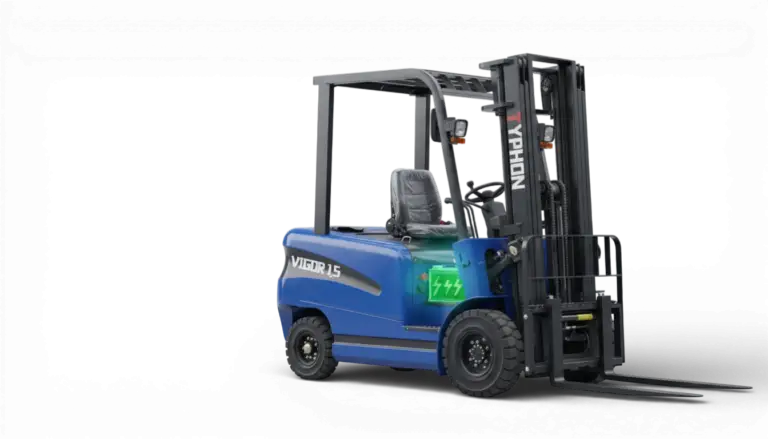
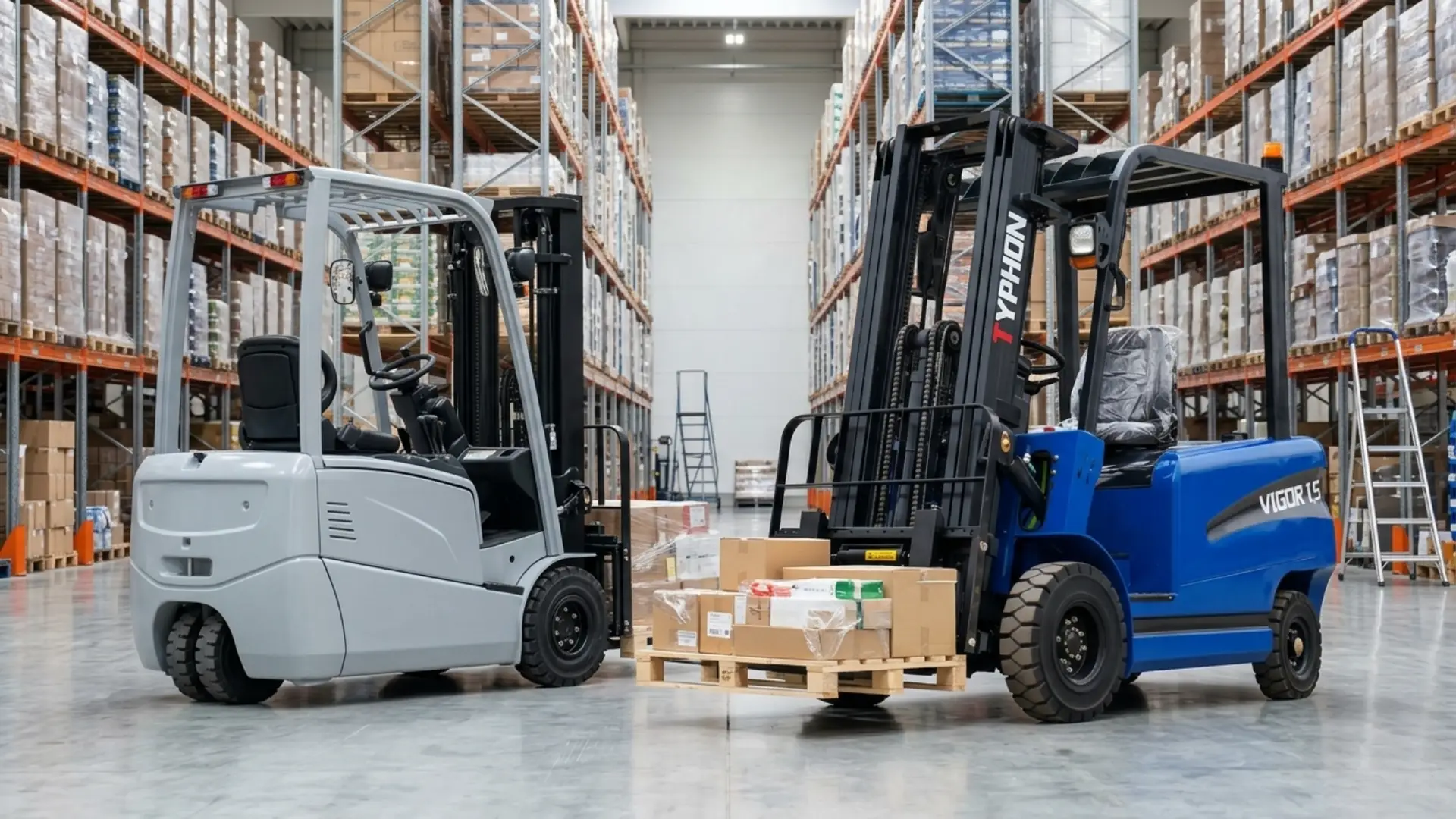
The split between these two machines starts with one design choice: where the wheels sit. A three-wheel electric forklift places two drive wheels at the front and a single steer wheel, or a tightly paired set, at the center rear. A four-wheel electric forklift uses the familiar layout with a wheel at each corner. Everything else, turning radius, stability, capacity, and surface handling, follows from that rear arrangement.
Once you grasp this, the decision becomes far more manageable. These are not interchangeable machines but two designs built around different priorities. The three-wheel model gives up a measure of stability and capacity in exchange for remarkable agility in tight quarters. The four-wheel model gives up some agility in exchange for greater stability, higher capacity, and stronger performance on tough surfaces. Hold that contrast in mind, and the right choice comes down to an honest look at your own conditions.
Maneuverability and Turning Radius
This is where the three-wheel forklift truly stands out. With the rear pivoting on a single point, these machines turn within a remarkably tight radius — often nearly within their own length. That means fewer movements to reverse, reposition, and round corners, which shaves seconds off every cycle. In an operation where a forklift completes hundreds of turns a shift, those seconds add up to real productivity gains by the end of the week.
Four-wheel forklifts turn in a wider arc because of their fixed rear axle and corner-mounted wheels. That is not a flaw but a deliberate tradeoff, since the same wide stance that limits the turn is what delivers the stability these machines are prized for. In open areas, loading docks, and yards where space is plentiful, the wider turning circle rarely costs you anything. So the maneuverability question really comes down to this: how tight is your working space, and how often do your operators turn?
Stability and Load Capacity
Stability is where the four-wheel forklift takes a clear lead. The wheel-at-each-corner layout creates a wider, more rectangular base of support, which gives the machine stronger lateral stability when lifting, turning under load, and handling heavy weights at height. If your work involves substantial loads, high stacking, or off-center handling, that stability is both a safety advantage and a performance one.
Three-wheel forklifts are genuinely stable for the tasks they are designed to do, but their narrower rear support means they suit lighter to medium load ranges. Most three-wheel electric models cover the capacities typical of warehouse and distribution work, while four-wheel models reach into the heavier ranges that demanding applications require. When your loads run consistently heavy, or when you lift to greater heights where stability matters most, the four-wheel configuration gives you the margin you need. Whichever you choose, match the rated capacity to your heaviest routine loads with sensible headroom rather than buying right at the edge.
Aisle Width Requirements
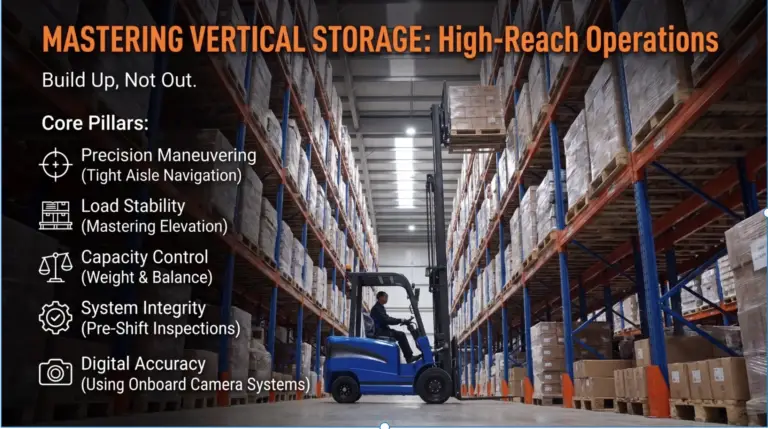
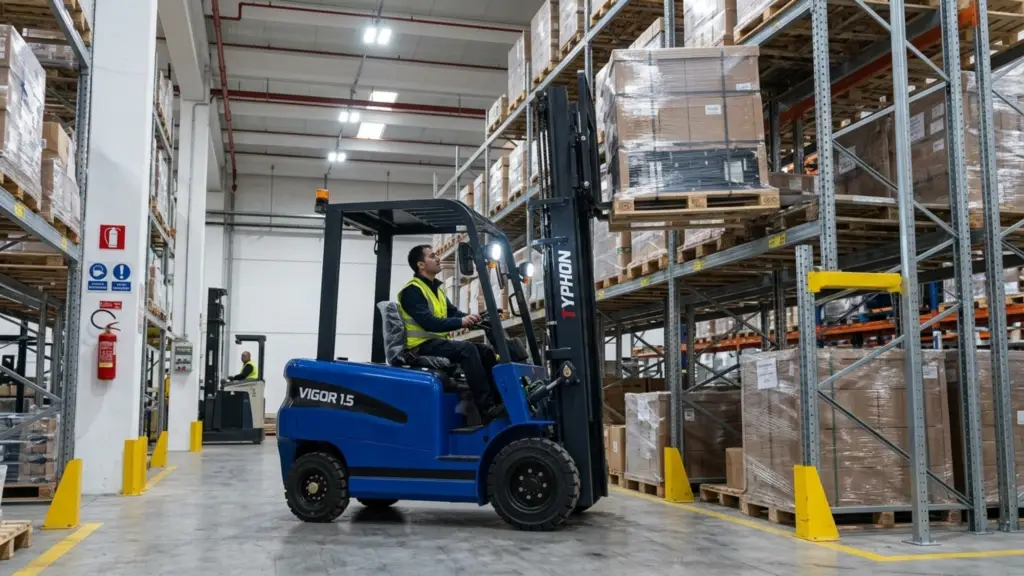
Aisle width often becomes the deciding factor, because it directly governs how much product you can store and how quickly you can move it. Three-wheel forklifts excel in narrow aisles, where their tight turning radius lets them work in spaces that would force a four-wheel machine into awkward, multi-point maneuvers. For warehouses chasing storage density, a three-wheel forklift can support narrower aisles and more pallet positions within the same four wall turning an equipment decision into a genuine capacity win.
Four-wheel forklifts need more room to turn and position loads comfortably, so a facility built around them devotes more floor space to travel lanes and less to racking. That tradeoff makes perfect sense in open layouts or in operations where heavy loads call for a four-wheel machine regardless. The practical move is to measure your actual aisle widths and right-angle stacking needs, then confirm which configuration works safely and efficiently within them. When storage density is a priority and your loads stay moderate, the three-wheel machine frequently wins on layout alone.
Traction and Surface Handling
Traction reflects the environment each machine is built for. Four-wheel forklifts spread their weight across four corner wheels and often deliver stronger grip, which suits them to ramps, slopes, uneven ground, and outdoor or semi-outdoor conditions. That added traction and stability let them work with confidence where the surface is less than perfect, from dock approaches to yards with grade changes.
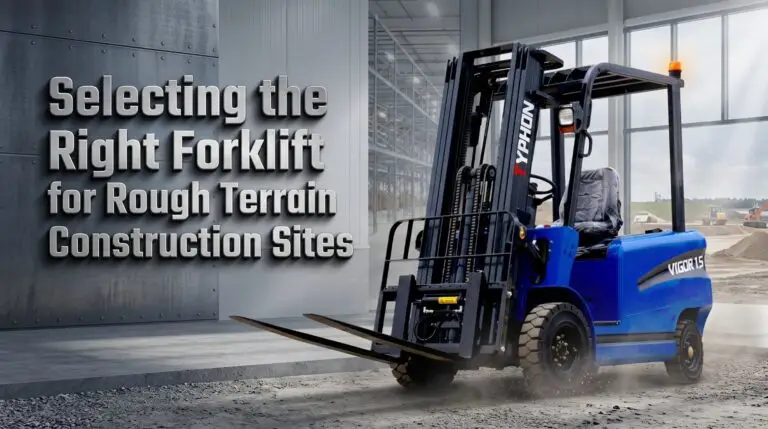
Three-wheel forklifts perform at their best on smooth, level, finished floors—exactly the conditions most indoor warehouses and distribution centers offer. On clean concrete, they deliver excellent control and efficiency. Take them onto ramps, rough ground, or outdoor surfaces, though, and the single-point rear design gives up traction and stability compared with a four-wheel machine. Before you decide, picture where the forklift will actually spend its time. Work that stays indoors on good floors fits the three-wheel machine well, while any meaningful outdoor or sloped duty points firmly toward four wheels.
Ideal Applications and Environments
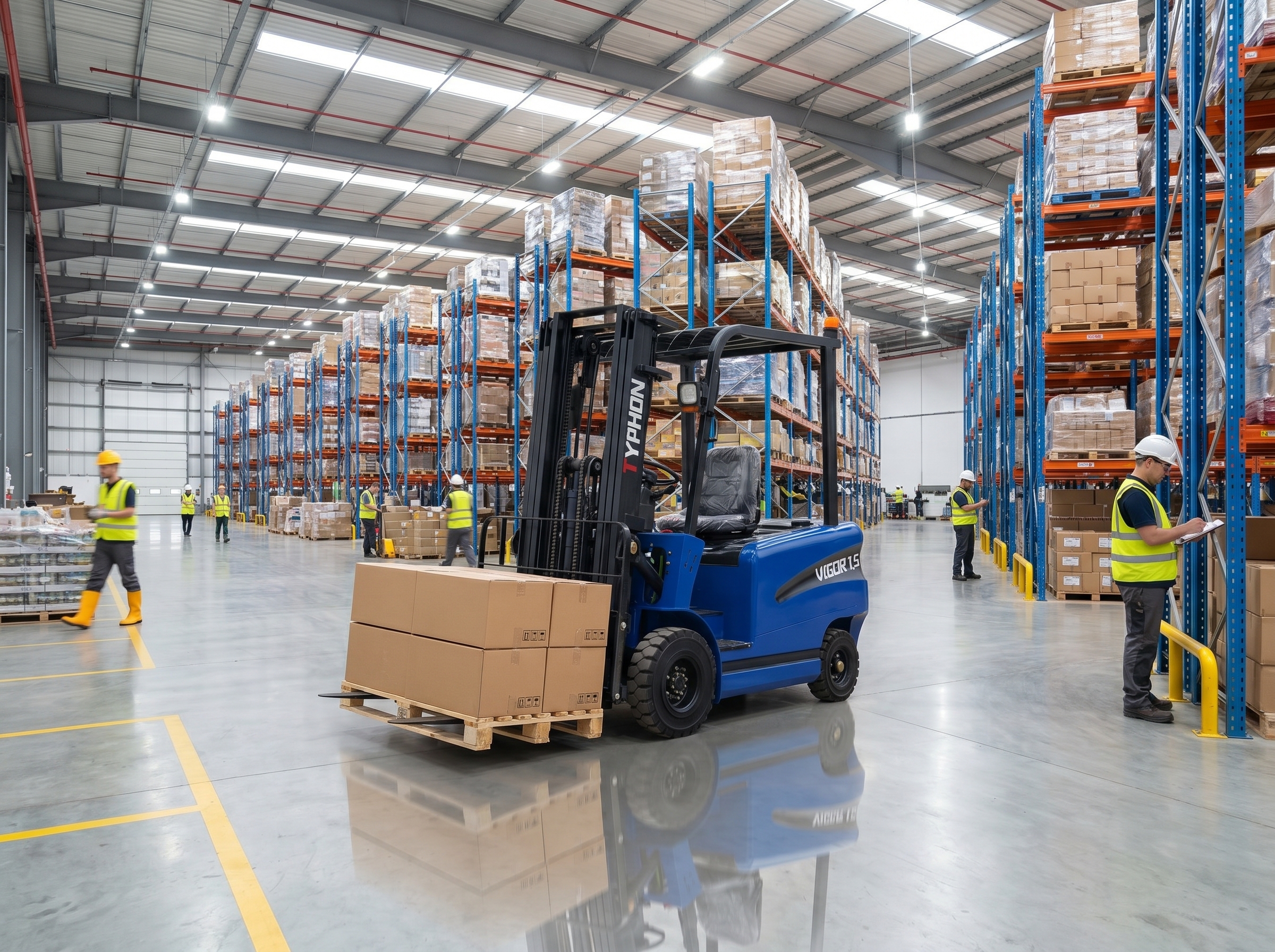
Seeing where each machine earns its keep brings the whole comparison into focus. Three-wheel electric forklifts are the natural pick for indoor operations with tight aisles and moderate loads in distribution centers, retail stockrooms, e-commerce fulfillment, food and beverage warehousing, and any setting where storage density and quick maneuvering drive output. Their agility and clean, quiet operation make them ideal for fast-paced indoor work on finished floors.
Four-wheel electric forklifts are the workhorses of heavier, more demanding applications, including manufacturing, lumber and building supply, heavy distribution, and operations that move between indoor and outdoor areas. Their stability, capacity, and surface handling make them essential where loads are substantial, grades are present, or conditions turn rough. Plenty of operations run both, putting three-wheel machines to work in tight interior spaces and four-wheel machines on the heavy lifting and the tasks that head outside.
Total Cost of Ownership
Smart buyers look well past the sticker price, because a forklift’s true cost plays out across its entire working life. Both three-wheel and four-wheel electric models share the strong advantages of electric power over internal combustion: lower energy cost per hour, far fewer moving parts to service, no fuel to handle, and reduced maintenance year after year. Within that shared advantage, the configuration you select still shapes the financial picture in meaningful ways.
The biggest cost lever is fit. A three-wheel forklift that lets you tighten your aisles can boost storage capacity without enlarging your building — a substantial saving that never shows up on a spec sheet. A four-wheel forklift that handles your heaviest loads reliably avoids the strain, downtime, and premature wear that come from pushing an undersized machine too hard. The wrong configuration costs you either way, whether through wasted floor space or a machine running beyond its comfortable range. When you weigh your options, build an honest total cost of ownership comparison that accounts for purchase price, energy, maintenance, expected utilization, and the value of your floor space and storage density. Run those full numbers, and the configuration that delivers the best value tends to reveal itself.
How to Choose the Right Configuration
Pulling these factors together, the path to the right machine begins with a clear look at your facility, your loads, and your shifts. Start with your layout. Measure your aisle widths and stacking requirements, because tight aisles and a focus on storage density point strongly toward a three-wheel machine, while open layouts free you to choose on other grounds. Walk the surfaces the forklift will travel as well, since smooth indoor floors reward three-wheel agility and any ramps, grades, or outdoor work reward four-wheel traction and stability.
Next, define your load requirements honestly. Add up the weight of your heaviest routine loads and the heights you lift to, then match those numbers to a configuration that handles them with room to spare rather than at its limit. Moderate loads on level floors suit a three-wheel forklift, while consistently heavy loads or significant lift heights call for the stability of four wheels. Finally, account for your shift demands, since high-utilization, multi-shift operations magnify the efficiency gains the right configuration delivers across thousands of cycles. Throughout, lean on a knowledgeable equipment partner who understands your industry and can match a specification precisely to your conditions. A choice grounded in your real operation, rather than spec sheets alone, leads dependably to a forklift that performs for years.
Conclusion
The choice between three-wheel and four-wheel electric forklifts is less about which design wins in the abstract and more about which one fits the work in front of you. Three-wheel machines excel in tight indoor spaces, with exceptional maneuverability, narrow-aisle capability, and storage-density gains on smooth floors with moderate loads. Four-wheel machines excel in heavy-duty and mixed environments, with greater stability, higher capacity, and stronger traction on ramps, rough surfaces, and outdoor ground. Every other difference traces back to that core distinction in wheel layout and the priorities each design serves.
Your next step is simple. Measure your aisles and surfaces, define your load and lift requirements, and review your shift demands with a clear eye. With those facts in hand, the right configuration comes into focus, and you can invest with confidence in a forklift that fits your facility, protects your productivity, and delivers reliable value on every shift it runs.