A busy grading project can quickly lose momentum when a small hydraulic problem turns into equipment downtime. The skid steer may be expected to prepare a driveway base, load gravel, and finish yard grading before the next crew arrives. If a hydraulic hose has been rubbing against the frame and develops a crack, the machine can lose fluid, reduce lifting performance, and require immediate attention.
Hydraulic hoses should be part of every pre-operation inspection because they are exposed to pressure, movement, heat, and contact with surrounding components. Checking for cracks, abrasion, bulges, leaks, loose fittings, and damaged protective coverings can reveal problems before they cause a failure. Fluid levels should also be checked according to the manufacturer’s requirements, especially when the hydraulic system powers the loader arms and attachments.
Taking a few minutes for a walkaround can help prevent avoidable downtime during demanding work. Identifying a worn hose early allows it to be repaired or replaced before fluid loss affects machine operation. Regular inspections, proper hose routing, and scheduled hydraulic maintenance help keep a skid steer ready for grading, loading, excavation, and other daily tasks.
Daily Walkaround Inspection
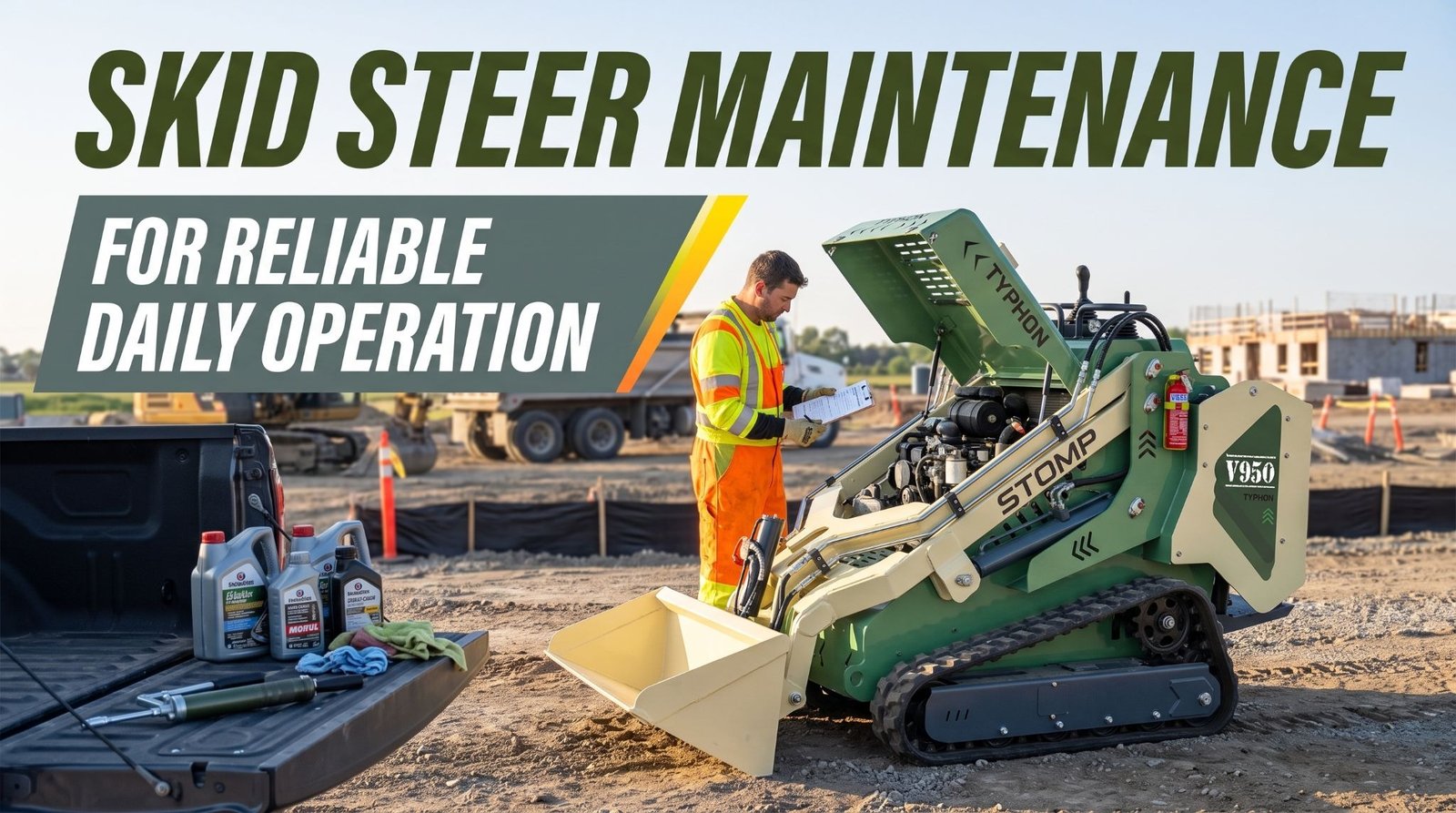
The daily walkaround is the simplest and most valuable step in skid steer maintenance. It gives operators a chance to spot visible problems before the machine starts working. A few minutes of attention at the start of a shift can prevent hours of downtime later.
Start at one corner of the machine and work your way around in the same order every day. Check tires or tracks, hydraulic hoses, attachment connections, and the engine area. Look under the machine and around the loader arms for fresh fluid leaks. Watch for loose bolts, cracked welds, damaged guards, and anything that looks different from the day before.
Follow the same pattern every time. A consistent route makes it easier to notice changes, such as a new drip, a worn hose, or a tire that looks low. Record what you find in a daily log so issues get fixed instead of forgotten.
Key takeaway: A daily walkaround inspection helps operators find damage, leaks, and unusual conditions on tires, tracks, hoses, attachments, and engine components before work begins.
Engine and Fluid Checks
The engine powers every function on a skid steer, from travel to lifting to running hydraulic attachments. Its condition depends on clean fluids at the right levels. Low or contaminated fluids can lead to overheating, poor performance, and costly internal damage.
Check fluid levels with the machine parked on level ground and the loader arms lowered, or secured with the arm support device the manufacturer provides. Review these key fluids:
- Engine oil: Confirm the level is within range and look for signs of contamination.
- Coolant: Check the level in the reservoir, and only open the radiator cap when the engine is cool.
- Hydraulic fluid: Verify the level using the sight glass or dipstick.
- Fuel and other fluids: Check any other fluids the manufacturer specifies.
Look for warning signs as well. Milky oil, dark or burnt-smelling hydraulic fluid, or a fluid level that drops faster than normal can point to leaks or internal problems. Inspect the air filter indicator, since skid steers often work in dusty conditions. Use only the fluids and filters the manufacturer recommends.
Key takeaway: Check engine oil, coolant, hydraulic fluid, and other required fluids regularly, and watch for contamination or leaks that could affect machine performance.
Hydraulic System Inspection
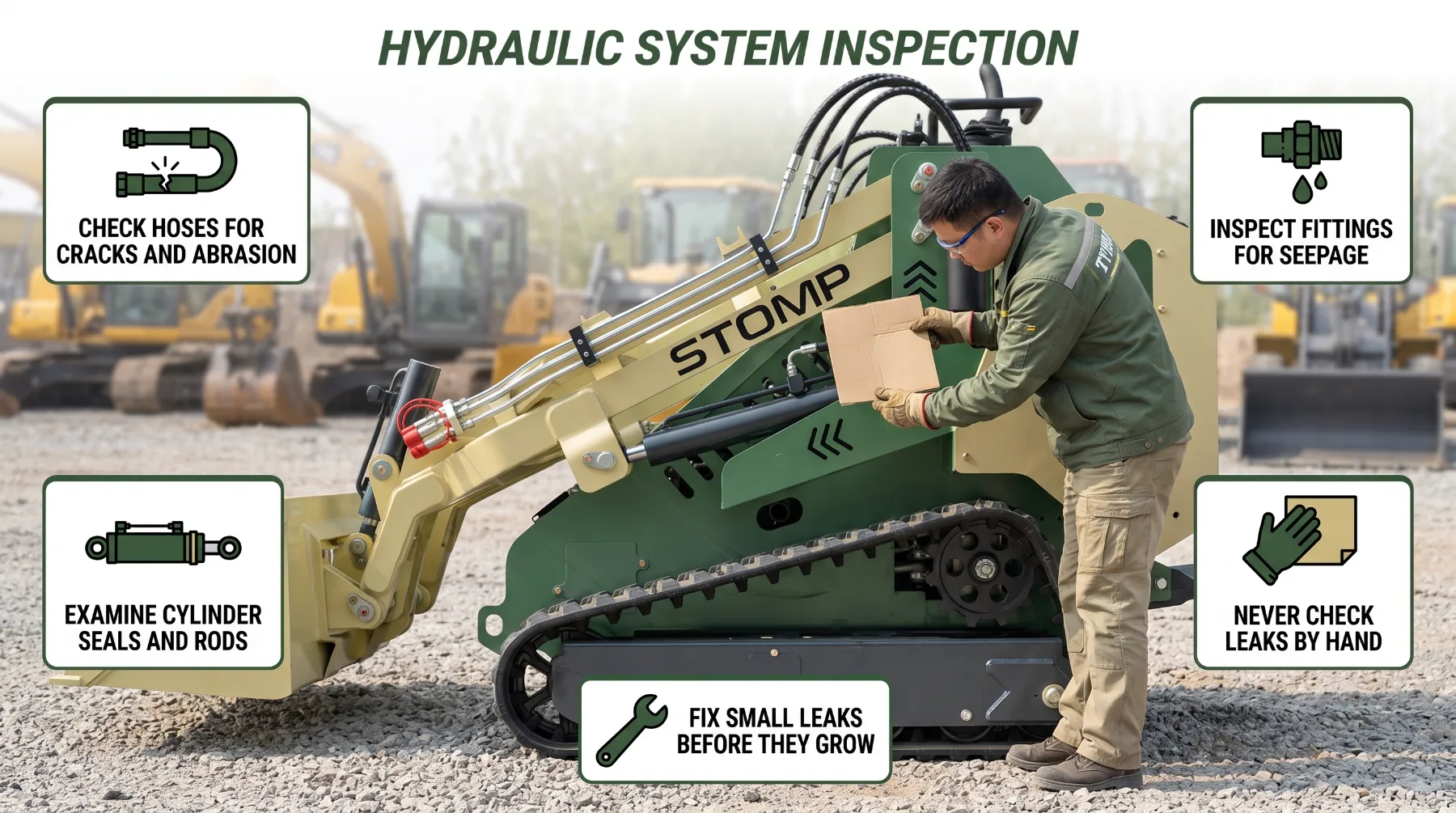
The hydraulic system powers the loader arms, bucket tilt, and many skid steer attachments. It works under high pressure throughout the day, and every lift, dig, and dump depends on it. When a hydraulic component fails, the machine often stops working right away.
Inspect hoses closely for cracks, abrasion, bulges, and kinks. Pay attention to areas where hoses flex near the loader arm pivots or rub against the frame. Check fittings and connection points for dampness or seepage. Examine cylinders for leaks around the seals and for nicks or scratches on the rods.
Never check for leaks by running your hand along a hose. Pressurized fluid can penetrate skin and cause serious injury. Use a piece of cardboard instead, and relieve system pressure according to the manufacturer’s procedure before any repair. Replace damaged hoses with parts rated for the system, and fix small leaks promptly before they grow into failures.
Key takeaway: Inspect hydraulic hoses, fittings, cylinders, and connection points for leaks, cracks, abrasion, or damage that could reduce system performance.
Tire or Track Condition
Tires and tracks control how a skid steer travels, turns, and grips the ground. Skid steers steer by turning one side faster than the other, which puts heavy stress on tires and tracks. Rough sites, debris, and constant turning speed up that wear.
On wheeled machines, check each tire for cuts, punctures, embedded debris, and sidewall damage. Look for uneven wear, which can show alignment issues or uneven pressure. Confirm tire pressure matches the manufacturer’s specification. Low pressure reduces stability and makes the machine harder to control under load.
Tracked machines need an inspection of the full undercarriage. Look at the tracks for cuts, missing lugs, and exposed cords. Check track tension, and inspect rollers, idlers, and sprockets for wear. Clear packed mud and rock from the undercarriage at the end of each shift, since buildup can affect tension and speed up wear.
Key takeaway: Regular tire and track inspections help find uneven wear, damage, low tire pressure, or track problems that may reduce traction and stability.
Attachment and Coupler Checks
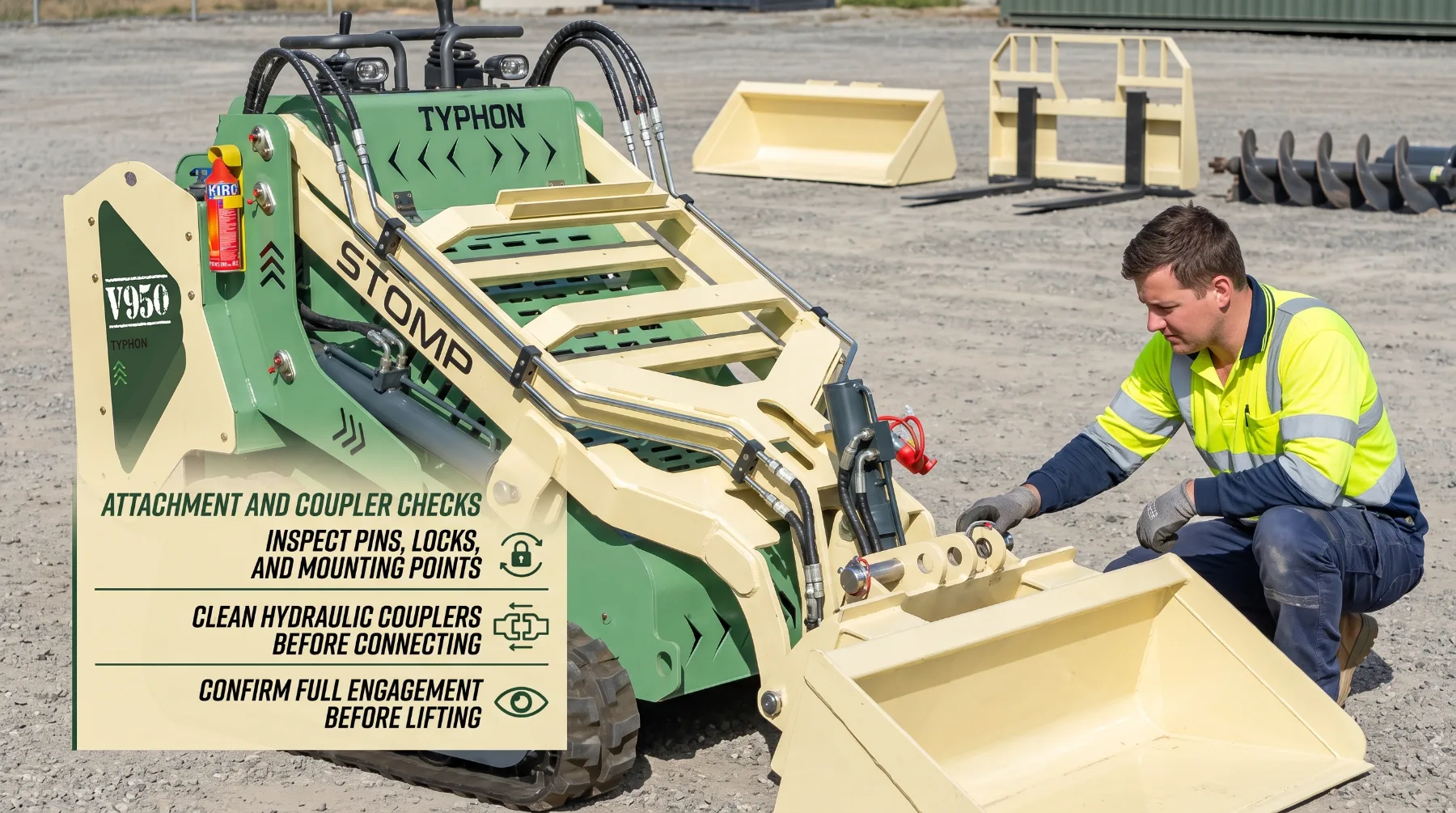
Attachments make a skid steer one of the most versatile machines on a jobsite. Buckets, forks, grapples, augers, and breakers each place different demands on the machine. Every one of them depends on a secure connection to work safely.
Inspect the quick coupler before you mount any attachment. Check pins and locking components for wear, damage, or looseness. Examine mounting points on both the coupler and the attachment for cracks or distortion. Clear away mud and debris that could stop the coupler from locking fully.
For hydraulic attachments, inspect the couplers and hoses for leaks, damage, and dirt. Wipe the connections clean before you connect them. After every attachment change, confirm the locking mechanism is fully engaged before you lift or operate. A partially locked attachment can come loose during work and create a serious hazard.
Key takeaway: Inspect quick couplers, pins, locking components, hydraulic connections, and mounting points to confirm every attachment is securely connected before operation.
Scheduled Service and Lubrication
Daily checks catch visible problems, but they can’t reach everything. Many critical maintenance tasks follow a schedule set by the equipment manufacturer, usually based on operating hours. These intervals protect internal parts that a walkaround can’t inspect.
Scheduled skid steer service typically includes:
- Engine oil and filter changes
- Air, fuel, and hydraulic filter replacement
- Hydraulic fluid changes at the recommended interval
- Lubrication of loader arm pivots, cylinder pins, and coupler points
- Inspection of wear parts such as bushings, belts, and drive components
Lubrication deserves special attention. Skid steers have many grease points, and some manufacturers recommend greasing them daily or every few operating hours. Dry pivots wear quickly and can lead to expensive pin and bushing repairs. Track operating hours in the same log you use for daily checks, so upcoming service is easy to plan.
Key takeaway: Follow the manufacturer’s service intervals for oil changes, filter replacement, lubrication, and wear component inspection to maintain performance and reduce unexpected downtime.
Conclusion
Regular skid steer maintenance helps keep the machine ready for demanding daily work by combining pre-operation inspections with scheduled servicing and lubrication. A daily walkaround should check for fresh leaks, damaged components, tire or track condition, engine components, and debris, followed by checks of engine oil, coolant, hydraulic fluid, and the air filter indicator according to manufacturer requirements. Hydraulic hoses, fittings, cylinders, and connections should be inspected for wear, damage, or seepage, while tires require checks for pressure, wear, and damage and tracks require attention to tension and undercarriage condition. Attachments and quick couplers should be checked for secure pins, locks, mounting points, and hydraulic connections, while pivot points should be lubricated at the specified intervals. Controls, lights, alarms, seat belts, and safety bars should also be tested before operation, with inspection findings recorded and upcoming service intervals monitored. Consistent maintenance practices help identify problems early, reduce unexpected downtime, and support reliable skid steer performance throughout daily operations.
Frequently Asked Questions
How often should a skid steer be inspected?
Perform a basic inspection before each day’s operation to identify leaks, damage, worn components, and safety issues. Detailed maintenance should follow the manufacturer’s recommended service intervals, usually based on operating hours. Dusty, muddy, or heavy-duty conditions may require more frequent checks and servicing.
What fluids should be checked on a skid steer?
Check the engine oil, coolant, hydraulic fluid, and any other fluids specified by the manufacturer. Confirm that levels are within the recommended range and look for contamination, unusual changes, or visible leaks. Regular fluid checks help protect the engine and hydraulic system and can reveal developing problems before they cause downtime.
Why is hydraulic maintenance important on a skid steer?
The hydraulic system powers the loader arms, bucket, and many hydraulic attachments. Low fluid, contamination, leaks, or damaged hoses and components can reduce lifting and attachment performance or cause the machine to stop working. Regular fluid checks, hose inspections, and scheduled hydraulic service help maintain reliable operation and prevent costly failures.
What should be checked on a skid steer attachment?
Inspect the coupler, pins, locking components, mounting points, and hydraulic connections before use. Look for damage, excessive wear, loose components, or leaks, and remove debris that could prevent proper connection. Most importantly, confirm the attachment is fully engaged and locked before operating the skid steer.