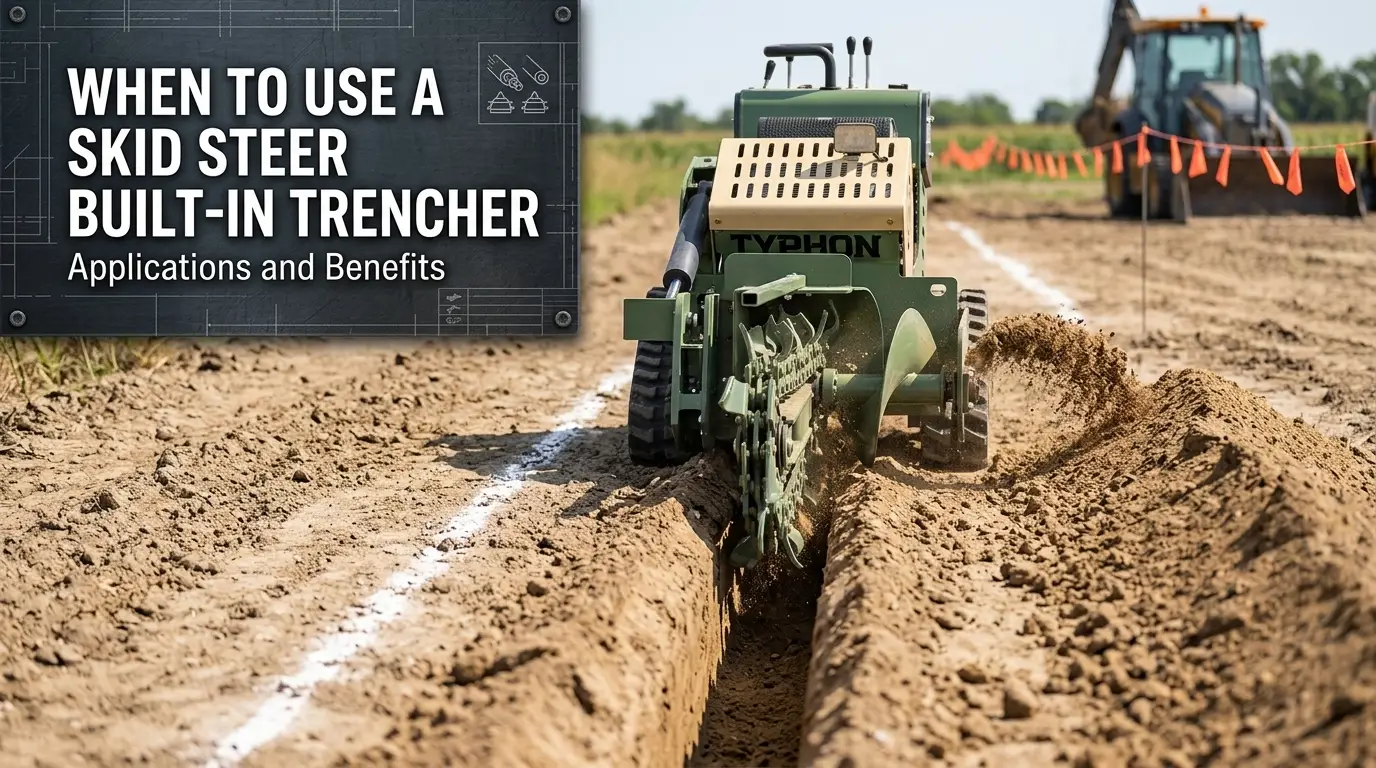
Digging clean, accurate trenches is rarely as simple as it sounds. The work often happens in tight spaces, across finished ground, or along routes where precision matters as much as speed. A skid steer built-in trencher meets these demands by combining the machine and the trenching system into one dedicated unit, giving operators a compact, capable tool for cutting narrow, consistent trenches wherever the job leads.
This guide explains when to use a skid steer built-in trencher and the benefits it brings to the work. You will learn how it handles utility trenching for water, power, and communications, how it supports landscaping and irrigation installation, how it performs in tight or restricted areas, how it aids road and site preparation, and what advantages the built-in design offers. By the end, you will know when this machine is the right choice for your project.
Utility Trenching for Water, Power, and Communications
A built-in trencher is well suited for creating narrow, consistent trenches for utility lines, cables, pipes, and irrigation systems. Utility work depends on trenches that hold a steady width and depth, since the lines being installed have to sit at the correct level and follow a controlled path. A dedicated trencher delivers this consistency naturally, cutting a clean channel that suits the line without the variation that manual digging or less precise equipment can introduce. This reliability is what makes the machine a dependable choice for installing water, power, and communications infrastructure.
The compact design of a skid steer trencher plays a large role in its usefulness for utility work. Utility lines often run through developed areas, along established routes, and into spaces where larger trenching equipment struggles to maneuver. A compact machine positions itself confidently in these conditions, reaching the work directly rather than forcing operators to compromise on where or how they dig. This helps crews work efficiently even where access is limited and space is at a premium.
The range of utility applications the machine supports is broad, which adds to its value on job after job:
- Water lines, cut to a consistent depth that keeps pipes properly buried and protected
- Power cables, laid in trenches that follow a controlled, accurate route
- Communications lines, installed cleanly with minimal disruption to the surrounding ground
- Irrigation systems, trenched efficiently for both new installations and repairs
When a trencher cuts narrow, uniform channels reliably, the whole installation process moves smoothly. Lines drop into trenches sized to fit them, backfilling proceeds cleanly, and the finished work meets the depth and routing the project requires. For crews handling utility installation regularly, a built-in trencher provides the accurate, efficient trenching that dependable underground infrastructure depends on.
Landscaping and Irrigation Installation
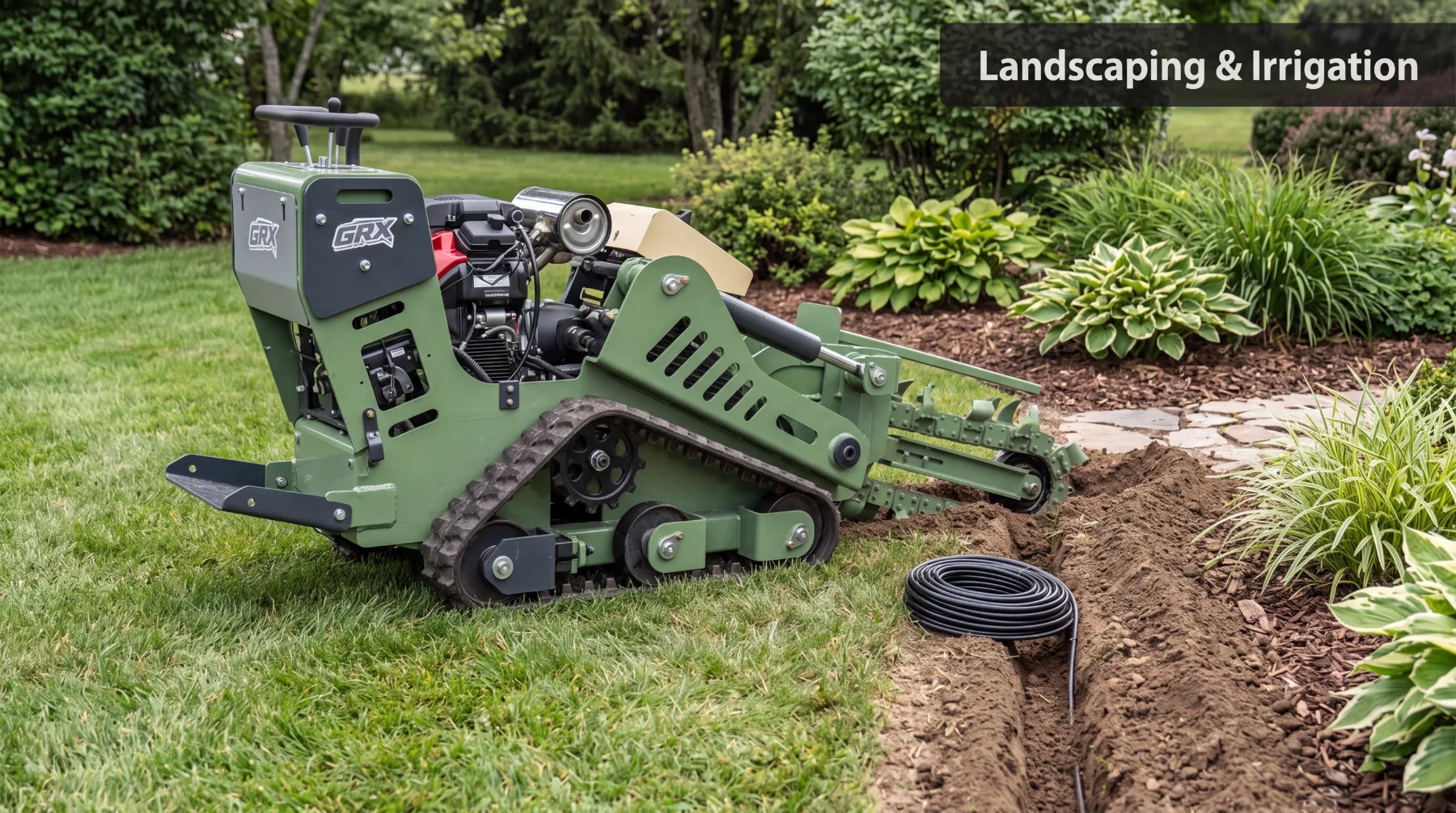
A built-in trencher is a practical tool for installing irrigation lines, drainage systems, and landscape utilities with minimal ground disturbance. Landscaping work often happens on properties where the surrounding ground has already been finished, planted, or carefully prepared, so keeping disruption to a minimum matters a great deal. The narrow trench profile of a dedicated trencher produces cuts only what the job requires, leaving the rest of the ground intact and reducing the mess and repair work that wider excavation would create.
This narrow profile brings a real advantage in both excavation and cleanup. A trencher that removes only a slim channel of soil disturbs less of the surrounding area, which means less material to handle during the dig and less ground to restore once the line is in place. On landscaping projects where the finished appearance is part of the goal, this lighter footprint helps crews complete the work without leaving behind extensive damage to lawns, beds, or established features.
The machine suits a variety of common landscaping tasks. Irrigation lines can be trenched cleanly across a property to bring water where it is needed, drainage systems can be installed to move water away from structures and low areas, and landscape utilities can be routed underground without tearing up large sections of ground. Each of these tasks benefits from the controlled, narrow cut a built-in trencher delivers, since the trench matches the line being installed and keeps disturbance contained.
By reducing excavation and cleanup, a built-in trencher helps landscaping crews work faster and leave a tidier result. Material reaches its destination underground with less disruption to the surface, and the property recovers more quickly once the work is done. For irrigation and landscape installation where a clean finish is essential, this machine offers an efficient, low-impact way to get lines into the ground.
Trenching in Tight or Restricted Areas
Compact trenching equipment can access narrow pathways, residential properties, backyards, and other confined work areas, and this access is one of the strongest reasons to choose a built-in trencher. Many trenching jobs happen in spaces that larger machines simply cannot reach. A backyard hemmed in by fences, a narrow side passage between buildings, or a developed residential lot leaves little room for bulky equipment, and this is exactly where a compact trencher proves its worth by fitting into places others cannot.
The practical value of this access shows in how it opens up projects that would otherwise be difficult to tackle. When larger excavators or trenchers have limited access, the work can stall, require extensive hand digging, or demand awkward workarounds that slow everything down. A compact skid steer trencher moves into these confined areas directly, positioning itself where the trench needs to go and cutting cleanly without the struggle that oversized equipment brings to tight sites.
Consider the kinds of restricted settings where this capability matters most:
- Narrow pathways, where the machine slips through spaces too tight for larger trenchers
- Residential properties, where developed lots leave limited room to maneuver
- Backyards, often enclosed by fences, structures, and established landscaping
- Confined work areas, where obstacles and boundaries restrict access on every side
In each of these settings, a compact trencher keeps the work practical and efficient. Rather than being blocked by access limitations, crews bring the machine to the trench line and complete the job with the same accuracy they would achieve on an open site. This makes the built-in trencher a dependable choice for projects defined by tight quarters and difficult access, where the ability to reach the work is often the deciding factor in getting the job done well.
Road and Site Preparation
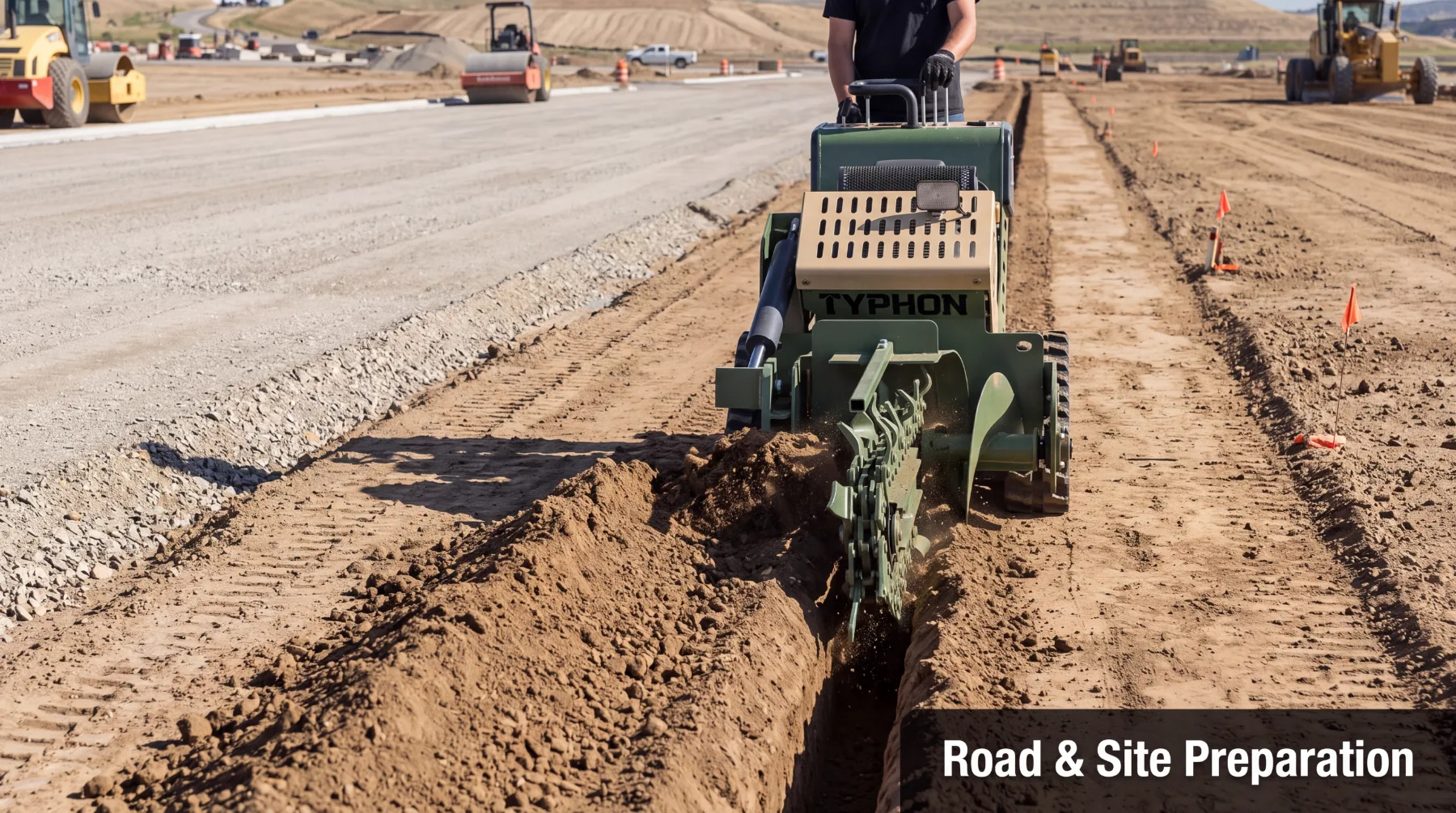
Built-in trenchers can support roadwork and site development by creating trenches for drainage, utility lines, and other underground infrastructure. Preparing a road or a site involves putting a great deal of infrastructure beneath the surface before the surfacing and structures go in above. A dedicated trencher handles this groundwork efficiently, cutting the channels that drainage systems, utility runs, and other buried services require, all with the controlled dimensions these installations depend on.
One of the machine’s strengths in this work is its ability to move along the work area while maintaining a controlled trench width and depth. Road and site trenches often run for considerable distances, and consistency along that length is essential. A trench that holds its width and depth as the machine advances gives each line a uniform channel to sit in, which supports proper installation and keeps the finished infrastructure performing as intended. This steady, controlled cutting is what allows a built-in trencher to produce dependable results across long runs.
The machine’s role in site preparation is genuinely versatile. Drainage trenches can be cut to guide water away from roadways and structures, utility trenches can be created to carry the services a developed site requires, and other underground infrastructure can be installed with the accuracy a controlled trencher provides. Each of these tasks contributes to a properly prepared site, and having a single machine capable of cutting them all keeps the preparation phase moving efficiently.
By producing consistent trenches along the work area, a built-in trencher helps roadwork and site development proceed on a solid foundation. The underground infrastructure goes in accurately, the trenches match the lines and systems they carry, and the site is ready for the surfacing and construction that follow. For contractors handling road and site preparation, this dependable trenching capability is a valuable part of building sites that hold up over time.
Benefits of a Built-In Trencher Design
A purpose-built skid steer trencher combines the machine and trenching system into one dedicated unit, eliminating the need to mount a separate attachment. This integrated design sets it apart from setups that rely on adding and removing a trenching attachment for each job. With the trenching system built directly into the machine, the equipment is ready to work as soon as it arrives, without the time and effort that attaching, adjusting, and detaching separate components require.
This integration simplifies operation in meaningful ways. There is no attachment to fit before starting or to remove afterward, which reduces the steps between arriving on site and cutting the first trench. The operator works with a single dedicated machine designed around the trenching task, so the controls, the cutting system, and the machine itself function together as one coordinated unit. This cohesion tends to make the work more straightforward and the results more consistent.
The built-in approach also provides a compact solution particularly well suited to projects where trenching is the primary task. When the main job is cutting trenches, a machine dedicated to that purpose offers a focused, efficient tool rather than a general machine adapted for the role. Its compact form keeps it maneuverable in the tight and developed areas where trenching often takes place, and its dedicated design keeps it ready to perform that work reliably.
For operations that trench frequently, the benefits of a built-in design add up. The machine simplifies the workflow, removes the complications of managing a separate attachment, and delivers a compact, purpose-built tool that concentrates on doing one job well. When trenching is central to your work rather than an occasional task, a dedicated built-in trencher offers a dependable, efficient way to get consistent trenches into the ground.
Conclusion
A skid steer built-in trencher earns its place across a wide range of work by cutting narrow, consistent trenches wherever they are needed. It handles utility installation for water, power, and communications, supports landscaping and irrigation with minimal ground disturbance, reaches tight and restricted areas that larger equipment cannot, and prepares roads and sites by cutting controlled trenches for underground infrastructure. Its integrated design simplifies operation and provides a compact, dedicated tool for projects where trenching is the main task.
Before choosing equipment for your next trenching project, consider the conditions you face most often. Think about the access your sites allow, the lines and systems you install, and how central trenching is to your work. When those needs point toward accurate, efficient trenching in compact spaces, a built-in skid steer trencher is a dependable choice that keeps your projects moving from the first cut to the finished installation.
Frequently Asked Questions
1. What types of utility lines can a skid steer built-in trencher install?
A built-in trencher is well suited for installing a wide range of utility lines, including water pipes, power cables, communications lines, and irrigation systems. It excels at cutting narrow, consistent trenches that hold a steady width and depth, which matters because utility lines need to sit at the correct level and follow a controlled path. Water lines can be trenched to a consistent depth that keeps pipes properly buried and protected, while power cables can be laid in trenches that follow an accurate route. Communications lines install cleanly with minimal disruption to the surrounding ground, and irrigation systems can be trenched efficiently for both new installations and repairs. The machine’s compact design adds to its usefulness here, since utility lines often run through developed areas and along established routes where larger equipment struggles to maneuver. A compact trencher positions itself confidently in these conditions and reaches the work directly. When the trencher cuts uniform channels reliably, lines drop into trenches sized to fit them, backfilling proceeds cleanly, and the finished work meets the depth and routing the project requires.
2. Is a built-in trencher a good choice for landscaping projects?
Yes, a built-in trencher is a practical tool for landscaping work, particularly for installing irrigation lines, drainage systems, and landscape utilities. Landscaping often happens on properties where the ground has already been finished, planted, or carefully prepared, so minimizing disruption is important. The narrow trench profile of a dedicated trencher produces cuts only what the job requires, leaving the rest of the ground intact and reducing the mess and repair work that wider excavation would create. This narrow profile helps in both excavation and cleanup, since removing only a slim channel of soil disturbs less of the surrounding area. That means less material to handle during the dig and less ground to restore once the line is in place. The machine suits several common landscaping tasks, including trenching irrigation lines across a property, installing drainage systems to move water away from structures, and routing landscape utilities underground without tearing up large sections of ground. By reducing excavation and cleanup, a built-in trencher helps crews work faster and leave a tidier result, which matters greatly on projects where the finished appearance is part of the goal.
3. Can a built-in trencher work in tight or confined spaces?
Absolutely, working in tight or confined spaces is one of the strongest reasons to choose a built-in trencher. Compact trenching equipment can access narrow pathways, residential properties, backyards, and other restricted work areas that larger machines simply cannot reach. A backyard enclosed by fences, a narrow passage between buildings, or a developed residential lot leaves little room for bulky equipment, and this is exactly where a compact trencher proves its worth. When larger excavators or trenchers have limited access, the work can stall, require extensive hand digging, or demand awkward workarounds that slow everything down. A compact skid steer trencher moves into these confined areas directly, positioning itself where the trench needs to go and cutting cleanly without the struggle oversized equipment brings to tight sites. This access opens up projects that would otherwise be difficult to tackle, letting crews complete the work with the same accuracy they would achieve on an open site. For projects defined by tight quarters and difficult access, the ability to reach the work is often the deciding factor, which makes a built-in trencher a dependable choice in these settings.
4. How does a built-in trencher support road and site preparation?
A built-in trencher supports roadwork and site development by creating trenches for drainage, utility lines, and other underground infrastructure. Preparing a road or site involves putting a great deal of infrastructure beneath the surface before the surfacing and structures go in above, and a dedicated trencher handles this groundwork efficiently. It cuts the channels that drainage systems, utility runs, and other buried services require, all with the controlled dimensions these installations depend on. A key strength is the machine’s ability to move along the work area while maintaining a controlled trench width and depth. Road and site trenches often run for considerable distances, and consistency along that length is essential so each line has a uniform channel to sit in. This steady, controlled cutting supports proper installation and keeps the finished infrastructure performing as intended. The machine’s role here is versatile, since drainage trenches can guide water away from roadways, utility trenches can carry the services a developed site requires, and other underground infrastructure can be installed accurately. Having a single machine capable of cutting them all keeps the preparation phase moving efficiently and builds sites on a solid foundation.
5. What are the main benefits of a built-in trencher over a separate attachment?
The main benefit of a built-in trencher is that it combines the machine and trenching system into one dedicated unit, eliminating the need to mount a separate attachment. With the trenching system built directly into the machine, the equipment is ready to work as soon as it arrives, without the time and effort that attaching, adjusting, and detaching separate components require. This integration simplifies operation in meaningful ways, since there is no attachment to fit before starting or remove afterward, which reduces the steps between arriving on site and cutting the first trench. The operator works with a single dedicated machine designed around the trenching task, so the controls, the cutting system, and the machine itself function together as one coordinated unit. This cohesion tends to make the work more straightforward and the results more consistent. The built-in approach also provides a compact solution particularly well suited to projects where trenching is the primary task, offering a focused tool rather than a general machine adapted for the role. For operations that trench frequently, these benefits add up to a simpler workflow and a dependable, purpose-built tool.