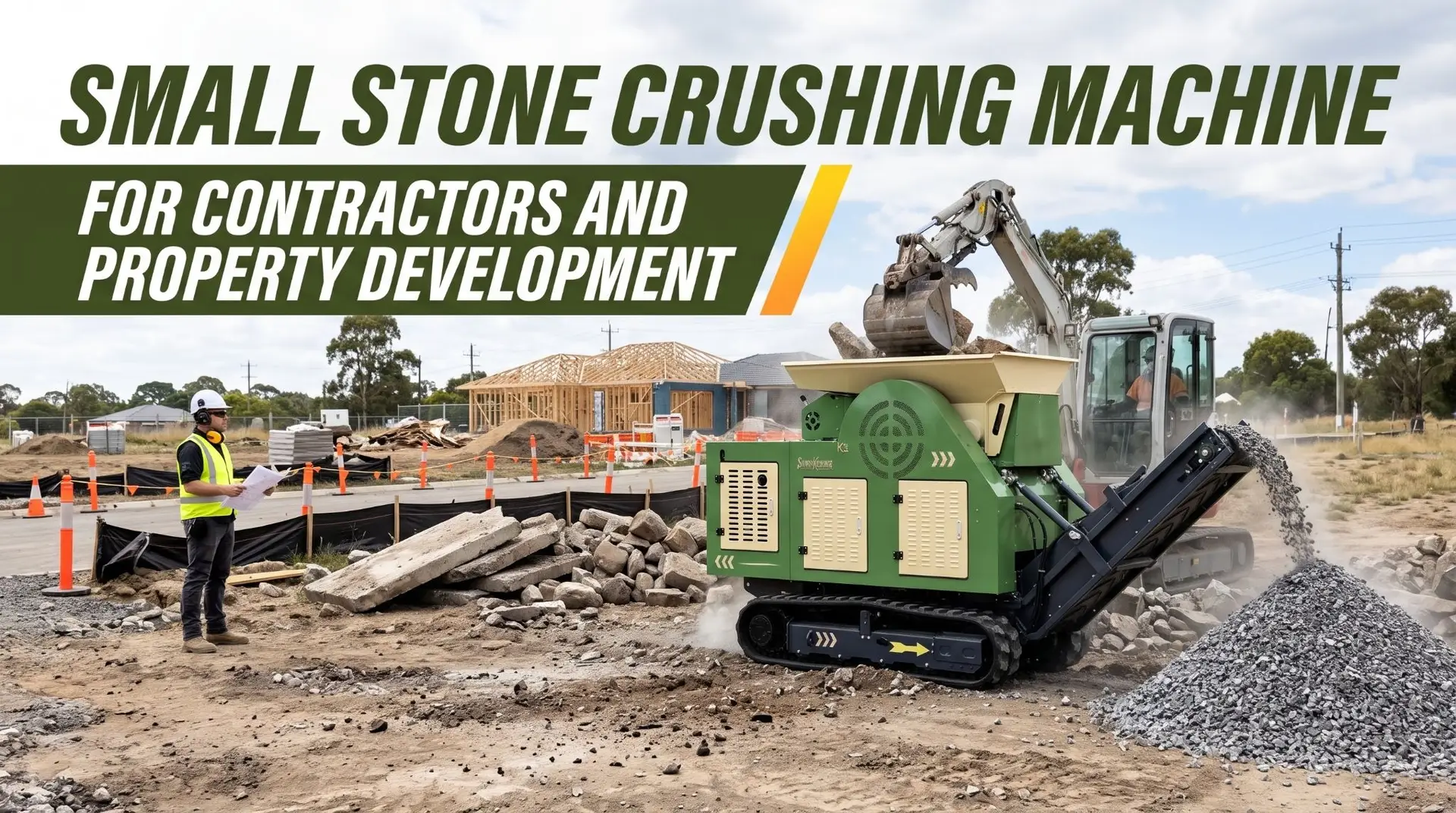
A property developer is clearing a lot for a new residential build. Excavation turns up hundreds of tons of fieldstone, and the old foundation and driveway have to come out before work can begin. The usual plan is to haul all of it to a landfill or recycling yard, then buy and truck in fresh aggregate for the base, drainage, and access roads. A small stone crushing machine changes that plan. The rock and concrete stay on site, go through the crusher, and become the aggregate the project needs.
Small stone crushing machines help contractors turn suitable rock, concrete, and masonry into reusable aggregate close to the work. They support property development, landscaping, site preparation, road and driveway construction, and small demolition projects where sending material to a large crushing facility costs too much or takes too long. Buying the right machine requires more than a quick look at its size. You need to understand the materials you’ll process, the feed size the crusher accepts, the output it produces, how it moves between sites, what it costs to run, and how to operate it safely. The steps below give contractors a practical framework for choosing and running a small crusher with confidence.
Identify the Materials to Be Crushed
Every crusher purchase should start with the material, not the machine. Natural stone, concrete, brick, block, and asphalt each behave differently in a crushing chamber. Their hardness, abrasiveness, moisture content, and the debris mixed in with them all affect how well a crusher performs and how quickly its wear parts break down.
Natural stone varies widely. Limestone and sandstone are relatively soft and easy to crush, while granite, basalt, and river rock are hard and abrasive. Abrasive stone wears jaw plates, liners, and other contact surfaces faster, which raises operating costs. Recycled concrete is a common feed on property development and demolition projects, but it often contains rebar, wire mesh, and embedded fittings. Some crushers include a magnetic separator to pull steel from the output, while others require you to remove it before feeding. Brick and block crush easily but can produce more fines. Wood, plastic, soil, and trash mixed into the feed reduce product quality and can cause blockages.
Confirm that the crusher is designed for your intended feed material. Ask the manufacturer which materials the machine is rated to process, how it handles reinforced concrete, and what hardness range it suits. Separate unsuitable material before it reaches the crusher. If you suspect contamination, such as asbestos-containing materials, painted surfaces with lead, or fuel-soaked soil, stop and follow the applicable environmental and safety requirements for testing and disposal before crushing.
Key takeaway: Identify the hardness, abrasiveness, and contaminants in your feed material first, then confirm the crusher is rated to process it.
Check Feed Opening and Maximum Material Size
The feed opening decides which pieces of rock or concrete can enter the crushing chamber. On a jaw crusher, the most common design for small machines, the feed opening is the gap at the top of the jaws, usually listed as width by depth. Material that’s too large either bridges across the opening or sits on top of the jaws without breaking, which stops production and creates a dangerous situation if someone tries to clear it.
A common rule of thumb is that the largest piece fed into a jaw crusher should be no more than about 80% of the feed opening’s smaller dimension. Check the manufacturer’s stated maximum feed size for the exact model, since chamber design and jaw profile affect what the machine accepts. Then compare that figure with the largest pieces you expect on site. Excavated boulders, slab sections, and footings can be far bigger than they look once they’re broken loose.
Oversized material requires preparation before it reaches the crusher. A hydraulic breaker on an excavator or skid steer can reduce boulders and slabs to feedable size. Concrete pulverizers and shears help separate rebar from concrete at the same time. Planning this preparation step matters, because a small crusher paired with a well-prepared feed pile often outproduces a larger machine fed with poorly sized material. Size your feeding equipment as well. The excavator, loader, or skid steer that feeds the hopper should place material at a steady rate without overfilling or dropping large pieces from height.
Key takeaway: Compare the crusher’s maximum feed size with the largest material on site, and plan to pre-break anything oversized before it reaches the hopper.
Compare Output Size and Production Rate
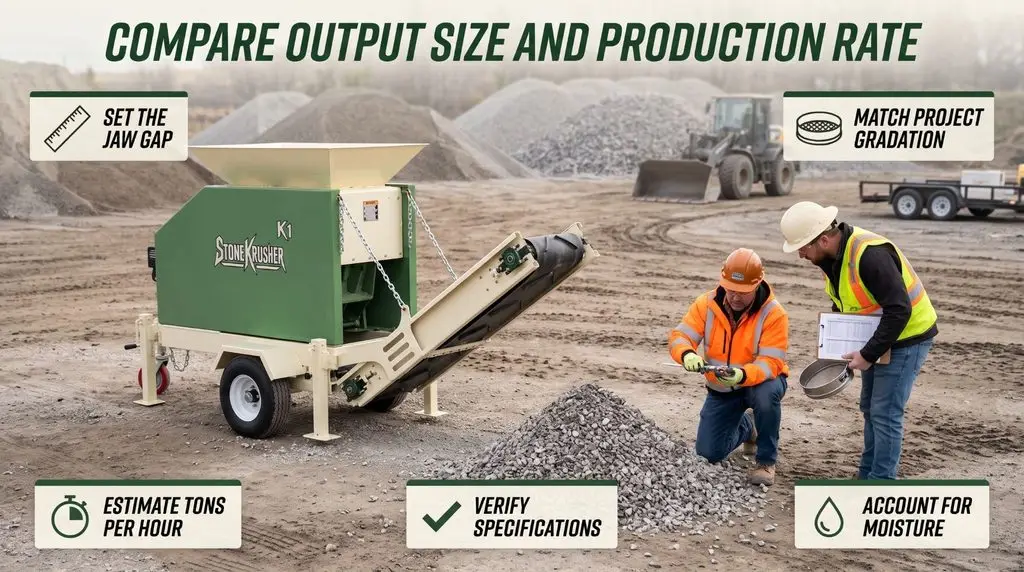
The value of a crusher lies in what comes out of it. Crushed material serves many purposes on development projects, including road and driveway base, pipe bedding, drainage layers, backfill, pathways, and landscaping. Each use calls for a specific size range and gradation, and project specifications often define exactly what’s acceptable.
On a jaw crusher, output size is controlled mainly by the closed side setting, which is the narrowest gap between the jaws at the discharge end. A smaller setting produces finer material but lowers production. A larger setting increases output but produces coarser aggregate. Review the adjustable range of the closed side setting, how it’s adjusted, and how long the change takes. Some small crushers use shims, while others offer hydraulic adjustment that saves time when you switch products. If you need several sized products, ask whether the machine can be fitted with a screen, or whether you’ll need a separate screening unit.
Production rate is usually listed in tons per hour, but treat that figure as a guide rather than a guarantee. Real output depends on material hardness, moisture, feed size, closed side setting, and how consistently the hopper is fed. Wet, sticky material and clay can slow throughput and clog the chamber. Ask the manufacturer for production estimates based on material and settings similar to yours. Then calculate how many hours your project volume requires, and check whether the machine fits your schedule. Finally, confirm that the finished product will meet your specifications. Recycled aggregate used for structural base or bedding may need testing and approval before it’s placed.
Key takeaway: Choose a crusher whose closed side setting range produces the sizes your project specifies, and estimate production using your own material and settings.
Consider Mobility and Site Access
Small crushers earn their value by moving to where the material is. A contractor working several property development sites a year needs a machine that loads, travels, and sets up quickly. A crusher that’s difficult to transport or position ends up sitting in the yard while material gets hauled away.
Small crushers generally come in towable, tracked, and skid-mounted designs, and some smaller units mount directly onto an excavator or skid steer as attachments. Towable crushers are pulled behind a suitable truck and suit contractors who move often on public roads. Tracked crushers drive onto a trailer and walk themselves into position on site, which helps on rough or uneven ground. Attachment-style crushers use the carrier’s hydraulics and work well for very small volumes, though their output is limited. Compare transport dimensions, machine weight, and towing or trailer requirements with your current fleet. Check the regulations that apply to your hauling setup.
Site layout matters as much as transport. The crusher needs firm, level ground and enough room for the feed pile, the feeding machine, the crusher itself, and the finished product stockpile. Plan where the discharge conveyor will deposit material and how a loader will remove it without crossing the feeding area. Check for stabilizing legs or supports and how long setup takes. Consider neighbors as well. On residential and mixed-use developments, place the crusher to reduce noise and dust reaching nearby homes, and confirm any local permit requirements for crushing operations before you mobilize.
Key takeaway: Match the crusher’s transport method, weight, and footprint to your fleet and typical sites, and plan a layout that separates feeding, crushing, and stockpiling.
Evaluate Power and Operating Costs
The purchase price is only part of what a crusher costs. Fuel, wear parts, routine service, and downtime shape the true cost per ton over the life of the machine. Contractors who estimate those costs before buying make better decisions and price their crushing work more accurately.
Start with the power source. Most small mobile crushers use a diesel engine that drives the crushing chamber and conveyors directly or through a hydraulic system. Some models offer electric drive, which can lower fuel costs and noise where site power is available. Compare engine type, rated horsepower, fuel consumption under typical load, and emissions compliance for your location. Attachment crushers rely on the carrier machine, so confirm the carrier’s hydraulic flow and pressure meet the crusher’s requirements.
Wear parts are the largest recurring expense on most crushers. Jaw plates, cheek plates, liners, conveyor belts, bearings, and screens where fitted all wear with use, and abrasive material speeds that wear. Ask how long jaw plates typically last in material similar to yours, whether they can be flipped to extend life, and how long replacement takes. Review service intervals for the engine, hydraulics, and lubrication points. Ask about parts availability, delivery times, and technical support, since a crusher waiting on a jaw plate earns nothing. Track fuel use, wear-part replacements, and tons produced from the start. That record shows your real cost per ton and helps you compare crushing on site with buying and trucking in new aggregate.
Key takeaway: Compare fuel use, wear-part life, service intervals, and parts support alongside purchase price, and track your cost per ton from the first day of operation.
Plan Safe Crushing Operations
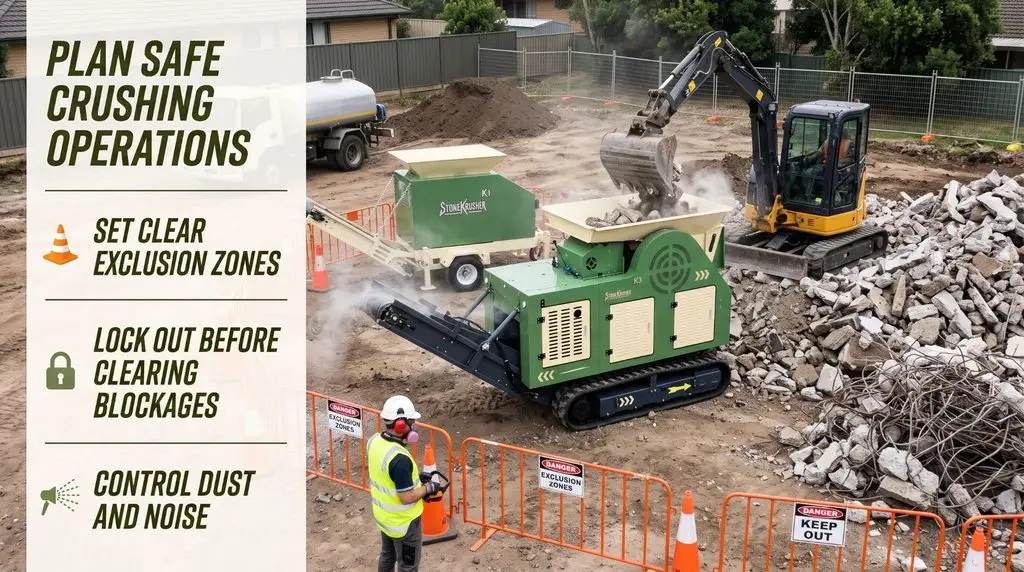
Crushers combine heavy moving parts, flying material, conveyors, dust, and noise in a small area. Most crushing injuries happen when people get too close to the feed hopper, reach into the machine to clear a blockage, or work near unguarded conveyors. Clear procedures and disciplined operation prevent them.
Establish an exclusion zone around the feed hopper, the crushing chamber, and the discharge area. Rock can eject from the hopper during crushing, and material falls from conveyors as it discharges. Keep ground workers outside the zone while the crusher runs, and mark it clearly with barriers or cones. The feeding machine operator should have a clear view of the hopper and a reliable way to communicate with the crusher operator. Know where every emergency stop is located, and test them before each shift. Confirm that all guards are in place on belts, pulleys, and drive components.
Never reach into a crusher or climb onto it while it’s running. Shut it down and follow lockout procedures before clearing a blockage, adjusting settings, or performing maintenance. Use the tools or hydraulic clearing systems the manufacturer provides rather than bars or hands. Control dust with water spray at the feed and discharge points, especially when crushing concrete or stone that may contain respirable crystalline silica. Follow applicable silica exposure requirements, such as the OSHA silica standard in the United States, along with any required respiratory protection. Provide hearing protection, safety glasses, hard hats, gloves, and high-visibility clothing. Train every operator on the manufacturer’s instructions for the specific model before they run it.
Key takeaway: Set exclusion zones, keep guards in place, lock out the crusher before clearing blockages, and control dust and noise to protect everyone on site.
Conclusion
A small stone crushing machine helps contractors process suitable rock and concrete close to the jobsite, reduce hauling and disposal costs, and produce aggregate for base, drainage, and landscaping work. The right purchase depends on the material you crush, the feed size the machine accepts, the output size and production rate it delivers, how easily it moves between sites, and what it costs to run over the long term. Safe operation ties it all together, protecting your crew and keeping the machine productive.
Before you buy, list the materials and volumes you expect across your typical projects, and note the aggregate sizes your specifications require. Compare those needs with each crusher’s documented feed size, closed side setting range, production estimates, transport requirements, fuel use, and wear-part costs. Confirm the details in writing for the exact model. Then arrange a demonstration using material similar to yours. That process leads to a reliable machine that turns site material into a valuable resource on every development project.
Frequently Asked Questions
What projects can use a small stone crusher?
Small stone crushers support construction, landscaping, property development, site preparation, driveway and road base, and small demolition projects where suitable aggregate is needed and hauling material off site is costly.
Why is feed opening size important?
The feed opening determines the maximum material size the machine can accept. As a general rule, the largest piece should be no more than about 80% of the opening’s smaller dimension, so oversized material needs pre-breaking.
Can crushed material be reused on every project?
No. Reuse depends on material quality, gradation, testing, and project specifications. Recycled aggregate for structural base or bedding may require approval before placement.
What should buyers check before purchasing?
Review the materials the crusher is rated for, maximum feed size, output size range, production capacity, transport dimensions, power requirements, wear-part costs, parts support, and safety features.