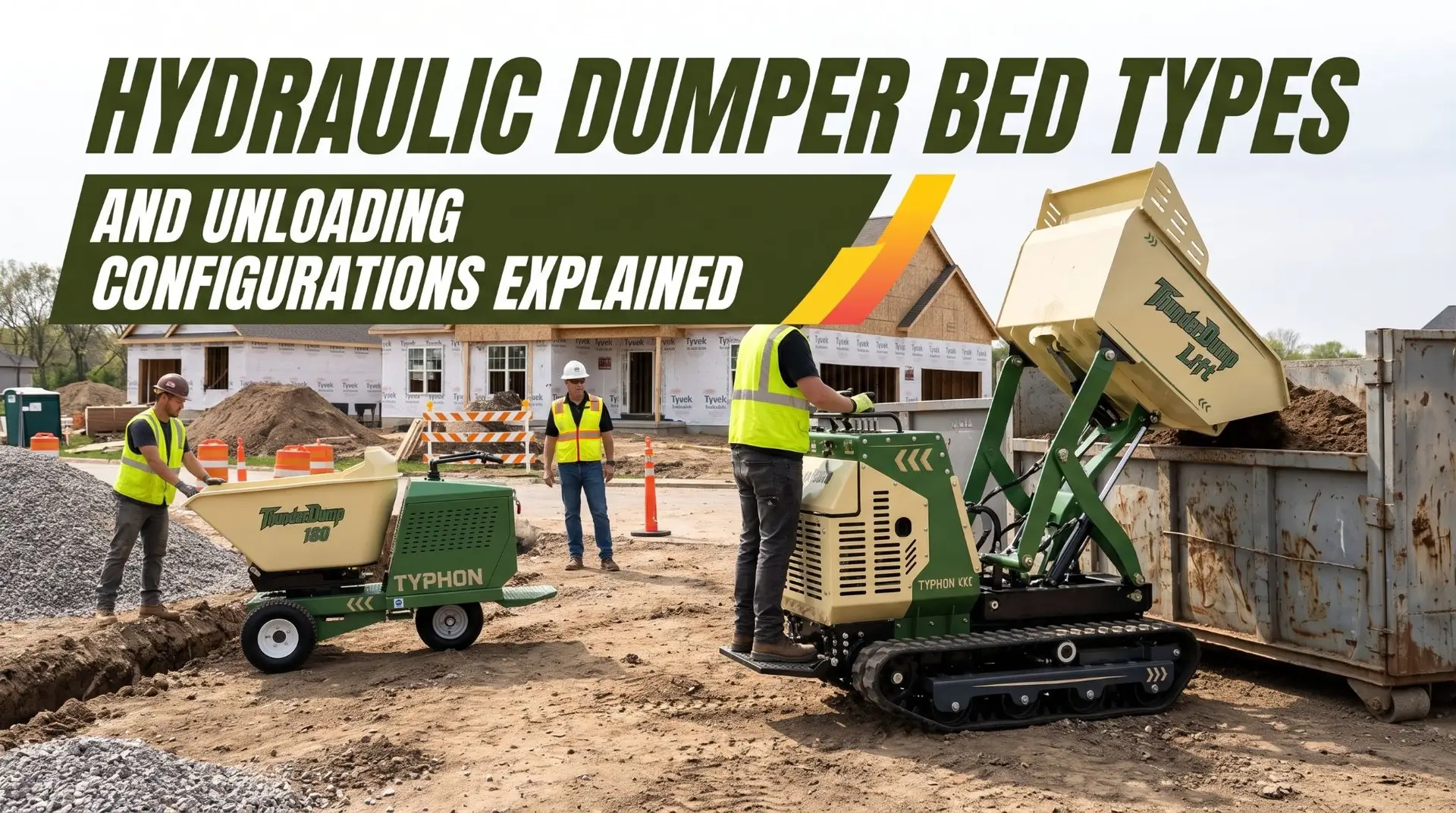
A hydraulic dumper reaches a narrow gap between a house and a fence, carrying a full load of excavated soil. The bed has to tip in a tight space, clear a fresh foundation, and place the load where the next crew needs it. If the dumper has the wrong bed for that site, the operator repositions over and over, spills material, or tips close to a hazard.
Hydraulic dumpers move soil, gravel, sand, construction waste, and demolition rubble on residential, commercial, landscaping, and utility sites. Engine power and payload matter, but the bed design and unloading configuration decide where material can go, how the machine fits into tight spaces, and how fast each transport cycle ends. Choosing the right setup improves productivity, reduces rehandling, and supports safe operation.
Understand Standard Front-Tipping Beds
The standard front-tipping bed is the most common configuration on compact and site dumpers. The bed pivots near its front edge, and hydraulic cylinders lift the rear of the bed. The bed tilts forward and discharges material in front of the machine, into a trench, onto a stockpile, or across a work area.
This design is simple, durable, and efficient. It has fewer moving parts than high-tip or swivel systems, which keeps maintenance easy and leaves more of the machine’s rated capacity for payload. Front tipping works well for moving loose soil, sand, gravel, and mulch across open ground. It is also practical for backfilling, because the operator can drive up to a trench and place material along its length.
Front tipping needs space. The site must have enough room in front of the machine for material to spread, and enough overhead clearance for the bed to rise. Operators also need firm ground at the discharge point, especially near trench edges and slopes. Where discharge sits close to an excavation, use stop blocks or wheel stops and follow the setback distances your site requires. Before you buy, check the tipping angle, the discharge reach, and how cleanly the bed empties sticky or wet material.
Key takeaway: Standard front-tipping beds offer simple, dependable discharge for loose materials on open sites. Confirm clearance, tipping angle, and safe ground at every discharge point.
Review High-Tip Configurations
A high-tip dumper raises the entire bed vertically before tipping it. The bed lifts on hydraulic arms or a lifting frame and then tilts to discharge. This lets operators unload into a skip, a container, a truck bed, or over a low wall without a separate loader handling the material again.
High-tip configurations work well on sites where material leaves by skip or truck. A crew clearing a basement, a backyard landscaping job, or an interior renovation can fill the dumper, drive to a skip, and empty the load directly into it. One handling step disappears, and the work area stays cleaner. High tip can also help when material has to reach a raised bed, a ramp, or a platform.
Buyers should compare maximum discharge height, the reach at that height, and the rated payload at full lift. The rated payload for high-tip operation can be lower than the payload for ground-level tipping, so check the manufacturer’s figures carefully. A raised load also moves the machine’s center of gravity upward, which makes stability far more sensitive to slopes and soft ground. Only use high tip on firm, level surfaces. Never travel with the bed raised. Lower the bed fully before moving away from the discharge point.
Key takeaway: High-tip dumpers unload directly into skips and containers, which cuts rehandling. Verify discharge height and high-tip payload ratings, and only raise the bed on firm, level ground.
Consider Swivel or Rotating Beds
A swivel bed rotates on a turntable before it tips. The operator can turn the bed to the left or right and discharge to the side without turning the whole machine. The available rotation range varies by model, so confirm it on the exact configuration you plan to buy.
Side discharge solves several common jobsite problems. In a narrow access path, the dumper can drive alongside a trench and place backfill straight into it. On road and footpath work, operators can lay material along an edge while the machine stays on firm ground. In tight backyards and between buildings, swivel discharge removes the multi-point turns that slow cycles and damage finished surfaces.
Swivel beds call for extra care with stability. Tipping a loaded bed to the side shifts weight toward one side of the machine, which raises the risk of a sideways tip on uneven or soft ground. Check the manufacturer’s permitted operating positions, the load limits for side discharge, and any slope restrictions. Watch the area around the bed as it rotates, since a swinging bed can strike people, walls, or fences. Inspect the turntable, the slew mechanism, and the locking devices during routine maintenance.
Key takeaway: Swivel beds allow side discharge in narrow spaces and along trench lines. Follow rated positions and load limits, and keep the rotation area clear of people and obstacles.
Compare Hydraulic Lifting Systems
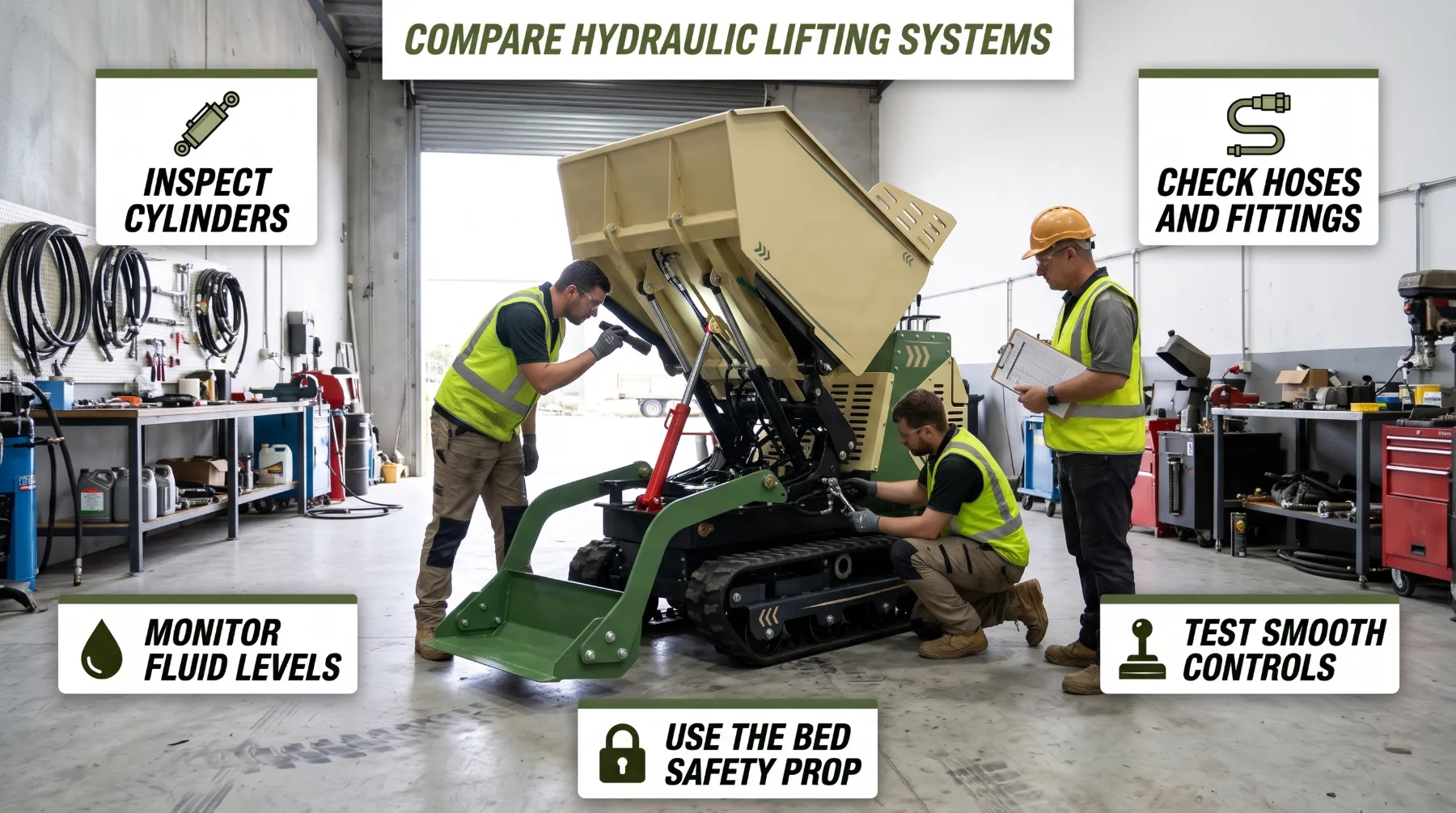
Every dumper bed relies on hydraulics to rise and lower. The system includes a pump, control valves, hydraulic cylinders, hoses, fittings, filters, and hydraulic fluid. High-tip and swivel configurations add lift arms, extra cylinders, or a slew motor, so they place more demand on the hydraulic circuit.
When you compare machines, look at cylinder size and design, hose routing, and the rated lifting capacity. Hoses should be well protected and routed away from pinch points and abrasion. Controls should respond smoothly, so the operator can tip gradually and stop the bed at any position. Smooth control is especially important for heavy or sticky loads, which can shift suddenly as they release. Ask whether the system includes load-holding valves or other safety features that stop the bed from dropping if a hose fails.
Consistent unloading depends on regular maintenance. Check hydraulic fluid levels and condition according to the manufacturer’s schedule. Inspect cylinders for rod damage and leaking seals. Check hoses for cracks, bulges, and wear, and confirm all fittings are tight. Never use your hand to search for a leak, because pressurized fluid can penetrate skin. Before working under a raised bed, engage the bed support prop or safety lock the manufacturer provides, and never rely on hydraulic pressure alone. Report slow lifting, jerky movement, or a bed that drifts down, and have these problems diagnosed before you continue work.
Key takeaway: A well-designed, well-maintained hydraulic system delivers smooth, controlled tipping. Inspect cylinders, hoses, and fluid regularly, and always use the bed safety prop before working underneath.
Match the Bed to the Material
Different materials behave differently in the bed and during discharge. Dry sand and gravel flow out easily. Wet clay sticks and releases slowly. Broken concrete and demolition rubble are heavy, uneven, and hard on bed surfaces. The best bed for your fleet depends on the materials you haul most often.
Start with weight, not just volume. A bed rated for a certain volume may reach its payload limit long before it is full when you carry dense material such as wet soil, gravel, or concrete. Compare the struck and heaped capacities with the rated payload, and train operators to load by weight. Overloading puts stress on the hydraulics, the chassis, and the brakes, and it reduces stability on slopes.
Then look at bed design. Smooth interior surfaces and well-angled sides help sticky material release cleanly. Higher sidewalls or extension boards help with light, bulky materials such as mulch or green waste. Reinforced floors and thicker steel stand up better to rubble and rock. A tailgate or front lip can help control spillage when you travel over rough ground. For wet concrete or slurry, confirm that the bed is suitable and that it can be cleaned thoroughly after each use.
Key takeaway: Choose bed design and capacity based on the weight and behavior of your materials. Load by rated payload, not by how full the bed looks.
Follow Safe Unloading Practices
Unloading is one of the highest-risk moments in a dumper cycle. A raised load moves the center of gravity, and the machine often works near trench edges, slopes, and ground crews. Most dumper overturns and struck-by incidents happen during tipping or right after it.
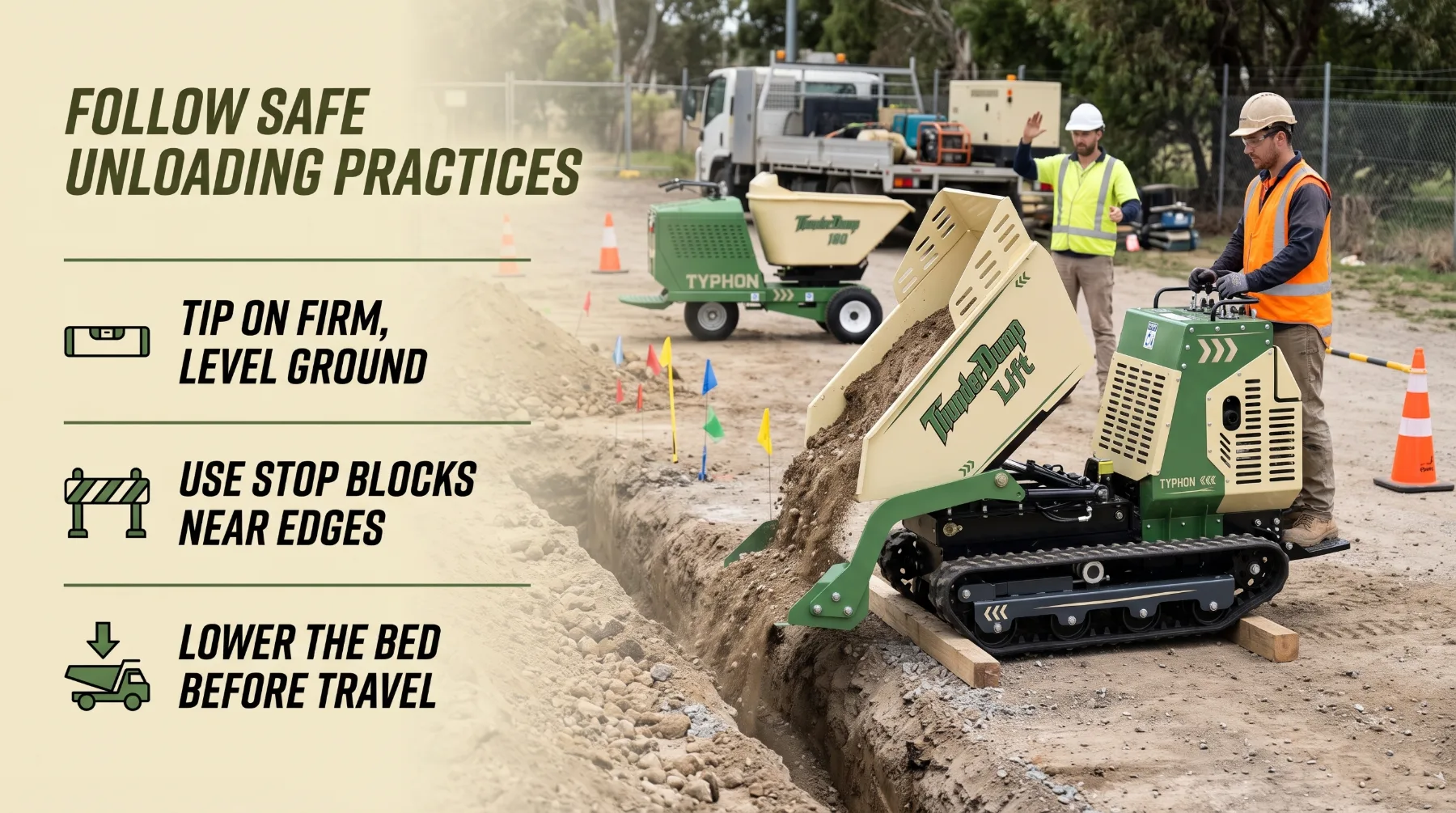
Unload on firm, stable, level ground whenever possible. Avoid raising the bed on slopes, soft ground, or uneven surfaces unless the manufacturer specifically permits the condition. When you discharge into a trench or over an edge, use properly placed stop blocks and keep the setback distance your site requires. Never rely on the operator to judge the edge by eye. Check for overhead power lines, branches, and structures before you raise the bed, especially on high-tip machines.
Keep people clear of the discharge area and the bed’s movement path. Agree on signals with ground crews, and use a trained spotter when visibility is limited. Operators should wear the seat belt and keep the rollover protective structure in its working position as the manufacturer requires. After discharge, lower the bed fully before you travel. Make sure the bed is empty, so no material shifts unexpectedly. When you park, lower the bed, apply the parking brake, and shut down according to the operator’s manual.
Key takeaway: Tip only on firm, level ground, use stop blocks near edges, keep people clear, and lower the bed fully before traveling.
Conclusion
Hydraulic dumper beds are available in several configurations, each designed for different materials, unloading requirements, and jobsite layouts. Standard front-tipping beds provide straightforward discharge onto open ground, making them suitable for general material handling. High-tip configurations raise the load to discharge directly into skips, containers, or elevated collection points, while swivel beds allow side discharge where space is limited or direct forward access is difficult. Regardless of the bed design, hydraulic system performance is essential for smooth, controlled lifting and reliable unloading. Buyers should consider hydraulic capacity, lifting stability, and ease of operation alongside the bed configuration to ensure the machine can handle routine tasks safely. Selecting the right dumper starts with identifying the materials being transported, typical load weights, site access conditions, and the required unloading locations. Compare bed design, rated payload, discharge height, tipping direction, and hydraulic specifications against actual job requirements. It is also important to consider machine dimensions, turning space, ground conditions, maintenance access, and parts availability. Confirm all specifications for the exact model and configuration before purchasing. A practical demonstration with the operators who will use the machine allows them to evaluate loading, travel, lifting, and unloading performance under realistic conditions. This approach helps ensure the dumper delivers dependable material handling and efficient operation across different jobsites.
Frequently Asked Questions
What is a standard tipping bed?
A standard front-tipping bed pivots near its front edge and tilts forward to discharge material in front of the dumper. It is simple, durable, and well suited to moving loose materials on open sites.
What is a high-tip dumper used for?
A high-tip dumper raises the bed vertically before tipping, so it can discharge into skips, containers, or truck beds. Always operate within the rated discharge height and high-tip payload, on firm, level ground.
Why choose a swivel bed?
A swivel bed rotates to discharge material to the side. This helps when the machine cannot turn into position, such as in narrow access paths or alongside trenches.
Can a dumper unload on a slope?
Only when the manufacturer permits the specific condition. Firm, stable, level ground is the safest choice for tipping, because a raised load reduces stability.