Picking the right scissor lift involves more than reaching height and platform capacity. The machine’s overall dimensions, its length, width, and height, shape how easily it moves, where it can go, and how well it fits your workspace. A lift that performs beautifully on paper can become a headache if it won’t fit through a doorway or turn in a tight aisle. Understanding what each dimension means for your operation helps you choose a machine that works with your site rather than against it. Here’s how length, width, height, and platform size come together.
Overall Length Affects Transport and Maneuverability
The overall length of a scissor lift plays a major role in how the machine moves around a jobsite and travels between locations. A longer lift needs more room to turn, reposition, and navigate corners. In open areas, this rarely causes trouble. But in tight indoor spaces, crowded warehouses, or busy construction sites where obstacles are everywhere, extra length can slow you down and make simple moves frustrating.
Maneuverability matters most when you work in confined areas. A compact lift can pivot in a smaller footprint, slip between racking, and reposition without repeated back-and-forth adjustments. That agility saves time on every cycle and reduces the risk of bumping into walls, shelving, or other equipment. When operators spend less effort steering the machine into place, they spend more time doing productive work at height.
Length also affects transport. A shorter machine is generally easier to load onto a trailer or truck, secure for the road, and unload at the next site. It takes up less deck space, which can matter when you’re moving several pieces of equipment together. For crews that shuttle lifts between jobs regularly, a compact length simplifies logistics and keeps transport costs in check.
That said, longer machines often exist for good reason, such as supporting larger platforms or greater capacities. The goal isn’t to choose the shortest model available, but to weigh the length against how and where you’ll actually use the lift. Matching overall length to your access routes and working conditions keeps both maneuverability and transport straightforward.
Width Determines Access to Narrow Work Areas
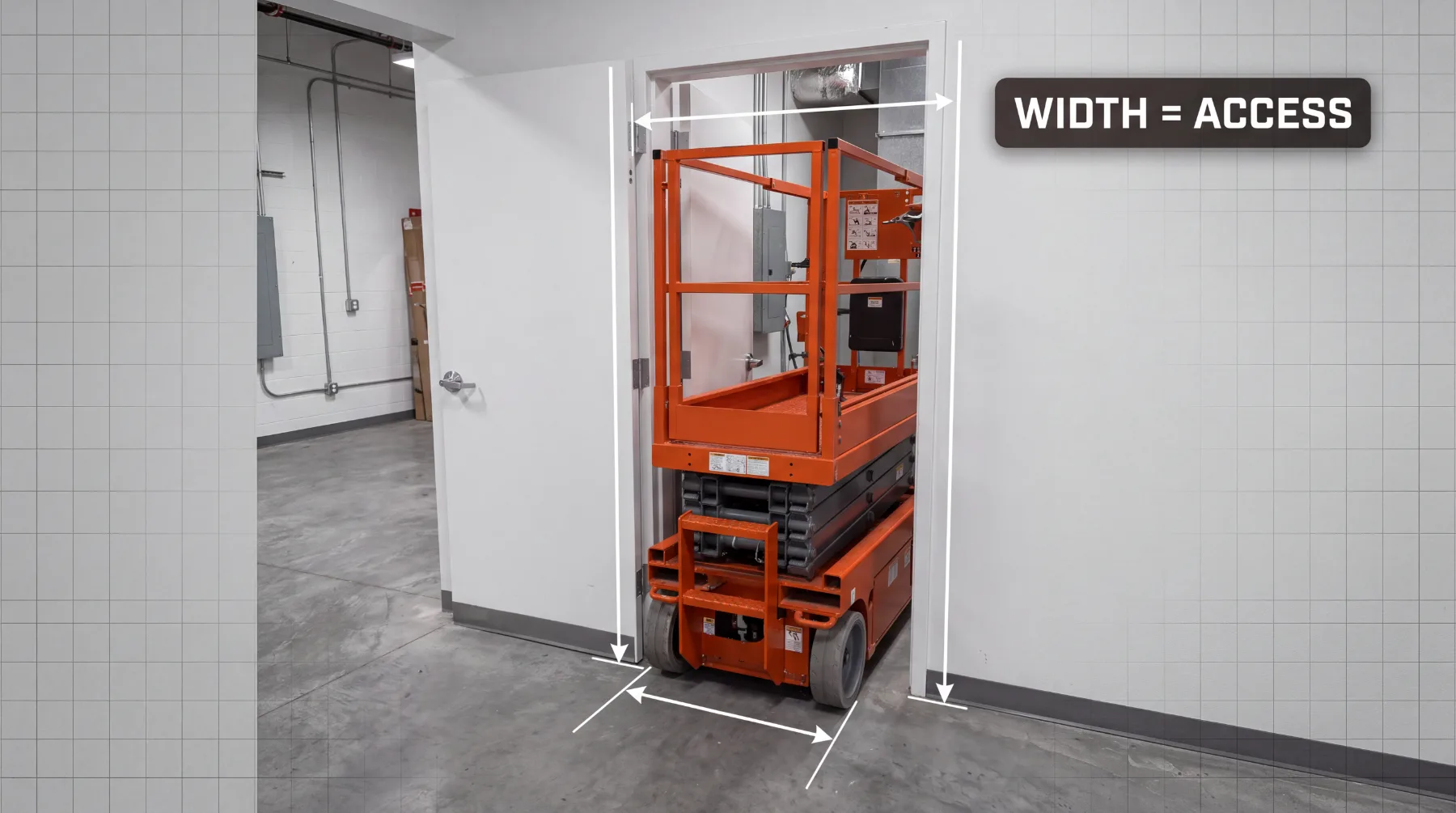
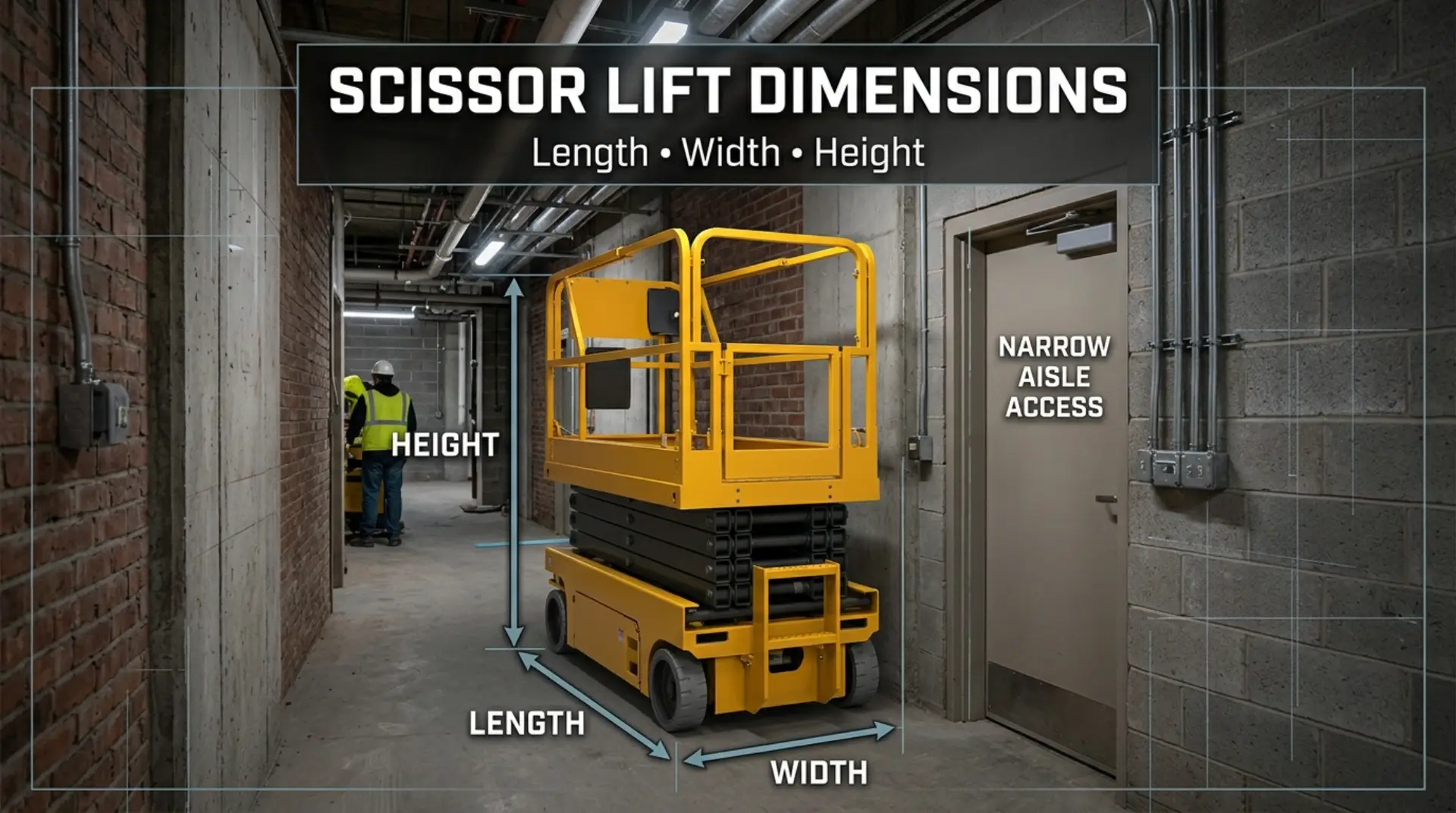
Overall width is often the single most important dimension when access is tight. If a scissor lift can’t physically pass through the openings on your route, its working capabilities don’t matter at all. Gates, doorways, aisles, elevator openings, and narrow corridors all set hard limits on the width you can accommodate. Measuring these access points before choosing a machine prevents the costly surprise of a lift that simply won’t fit where you need it.
A narrower machine opens up far more of your worksite. It can travel down standard aisles, roll through single-door entrances, and reach areas that wider equipment must skip. This is especially valuable for indoor maintenance, retail environments, warehouses, and facilities where space was never designed around heavy equipment. The ability to bring the lift directly to the work area, rather than working around access limits, keeps projects moving and reduces manual handling.
The reassuring part is that a slim profile doesn’t have to mean giving up performance. Many narrow scissor lifts still deliver strong working heights and dependable capacity, so you gain access without sacrificing the function you rely on. When evaluating width, keep a few reference points in mind:
- Standard doorways: confirm the lift clears typical single- and double-door openings on your route.
- Aisle spacing: check the narrowest aisles the machine must travel and turn within.
- Gates and thresholds: account for any raised edges, tracks, or frames that reduce usable width.
By comparing the machine’s overall width against the tightest point on its path, you can be confident it will reach the work area smoothly. Width isn’t just a spec — it’s the difference between a lift that fits your building and one that stays parked outside.
Overall Height Matters for Storage and Access
While reaching height gets most of the attention, a scissor lift’s stowed height deserves just as much thought. The lowered, or collapsed, height determines whether the machine can pass through entrances, clear low ceilings, fit under mezzanines, and slide into storage or transport spaces. A lift that extends impressively high is of little use if it can’t get through the door in its lowered state.
Stowed height becomes especially important for indoor work and for any site with overhead restrictions. Loading docks, parking structures, basements, and older buildings often have limited clearance. A lower profile lets the machine roll under pipes, ductwork, and beams without trouble, giving you access to spaces taller equipment can’t enter. Before committing to a model, it’s wise to measure the lowest clearances along the machine’s intended path and compare them against the stowed height.
Storage and transport add another layer to the decision. A lift with a compact lowered height fits more easily inside enclosed trailers, standard truck beds, and storage areas with modest ceilings. This makes moving the machine between jobsites simpler and often cheaper, since you have more transport options to choose from. It also means the lift takes up less valuable space back at the yard or warehouse when it isn’t in use.
Balancing stowed height with working height is part of choosing the right machine. You want enough vertical reach to complete the job, paired with a lowered profile that fits your access, storage, and transport realities. When both align, the lift moves smoothly from the truck to the work area and back again, without clearance becoming an obstacle at any stage.
Platform Dimensions Affect Working Space
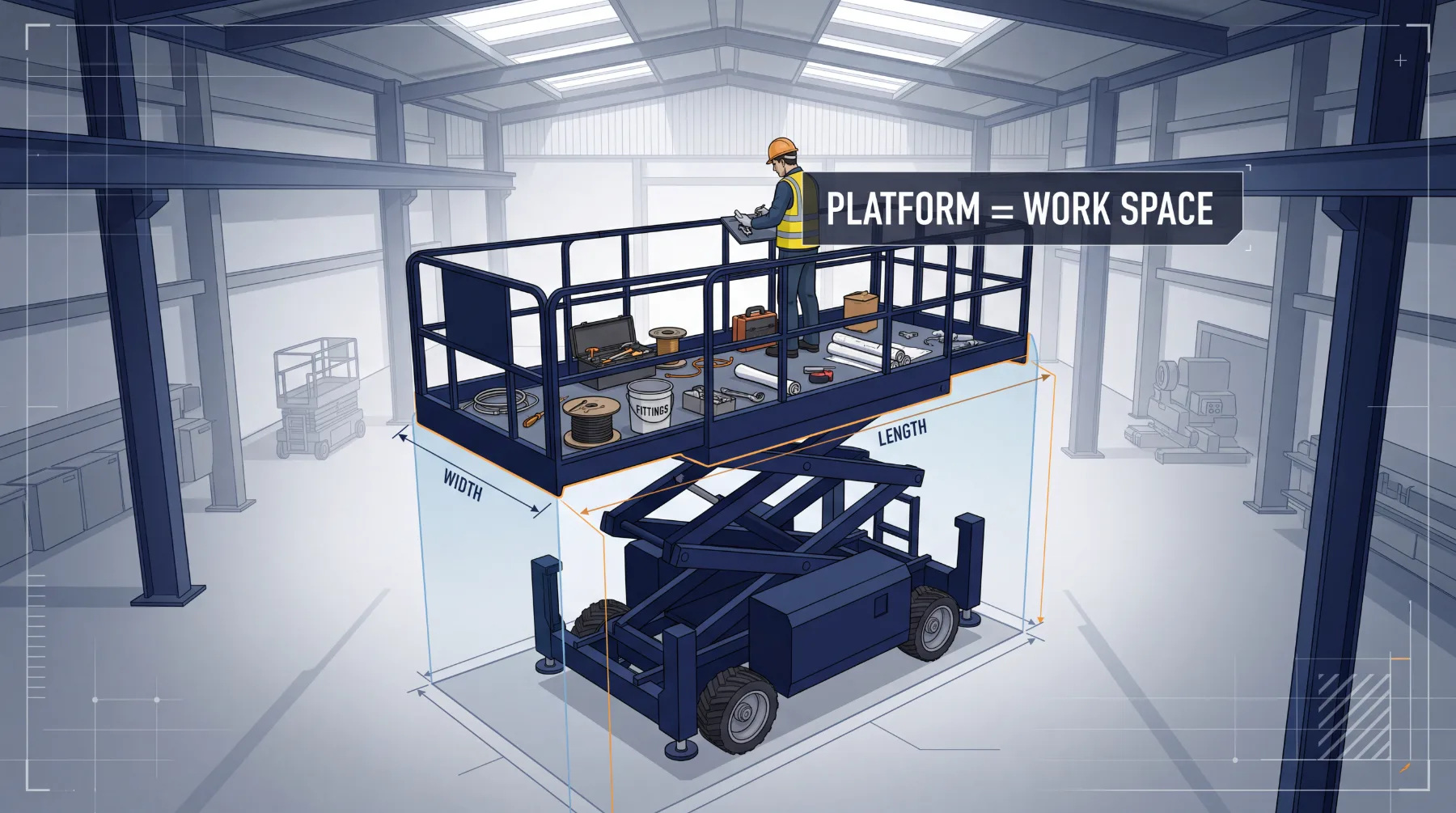
It’s easy to confuse the overall size of a scissor lift with the size of its platform, but the two are distinct measurements that serve different purposes. Overall dimensions describe the machine’s footprint and profile for access and transport. Platform dimensions describe the actual working surface where operators stand and materials rest. Both matter, and understanding the relationship between them helps you choose a lift that fits your space while still offering the room you need to work.
A larger platform provides clear advantages at height. It gives operators more space to move safely, accommodates additional tools and materials, and can allow more than one worker to share the deck when the task calls for it. For jobs involving bulky components, long stretches of overhead work, or heavier material loads, that extra working room can make the difference between a smooth job and a cramped, inefficient one. Some lifts also offer extending decks that expand the platform when needed and retract for travel.
The trade-off is that a bigger platform often increases the machine’s overall footprint. More working surface can mean added length or width, which may reduce maneuverability and complicate access through tight openings. This is where the balance between platform size and overall dimensions comes into focus. A generous deck is valuable only if the machine can still reach the work area.
Choosing well means weighing how much working space your tasks genuinely require against the access constraints of your site. If you frequently handle materials or need multiple operators aloft, a larger platform earns its footprint. If access is your biggest challenge, a more compact deck may serve you better. Matching platform size to the nature of your work keeps both productivity and access in balance.
Dimensions Must Match the Jobsite
The best scissor lift is rarely the smallest or the largest model available. It’s the one whose dimensions fit the specific demands of your jobsite. Length, width, height, and platform size all have to work together with your access routes, working areas, storage space, and transport requirements. A machine that excels in one area but ignores the others can leave you with equipment that’s difficult to move, store, or even bring on site.
Start by mapping the realities of your work environment. Consider how the lift will get from the truck to the work area, what openings it must pass through, how much clearance exists overhead, and how much room it has to maneuver once inside. Then think about the working area itself — how much platform space the task requires and how the machine will reposition throughout the job. Each of these factors points toward a different dimensional priority.
Several practical questions help guide the decision:
- Access routes: What are the narrowest and lowest points the lift must clear along its path?
- Working area: How much space does the machine have to maneuver, and how big must the platform be?
- Storage and transport: Will the lift fit your trailers, storage bays, and any clearance limits at either end?
When you weigh these elements together, the right size becomes much clearer. A lift chosen this way fits its surroundings naturally, moving easily into position, reaching the work comfortably, and returning to storage without a struggle. Matching dimensions to the jobsite isn’t about compromise — it’s about selecting a machine that removes obstacles instead of creating them, so your crew can focus on the work rather than wrestling with the equipment.
Conclusion
A scissor lift’s overall dimensions shape nearly every part of its usefulness, from getting it on site to putting it to work and storing it afterward. Length affects maneuverability and transport, width controls access, stowed height governs clearance and storage, and platform size defines your working space. None of these dimensions stands alone. The smartest choice comes from measuring your access routes, working areas, and transport needs, then selecting a machine whose size fits them all. Do that, and you’ll have a lift that works with your site every step of the way.
Frequently Asked Questions
1. Why does the overall length of a scissor lift matter if I only care about reach height?
Length affects far more than it might seem. A longer machine needs more room to turn, reposition, and navigate around obstacles, which can slow you down in tight indoor spaces or crowded sites. It also takes up more room on a trailer or truck, making transport and loading more involved. Even if reach height meets your needs, a length that doesn’t suit your access routes and maneuvering space can make the lift frustrating to use day to day. Matching length to your conditions keeps work smooth.
2. How do I know if a scissor lift is narrow enough for my site?
Measure the tightest points along the machine’s route before you choose a model. Check standard doorways, the narrowest aisles it must travel and turn within, and any gates or thresholds with raised edges that reduce usable width. Then compare those measurements against the lift’s overall width. If the machine clears the narrowest point on its path, it will reach the work area. Width is a hard limit, so confirming it upfront prevents the costly surprise of equipment that won’t fit through your openings.
3. What’s the difference between reaching height and stowed height?
Reaching height is how high the platform rises when the lift is fully extended, while stowed height is the machine’s lowered profile when the scissor mechanism is collapsed. Stowed height determines whether the lift can pass through entrances, clear low ceilings, fit under structures, and load into trailers or storage areas. A lift can have excellent reach yet still be unusable if its stowed height won’t clear the door or overhead obstacles on your site, so both measurements deserve attention.
4. Is a bigger platform always better?
Not necessarily. A larger platform gives operators more room to work, holds more tools and materials, and can support multiple workers when the task requires it. That’s a real advantage for bulky components or heavier loads. However, a bigger deck often increases the machine’s overall footprint, which can reduce maneuverability and make access through tight spaces harder. The right platform size depends on your work. If access is your main challenge, a more compact deck may serve you better than the largest option available.
5. How do I choose the right size scissor lift for my job?
Focus on fit rather than simply choosing the smallest or largest model. Map your access routes to find the narrowest and lowest points the lift must clear, then assess how much space the machine has to maneuver and how large a platform your tasks require. Finally, confirm the lift fits your transport and storage constraints at both ends. Weighing length, width, height, and platform size against these realities points you toward a machine that fits your site naturally and removes obstacles instead of creating them.