Electric forklifts have transformed warehouse operations. They run cleaner, cost less to maintain, and perform consistently across long shifts. But their quiet operation introduces a risk that many facilities underestimate: pedestrians simply do not hear them coming.
Add battery-related hazards, heavier chassis weights, and fast aisle speeds, and you have a machine that demands a structured safety approach—not assumptions built around what you knew from propane equipment.
This guide gives warehouse managers, safety leaders, and operators a complete electric forklift safety framework. You will find pre-shift inspection steps, battery safety protocols, pedestrian management strategies, and facility-level controls that reduce incident risk across every shift.
What you will get from this guide:
- A practical pre-shift inspection checklist
- Electric forklift battery safety protocols
- Pedestrian awareness strategies for quiet environments
- Load handling and aisle safety guidelines
- Training requirements and facility-level controls
Why Electric Forklift Safety Deserves Its Own Framework
Many warehouses retrofit their existing internal combustion safety protocols for electric equipment and call it sufficient. That approach leaves gaps.
Electric forklifts weigh more than equivalent IC models because of the battery pack. They accelerate smoothly and silently, giving bystanders less warning. Their batteries present specific chemical and electrical hazards. And their quiet operation means the usual auditory cues workers rely on to stay safe simply do not exist.
A purpose-built electric forklift safety checklist addresses these realities directly. It does not just adapt old rules—it builds new ones around how electric equipment actually behaves.
Pre-Shift Inspection: The Non-Negotiable Starting Point
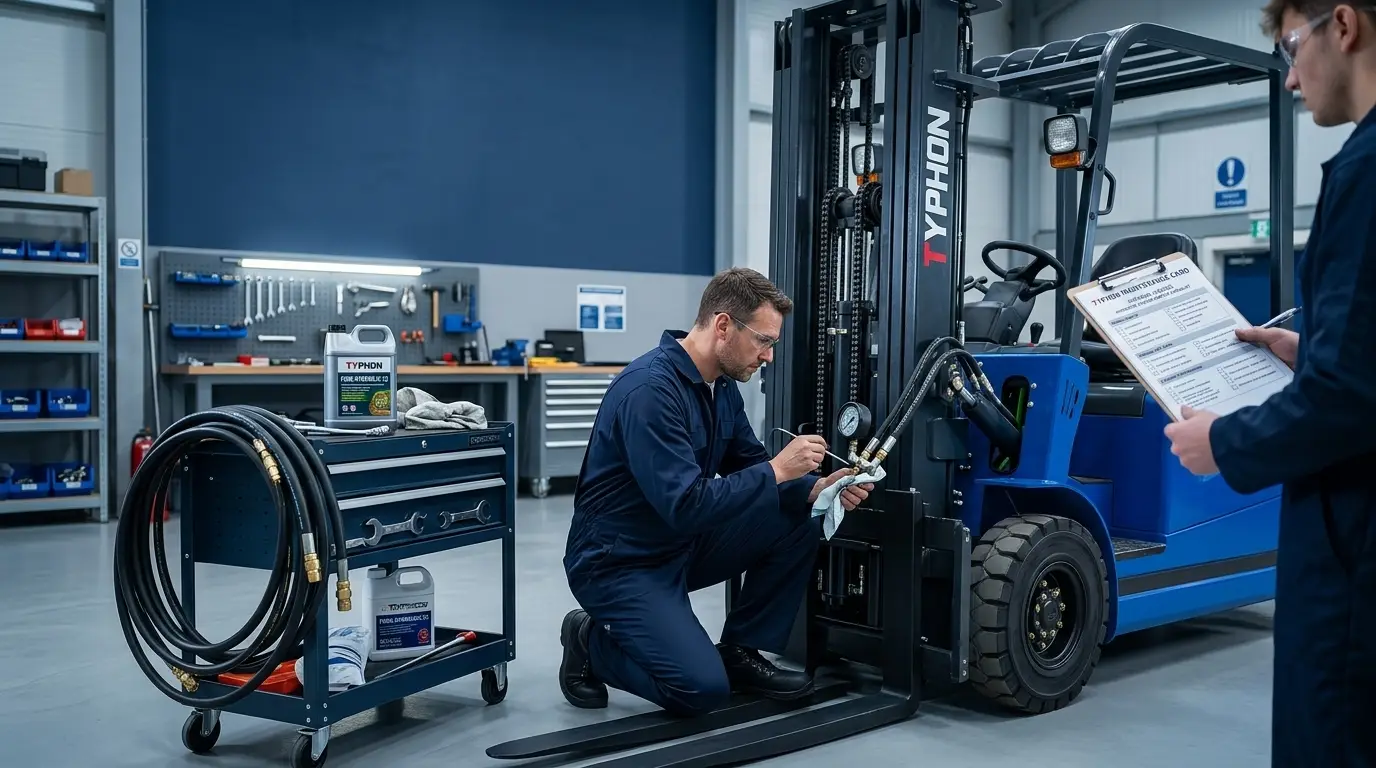
No operator should drive an electric forklift onto your floor without completing a documented pre-shift inspection. This is your first and most reliable defense against equipment-related incidents.
What Operators Must Check Before Every Shift
Battery and power system:
- The battery is fully charged and securely locked into the compartment
- Battery cables show no fraying, cracking, or corrosion
- Battery connector is seated correctly with no arc marks on the pins
- Battery compartment cover is secured
Forks and mast:
- Forks are not bent, cracked, or uneven in height
- Fork heel and tips show no excessive wear
- Mast channels are clean and lubricated
- Lift chains are properly tensioned with no broken or stretched links
- The carriage moves smoothly through the full range of motion
Brakes and controls:
- Service brakes hold the machine firmly on a flat surface
- Parking brake engages and holds reliably
- Accelerator and directional controls respond smoothly without sticking
- Horn activates clearly and consistently
- Reverse warning alarm functions on every reverse engagement
Tires and chassis:
- Tires are free of deep cuts, chunking, or embedded debris
- Tire pressure is within spec (for pneumatic models)
- Overhead guard is intact with no structural damage
- Seatbelt is present, undamaged, and buckles securely
- Load backrest extension is firmly attached
Visibility aids:
- Headlights and warning lights function correctly
- Mirrors are clean and correctly positioned
- The backup camera (if equipped) displays a clear image
Any defect identified during inspection must be reported immediately. The operator should tag the equipment out of service and notify the maintenance team before the machine is used. Never drive a forklift with a known defect onto the floor.
Electric Forklift Battery Safety: Handling the Power Source Correctly
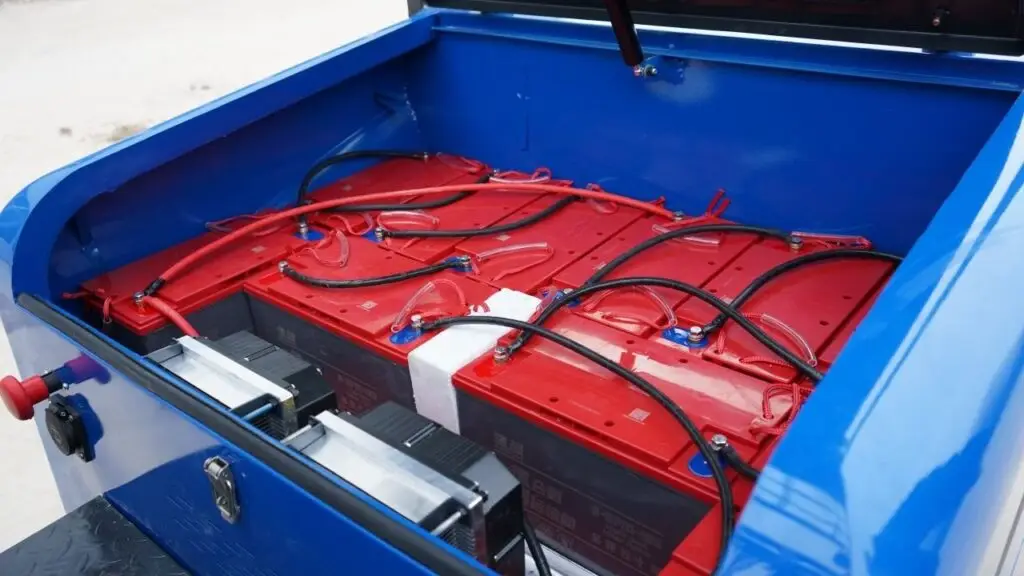
Battery management sits at the heart of electric forklift safety. Lead-acid batteries produce hydrogen gas during charging. Lithium-ion batteries can experience thermal events if damaged or improperly charged. Both require specific handling protocols.
Charging Area Requirements
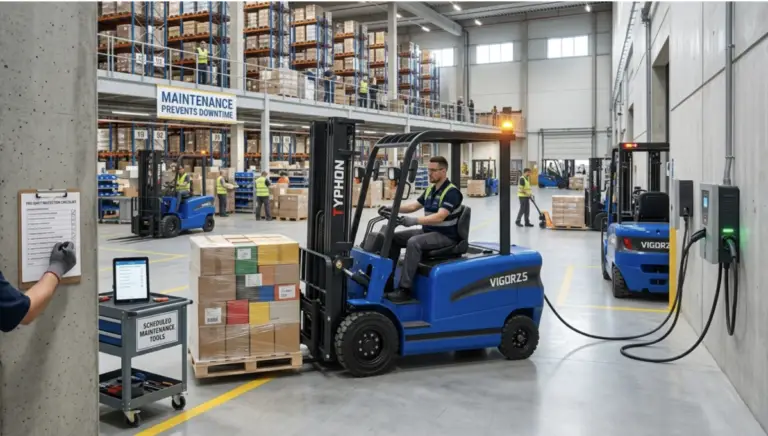
Designate a fixed charging area away from combustible storage, open flames, and high-traffic zones. The space must meet these minimums:
- Adequate ventilation to prevent hydrogen gas accumulation (lead-acid)
- A working eyewash station within 10 seconds of travel
- A fire extinguisher rated for electrical fires
- Clear signage prohibiting smoking and open flames
- Floor markings that designate the charging zone clearly
Operators must open the battery compartment cover before connecting the charger. This allows hydrogen gas to dissipate rather than accumulate inside the chassis.
Safe Charging Practices
- Connect the charger only after the forklift is parked and powered down
- Use only the approved charger for your specific battery chemistry—never mix lead-acid and lithium-ion chargers
- Do not interrupt a lead-acid charge cycle once started; doing so accelerates sulfation damage
- Allow a 1–2 hour cool-down period after charging before returning the battery to heavy service
- Inspect the charger cable and connector before each use; replace any unit with damaged insulation or corroded pins immediately
Personal Protective Equipment for Battery Handling
Anyone physically handling lead-acid batteries—during swaps, watering, or maintenance—must wear the following:
- Acid-resistant rubber gloves
- Safety glasses or a face shield
- Chemical-resistant apron
Keep distilled water and a baking soda neutralizing solution near the battery area at all times to address spills quickly.

Lithium-Ion Specific Precautions
Lithium-ion batteries are more tolerant of partial charging but carry different risks. Never use a lithium-ion battery that shows signs of swelling, unusual heat, or damage to the casing. These are warning signs of potential thermal runaway, which requires immediate removal from service and contact with the battery manufacturer.
Always follow the manufacturer’s storage guidelines. If a lithium-ion battery will sit unused for an extended period, charge it to approximately 50% before storage.
Pedestrian Awareness: Managing the Silence Hazard
This is the area where electric forklift safety diverges most sharply from conventional approaches. Workers who spent years on a floor with loud propane forklifts developed an instinctive awareness of machine proximity based on sound. Electric forklifts disrupt that entirely.
Facility Layout Controls
Physical controls are more reliable than behavioral reminders alone. Build them into your facility design:
- Designated pedestrian walkways: Mark them with high-contrast floor striping and barriers where feasible
- Forklift-only travel aisles: Clearly separate pedestrian and forklift paths wherever the layout allows
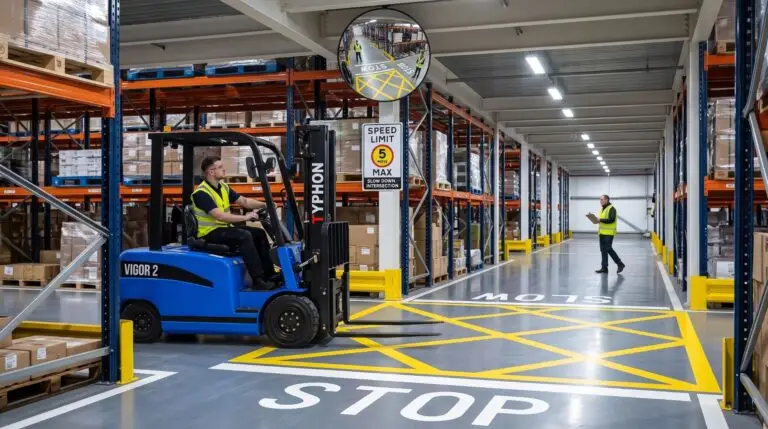
- Blind corner mirrors: Install convex mirrors at every aisle intersection where sightlines are limited
- Controlled access points: Use swing gates or painted stop lines at dock doors and warehouse entries to force a pause before entering forklift zones
Technology and Alerting Systems
Since the machine itself is quiet, add proximity warning systems that compensate:
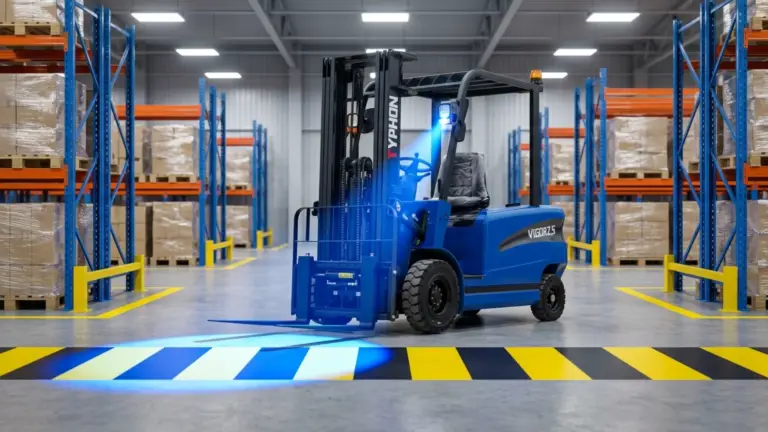
- Blue safety lights: A blue spotlight projects onto the floor 10–15 feet ahead of the forklift, alerting pedestrians to an approaching machine even before it rounds a corner
- Audible pedestrian alarms: Motion-activated alert systems that sound in areas where pedestrians regularly interact with forklift traffic
- Proximity detection systems: Wearable tags for workers that trigger a warning on the forklift and a vibration alert on the worker when they are within a set distance of the machine
No technology replaces procedural discipline, but these tools meaningfully reduce the window in which an unseen pedestrian-forklift interaction can occur.
Operator Responsibilities in Pedestrian Areas
Operators must slow to a walking pace whenever they enter areas with active pedestrian traffic. They should make eye contact with any pedestrian before proceeding, not assume the other person sees them. Horn use in blind spots and at aisle intersections should be mandatory, not optional.
Every warehouse should enforce a clear right-of-way rule: pedestrians always have the right of way, and forklifts must yield. Document this policy and enforce it consistently.
Load Handling Safety
Improper load handling causes a disproportionate share of warehouse incidents. Electric forklifts‘ smooth acceleration can mask instability, making operators less likely to notice that a load is poorly secured until it shifts dangerously.
Before Picking a Load
- Confirm the load weight does not exceed the forklift’s rated capacity
- Verify the load is stable and properly palletized before lifting
- Position forks fully under the pallet at the correct width before raising
- Tilt the mast back slightly to cradle the load against the carriage during travel
During Travel
- Carry loads at the lowest safe height—typically 6–8 inches off the floor
- Never travel with an elevated load, except for the final approach to rack placement
- Slow down on ramps, at intersections, and in any area with pedestrian activity
- Take corners at a reduced speed and in a wide arc to maintain stability
At the Rack
- Approach the rack face squarely before elevating the load
- Raise the load smoothly and stop at the correct height before insertion
- Never push a load into a rack—this damages rack structure and destabilizes adjacent pallets
- Lower and confirm the load is fully supported before backing away
Aisle and Traffic Management
Aisle discipline is a facility management responsibility, not just an operator responsibility.
Setting and Enforcing Aisle Rules
- Post maximum speed limits clearly at aisle entrances (3–5 mph is a typical indoor standard)
- Establish one-way traffic patterns wherever the layout supports them
- Prohibit passengers on forklifts—no rider on the forks or standing on the platform
- Enforce a strict no-phone policy for operators while the forklift is in motion
Keeping Aisles Clear
Blocked aisles force operators to maneuver around obstacles, reducing visibility and increasing the risk of tip-overs or rack strikes. Establish and enforce:
- No inventory staging in active travel aisles
- Immediate pick-up of dropped materials
- Clear height limits for stacked product in pick locations adjacent to aisles
Operator Training Requirements
Equipment certification is a legal requirement under OSHA 29 CFR 1910.178. It is also a practical necessity. An undertrained operator is a liability — regardless of how good your equipment is.
What Effective Forklift Training Covers
Initial certification must include:
- Formal instruction covering equipment-specific controls and limitations
- Practical demonstration with the actual equipment type the operator will use
- Evaluation by a qualified trainer before the operator works independently
Electric-specific training topics:
- Battery charging safety and hazard recognition
- The unique behavior of electric motors—instant torque, regenerative braking, smooth acceleration
- Pedestrian awareness protocols in quiet environments
- Emergency procedures for battery incidents (spills, thermal events, loss of power)
Refresher Training Triggers
OSHA requires retraining when any of the following occur:
- An operator is observed operating the equipment unsafely
- An incident or near-miss occurs
- An operator is assigned to a different type of forklift
- Workplace conditions change in a way that affects safe operation
Do not wait for an incident to schedule retraining. Build quarterly safety refreshers into your training calendar as a standard practice.
Facility-Level Safety Protocols
Individual operator compliance matters, but the safest warehouses build safety into their systems and physical environment—not just their training materials.
Safety Audits
Conduct documented safety inspections at least monthly. Walk the facility and audit:
- Pre-shift inspection log completion rates
- Condition of floor markings and safety signage
- Charging station compliance (proper ventilation, PPE availability, correct charger use)
- Aisle clearance and pedestrian pathway integrity
Assign corrective actions with a deadline and a responsible owner. An audit without follow-through is a documentation exercise, not a safety improvement.
Incident Reporting Culture
Create a reporting environment where near-misses are reported and investigated without automatic blame. Near-misses are leading indicators of future incidents. Every time you capture and analyze one, it gives you the opportunity to close a gap before it causes harm.
Track incident and near-miss data over time. Look for patterns in shift, location, operator experience level, or equipment type. Let that data drive your safety investments.
Visitor and Contractor Safety
Any visitor or contractor entering your forklift operating zones must receive a site safety briefing before entering the floor. Brief them on designated walkways, right-of-way rules, and what to do if they encounter a moving forklift. Provide high-visibility vests for anyone spending extended time in the facility.
Conclusion
Electric forklifts are among the most efficient and cost-effective tools in modern warehousing. But their quiet operation, heavier weight, and battery-specific hazards require a safety approach built specifically around their characteristics—not adapted from older equipment.
The framework in this guide covers every layer of warehouse forklift safety: pre-shift inspections, battery safety protocols, pedestrian management, load handling, operator training, and facility-level controls. Each element supports the others. No single checklist item compensates for gaps elsewhere in the system.
Start by reviewing your current pre-shift inspection process and your charging area setup. Those two areas carry the highest concentration of controllable risk. From there, assess your pedestrian management controls and verify your operator certifications are current. Build a monthly audit cycle that holds your team accountable to the standards you set.
A safe warehouse is a productive warehouse. Take the steps today that protect your people and your operation tomorrow.