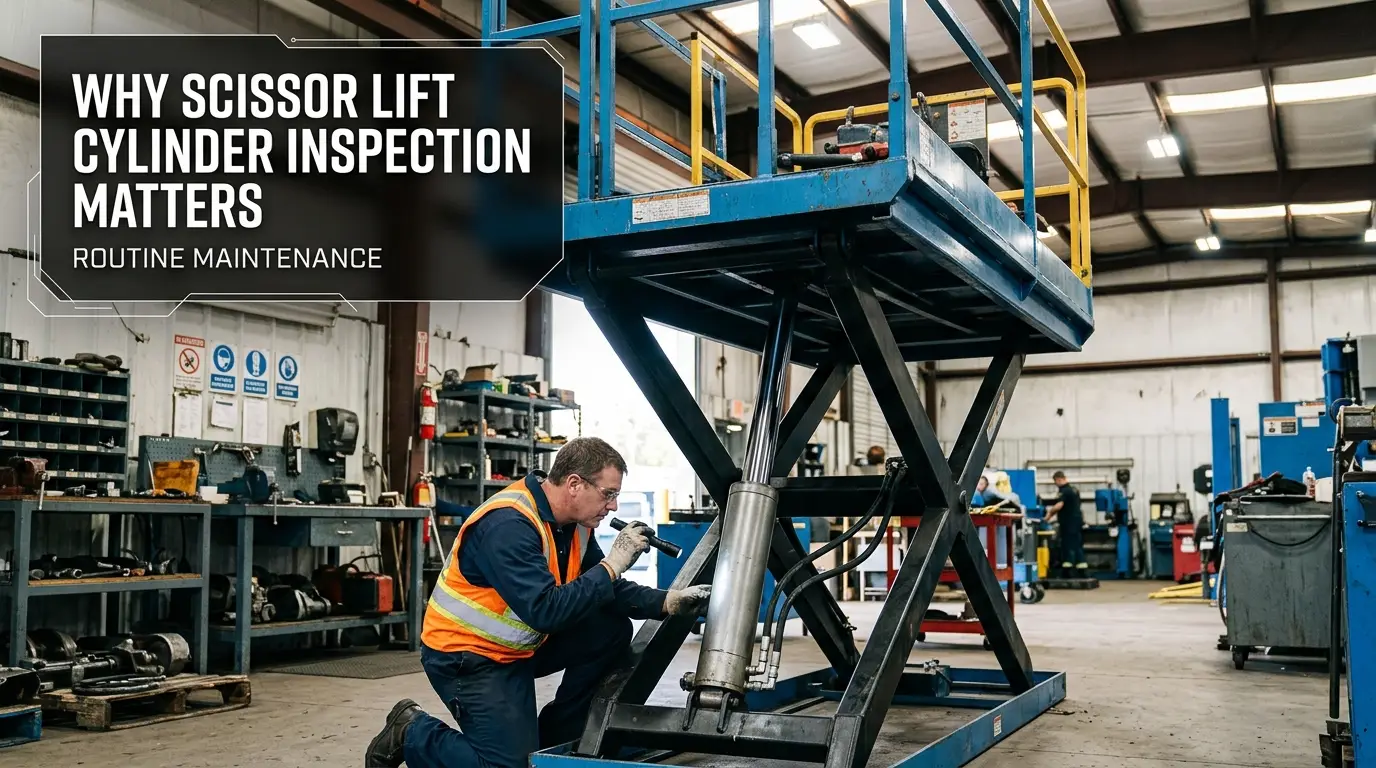
A scissor lift depends on its hydraulic cylinders to raise, hold, and lower the platform safely, which puts these components at the heart of both performance and safety. When a cylinder develops a problem, the effects show up quickly in the form of leaks, uneven lifting, or an unexpected loss of function. Building cylinder inspection into your routine maintenance is one of the most practical ways to catch these issues early, protect the people who rely on the equipment, and keep the machine working when you need it.
This guide explains why scissor lift cylinder inspection belongs in your regular maintenance program. You will learn how inspection helps prevent hydraulic cylinder failures, how to check for hydraulic leaks, what to look for when inspecting the cylinder rod and seals, how routine checks maintain safe lifting performance, and how consistent attention extends component service life. By the end, you will have a clear, practical view of what to inspect and why it matters.
Preventing Hydraulic Cylinder Failures
Regular inspection is your first line of defense against hydraulic cylinder failures on a scissor lift. Cylinders operate under considerable pressure and endure repeated cycles every time the platform rises and lowers, so wear and minor damage are natural over time. The trouble is that small problems rarely stay small. A weeping seal, a trace of corrosion, or a hairline of surface damage can quietly worsen until it becomes a failure that stops the machine and puts anyone on the platform at risk. Checking cylinders on a set schedule lets you catch these early warning signs while they are still easy and inexpensive to address.
The value of early detection is hard to overstate. When you identify a developing issue during a routine inspection, you can plan the repair, order the right parts, and take the machine out of service at a convenient time rather than dealing with a sudden breakdown mid-job. This is where inspection pays for itself, turning what could be an emergency into a manageable task.
Several problems commonly surface during cylinder inspection, and each deserves attention:
- Leaks, which point to worn seals or fittings that need service before fluid loss affects performance
- Damaged seals, which allow hydraulic fluid to escape and can compromise the cylinder’s ability to hold pressure
- Corrosion, which weakens surfaces and can lead to further deterioration if left unchecked
- Surface damage, such as scratches or dents that may interfere with smooth cylinder operation
Addressing these issues early reduces unexpected downtime and keeps repair costs under control. A cylinder that fails without warning can damage related components, disrupt your schedule, and require a far more expensive fix than a timely seal replacement would have cost. Making cylinder inspection a consistent part of your maintenance routine protects both your equipment and your operation from those avoidable setbacks.
Checking for Hydraulic Leaks
Checking for hydraulic leaks is one of the most important parts of any cylinder inspection, because leaks are often the earliest visible sign that something is wrong. During each inspection, look closely at the cylinder itself, the fittings, the hoses, and the surrounding areas for any trace of hydraulic fluid. Fluid on the cylinder body, damp fittings, wet hoses, or a puddle beneath the machine all signal that fluid is escaping somewhere it should not. Because hydraulic systems rely on contained pressure to function, any leak is worth taking seriously.
It helps to inspect the machine both at rest and during operation. A cylinder that appears dry when static may reveal a leak once it is under load and pressure, so cycling the platform while watching for seepage gives a more complete picture. Pay particular attention to the points where hoses connect to fittings and where the rod enters the cylinder, since these are common places for fluid to escape. Wiping surfaces clean before you begin makes fresh leaks far easier to spot.
Even a small leak deserves attention, because it rarely stays minor for long. A slight seep often indicates a worn seal, a loose fitting, or a developing problem within the hydraulic system, and ignoring it allows the underlying issue to grow. Beyond the risk to the cylinder, leaking fluid lowers the system’s fluid level, which can affect lifting performance and place added strain on the pump and other components. Leaked fluid also creates a slippery hazard around the machine and represents wasted resources over time. By treating every leak as a signal worth investigating, you catch hydraulic problems while they remain simple to fix. Consistent leak checks keep the system sealed, the fluid where it belongs, and the scissor lift performing as it should.
Inspecting the Cylinder Rod and Seals
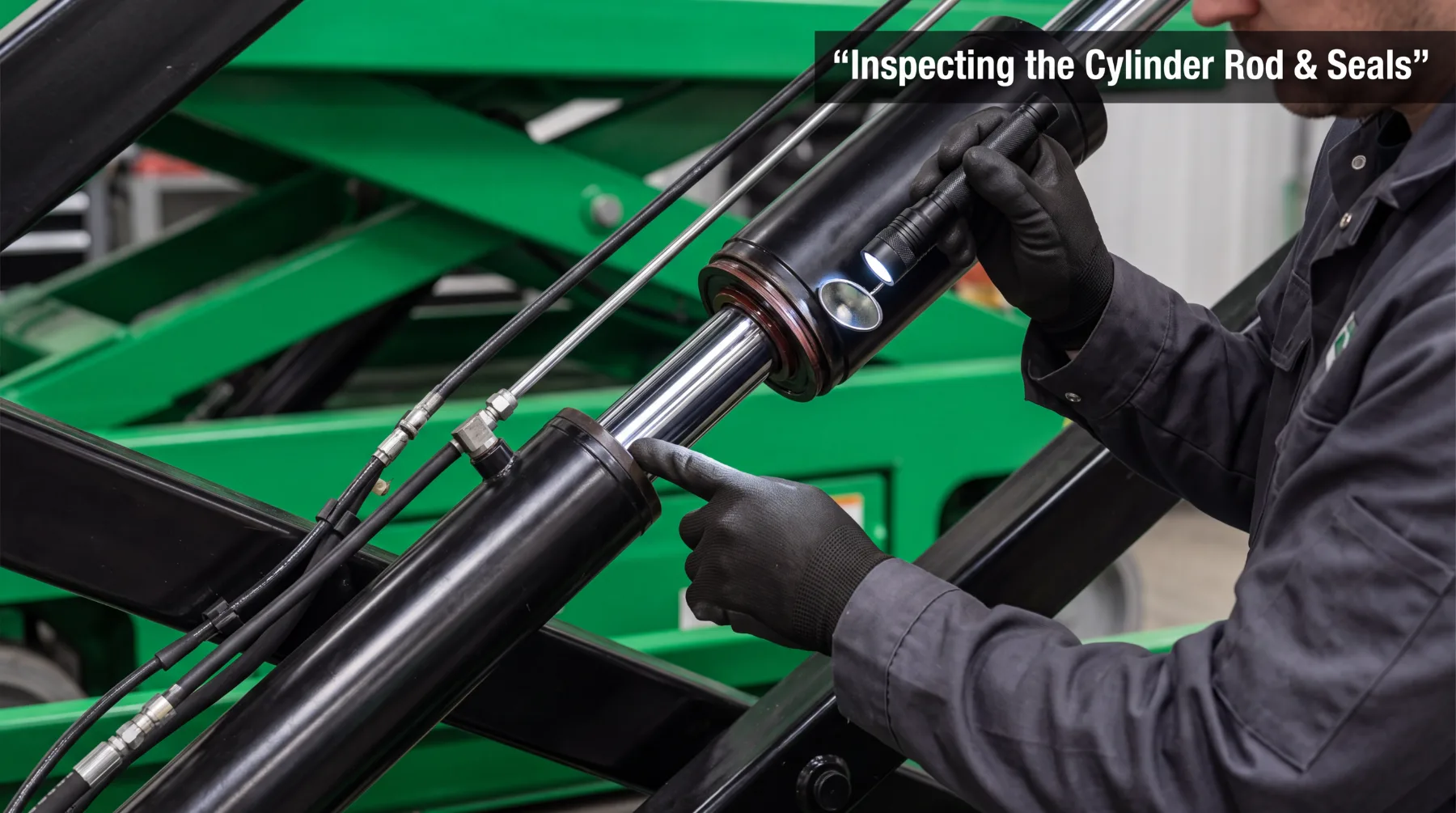
The cylinder rod and its seals work together to keep the hydraulic system sealed and the platform lifting smoothly, which makes their condition central to reliable operation. During inspection, examine the cylinder rod carefully for scratches, corrosion, bending, or other surface damage. The rod moves in and out of the cylinder with every lift cycle, sliding past the seals that keep fluid contained, so its surface needs to stay smooth and true. Even minor imperfections can affect how well the seals perform their job.
Surface damage on the rod matters because of how directly it affects the seals. A scratch or a patch of corrosion on the rod acts like sandpaper against the seal each time the cylinder cycles, gradually wearing it down until fluid begins to escape. A bent rod is a more serious concern, since it can bind against the seals and the cylinder bore, causing uneven wear, increased friction, and the risk of further damage. Catching these problems early, while the rod can still be cleaned, dressed, or replaced before it ruins the seals, saves both time and money.
The seals themselves deserve equally close attention. Worn or damaged seals may allow hydraulic fluid to escape, which reduces lifting performance and can lead to a cylinder that struggles to hold the platform steady. Signs of seal trouble include fluid leaking around the rod, a cylinder that drifts downward under load, or lifting that feels less smooth than it should. When you notice any of these, the seals are likely due for service. Keeping the rod clean and protected helps the seals last longer, and replacing worn seals promptly restores the cylinder’s ability to hold pressure. Regular inspection of the rod and seals together keeps the cylinder sealed, the lifting smooth, and the machine dependable across its working life.
Maintaining Safe Lifting Performance
Scissor lift cylinders play a central role in raising and supporting the platform, so their condition has a direct bearing on safe lifting performance. When the cylinders operate correctly, the platform rises smoothly, holds its position securely at any height, and lowers in a controlled manner. When a cylinder develops a problem, that reliability begins to erode, and the machine may lift unevenly, drift downward, or respond less predictably than it should. Because people work at height on these platforms, keeping the cylinders in sound condition is fundamental to operating the equipment safely.
Routine inspections help ensure the hydraulic system is functioning properly and can reveal issues that affect smooth, controlled lifting before they become dangerous. During each check, observe how the platform behaves as it rises and lowers. Smooth, steady movement without jerking, hesitation, or drift indicates the cylinders and hydraulic system are working as intended. Any deviation from that smooth operation is a signal worth investigating, since it may point to a leak, worn seals, or another developing fault within a cylinder.
The connection between cylinder condition and safety is direct and worth keeping front of mind. A cylinder that cannot hold pressure reliably may allow the platform to settle under load, which is a serious hazard for anyone working above. Uneven lifting can stress the scissor mechanism and place the platform at an unsafe angle. By inspecting the cylinders regularly and confirming the hydraulic system operates properly, you catch these issues early and keep the machine performing the way it was designed to. This kind of attention supports confident, controlled operation on every lift. For equipment that raises workers off the ground, there is no substitute for the peace of mind that comes from knowing the cylinders have been checked and are ready to perform safely.
Extending Component Service Life
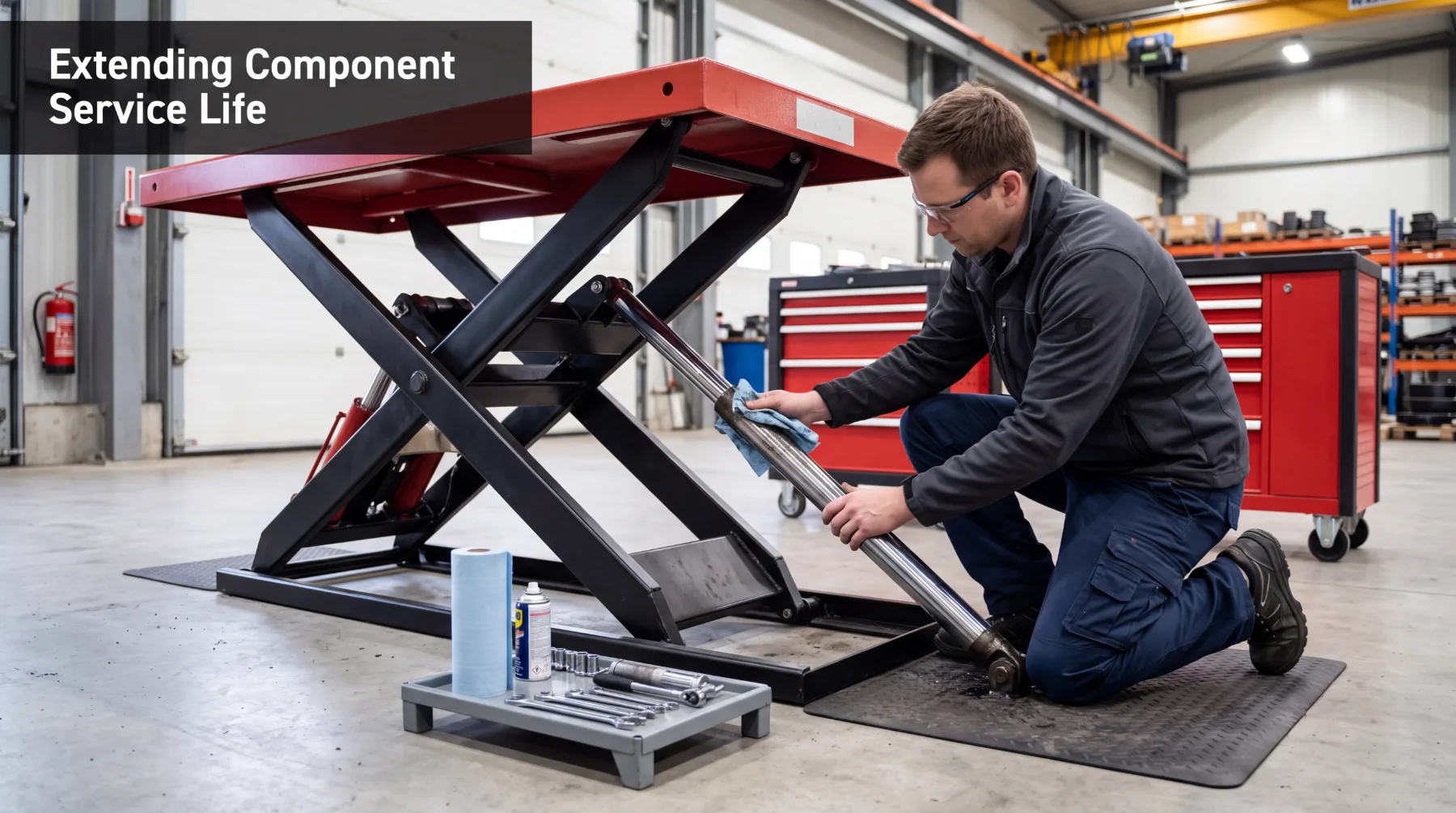
Consistent cylinder maintenance does more than prevent failures. It actively extends the service life of the components, helping you get the most from your investment in the equipment. Keeping cylinders clean, properly lubricated where required, and free from damage reduces the unnecessary wear that shortens component life. Dirt and debris that collect on the cylinder rod can be dragged into the seals, accelerating wear, while a rod left exposed to moisture may develop corrosion that damages both the rod and the seals over time. Simple, regular care goes a long way toward preventing these problems
A practical maintenance routine keeps several habits in mind:
- Cleaning the cylinder and rod regularly to remove dirt, grit, and debris that would otherwise cause wear
- Lubricating components where the manufacturer specifies, to reduce friction and protect moving surfaces
- Protecting the rod from moisture and contaminants that can lead to corrosion and surface damage
- Addressing minor issues promptly before they progress into problems that require major repair
Routine maintenance also provides a valuable opportunity to catch smaller problems before they lead to costly component replacement. A seal beginning to weep, a light film of surface corrosion, or a small scratch on the rod can often be resolved quickly and inexpensively when caught early. Left unattended, those same issues can escalate into a failed cylinder that requires full replacement, along with the downtime and expense that come with it.
The cumulative effect of this attention is equipment that lasts longer and performs more reliably. Cylinders that are kept clean, lubricated, and free from damage endure the demands of repeated lifting far better than neglected ones. By making cylinder care a regular practice, you reduce wear, avoid premature replacement, and keep your scissor lift dependable for years of service. That reliability protects both your budget and your ability to keep working without interruption.
Conclusion
Scissor lift cylinder inspection earns its place in routine maintenance by protecting the performance, safety, and longevity of the equipment. Regular checks help prevent hydraulic cylinder failures by catching leaks, damaged seals, and corrosion early. Careful leak inspection keeps the hydraulic system sealed, while attention to the cylinder rod and seals preserves smooth, dependable lifting. Routine inspection also supports safe lifting performance for everyone who works at height, and consistent care extends the service life of the cylinders while keeping repair costs in check.
Before your next maintenance cycle, make cylinder inspection a defined step in your routine rather than an occasional afterthought. Check for leaks, examine the rod and seals, observe how the platform lifts and lowers, and keep the components clean and protected. When you build these habits into your regular maintenance, you gain a scissor lift that operates safely, performs reliably, and serves your work dependably over the long term.
Frequently Asked Questions
1. How often should scissor lift hydraulic cylinders be inspected?
Scissor lift cylinders should be inspected as part of your regular maintenance routine, with the frequency guided by how often and how heavily the machine is used. A lift that works daily under demanding conditions benefits from more frequent checks than one used occasionally, but no machine should go without regular attention. A practical approach is to include a visual cylinder check as part of routine pre-use or periodic inspections, looking for leaks and obvious damage, and to carry out a more thorough examination of the rod, seals, and lifting performance on a set schedule. The reason for this consistency is simple: cylinders operate under high pressure and endure repeated cycles, so wear and minor damage develop gradually over time. Regular inspection catches these issues early, while they remain easy and inexpensive to address, rather than allowing them to progress into failures that stop the machine. Following the manufacturer’s recommended maintenance intervals gives you a solid baseline, and adjusting the frequency to match your actual usage keeps the cylinders in dependable condition. Building inspection into an established schedule ensures it happens reliably rather than being overlooked until a problem appears.
2. What are the warning signs of a failing scissor lift cylinder?
Several warning signs point to a cylinder that needs attention. The most common is hydraulic fluid leakage, which may appear as fluid on the cylinder body, damp fittings, wet hoses, or a puddle beneath the machine. Even a small leak is worth investigating, since it often signals a worn seal or a developing problem. Changes in lifting behavior are another key indicator. A platform that drifts downward under load, lifts unevenly, hesitates, or moves less smoothly than usual may be signaling trouble within a cylinder or the hydraulic system. Physical damage to the cylinder rod is also telling, including scratches, corrosion, or bending, all of which can affect how well the seals perform. During inspection, look and listen for anything out of the ordinary, since unusual movement, sounds, or resistance can all suggest a cylinder is not operating as it should. Catching these signs early gives you the chance to address the underlying issue before it becomes a failure. When you notice any of them, it is wise to inspect the cylinder more closely and service it as needed rather than continuing to operate a machine that may be developing a fault.
3. Why do even small hydraulic leaks matter?
Even a small hydraulic leak matters because it rarely stays small and often points to a larger issue. A slight seep of fluid typically indicates a worn seal, a loose fitting, or a developing problem within the hydraulic system, and ignoring it allows that underlying issue to grow worse over time. What begins as a minor drip can progress into significant fluid loss and eventual cylinder failure. Leaks also affect the system beyond the point where fluid escapes. As fluid leaks out, the overall level in the system drops, which can reduce lifting performance and place added strain on the pump and other components that depend on adequate fluid to function properly. Beyond performance, leaked hydraulic fluid creates a slippery hazard around the machine and represents wasted resources that add up over time. For all these reasons, it is best to treat every leak as a signal worth acting on. Wiping surfaces clean and inspecting both at rest and during operation makes fresh leaks easier to spot. By addressing leaks while they remain minor, you keep the hydraulic system sealed, protect the cylinder and related components, and maintain the reliable lifting the machine is meant to deliver.
4. How does cylinder condition affect scissor lift safety?
Cylinder condition has a direct effect on scissor lift safety because the cylinders are responsible for raising and supporting the platform, often with workers aboard. When the cylinders operate correctly, the platform rises smoothly, holds its position securely at any height, and lowers in a controlled manner. When a cylinder develops a problem, that reliability erodes, creating real hazards. A cylinder that cannot hold pressure reliably may allow the platform to settle or drift downward under load, which is dangerous for anyone working at height. Uneven lifting caused by a faulty cylinder can stress the scissor mechanism and leave the platform at an unsafe angle. These risks are exactly why cylinder inspection is so important to safe operation. By checking the cylinders regularly and observing how the platform behaves as it lifts and lowers, you can confirm the hydraulic system is functioning properly and catch developing issues before they compromise safety. Smooth, steady movement without jerking, hesitation, or drift is a good sign the cylinders are sound. Any deviation from that should be investigated. Keeping the cylinders in reliable condition supports confident, controlled operation and protects the people who depend on the equipment every time it lifts.
5. Can routine cylinder maintenance really extend component life and save money?
Yes, routine cylinder maintenance genuinely extends component life and helps control costs. Cylinders that are kept clean, properly lubricated where required, and free from damage endure the demands of repeated lifting far better than neglected ones. Dirt and debris on the rod can be dragged into the seals and accelerate wear, while moisture left on an exposed rod can cause corrosion that damages both the rod and the seals. Simple, regular care prevents much of this unnecessary wear and keeps the components working longer. Maintenance also gives you the chance to catch and resolve minor problems before they escalate. A seal beginning to weep, a light film of corrosion, or a small scratch on the rod can often be fixed quickly and inexpensively when caught early. Left unaddressed, those same issues can grow into a failed cylinder that requires full replacement, along with the downtime and expense that follow. By spending a modest amount of time on regular inspection and care, you avoid the far greater cost of major repairs and premature replacement. The result is equipment that lasts longer, performs more reliably, and keeps your operation running without unexpected interruptions, which makes routine maintenance a sound investment.